





Warm apple crumble, chocolate cream straight from the fridge, baked pears with nuts, or soft cookies packed with big chunks of chocolate — a good homemade dessert usually doesn’t require complicated techniques or a long list of specialty ingredients.
Dessert doesn’t need to be “fixed”
For the sake of being slim, having better skin, or simply following our idea of “healthy eating,” we often avoid desserts because of sugar, butter, cream, or white flour. Another option is trying to fix them: replacing sugar with honey or syrup, flour with nut flour, cream with yogurt, and butter with avocado or coconut oil. Some substitutions really can lower the calorie count — for example, when part of a rich cream is replaced with yogurt or a non-caloric sweetener is used. But that doesn’t always work, and it doesn’t always make sense.
According to the World Health Organization, free sugars also include the sugars naturally found in honey and syrups. Nut flour or a large amount of nuts also doesn’t automatically make a dessert lower in calories. On top of that, swapping an ingredient changes more than just the numbers — it changes the taste and texture too. Sugar helps baked goods stay moist and affects the crust and structure of ice cream; fat makes cream smooth; and regular wheat flour is sometimes simply the best tool for the job. So a homemade dessert can absolutely contain sugar, butter, chocolate, or cream. There’s no need to turn every slice of pie into a source of protein, fiber, and half your daily vitamins.
At the same time, berries, apples, pears, nuts, yogurt, farmer’s cheese, and eggs work beautifully in sweet dishes on their own. They can be used to make juicy bakes, thick creams, crumbles, chilled desserts, and cookies — not because they “fix” sweets, but because they’re simply normal, delicious ingredients. For skin and hair, what matters is how you eat over the course of a day and a week: different sources of protein and fats, vegetables, fruit, grains, legumes, fish, and other everyday foods. We explain this logic in more detail in the article “What to Cook Today for Beauty: Breakfast, Lunch, and Dinner Ideas”. Here, though, we’ll let dessert do its main job — taste good.
7 simple desserts you can make at home
1. Yogurt cream with berries, chocolate, and pistachios
2 servings, about 5 minutes
When you want something sweet right now, there’s no need to bake. Yogurt and ricotta make a thick, creamy base, the berries add brightness, and the chocolate and pistachios turn it into something much better than just a quick fridge snack.
Ingredients:
- 250 g thick Greek yogurt;
- 80 g ricotta;
- 150 g raspberries, strawberries, blackberries, blueberries, or a mix of berries;
- 15–20 g dark chocolate;
- 20 g unsalted pistachios or other nuts;
- 1–2 tsp sugar or honey, to taste;
- a little lemon zest;
- vanilla — optional.
Mix the yogurt with the ricotta, zest, and sugar or honey. If the berries are sweet, taste the cream first before adding any extra sweetener. Divide it between two glasses, then add the berries, roughly chopped pistachios, and chocolate. The chocolate can be left in pieces or melted and drizzled over the chilled cream. Peaches, nectarines, ripe pears, or figs also work well instead of berries.
2. Baked pears with ricotta, nuts, and chocolate
2–4 servings, about 30 minutes
Pears become soft, juicy, and fragrant in the oven, but if you choose fruit that’s ripe yet still firm, they’ll hold their shape nicely. Cold ricotta, warm pear, nuts, and a little chocolate create a great contrast of textures and temperatures.
Ingredients:
- 2 large ripe but firm pears;
- 10 g butter;
- 120–150 g ricotta;
- 25 g walnuts or hazelnuts;
- 20 g dark chocolate;
- 1–2 tsp honey or sugar — optional;
- cinnamon;
- a little lemon juice.
Cut the pears in half and remove the cores. Place them cut side up in a small baking dish, lightly brush with butter, add a few drops of lemon juice, and sprinkle with a pinch of cinnamon. Bake at 190 °C for about 20–25 minutes. The pears should be easy to pierce with a knife but shouldn’t collapse. Let them cool for a few minutes, then spoon the ricotta, nuts, and chopped chocolate into the hollow. If the fruit isn’t very sweet, drizzle with a little honey. Very ripe pears are not the best choice for this recipe — they’ll lose their shape quickly in the oven. Firm winter varieties, on the other hand, may need another 10–15 minutes.
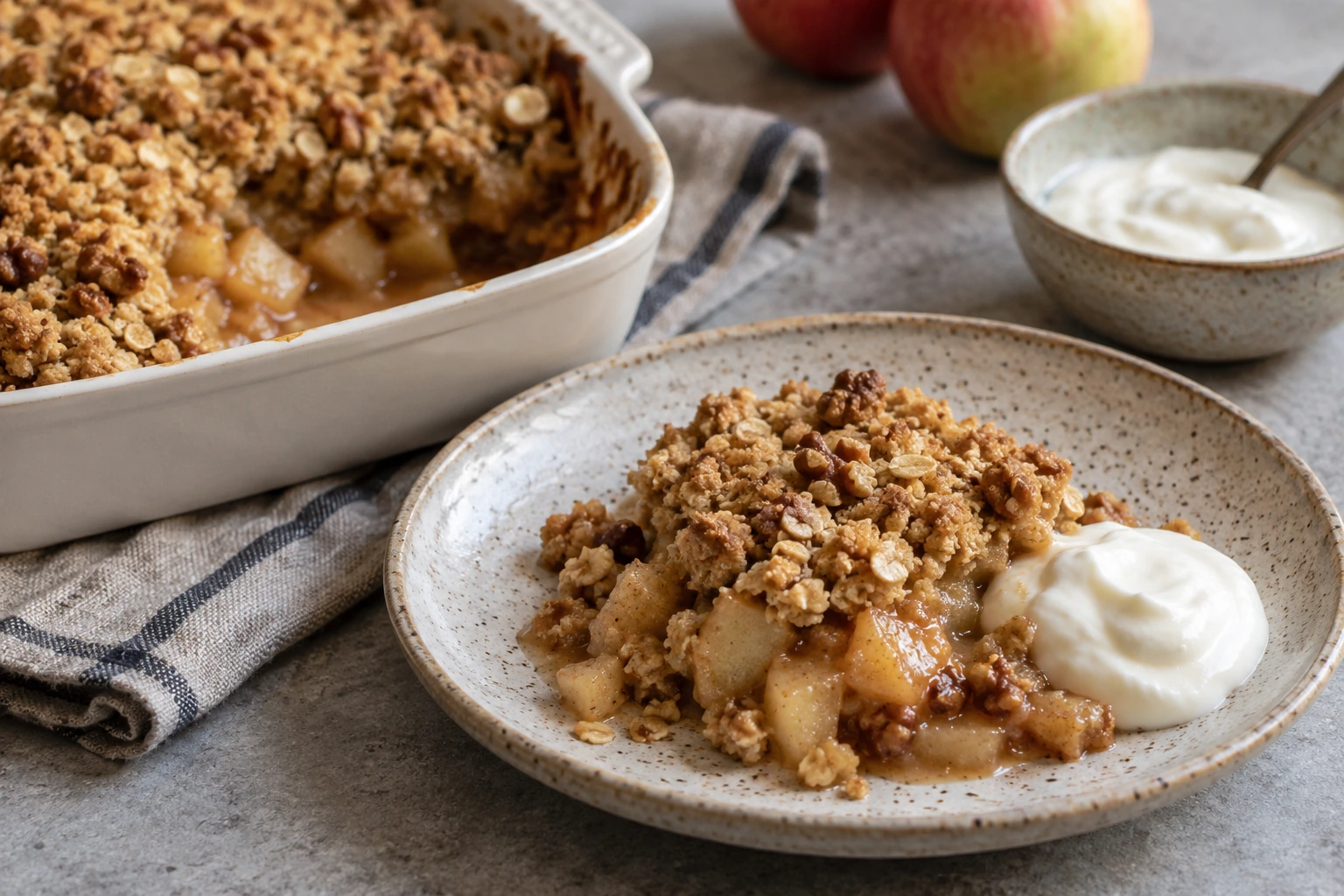
3. Apple crumble with oats and walnuts
6 servings, about 45 minutes
Crumble is one of the easiest ways to turn apples into a proper warm dessert. There’s no dough to knead or roll out: juicy apples are simply baked under a layer of buttery, crisp topping.
Ingredients:
For the apple layer:
- 700 g apples;
- 1 tbsp lemon juice;
- 20–30 g sugar;
- ½–1 tsp cinnamon.
For the crumble topping:
- 80 g rolled oats;
- 80 g wheat flour;
- 70 g cold butter;
- 50 g sugar;
- 50 g walnuts;
- a pinch of salt.
Peel the apples if you like, remove the cores, and cut them into small pieces. Toss with the lemon juice, cinnamon, and sugar, then spread them in a baking dish about 20 × 20 cm. If the apples are sweet, you can reduce the sugar in the filling or leave it out altogether. In a separate bowl, mix the oats, flour, sugar, salt, and roughly chopped nuts. Add the cold butter in cubes and quickly rub everything together with your fingertips until you get an uneven crumb. Scatter it over the apples and bake at 190 °C for about 30–35 minutes, until the filling is bubbling around the edges and the top is golden. You can also add a handful of blueberries, currants, or raspberries to the apples. Crumble is especially good warm — on its own, with a spoonful of thick yogurt, or a scoop of ice cream.
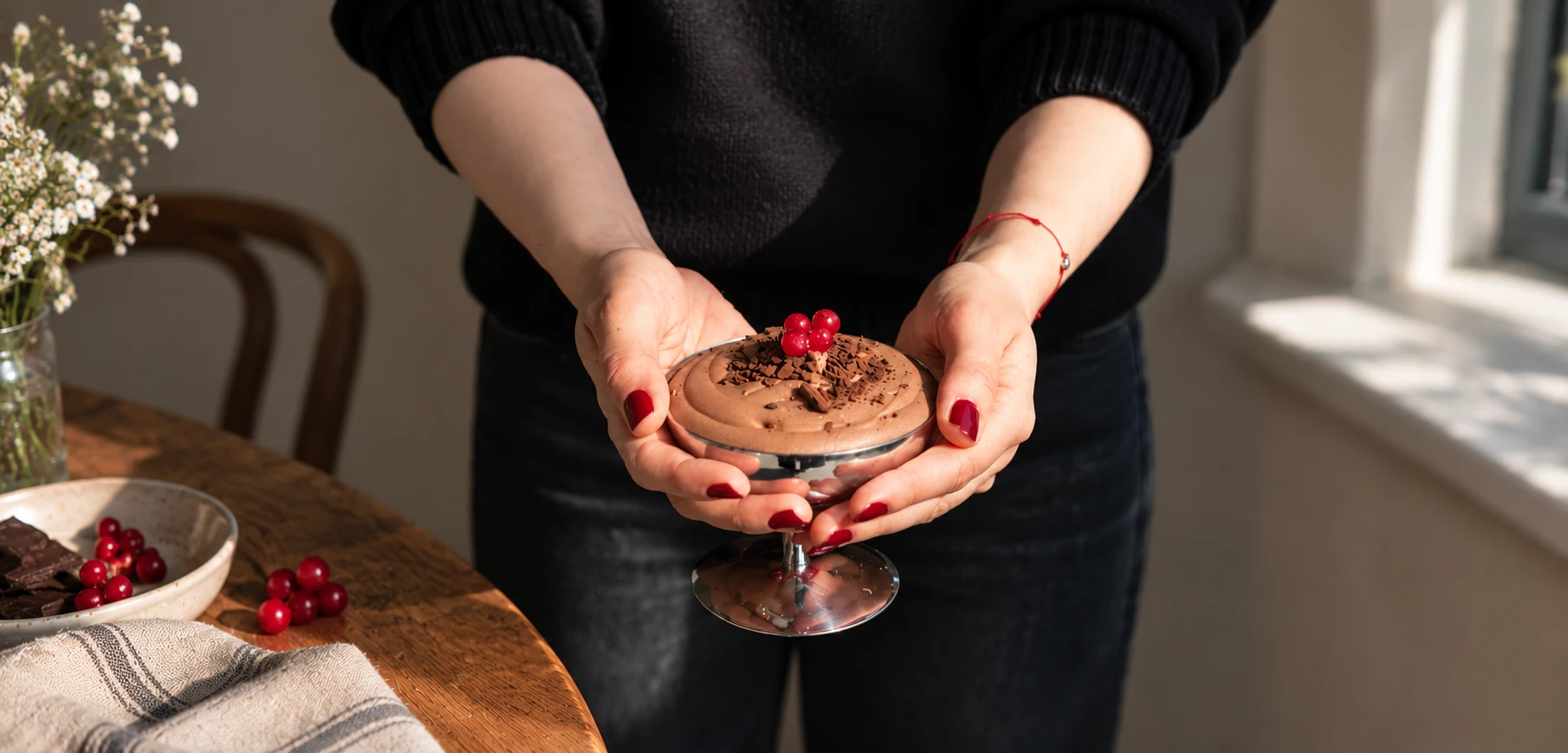
4. Chocolate cream made with farmer’s cheese
4 small servings, 10 minutes + chilling
Farmer’s cheese turns into a thick chocolate cream if you blend it until completely smooth and add the right ingredients. The texture matters a lot here: grainy curds and a silky chilled cream feel like two entirely different desserts.
Ingredients:
- 300 g soft farmer’s cheese;
- 100 g Greek yogurt;
- 70 g dark chocolate;
- 1 tbsp cocoa powder;
- 20–30 g sugar or honey;
- a pinch of salt;
- vanilla — optional;
- 1–2 tbsp milk, if the cheese is dry.
Melt the chocolate over a double boiler or in short bursts in the microwave, then let it cool slightly. Blend the cheese with the yogurt, cocoa, sugar, and a pinch of salt until smooth. Add the chocolate and blend once more. If the mixture is still too thick, add a spoonful of milk and check the consistency. Spoon the cream into small glasses and chill for at least 30 minutes. Raspberries, cherries, orange zest, or toasted hazelnuts all pair especially well with the chocolate flavor.
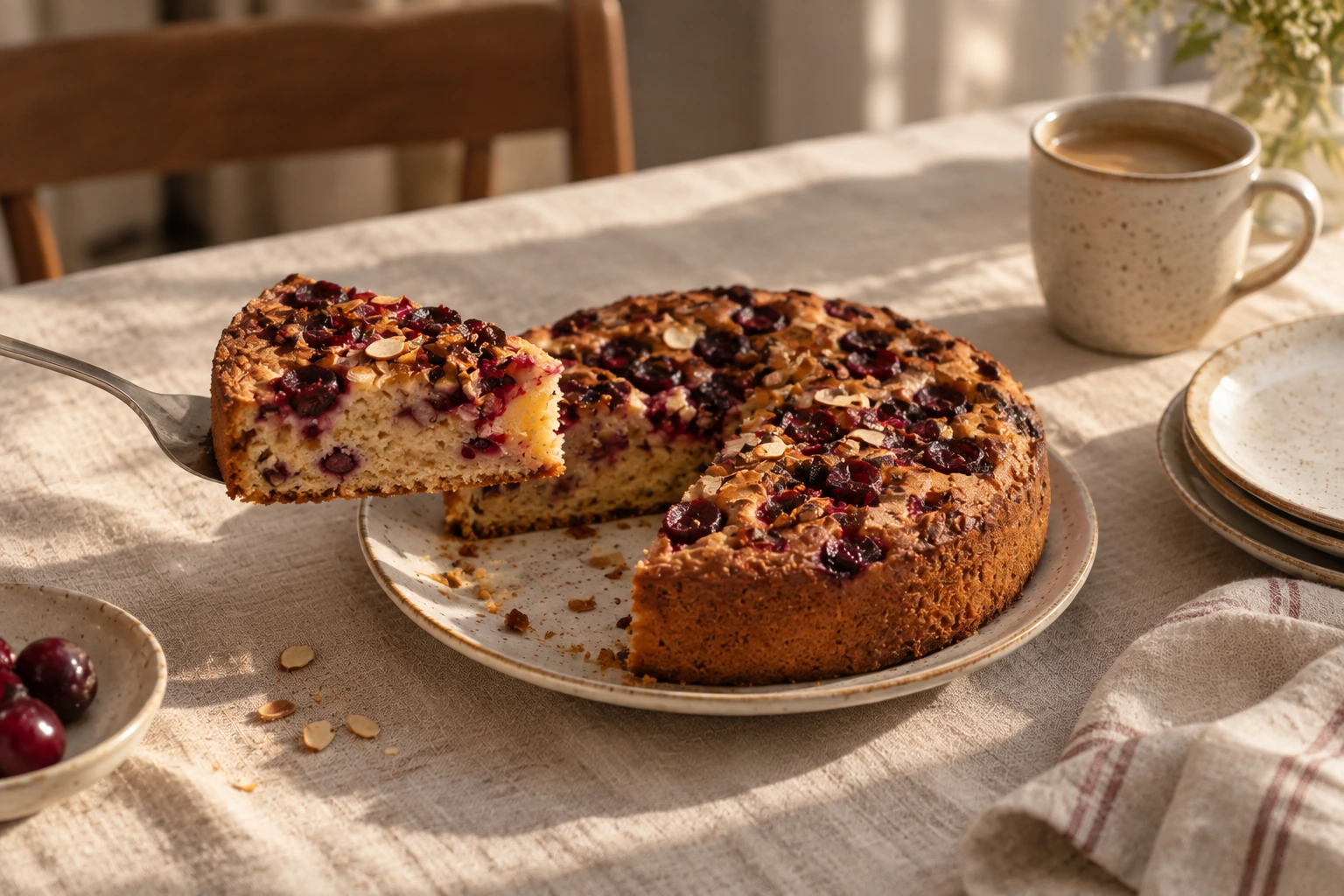
5. Yogurt cake with lemon and berries
8 slices, about 50 minutes
A soft everyday cake for home baking: yogurt keeps the crumb moist, lemon brings a fresh aroma, and the berries leave little juicy tart pockets inside.
Ingredients:
- 2 eggs;
- 100 g sugar;
- 150 g plain yogurt;
- 70 ml neutral vegetable oil;
- 180 g wheat flour;
- 8 g baking powder;
- 150 g raspberries, blueberries, currants, or other berries;
- zest of 1 lemon;
- 1 tbsp lemon juice;
- a pinch of salt.
Whisk the eggs with the sugar, then add the yogurt, oil, lemon juice, and zest. In a separate bowl, combine the flour, baking powder, and salt, then briefly fold the dry ingredients into the wet ones. Add about two-thirds of the berries, pour the batter into a tin about 20 cm in diameter, and scatter the rest on top. Bake at 175 °C for about 35–40 minutes. Test for doneness with a skewer in a spot without berries. Frozen berries can go straight into the batter without thawing first. In that case, the cake may need a few extra minutes.
6. Berry semifreddo with yogurt
6 servings, 20 minutes + freezing
A home freezer isn’t particularly kind to a simple mixture of yogurt and berries: after a few hours, it can easily turn into a solid block of ice. That’s why semifreddo works better here — whipped cream keeps the mixture light and airy.
Ingredients:
- 250 g thick Greek yogurt;
- 250 ml cream, 30–33% fat;
- 250 g strawberries, raspberries, or mixed berries;
- 70 g sugar;
- 1 tbsp lemon juice;
- vanilla — optional.
Blend two-thirds of the berries with the sugar and lemon juice. Whip the cold cream to soft peaks, gently fold in the yogurt, then add the berry purée. Chop or lightly mash the remaining berries and stir them in at the end. Line a loaf tin or small rectangular dish with cling film or parchment, transfer the mixture, and freeze for about 5–6 hours. Before serving, take the semifreddo out 10–15 minutes in advance, turn it out onto a plate, and slice. The sugar here does more than add sweetness. It lowers the freezing point of the mixture and helps the dessert stay softer, so it’s best not to remove it from the recipe completely.
7. Oat cookies with nuts and chocolate chunks
12–14 cookies, about 30 minutes
Good oat cookies should still be cookies: browned edges, a soft center, chunks of chocolate, and nuts. The oats are here for flavor and texture, not to make the bake feel more “virtuous.”
Ingredients:
- 100 g soft butter;
- 70 g sugar;
- 1 egg;
- 100 g wheat flour;
- 100 g rolled oats;
- ½ tsp baking soda;
- 60 g dark or milk chocolate;
- 50 g walnuts or hazelnuts;
- a pinch of salt;
- vanilla — optional.
Cream the butter with the sugar, add the egg, and mix. Stir in the flour, oats, baking soda, and salt, then add the roughly chopped nuts and chocolate. If the dough is very soft, chill it for 15 minutes. Shape into 12–14 balls, place them on a baking tray with space between them, and flatten slightly. Bake at 180 °C for about 10–12 minutes. The edges should already be golden, while the center may still seem soft: the cookies will continue cooking for a few more minutes on the hot tray after they come out of the oven. If you toast the nuts lightly first, their flavor will be more pronounced. It’s also best to chop the chocolate into fairly large pieces so you get uneven, soft chunks inside.
What does any of this have to do with skin and hair?
Skin and hair don’t need a special “beauty dessert.” They need nutrients, and the body gets them from the overall diet. But some of the ingredients in these recipes do play their part. Berries and fruit contain vitamin C and various plant compounds; vitamin C is needed, among other things, for collagen synthesis. Nuts provide unsaturated fats, protein, and minerals, and some of them — especially almonds and hazelnuts — are dietary sources of vitamin E. Yogurt, ricotta, and farmer’s cheese add protein, while dairy products are one of the usual sources of calcium.
Really, it’s simpler than that: berries are still berries, nuts are still nuts, and dessert is still dessert. They add their own nutrients to the diet, but they don’t give a dish some separate “beauty function.” So even a slice of regular cake without berries or yogurt doesn’t need to be justified or “improved.” What matters is how we eat regularly.
What to make today
If you have five minutes, stir together the yogurt cream with berries. If you’ve got lots of apples at home, crumble is the easiest option. Ripe pears can be baked after dinner, and the chocolate cream is convenient to make in the morning and leave in the fridge.
For guests, the pears with ricotta, crumble, or berry semifreddo all work well: they can be prepared almost entirely in advance. The cake and cookies keep longer and are perfect as homemade baking to go with coffee or tea.
And sometimes what you really want isn’t homemade crumble, but your favorite pastry, ice cream, or croissant. They don’t need a “better” or “healthier” version either. Dessert is just one small part of your diet, not a test of how perfectly you eat. If you keep sweets in reasonable portions, there’s room in your diet for almost any treat.
And when the question “what should I make?” goes beyond dessert, the cluster also includes separate roundups of breakfasts with protein and fiber, lunch and dinner ideas, and hearty salads for every day. Along with fish, legumes, and desserts, that’s already almost a ready-made pool of ideas you can use to build a menu around the season, the time you have, and your own appetite.