





Salmon often ends up on lists of foods “for beautiful skin,” and omega-3s are frequently mentioned as something you supposedly need to add to your diet specifically for thicker hair. There are reasons for this interest: fish provides high-quality protein, oily varieties contain the long-chain omega-3s EPA and DHA, and some species also supply vitamin D, iodine, selenium, and other micronutrients. All of these are important for the body’s normal functioning, including the health of the skin and hair follicles. Of course, one serving of salmon will not change your skin or make your hair thicker — what matters is your overall diet.
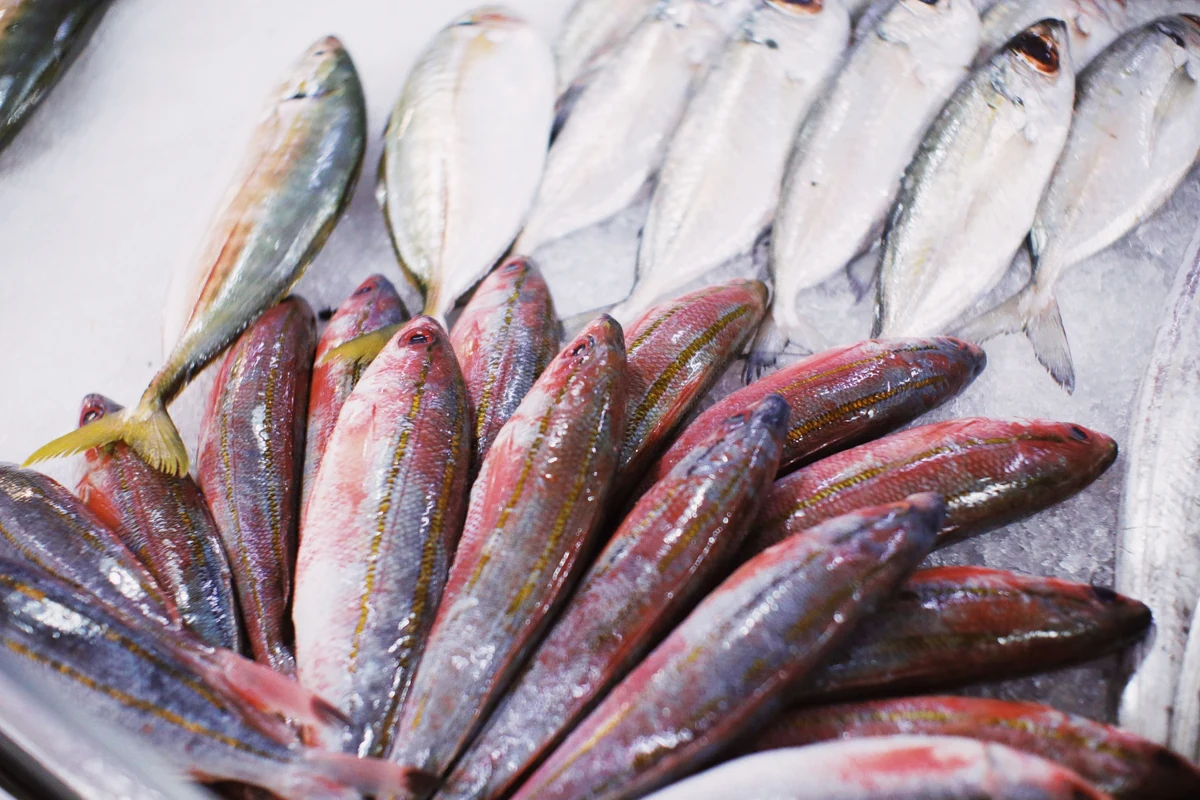
There is no need to build your menu around salmon either. Mackerel, sardines, herring, trout, hake, cod, pollock, and canned tuna all have different nutritional profiles and complement one another well. In an everyday diet, regularly rotating different types of fish matters more than trying to find the one “healthiest” option.
If you want to understand where the real impact of nutrition on appearance ends and beauty promises begin, this is covered in more detail in the article “Skin and Your Plate: What Food Can Actually Do — and What It Can’t”.
What fish adds to the diet and why it matters for skin and hair
Let’s start with protein. Hair is made mostly of keratin proteins, and the cells in the hair follicle divide actively, so a pronounced deficiency of energy, protein, or certain micronutrients can affect hair growth. Skin also needs amino acids as building blocks for constant tissue renewal. What matters here is having enough: if your protein intake is already adequate, extra servings alone should not make hair thicker or noticeably improve the condition of your skin.
Another key feature of fish is EPA and DHA. Oily fish usually contains the highest amounts of these long-chain omega-3s: mackerel, sardines, herring, salmon, and trout. Flax, chia, and walnuts also contain omega-3s, but mainly in the form of ALA. The body can convert some ALA into EPA and DHA, but this conversion is limited, which is why fish and seafood remain the main direct dietary sources. EPA and DHA are part of cell membranes and help regulate inflammatory responses. Omega-3s are studied in dermatology, including in inflammatory skin conditions and photodamage. But most of this research focuses on supplements and specific doses, so the results should not be directly applied to a regular serving of fish.
Oily fish is also one of the few natural dietary sources of vitamin D. Marine fish may provide iodine, and fish and seafood more broadly can supply selenium. Deficiencies in these nutrients can affect the body, including the skin and hair, but their levels in fish vary significantly depending on the species.
The real value of fish is that it helps provide the diet with protein, fatty acids, and micronutrients needed by the skin, hair, and the body overall.
Which fish to choose: oily or white, fresh, frozen, or canned
You do not need to choose between oily and white fish. Oily fish usually contains much more EPA and DHA; white fish is lower in fat and omega-3s, but it is still an excellent source of protein. Both have a place in a balanced everyday diet.
| Fish | Type | Omega-3 | What to keep in mind |
|---|---|---|---|
| Mackerel | oily | high | Atlantic mackerel is a good everyday option; do not confuse it with king mackerel |
| Sardines | oily | high | canned sardines with soft edible bones also provide calcium |
| Salmon, trout | oily | high | can be good natural sources of vitamin D |
| Herring | oily | high | in salted or pickled form, it is worth paying attention to the salt content |
| Hake, pollock, cod | lean | lower | a good everyday option for soups, stews, baking, and fish patties |
| Tuna | depends on the species | depends on the species | it is worth considering the type of tuna and its mercury content |
Mackerel, sardines, herring, salmon, and trout are convenient choices when you want to get EPA and DHA from food regularly. But there is no need to expect this from every fish dish. Hake, pollock, or cod work well on other days — especially if oily fish has already appeared on the menu during the week.
Is frozen fish healthy?
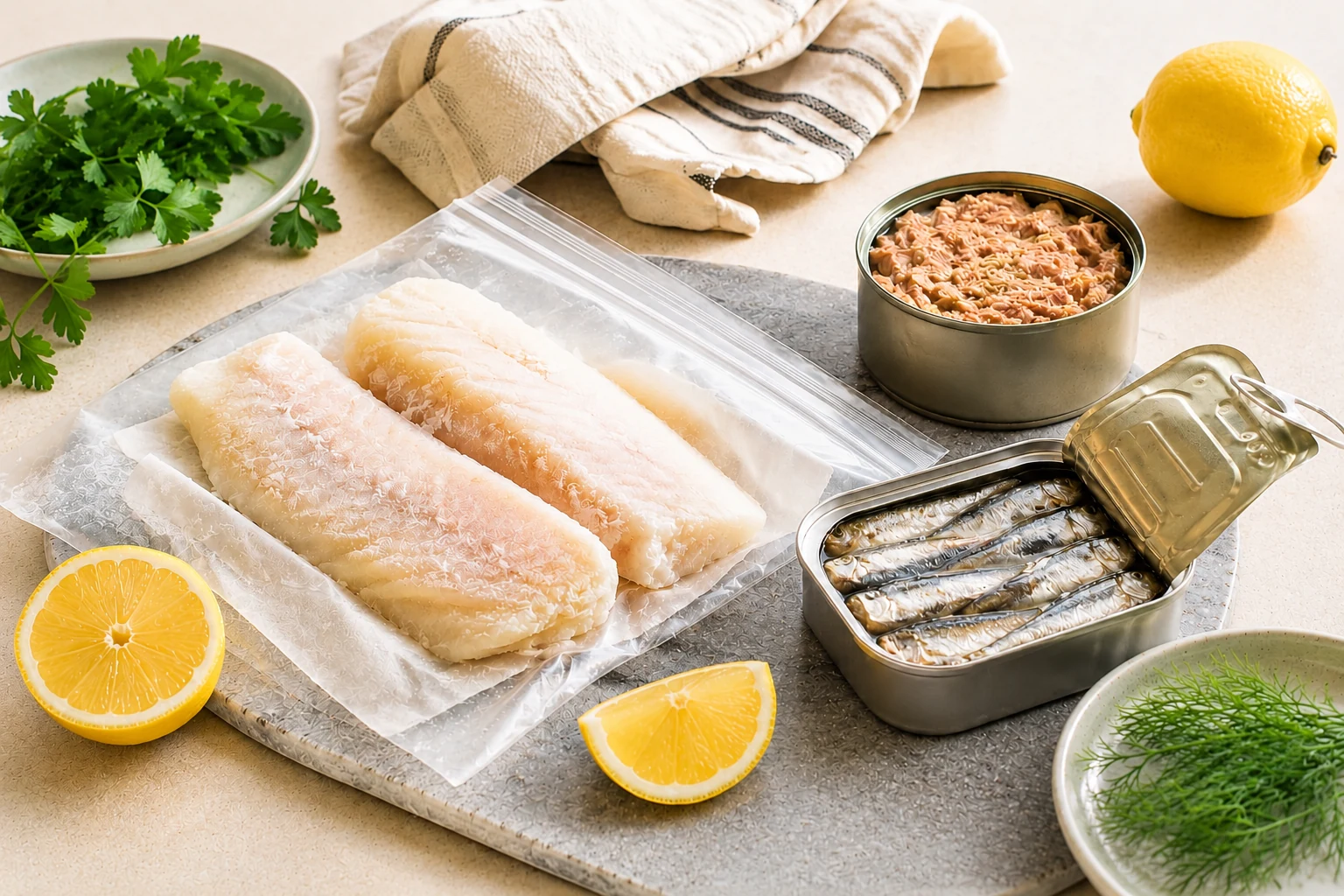
Yes. There is no reason to automatically think frozen fish is worse than fresh fish. Its quality depends on the original product, the freezing method, temperature, and storage time, but properly frozen and correctly stored fish remains a nutritious food. From a practical standpoint, a pack of hake, cod, or mackerel in the freezer is often more useful for real-life eating than the intention to one day buy the perfect fresh fillet. Especially on evenings when you only have twenty minutes to cook.
What about canned fish?
Sardines, tuna, or salmon in a can can also be a perfectly normal part of the diet. Sardines with soft edible bones provide extra calcium, and a can of tuna makes it easy to quickly put together pasta, a salad, or a sandwich without cooking fish separately. If fish is canned in oil, some of that oil ends up in the finished dish too — it is simply something to keep in mind. For salted herring, smoked fish, and some canned products, another characteristic matters more: salt content. In this case, it is enough to check the label, especially if these foods show up often.
Which fish contains less mercury, and what is worth knowing about tuna?
There are many low-mercury fish suitable for an everyday menu: according to the FDA, these include sardines, herring, salmon, trout, hake, cod, pollock, and Atlantic mackerel. Larger predatory fish and some types of tuna require more attention.
If tuna appears on your menu often, it helps to know one simple difference. Canned light tuna — most often skipjack — usually contains less mercury than albacore, or white tuna. There is also a nuance with mackerel: ordinary Atlantic mackerel is considered a low-mercury option, while king mackerel is a completely different species with a high mercury level.
For an everyday diet, it is enough to rotate different types and not make large predatory fish a постоянной основой рациона. Separate recommendations on fish choice and quantity apply during pregnancy, when planning pregnancy, while breastfeeding, and for children’s diets.
How often to eat fish and what to pair it with
A practical guideline is about two servings of fish per week, one of them oily. There is no need to strictly measure out 140 g every time: the point of the recommendation is not the exact weight, but making fish a regular part of your menu. For example, one day it might be sardines, trout, or mackerel, and another day hake, cod, or tuna pasta. Fish can also be eaten more often, especially if you rotate different types and do not make large predatory fish the constant basis of your diet. Fish itself does not provide everything you ideally want to get regularly from food. It contains virtually no fiber, so vegetables, legumes, grains, and other plant foods complement fish dishes especially well. They add fiber, vitamin C, carotenoids, polyphenols, and a wide range of other plant compounds.
For skin and hair, the overall adequacy of the diet matters too. Vitamin C, which comes mainly from vegetables, fruits, and berries, is needed for normal collagen synthesis, and adequate energy intake helps the body use amino acids primarily for protein synthesis rather than for covering energy needs. That is why a plate with fish, vegetables, and potatoes, grains, legumes, or whole-grain bread usually makes more sense than a large fillet with a few lettuce leaves. This is exactly how the dishes in the article “What to Cook Today for Beauty: Breakfast, Lunch, and Dinner Ideas” are structured: not around one “right” product, but around combining different food groups. Another seven ready-made lunch and dinner ideas with different protein sources are collected in the article “What to Cook for Lunch and Dinner: 7 Balanced Meals for Skin and Hair”, and legumes have their own dedicated article: “What to Cook with Legumes: 7 Dishes with Chickpeas, Lentils, and Beans”.
You can choose the cooking method mainly based on taste and convenience: fish can be baked, stewed, grilled, pan-cooked, or added to soups and ragouts. Fish in breadcrumbs or batter does not stop being a source of protein and other nutrients, but the cooking method changes the composition of the whole dish. Frying adds fat from oil, and the amount depends on the coating, temperature, and method of cooking. For an everyday menu, simpler cooking methods are often the most practical.
Can fish be replaced with omega-3 capsules?
Not completely. An omega-3 supplement provides EPA and DHA, while fish provides them together with protein, vitamins, and minerals. So a capsule and a serving of fish are not nutritional equivalents. There are also prescription omega-3 products in high doses used for medical indications. That is treatment, not a way to replace fish in the diet.
7 simple fish dishes
The calories, protein, and fiber listed below are approximate. The exact numbers vary slightly depending on the type of fish, the brand of canned goods, the grain, or the bread. They are meant as a guide for the whole dish, not as a recommended norm. Grain and pasta weights are given before cooking, legumes in cooked form, and canned fish after draining.
1. Mackerel with bulgur and roasted vegetables
Mackerel has enough flavor and fat of its own, so it does not need a complicated marinade.
For 1 serving:
- mackerel fillet — 100 g;
- bulgur — 50 g;
- zucchini — 150 g;
- sweet pepper — 100 g;
- olive oil — 5 g;
- lemon juice, parsley, black pepper — to taste.
Approx.: 480 kcal · protein 28 g · fiber 9–10 g
Cut the zucchini and pepper into large pieces, toss with olive oil, and place in the oven at 200 °C for about 15 minutes. Add the mackerel skin-side down, season with pepper, and bake for another 12–15 minutes depending on the thickness of the fillet. Meanwhile, cook the bulgur. Toss it with the roasted vegetables, herbs, and lemon juice, and serve with the fish.
2. Hake in tomato sauce with white beans
Hake has a neutral flavor, which is why it works especially well in sauces. Here, tomatoes and garlic provide the flavor, while beans make the dish more filling and add fiber.
For 1 serving:
- hake fillet — 120 g;
- cooked white beans — 100 g;
- tomatoes in their own juice — 200 g;
- spinach — 80 g;
- whole-grain bread — 50 g;
- olive oil — 5 g;
- garlic, paprika, black pepper, herbs — to taste.
Approx.: 480 kcal · protein 43 g · fiber 14–15 g
Warm the oil with garlic in a wide pan, add the tomatoes and paprika, and cook for a few minutes. Place the hake into the sauce, cover, and simmer for about 7–10 minutes depending on the thickness of the piece. At the end, add the beans and spinach and heat everything through. Serve with bread.
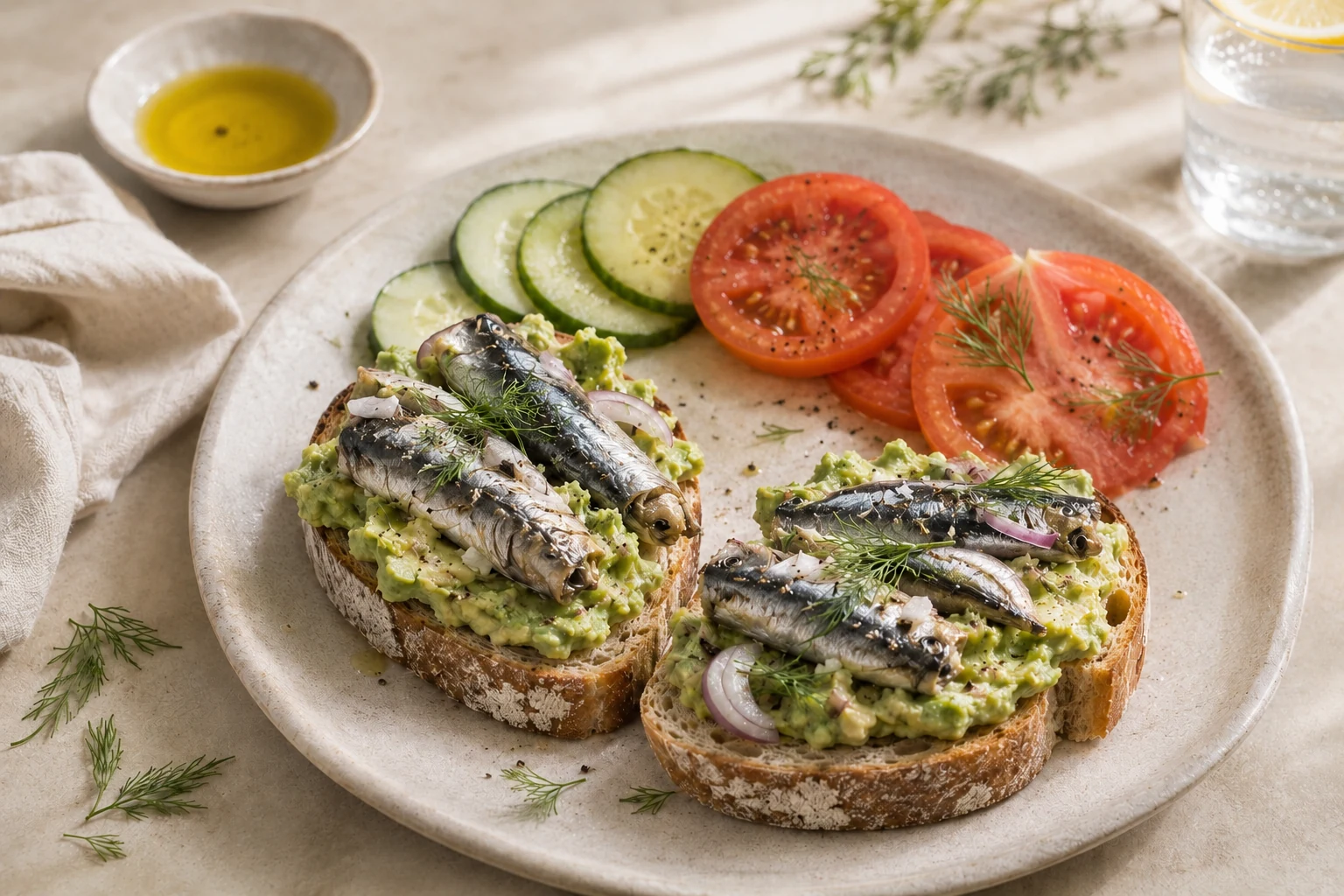
3. Toast with sardines, avocado, and tomatoes
Not every fish dish needs an oven or a frying pan. One can of sardines is enough to put together a proper lunch in just a few minutes.
For 1 serving:
- sardines — 80 g;
- whole-grain or rye bread — 70 g;
- avocado — 50 g;
- tomato — 150 g;
- cucumber — 100 g;
- lemon juice, pepper, herbs — to taste.
Approx.: 460 kcal · protein 32 g · fiber 10–11 g
Toast the bread. Mash the avocado with a fork together with lemon juice and pepper, spread it on the toast, and top with the sardines. Cut the tomato and cucumber into large pieces and serve on the side with herbs.
4. Whole-grain pasta with tuna and tomatoes
A can of tuna in the cupboard lets you make a hot meal in about the same time it takes to cook pasta. No separate “healthy menu” or complicated prep required.
For 1 serving:
- canned tuna in its own juice — 80 g;
- whole-grain pasta — 70 g;
- tomatoes — 180 g;
- spinach — 80 g;
- olive oil — 5 g;
- garlic, lemon juice, herbs, pepper — to taste.
Approx.: 430 kcal · protein 34 g · fiber 9–10 g
Start cooking the pasta. Warm the oil with garlic in a pan, add the tomatoes, and cook for 4–5 minutes. Add the spinach, and when it has wilted, add the tuna. Add the cooked pasta and a few spoonfuls of the pasta water, stir, and season with lemon juice, pepper, and herbs. The tuna only needs to be heated through.
5. Trout with buckwheat and cucumber salad
Trout can easily take the place on the menu that is so often automatically given to salmon. Here, it needs neither a complicated sauce nor a long list of ingredients.
For 1 serving:
- trout fillet — 100 g;
- buckwheat — 55 g;
- cucumber — 150 g;
- plain yogurt — 70 g;
- olive oil — 5 g;
- dill, lemon juice, black pepper — to taste.
Approx.: 480–490 kcal · protein 31–33 g · fiber 6 g
Cook the buckwheat. Season the trout with pepper, drizzle with lemon juice, and bake at 190–200 °C for about 12–15 minutes, or cook in a pan until done. Mix the cucumber with yogurt, dill, and lemon juice. Add the olive oil to the buckwheat or the salad.
6. Fish soup with cod, potatoes, and green peas
If you are tired of baked fillet, the same white fish can be turned into a light but still satisfying soup.
For 1 serving:
- cod or other white fish — 140 g;
- potatoes — 180 g;
- green peas — 80 g;
- carrot — 70 g;
- celery — 70 g;
- onion — 50 g;
- whole-grain bread — 40 g;
- olive oil — 5 g;
- bay leaf, dill, pepper — to taste.
Approx.: 520 kcal · protein 40 g · fiber 15 g
Briefly warm the onion, carrot, and celery in a pot with oil, then add the potatoes, water or unsalted stock, and the bay leaf. When the potatoes are almost cooked, add the fish in large pieces and the green peas. Simmer over low heat for another 5–7 minutes, without letting the soup boil actively. At the end, add dill and pepper. Serve with bread.
7. Salmon with lentils, green beans, and tomatoes
In this plate, salmon is one component rather than the product the whole dinner is built around, so a fairly small fillet is enough alongside the lentils and vegetables.
For 1 serving:
- salmon — 90 g;
- cooked lentils — 120 g;
- green beans — 150 g;
- tomatoes — 150 g;
- olive oil — 5 g;
- lemon juice, parsley, black pepper — to taste.
Approx.: 445 kcal · protein 33 g · fiber 15 g
Bake the salmon or cook it in a pan until done. Boil the green beans for a few minutes or quickly braise them, then add the cooked lentils and chopped tomatoes and heat everything together. Remove from the heat, add the olive oil, lemon juice, herbs, and pepper. Place the salmon on top, or break it into large pieces and gently fold it into the dish.
When sardines or mackerel, hake or cod, and sometimes trout or salmon appear on the table over the course of the week, the question “which fish is the healthiest?” gradually stops making sense. Different types have different strengths, which is exactly why it makes sense to rotate them — just as fish itself is worth rotating with other protein sources.