





Lunch and dinner are some of the easiest meals to build into a varied menu without complicated rules: add fish, poultry, legumes, or tofu, vegetables, grains or potatoes, a little oil, herbs, and spices. Over the course of the week, it’s dishes like these that make up a diet that gives the body energy and nutrients. For skin and hair, this matters far more than individual “beauty foods.” Amino acids are needed to synthesize proteins, vitamin C is involved in collagen formation, fatty acids are part of cell membranes, and iron and zinc are essential for many processes in the tissues. The “more is better” principle doesn’t work here. If you’re already getting enough of a nutrient, an extra serving won’t make your hair thicker or your skin firmer.
That’s why we’ve put together seven dishes below that you can rotate, adapt to the season, and cook without stocking a separate shelf of superfoods. If you’re looking for ideas not just for lunch and dinner but for the whole day, start with our in-depth guide “What to Cook Today for Beauty: Breakfast, Lunch, and Dinner Ideas”.
How to Build a Lunch or Dinner — and What Beauty Has to Do With It
For most of the dishes below, the logic is simple: a protein source + vegetables + grains, potatoes, or bread + a source of fats. This kind of structure makes it easier to quickly assess a meal as a whole and notice when dinner consists mostly of just one side dish or one piece of meat. Fish today, lentils tomorrow, eggs the day after — that’s how your diet naturally includes different amino acids, fatty acids, vitamins, and minerals without having to count each one separately.
Vegetables offer far more than fiber. Bell peppers, broccoli, tomatoes, leafy greens, carrots, and cabbage contain a wide range of plant compounds, vitamins, and minerals. For example, vitamin C is needed for collagen synthesis and also improves the absorption of non-heme iron from plant foods. That’s why lentils with peppers or tomatoes are such a smart pairing. Fats also absolutely belong in an evening meal. Olive oil, fish, avocado, nuts, seeds, and tahini add unsaturated fatty acids, help the body absorb fat-soluble compounds, and simply make food taste better.
There’s another nuance when it comes to hair. Trying to eat “for beauty” is sometimes accompanied by sharp cuts in calories, fats, carbohydrates, or even entire food groups. A pronounced energy and nutrient deficiency can disrupt the normal hair growth cycle.
That’s why our approach is built on eating enough and eating a varied diet — without a separate beauty diet. We wrote more about the line between what food can realistically do and common beauty myths in the article “Skin and Plate: What Food Can Really Do — and What We Should Stop Expecting From It”.
In the estimates below, calories, protein, and fiber are approximate. They’re there to help you gauge portion size, not to give you a number you have to hit. The weight of grains is given before cooking; legumes are listed in cooked form.
7 Dishes for Lunch and Dinner
1. Salmon with Potatoes and Broccoli
For 1 serving:
- salmon — 100 g;
- potatoes — 220 g;
- broccoli — 160 g;
- olive oil — 5 g;
- lemon, herbs, pepper, garlic — to taste.
Approx.: 480 kcal · protein 29 g · fiber 9 g
Cut the potatoes into small pieces and roast or boil them. Steam the broccoli, boil it for a few minutes, or add it to the baking dish with the potatoes closer to the end of cooking. The salmon can be baked alongside them or quickly cooked in a skillet. Lemon, herbs, and a little olive oil work perfectly here in place of a complicated sauce.
Salmon provides amino acids and the long-chain omega-3 fatty acids EPA and DHA. Broccoli adds vitamin C, folate, and plant compounds, while potatoes provide energy, potassium, and a bit more vitamin C. Mackerel, sardines, herring, or trout also work well instead of salmon — an easy way to vary both flavor and budget. We’ll devote a separate article to fish later on, so for now we’re keeping it here as one option for a main dish.
2. Turkey with Bulgur, Zucchini, and Bell Pepper
For 1 serving:
- turkey fillet — 80 g;
- bulgur — 60 g;
- zucchini — 150 g;
- bell pepper — 120 g;
- olive oil — 10 g;
- paprika, lemon juice, herbs — to taste.
Approx.: 460 kcal · protein 34 g · fiber 11–12 g
Start cooking the bulgur. Heat part of the oil in a skillet and cook the turkey for 5–6 minutes, stirring occasionally. Add the zucchini and bell pepper and cook for another 5–7 minutes, until the vegetables soften but still keep their texture. Add the cooked bulgur to the turkey and vegetables, pour in the remaining oil and lemon juice, then add herbs and spices. Stir and warm everything together for about another minute.
This dish doesn’t require anything unusual: just grains, two kinds of vegetables, oil, and a moderate portion of poultry. Bell pepper also happens to be a good source of vitamin C, which is needed, among other things, for normal collagen synthesis. Turkey can be replaced with chicken fillet, and bulgur with buckwheat, couscous, or rice.
3. Beef with Buckwheat, Spinach, and Tomatoes
For 1 serving:
- lean beef — 80 g;
- buckwheat — 60 g;
- spinach — 80 g;
- tomatoes — 180 g;
- olive oil — 5 g;
- garlic, pepper, herbs — to taste.
Approx.: 460 kcal · protein 33 g · fiber about 10 g
Cook the buckwheat. In a well-heated skillet with oil, quickly cook the beef for 4–5 minutes. Add the tomatoes and cook for another 3–4 minutes. At the end, add the spinach and stir for about a minute, until it wilts down. Serve the beef and vegetables with the buckwheat, adding herbs and pepper to finish.
Beef is a source of heme iron and zinc. These nutrients are often mentioned in the context of hair, but what matters most is simply getting enough of them. If there’s no deficiency, eating more red meat “for hair growth” doesn’t make sense. A small portion of beef from time to time fits perfectly well into a varied menu. Buckwheat with spinach and tomatoes also pairs well with chicken, eggs, mushrooms, or legumes.
4. Lentils with Tomatoes, Bell Pepper, Yogurt, and Bread
For 1 serving:
- cooked lentils — 150 g;
- tomatoes — 180 g;
- bell pepper — 100 g;
- thick plain yogurt — 60 g;
- whole grain bread — 60 g;
- olive oil — 5 g;
- cumin, paprika, garlic, herbs — to taste.
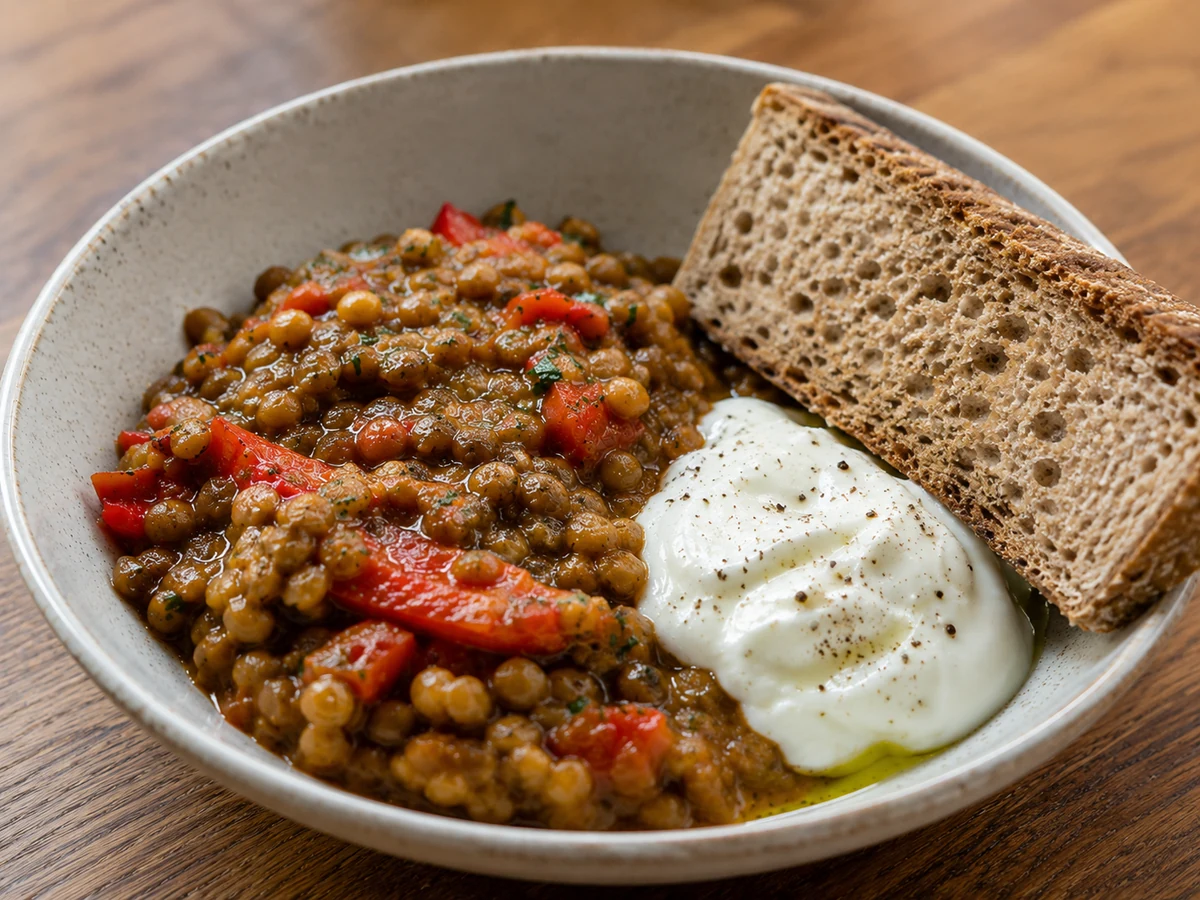
Approx.: 470 kcal · protein 30 g · fiber about 20 g
Heat the olive oil in a skillet, add the bell pepper, and cook over medium heat for 3–4 minutes. Add the tomatoes, garlic, and spices, then cook for another 4–5 minutes, until the pepper softens but still keeps its texture. Then add the cooked lentils, stir, and heat everything through well. Add herbs at the end. Serve the lentils with thick yogurt and whole grain bread.
Lentils provide plant protein, iron, and plenty of fiber, while peppers and tomatoes add vitamin C. Together, these foods create a more effective nutrient combination than any of them would on their own. If legumes don’t appear in your diet very often, it’s best to increase fiber gradually rather than all at once. We wrote separately about the role of fiber, varied plant foods, and fermented foods in the article “The Microbiome Begins in the Kitchen”.
5. Tofu with Rice, Broccoli, Carrots, and Sesame
For 1 serving:
- firm tofu — 120 g;
- brown rice — 55 g;
- broccoli — 150 g;
- carrots — 100 g;
- sesame seeds — 10 g;
- olive oil or another vegetable oil — 5 g;
- soy sauce, ginger, garlic, lemon or lime juice — to taste.
Approx.: 570 kcal · protein 31 g · fiber 12–13 g
While the rice is cooking, heat the oil in a separate skillet, add the tofu, and brown it for 4–5 minutes, turning occasionally. Transfer it to a plate. Add the carrots to the same skillet and cook for 2–3 minutes. Then add the broccoli and 2–3 tablespoons of water, cover with a lid, and cook for another 3–4 minutes. The vegetables should soften but still keep their texture. Return the tofu to the skillet, add soy sauce, ginger, garlic, and lemon or lime juice. Stir and heat everything together for about another minute. Serve with rice and sprinkle with sesame seeds.
Tofu, sesame, broccoli, and rice diversify the menu and bring in a different nutrient profile compared with fish- or poultry-based dishes. Carrots and broccoli contain carotenoids and other plant compounds. Some carotenoids are better absorbed together with fats, so the oil or sesame here is not just welcome — it makes sense. The rice portion can easily be adjusted depending on your appetite and activity level during the day.
6. Couscous with Shrimp, Zucchini, and Bell Pepper
For 1 serving:
- couscous — 65 g;
- peeled shrimp — 90 g;
- zucchini — 150 g;
- bell pepper — 100 g;
- olive oil — 10 g;
- lemon juice, garlic, parsley — to taste.
.webp)
Approx.: 480 kcal · protein 33 g · fiber about 7 g
Pour boiling water over the couscous and leave it covered. Heat the olive oil in a skillet, add the bell pepper and zucchini, and cook over medium heat for 5–7 minutes, stirring occasionally. The vegetables should soften but not fall apart. Add the peeled shrimp and cook for another 2–3 minutes if they’re raw, or about a minute if they’re already cooked. At the end, add garlic, lemon juice, and parsley. Serve with the couscous.
The main advantage of this dish is how realistic it is for everyday life. You can keep shrimp and vegetables in the freezer, couscous in the cupboard, and have a полноценна hot meal ready in about fifteen minutes. Regularity matters for your diet too: simple dishes you can actually make after a workday often turn out to be more useful than complicated recipes you only get around to once a month. Couscous can be replaced with bulgur, rice, or pasta, and shrimp with fish, tofu, or leftover cooked poultry.
7. Eggs with Potatoes, Spinach, and Yogurt Sauce
For 1 serving:
- eggs — 2;
- potatoes — 200 g;
- spinach — 100 g;
- tomatoes — 150 g;
- thick Greek yogurt — 60 g;
- olive oil — 10 g;
- herbs, mustard, lemon juice — to taste.
Approx.: 480 kcal · protein about 27 g · fiber 8–9 g
Boil the potatoes or cook them in the microwave until tender. Heat the olive oil in a skillet, brown the potatoes for a few minutes, and transfer them to a plate. In the same skillet, cook the tomatoes and spinach for 2–3 minutes. Return the potatoes, stir, and heat everything together. Cook the eggs separately or in a free section of a large skillet to your preferred doneness. For the sauce, mix the Greek yogurt with mustard, lemon juice, and herbs. Serve the eggs with the potatoes and vegetables, adding the yogurt sauce.
Eggs work perfectly well for both lunch and dinner. Together with potatoes, vegetables, yogurt, and oil, they make a satisfying dish built from several food groups. If you’ve already had enough protein-rich food earlier in the day, there’s no need to add extra cheese, tuna, or a third egg here.
Dinner in 20 Minutes: When You’re Out of Energy for a Recipe
In the evening, combinations you can put together without much prep are especially valuable. It’s easier to remember a few flexible formulas and build them from what you already have at home.
Pasta + canned fish + vegetables. While the pasta cooks, heat tomatoes or frozen spinach and add tuna or sardines. A little olive oil, lemon, and pepper — and dinner is done.
Couscous + frozen vegetables + a quick protein. Shrimp, tofu, eggs, or leftover chicken all work well. Couscous only needs boiling water, and the vegetables need just a few minutes in a skillet.
Cooked legumes + tomatoes + bread + something creamy. Canned beans or chickpeas, tomatoes in their own juice, spices, feta, or a spoonful of yogurt turn into a warm dinner in minutes.
Eggs + vegetables + bread or potatoes. An omelet with frozen spinach, shakshuka, eggs with tomatoes, or a quick frittata work especially well when there’s no prepped meat or fish at home.
What to Prep Ahead So Lunch and Dinner Come Together Faster
On a home kitchen schedule, the biggest time drain is often having to cook every component from scratch. A few basic prep steps can make future lunches and dinners much easier. You can cook a little extra buckwheat, rice, or bulgur, roast a tray of vegetables, make enough lentils for two meals, wash your herbs, mix a simple yogurt-mustard-lemon sauce, and freeze bread in portions. Then today’s potatoes become part of tomorrow’s dinner with eggs, the bulgur becomes the base of lunch with turkey, and the broccoli moves into rice with tofu.
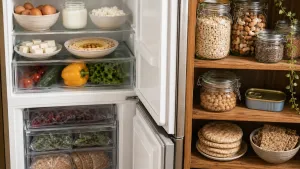
It also helps to keep broccoli, spinach, green peas, green beans, peeled shrimp, fish, and sliced bread in the freezer. In the cupboard: grains, pasta, canned tomatoes, tuna, sardines, beans, chickpeas, olive oil, tahini, and spices.
The practical meaning of eating for skin and hair is really regularity and variety. Over the course of the day and week, the body gets energy, amino acids, fatty acids, vitamins, minerals, and plant compounds from different foods. And good homemade food should still remain food — tasty, satisfying, and simple enough that you’ll actually want to cook it again.