





What should you cook today when you want tasty, familiar food without throwing random ingredients together? The easiest way is to build a meal from what you already have at home: a source of protein, vegetables or fruit, grains or bread if you like, and a few ingredients that add flavor.
In this подборка, we focus on dishes that make it easy to combine different food groups and nutrients that matter for the normal condition of the skin, hair, and the body overall. Protein is needed to build tissues, fatty acids are part of cell membranes, and iron, zinc, and other micronutrients are involved in many processes that support healthy skin and hair. That is why what matters is not a single “beauty dish,” but the overall variety of your diet throughout the day and week.
All of this can be done with everyday foods: eggs, fish, legumes, vegetables, berries, fermented dairy products, grains, nuts, seeds, and plant oils.
If you need to decide right now
Have eggs? Make an omelet with herbs and vegetables, shakshuka, or toast with an egg and soft cheese.
Have chicken or turkey? Quickly pan-fry the fillet, add bulgur, buckwheat, or rice, and a big salad.
Have fish? Bake it with potatoes and vegetables, or make pasta with tuna and tomatoes.
Have chickpeas, lentils, or beans? Make a warm salad, hummus, a stew, or add the legumes to vegetables and grains.
Have tvorog? Make a savory breakfast with herbs and tomatoes, syrnyky, or a baked casserole with berries.
Have a little bit of everything? Put together a plate with grains, vegetables, eggs, fish, or legumes, and add a simple sauce.
Have almost nothing? Eggs, pasta, and a can of tuna or beans often save dinner better than a complicated recipe.
These options can be varied almost endlessly. If you have sardines instead of tuna, buckwheat instead of bulgur, and you have run out of fresh vegetables, there is no need to look for another recipe. It is much more convenient to understand the principle itself: how to build a complete dish from just a few ingredients. Then the question “what should I cook?” gradually becomes much easier.
How to build a tasty dish from what you already have at home
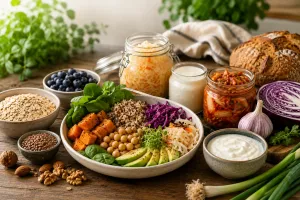
When you do not know what to cook, start not with the name of a dish but with one main ingredient. First, see what source of protein you have at home: eggs, fish, poultry, tvorog, yogurt, chickpeas, lentils, beans, or tofu. Then add vegetables or fruit. Fresh, roasted, and frozen vegetables are equally convenient for everyday cooking. For breakfast, that might be berries, an apple, a pear, a peach, or another seasonal fruit. If you want a more filling dish, potatoes, buckwheat, rice, bulgur, pasta, couscous, oatmeal, or bread will help. The last step is flavor. Olive oil or another plant oil, yogurt, tahini, nuts, seeds, cheese, herbs, lemon juice, mustard, or pesto can completely transform a simple combination of ingredients.
For example:
- buckwheat + egg + mushrooms + cucumber;
- chickpeas + roasted pepper + feta + herbs;
- potatoes + mackerel + salad;
- rice + egg + frozen vegetables;
- pasta + tuna + tomatoes;
- tvorog + berries + nuts.
These combinations are easy to adapt depending on the season, what is in the fridge, and your appetite. Over time, you naturally build your own set of basic combinations: the ones your family likes, that cook quickly, and that do not require a separate shopping list for every dinner.
If you have 10–15 minutes to cook
For a very quick breakfast or dinner, it helps to keep foods on hand that do not need much prep: eggs, canned fish, cooked legumes, couscous, frozen vegetables, fermented dairy products, lavash, and a few simple sauces. In 10–15 minutes, you can make:
- lavash with cheese, egg, and herbs;
- shrimp with frozen vegetables;
- toast with hummus, tomatoes, and feta;
- couscous with tuna, cucumber, and herbs;
- warm lentils with spinach and egg;
- salad with sardines, tomatoes, and bread;
- yogurt with berries, oatmeal, and nuts.
Good homemade food often needs only three or four ingredients that work well together. The same logic works throughout the day, but in the morning simple solutions are especially valuable: there is usually less time, and eating the same breakfast for weeks gets boring fast.
What to make for breakfast
Breakfast is easy to vary if you rotate a few basic formats instead of inventing a new recipe every morning. Today it can be eggs, tomorrow yogurt with berries, the day after savory oatmeal or toast with fish. Even a small rotation of ingredients already makes the morning menu more interesting.
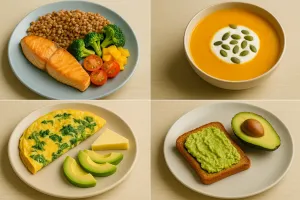
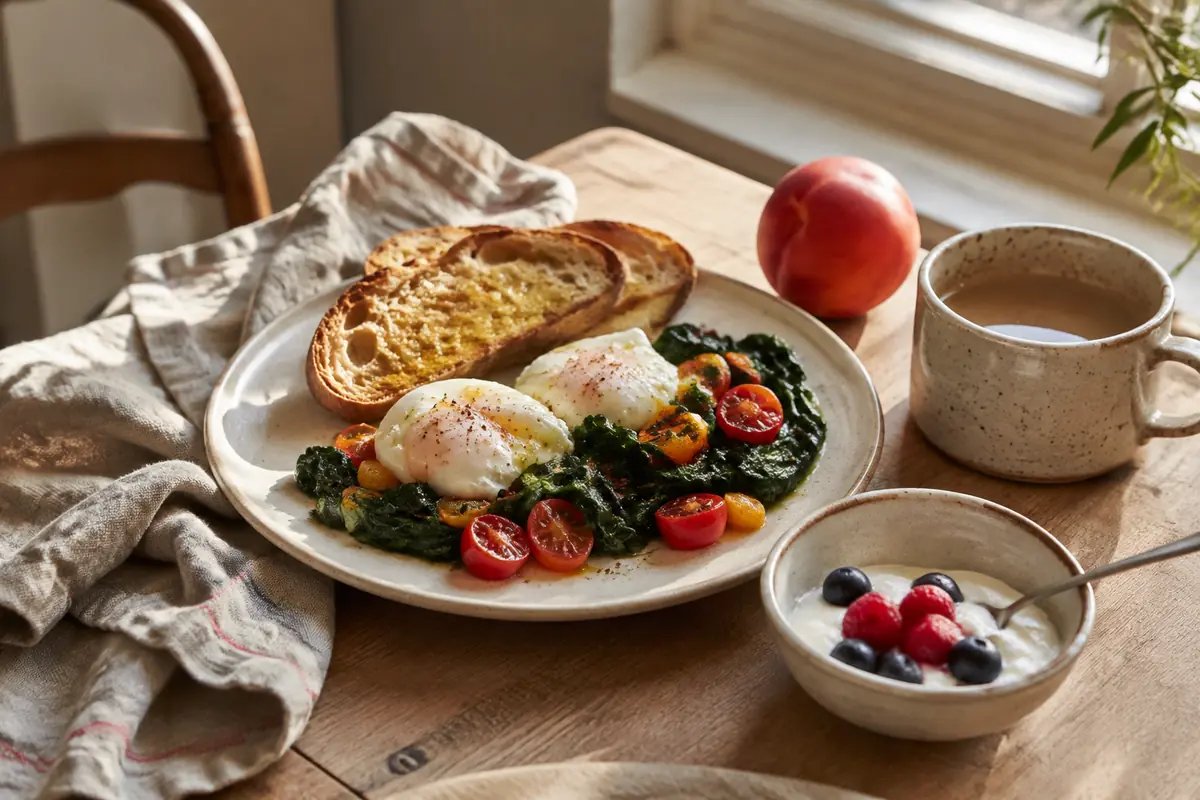
Eggs, vegetables, and bread. Omelets, scrambled eggs, poached eggs, or shakshuka go well with tomatoes, mushrooms, spinach, herbs, cheese, and toast.
Tvorog with berries or fruit. Add nuts, seeds, plain yogurt, or cinnamon. For a savory version, cucumber, tomatoes, herbs, pepper, and a little oil work well.
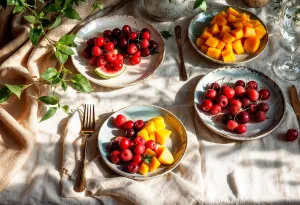
Yogurt, oatmeal, and berries. One of the easiest options when you do not feel like cooking at all. In summer, add fresh berries or a peach; in winter, an apple, pear, or frozen berries.
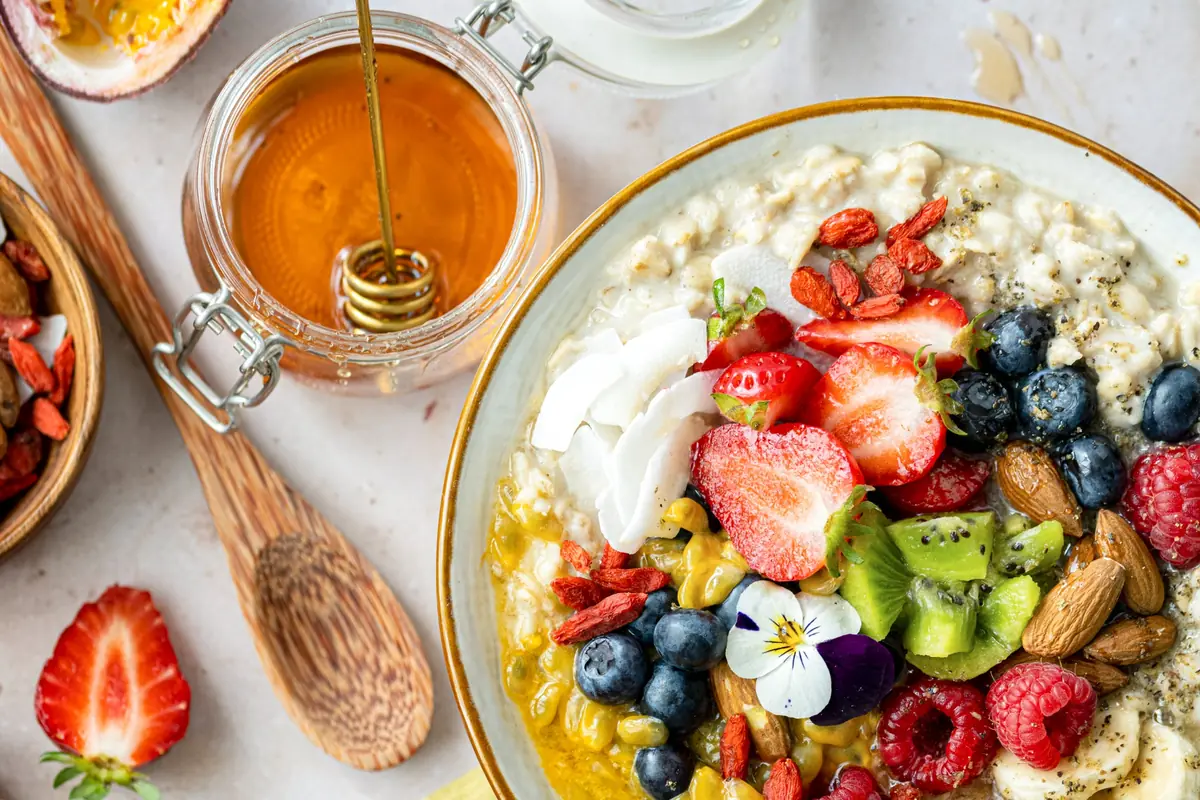
Savory oatmeal. Oats pair well with egg, mushrooms, spinach, tomatoes, and cheese. Especially if sweet porridge has started to feel repetitive.
Toast with fish. Lightly salted salmon is just one option. You can also use sardines, tuna, trout, or herring, and add egg, cucumber, herbs, or soft cheese.
Shakshuka. Tomatoes, peppers, onion, spices, and eggs cook in one pan and work well for breakfast for two or for the whole family.
Yesterday’s buckwheat or roasted vegetables. Warm them up, add an egg, cheese, or a piece of fish, and you have a hot breakfast in just a few minutes.
When a few basic options no longer feel like enough, a wider rotation helps: sweet and savory breakfasts, dishes with eggs, fish, tvorog, grains, and seasonal produce. We gathered them in a separate guide: What to Make for Breakfast: Simple Dishes for Skin, Hair, and Energy.
What to make for lunch and dinner
By lunchtime, the choice is usually wider: you can use the oven, make a side dish, or cook something for two days at once. In the evening, by contrast, you often want to do as little as possible. That is why, for the second half of the day, it helps to think not only about a specific recipe but also about the format: one baking dish, one pan, pasta, soup, or a warm salad. For lunch and dinner, it is useful to plan around how much time and energy you have for cooking today. Some dishes reheat well the next day, so one good dinner can also solve tomorrow’s lunch.
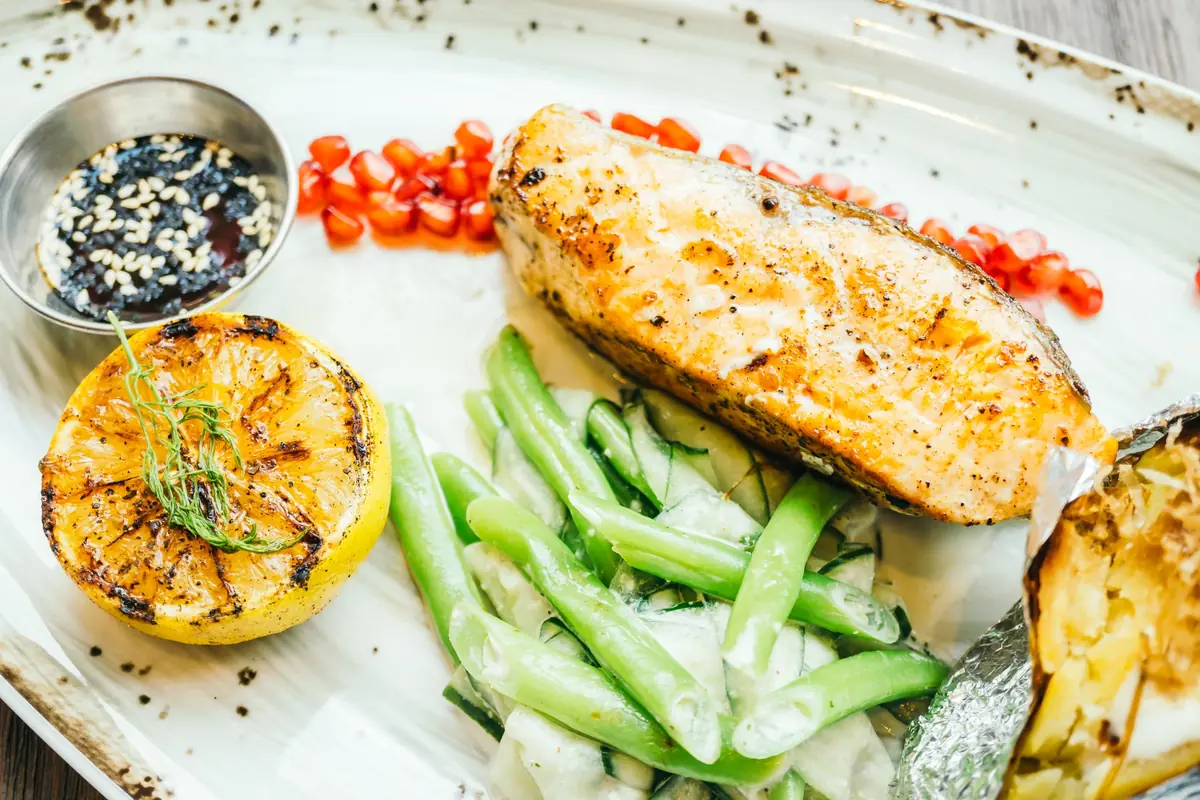
Fish, potatoes, and vegetables in one baking dish. Mackerel, trout, hake, or salmon all work well here. Add broccoli, green beans, peppers, cauliflower, or zucchini, and most of dinner will cook with very little effort from you. Oily sea fish is a source of long-chain omega-3 fatty acids. And salmon is far from the only option: mackerel, sardines, and herring help diversify your fish menu and are usually more affordable.
Fish is much more versatile than simply baking a fillet: it works well in pasta, warm salads, toast, bowls, and vegetable dishes. More combinations like these will be in the article What to Make with Salmon and Other Fish: Simple Omega-3 Dishes.
Chicken or turkey with grains and salad. Change the grain, vegetables, and dressing, and one basic formula gives you completely different meals. Bulgur with tomatoes and yogurt sauce, rice with cucumber and sesame, or buckwheat with roasted beetroot and mustard dressing barely repeat one another in flavor.
Pasta with tuna and tomatoes. While the pasta cooks, warm tomatoes, garlic, and tuna in a pan. If you like, add olives, capers, herbs, or a little cheese. Dinner is ready in about the same time it takes to cook the pasta.
Warm lentil salad. Add roasted vegetables, arugula or other greens, feta or egg, oil, and lemon juice to the lentils. You can use the same principle for chickpeas and beans.
Chickpeas, lentils, and beans are especially useful because they work equally well in salads, soups, spreads, stews, and hot meals. We will gather more practical options in the article What to Make with Legumes: Dishes with Chickpeas, Lentils, and Beans.
Legumes help vary your protein sources while also increasing the diversity of plant foods in your diet. We talk in more detail about fiber, fermented foods, and their connection to the gut microbiome in the article The Microbiome Starts in the Kitchen.
Vegetable frittata. Zucchini, mushrooms, broccoli, potatoes, herbs, cheese, or pieces of cooked chicken can be covered with eggs and finished in a pan or in the oven. It is a convenient way to use small leftovers.
Soup and toast. Lentil, vegetable, chicken, or tomato soup can be paired with toast with cheese, fish, or hummus. It is especially convenient to make several portions at once for the next day.
Another format that is easy to adapt throughout the year is salads. In summer they can be fresh and light; in winter, warm, with grains, legumes, or roasted vegetables. We will break down how to combine ingredients so that a salad is not just a random pile of greens but a complete meal in the guide Everyday Salads: How to Build a Tasty, Nourishing Plate.
Dinner in 20 minutes
When time is short, dishes where most of the ingredients cook at the same time, or where some ingredients are already ready, are especially convenient:
- omelet with vegetables and salad;
- pasta with tuna;
- couscous with chickpeas and feta;
- shrimp with vegetables and rice;
- beans with tomatoes and herbs;
- toast with fish, egg, and salad.
On evenings when even half an hour in the kitchen feels like too much, a small repertoire of simple combinations with protein and vegetables is especially helpful. More ideas like these will be in the article “What to Make for Lunch and Dinner: Simple Dishes with Protein and Vegetables. If a late dinner makes it hard to fall asleep, that is a different situation. Union Beauty has a separate article about dinners for better sleep with meal ideas specifically for that case.
Snacks, sweets, and a pantry backup for those “I don’t know what to cook” days
Even a well-planned day is not made up of only breakfast, lunch, and dinner. Sometimes you need a snack in between, and sometimes after dinner you simply want something sweet. Both fit naturally into an ordinary menu, especially if you also have a few simple solutions for them on hand. A snack is especially useful when there is a long gap between main meals. The easiest combinations do not need a recipe:
- plain yogurt, berries, and nuts;
- an apple or pear with cheese;
- hummus with vegetables;
- tvorog with tomatoes;
- an egg and toast;
- kefir or yogurt with fruit.
When you specifically want something sweet, you can bake an apple or pear with nuts and cinnamon, mix tvorog with berries and chocolate, make a yogurt dessert with fruit, drizzle berries with melted dark chocolate, or bake a tvorog casserole or a simple seasonal cake.
Homemade desserts have their own advantage too: they are easy to adapt to the season, your mood, and whatever is already in the kitchen. Berries, fruit, tvorog, yogurt, nuts, and chocolate give you dozens of simple combinations. We will gather them in a separate article What to Make When You Want Something Sweet: Simple Everyday Desserts. Sweets can still remain part of an ordinary menu. What matters is the diet as a whole, not one dessert. We have already written separately about glycation, sugar, and collagen and the exaggeration around this topic.
What is worth keeping at home
A small, versatile pantry stock makes everyday meals much easier. These are foods you can use in different ways and do not need to buy for one specific recipe:
- eggs;
- buckwheat, rice, bulgur, or another favorite grain;
- pasta;
- canned chickpeas or beans;
- tuna, sardines, or other canned fish;
- frozen fish;
- frozen vegetables and berries;
- yogurt or kefir;
- tvorog and hard cheese;
- nuts and seeds;
- olive oil or another plant oil;
- mustard;
- lemon;
- tomatoes in their own juice;
- bread.
Add seasonal vegetables, herbs, fruit, fresh fish, or meat to this base, and one set of ingredients can become dozens of different meals. When the kitchen has a few such versatile staples, the menu is much less likely to begin with an empty fridge and the question, “So what do I cook now?”
Beauty food in real life can look very simple. Today, mackerel with potatoes and salad. Tomorrow, pasta with tuna and tomatoes. For breakfast, eggs with herbs; in the evening, lentils with roasted vegetables. And sometimes, a slice of pie.
Everyday food does not have to be new or perfect every time. What matters much more is that it stays varied, that you enjoy it, and that the kitchen does not turn into yet another complicated task.