






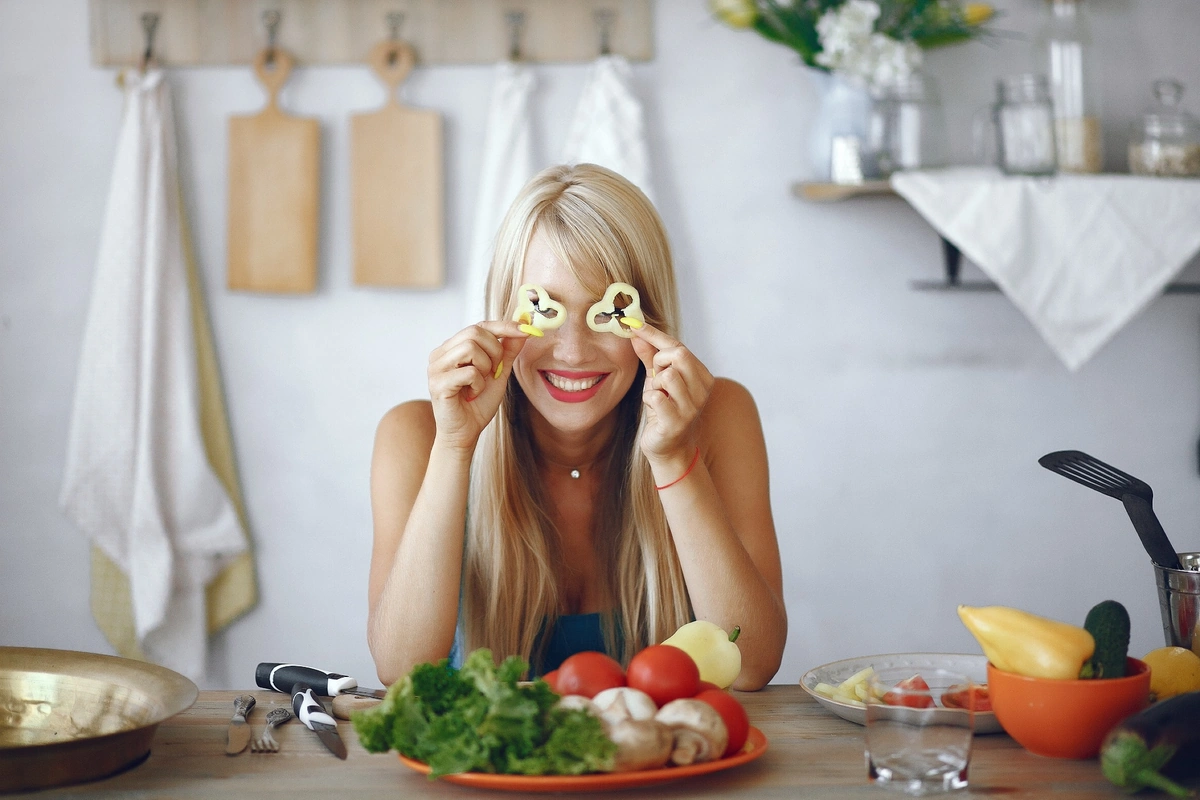
In conversations about beauty, food often ends up in an awkward place. It is either almost written out of the skin discussion altogether, as if the face exists separately from the rest of the body, or loaded with almost magical expectations: clear breakouts, “detox” the body, stop aging, bring back radiance, make the skin even and calm. Just cut out sugar. Just add collagen. Just drink more water. Just eat “clean.”
In reality, nutrition does matter, but not in such a direct way. It does not work like skincare, does not replace SPF, and does not treat dermatological conditions on its own. What it does is create the background against which skin finds it easier or harder to recover, maintain its barrier, and respond to stress, sun, inflammation, lack of sleep, hormonal shifts, and daily care. It is not a “glow” button. It is part of the environment the body lives in.
Beauty in cooking begins not with restrictions, but with attention to the body. Not with a list of “don’ts.” Not with anxious reading of every label. Not with the idea that the right plate should fix your face, your mood, and your sense of having yourself together. Cooking can be part of self-care, as long as it does not turn into yet another way to put pressure on yourself.
Food does not work like a cream
Cream, serum, SPF, cleanser, and reparative balm all have a clear route of action. They come into direct contact with the skin: supporting the barrier, reducing moisture loss, soothing irritation, affecting texture, and helping with photoprotection or certain signs of uneven tone. Skincare has a formula, a concentration, an area of application, and a frequency of use. It works within the limits of what its ingredients can do.
Food works through a different route. It moves through digestion, metabolism, hormonal and immune mechanisms, the state of the nervous system, sleep, stress levels, the gut microbiome, and overall energy balance. That is why its effect is broader, slower, and less predictable.
You cannot eat an avocado and expect your skin to be more elastic the next morning specifically because of it. But if you spend months living in a pattern of chaotic eating, sharp blood sugar swings, too little protein, fiber, fatty acids, sleep, and recovery, the body will gradually feel that background. The skin will too.
This is where the grown-up conversation begins. Skin is not an isolated surface. It is an organ connected to circulation, the immune system, nervous regulation, hormones, barrier lipids, microorganisms, and the rhythms of the day.
What nutrition can actually support
Food’s strongest role for the skin is in supporting the body’s basic resources. It sounds less flashy than “superfoods for glow,” but it is much closer to physiology.
The skin is constantly renewing itself, repairing its barrier, and responding to UV light, temperature, sweat, irritants, cosmetics, lack of sleep, and stress. To do that, it needs proteins, fats, carbohydrates, vitamins, minerals, water, and fiber. Not as a beauty secret, but as material for normal function.
Protein matters not because it instantly “builds collagen in your cheeks.” Amino acids are involved in tissue repair and ordinary renewal processes. Fats are needed for cell membranes, barrier function, and the absorption of fat-soluble vitamins. Vitamin C truly does matter for skin: it plays a role in collagen synthesis, antioxidant defense, and healing processes. But that does not mean more citrus or more supplements will automatically make skin firmer. A nutrient supports the system; it does not act like a fast-track rejuvenation button.
Vegetables, berries, leafy greens, legumes, whole foods, nuts, seeds, fish, and other sources of beneficial fats do not make skin perfect. They create a nourishing context in which the body does not have to run on empty. This is especially important for the barrier: modern reviews connect its condition to a whole cluster of factors—fatty acids, nutrient adequacy, gut health, prebiotic and probiotic approaches, and the overall pattern of the diet.
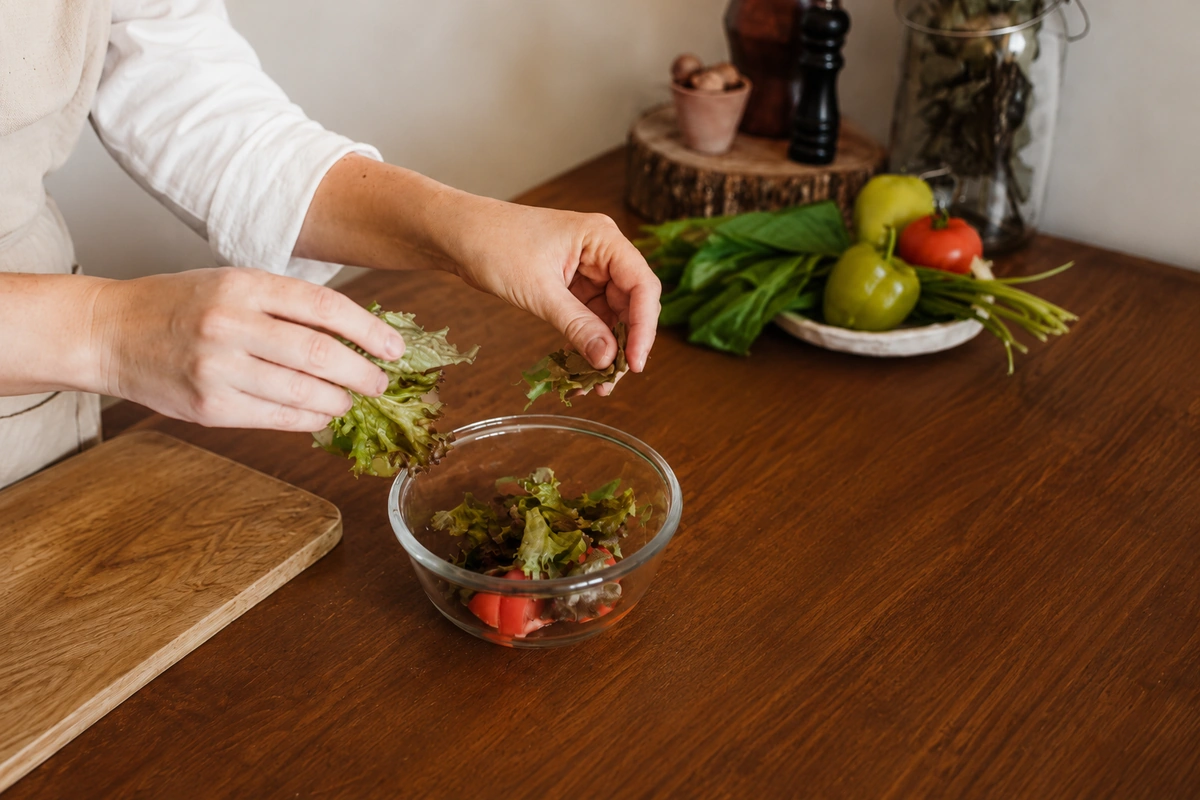
Blood sugar swings, milk, and acne: where the facts end and exaggeration begins
Acne is the topic most likely to attract categorical advice. “Cut out sugar.” “Cut out milk.” “Cut out gluten.” But after hearing these phrases, what people often get is not clarity, but another list of restrictions. The evidence is more nuanced.
Some studies link a high-glycemic diet with more breakouts in some people. The logic is understandable: sharp rises in glucose may affect insulin-related mechanisms, inflammatory background, and sebum production. The American Academy of Dermatology points to a study in which acne patients who followed a low-glycemic diet for 10 weeks had fewer breakouts than those who ate as usual. At the same time, other studies do not always show the same connection, so this is not a universal formula for everyone.
Milk is another area that calls for precision. Some observational studies have found a link between cow’s milk and acne, particularly skim milk. But that does not mean all dairy automatically “ruins the skin.” The same dermatology sources note separately that convincing evidence has not been found for yogurt and cheese worsening acne. A more honest position is this: if you suspect an individual trigger, observe it systematically—ideally with a doctor—rather than building your diet around fear.
The same goes for sweets. Dessert does not automatically “break” your skin. But if your diet is built almost every day around sugary drinks, quick snacks, and sharp swings in fullness, then this is no longer about one slice of cake—it is a regular metabolic background. It is the background, the repetition, and the overall structure of eating that matter more than any single product.
What food should not be expected to do
Food does not “cleanse the skin of toxins” in the way wellness marketing often suggests. The body already has its own detox systems—the liver, kidneys, gut, lungs, and lymphatic system. These can be supported by normal nutrition, sleep, movement, and adequate hydration. But smoothies, lemon water, or an “antioxidant salad” do not pull anything out of your pores.
Food does not replace a dermatologist. If there is acne, rosacea, atopic dermatitis, seborrheic dermatitis, persistent irritation, itching, painful breakouts, or a sudden change in skin condition, diet may be part of a broader strategy. It does not replace diagnosis and treatment.
Food does not cancel out SPF. This is one of the most important facts in any conversation about “nutrition for skin.” Antioxidants in the diet may support the body’s overall protective background, but they do not create a protective film on the skin’s surface against UV radiation. Dermatological recommendations remain external and very specific: broad-spectrum SPF 30 or higher, enough product, reapplication roughly every two hours outdoors, plus shade, clothing, and sunglasses. SPF 30 blocks about 97% of UVB rays when applied correctly, but no SPF blocks 100% of radiation.
Food also does not guarantee “glow.” Skin may look dull because of lack of sleep, stress, dehydration, anemia, hormonal changes, overly aggressive cleansing, barrier disruption, seasonality, illness, medication, or exhaustion. A person may eat reasonably well and their skin may still react. That is not failure. It is a sign that the body is more complex than any formula.
Trigger or coincidence?
There is a very human temptation to find one single cause. Ate chocolate—got a breakout. Drank milk—skin became oilier. Ate spicy food—face turned red. Had wine—more puffiness the next day. These observations should not be dismissed. They can be useful, as long as you do not rush to a verdict.
Skin responds to the menstrual cycle, sleep, stress, temperature, new cosmetics, sweat, fabric, medication, alcohol, flights, infection, anxiety levels, mechanical friction, and sun exposure. One coincidence is not proof. What matters is repetition: does a certain product or pattern of eating really correlate with a reaction several times in a row? Were there other factors on those days? Did your skincare change? Were you sleep-deprived? Did it happen during a particularly stressful period?
Food triggers do exist, but the clearest path is observation. Not “I can never have this again.” But “my body seems to notice this—it is worth paying closer attention.” If reactions are strong, painful, recurrent, or seem allergic, it is time to talk to a doctor.
The microbiome: not sterility, but balance
One of the most important shifts in the modern conversation about skin is the move away from the idea of “remove everything extra” toward the idea of balance. Skin is not supposed to be sterile. It is home to microorganisms that interact with the barrier, sebum, pH, the immune system, skincare, and the environment.
When we talk about the microbiome, it is easy to slide into a new trend where every product becomes a “probiotic miracle.” The old aggressive logic is no less risky, where cleanliness means destroying everything alive. In that sense, it is worth reading separately why the balance of the skin microbiome matters more than sterility.
Nutrition can be part of the body’s overall ecosystem—through fiber, dietary diversity, fermented foods, regularity, and gut health. But it does not “relocate” beneficial bacteria directly onto the face. Professional dermatology sources describe the microbiome as a dynamic system influenced by diet, sleep, water, physical activity, environment, and some medications, especially antibiotics. The plate matters, but it is only one part of a much bigger system.
A garden is a useful metaphor here. If you constantly flood the soil with harsh products, plants struggle. If they do not get water, light, and a nourishing environment, they struggle too. But no single ingredient can make a garden healthy. It takes a whole set of conditions. For skin, that means not just what is on the plate, but also sleep, skincare, stress, hormones, environment, air, touch, and the rhythm of the day.
Dinner, sleep, and skin: the indirect path people often underestimate
Sometimes food affects the skin not through a specific nutrient, but through the nervous system. A dinner that is too late, too heavy, or too chaotic can worsen sleep in sensitive people. Lack of sleep, in turn, often makes skin look duller, more reactive, puffier, and less able to recover.
This is a gentler logic than “ate the wrong thing—ruined your face.” The body recovers more easily when the evening is not overloading it. When digestion, the nervous system, and sleep are not competing with one another to be heard.
That is why, at Union Beauty, dinner is not framed as a diet instruction, but as a ritual of transition from day to night. You can read separately how dinner helps the nervous system recover. For skin, this matters not because of one “glow dinner,” but because of sleep—a basic mode of repair, regulation, and calming.
When we eat in a rush, standing up, answering messages at the same time, the body often does not even receive a simple signal: “I am safe, I can digest, I can slow down.” Sometimes beauty on the plate begins not with broccoli, but with finally sitting down, breathing a little deeper, and actually tasting the food.
Cooking as care, not control
There is a fine line between attentiveness and control.
Attentiveness says: “I notice what makes me feel better. I see that my body sleeps better when dinner is simpler. I feel that I need warm food, not another coffee.” Control sounds different: “I cannot have this. This is bad. This will ruin my skin. I have to be disciplined.”
From the outside, these two approaches can look similar. A person cooks, chooses ingredients, thinks about the plate, reads labels, notices skin reactions. On the inside, they are very different states. One contains connection. The other contains tension.
Union Beauty is closer to the first approach. Food can be a way back to the body. To the smell of onions slowly turning sweet in the pan. To a warm soup that promises no rejuvenation, yet still gives a sense of support. To a salad with something acidic, something crunchy, something soft, something fresh. To a simple question: “What would feel good for me right now?”
This is beautifully continued in the piece on why cooking can be therapy, not just another task. Not therapy instead of professional help, but a therapeutic gesture in the everyday sense: chop, stir, taste, feel the temperature, listen to yourself. Sometimes that kind of ordinary presence reduces tension better than yet another list of rules.
And where there is taste, there is always room for freedom. Not every dish has to follow a recipe. Not every dinner has to be perfectly balanced. Not every day has to be “right.” In cooking, too, it matters to trust your taste without perfectionism or rigid rules. Because if caring for your skin begins to destroy your connection with yourself, it is no longer care.
A gentle practice: one plate without a diagnosis
There is a simple exercise you can do without apps, charts, or restrictions. Before eating, look at your plate not as “healthy” or “unhealthy,” but as a message to the body.
Is there something warm or soothing here? Is there something that gives satiety? Is there a flavor that brings pleasure? Is there a texture that feels good to chew? Am I eating right now only because I am very tired, angry, or anxious? Am I trying to use this plate to fix my face, my mood, or my sense of “not being enough”?
It is a return to the body’s own language. Skin does not need its owner to live in food anxiety. More often, it needs basic conditions: gentle care, sun protection, enough recovery, less aggression, fewer sharp swings, more predictability. The plate can be part of that environment. But it should not become the judge.
An honest conclusion
Food can do a lot. It can support energy, sleep, barrier processes, the gut microbiome, the body’s general inflammatory background, a sense of stability, and connection with the body. It can help a person notice themselves before the body has to start shouting through fatigue, breakouts, irritation, or tension.
But food cannot do everything. It is not a cream, SPF, a retinoid, dermatological treatment, psychotherapy, or a way to become “perfect.” It should not be the language of guilt. There is no point in building beauty on fear of sugar, milk, gluten, fat, dinner, or dessert. It is much healthier to build it on observation.
Skin and the plate really are connected. But that connection is not direct, not simple, and not punitive. It is more like a quiet conversation: what the body receives regularly, how it recovers, whether it has resources, whether it feels calm, whether it is not living in a constant mode of attacking itself.
And if beauty appears in that conversation, it does not begin with a perfect diet. It begins with attentiveness.
References
- American Academy of Dermatology Association. Can the right diet get rid of acne?
- American Academy of Dermatology Association. How to decode sunscreen labels.
- Meixiong J., Ricco C., Vasavda C., Ho B.K. Diet and acne: a systematic review. JAAD International, 2022.
- Parke M.A., Perez-Sanchez A., Zamil D.H., Katta R. Diet and skin barrier: the role of dietary interventions on skin barrier function. Dermatology Practical & Conceptual, 2021.
- DermNet NZ. The gut microbiome in skin disease.
- Linus Pauling Institute, Oregon State University. Vitamin C and skin health.
- Pullar J.M., Carr A.C., Vissers M.C.M. The roles of vitamin C in skin health. Nutrients, 2017.