






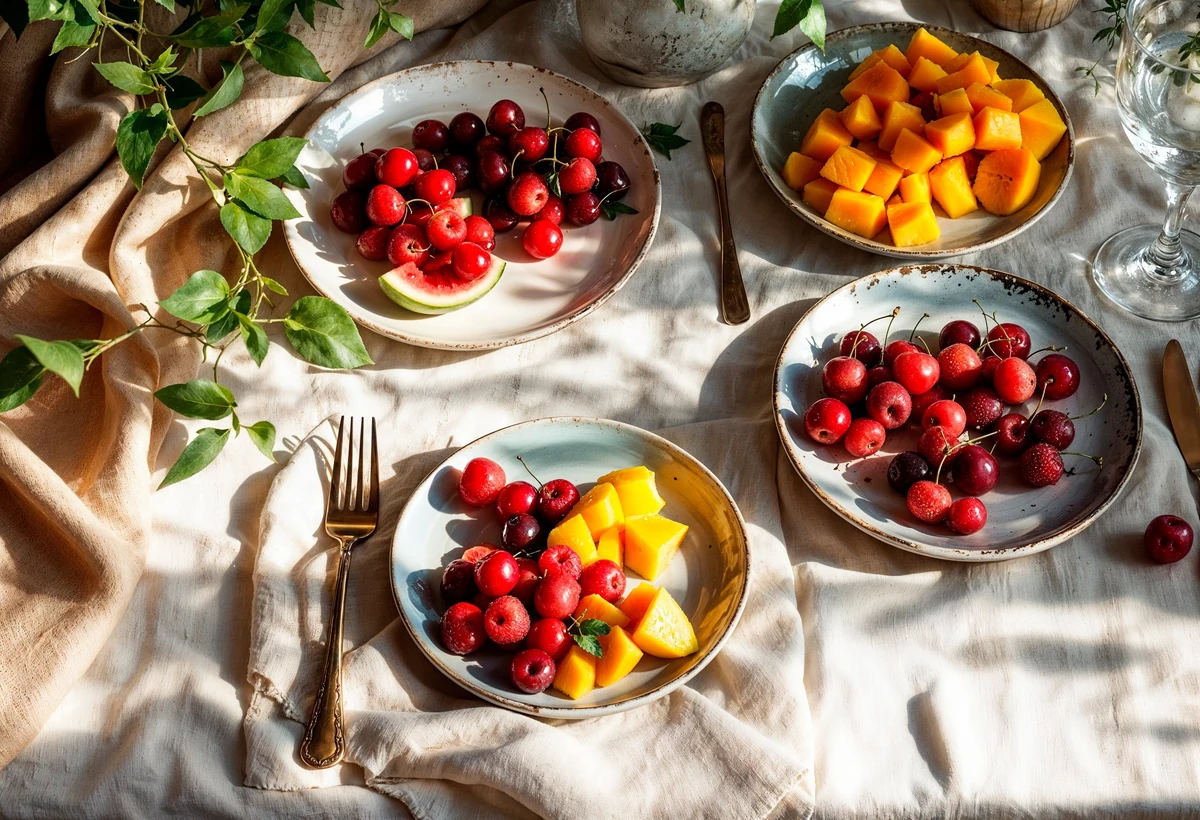
The kitchen is rarely as beautiful as it looks in photographs. There may be damp greens on the counter, a knife nearby, a cup of unfinished coffee, a bag of grains that won’t close properly, and a pot already beginning to hum softly on the stove. A person stands in the middle of errands, fatigue, phone notifications, and one simple question: what can I cook right now that will help my body feel a little better?
This is exactly where the idea of beauty in cooking begins. Not with a perfect plate. Not with a kind of discipline where every ingredient has to prove its usefulness. Not with the promise that one salad will make your skin glow and one dessert will ruin everything. Beauty here is almost invisible and entirely practical. It appears when food stops being only fuel or control and becomes a way to support the body: to give it warmth, protein, color, flavor, rhythm, a familiar smell, a sense of enoughness. Sometimes it is a complex dish. Sometimes it is a soup that almost cooks itself. Sometimes it is herbs added at the last minute, because without them the flavor felt flat.
Union Beauty looks at cooking in exactly this way: as a daily embodied ritual where nourishment meets sensory experience, the nervous system meets repetition, and the skin meets the inner environment it lives in. Food does not replace skincare, sleep, medicine, or rest. But every day it touches the body from the inside—and for that reason, it deserves a calmer, more attentive conversation.
This cluster is not about “foods for perfect skin.” It is about something else: how to cook and eat in a way that gives the body a little more support, brings more presence to flavor, and makes self-care feel less tense.
Food Is Not Cosmetics. But Skin Does Not Live Separately from the Body
There is a dangerous temptation to talk about food too directly: eat this and your skin will glow; remove that and breakouts will disappear; add one superfood and your body will become younger. These formulas sound convenient, which is exactly why they call for caution.
Skin is not the mirror of a single dinner. It does not respond to a plate as simply as litmus paper. Its condition is shaped by genetics, hormones, sleep, stress, sun exposure, skincare, medications, illness, age, the microbiome, barrier function, lifestyle, and countless small circumstances that cannot be reduced to one list of foods.
And still, food matters. Not as a magical substitute for SPF, a dermatologist, or professional care, but as part of the internal environment the skin lives in. Protein is needed for tissue repair. Fats are involved in barrier function and hormonal systems. Vitamin C plays a role in collagen synthesis. Zinc, copper, selenium, polyphenols, carotenoids, fiber, enough water, and a steadier eating rhythm do not make a face “perfect,” but they support the processes without which it is harder for skin to stay calm.
That is why we will explore separately what food can actually do for skin—and what it should not be credited with. This is an important framework: without exaggeration and without wellness mythology.
Not “beauty food,” but food as a background for recovery
When we talk about beauty in cooking, we do not mean a list of allowed and forbidden foods. It is more about quieter questions: is the body getting enough building material? Is it living in constant sharp swings of energy? Is there variety in the diet? Can an evening meal help the nervous system shift from tension into recovery?
In this sense, the article we have already published about dinners for better sleep continues the theme very precisely. Because sleep is one of those processes where beauty stops being a visual category. During sleep, the body does not “switch off.” It regulates, restores, redistributes resources, works with immune response, hormonal rhythm, barriers, and memory. And the way we eat dinner can sometimes affect not only how we fall asleep, but also the face we wake up with and the way our body feels in the morning.
The Kitchen as a Place Where the Nervous System Receives a Signal of Safety
Not every kitchen is calming. Some kitchens are shaped by haste, where food is swallowed standing up. Some are kitchens of anxiety, where every calorie sounds like a verdict. Some are kitchens of exhaustion, where a person cooks no longer out of love, but from the last of their energy.
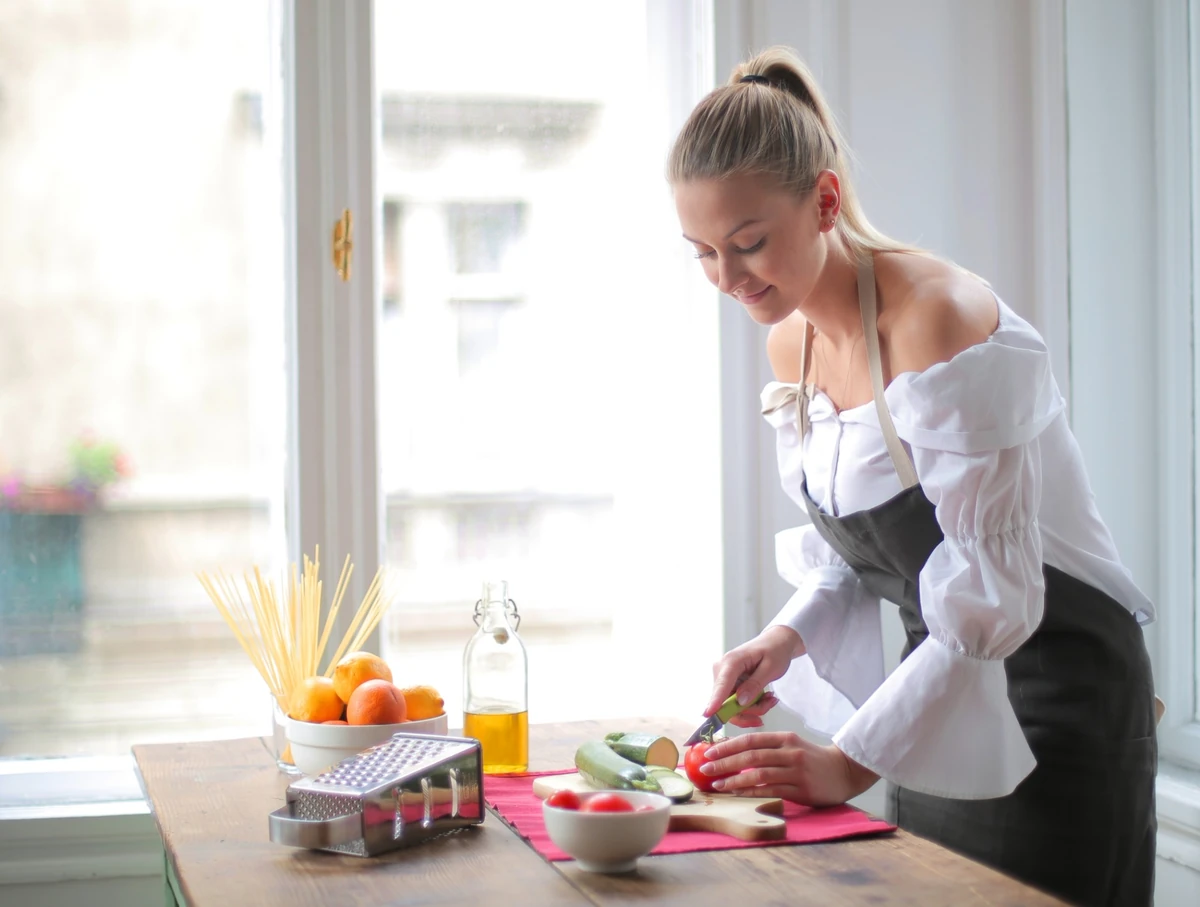
And yet there is something in the very nature of cooking that can restore rhythm. Repetitive movements. Warmth. Smell. Water coming to a boil. A knife moving through a vegetable. Greens darkening under your fingers. An onion whose aroma shifts from sharp to sweet. This is not grand therapy. It does not resolve every inner conflict. But it is a small embodied practice that can be lived without special equipment, without the right clothes, and without carving out separate “me time.”
We already have a separate piece on this: “Food as Meditation: Why Cooking Can Be Therapy”. It shows that cooking can support us not only through nutrients, but through the process itself. Sometimes it is not the finished dish that calms the body, but the path toward it.
Hands often know before the mind does
There is a part of cooking that is hard to explain through charts. A person may be tired, irritated, distracted, but then they begin washing herbs, sorting berries, kneading dough, or slowly stirring soup—and something shifts inside. Not dramatically. Without revelation. Just that the thoughts become less sharp.
This does not mean the kitchen should replace rest, therapy, or help. But it can be one way of returning to reality through sensation. Through texture. Through smell. Through small decisions that do not require perfection.
Where a person begins to feel their hands again, a sense of self often returns too.
Taste, Memory, and the Body: Why the Aroma of Food Is So Powerful
The beauty of food rarely lives in taste alone. It begins with aroma, even before the first bite. And it is often smell that makes a culinary experience emotional. The smell of warm bread. Garlic in a pan. Dill in new potatoes. Cinnamon. The sweet-sour aroma of beetroot slowly braising. A soup that smells not of ingredients, but of home.
In the article about the taste of childhood and culinary memories, we already talked about how kitchen aromas can bring back not only recipes, but time, places, people, and atmosphere. There is an important embodied meaning here: memory is not stored only in words. It lives in smells, in muscular sensation, in the way the body recognizes what is familiar.
That is why food can be a way of grounding. Not because it “heals the soul” in some romantic sense, but because sensory signals help the brain and body remember: there is warmth, there is space, there is repetition, there is something familiar. For the nervous system, this can sometimes matter more than beautiful motivational words.
The Way Food Is Cooked Has Its Own Aesthetic Too
In cooking, we often think about ingredients, but less often about the way we handle them. And between a raw carrot, a carrot stewed in soup, and a carrot seared to a dark crust, there is more than just a difference in taste. There is a different aroma, a different texture, a different effect of heat, a different pace.
High-heat browning creates depth. Slow braising creates softness. Roasting concentrates sweetness. Boiling makes food gentler. Acid in a marinade changes the structure of protein and the flavor. Spices can add complexity without excess salt or sugar.
This does not mean you need to fear a frying pan or a crisp crust. Cooking without joy quickly turns into a disciplinary system. But it is important to understand: beauty in food is not always where the maximum effect is. Sometimes it is where a dish does not overwhelm the body with excess, but supports it more gently.
Glycation without fear
Glycation is a process in which sugar molecules bind to proteins or fats without the help of enzymes. Put more simply, some sugars under certain conditions can react with the body’s protein structures. In the context of skin, the focus is usually on collagen and elastin: when these changes build up over the years, the fibers may become stiffer, tissues less elastic, and the skin duller and more vulnerable to oxidative stress.
This topic has often been demonized because it fits so neatly into a simple formula: “sugar destroys collagen.” But the body works in more complex ways. One dessert does not age the face, and one “correct” dinner does not restore skin density. What matters is the long distance: the overall diet, blood sugar levels, the amount of ultra-processed food, cooking methods, sleep, stress, movement, and how often the body is living in a state of metabolic overload.
There is another important nuance connected to food: advanced glycation end products can form not only inside the body, but also enter it through prepared foods. They are more abundant where there is dry high heat, prolonged frying, grilling, a very dark crust, and lots of sugar and fat in heavily processed food. This does not mean you should fear the frying pan. But it does explain why cooking method can sometimes matter just as much as the list of ingredients itself.
That is why we will have a separate article on glycation without fear—how sugar, heat, and cooking methods relate to collagen. In it, we will break down how to talk about this topic without panic: what is truly worth considering, why braising, soups, moist heat, vegetables, acidic marinades, and spices can be a gentler culinary strategy, and why a culture of prohibition works worse here than understanding the process.
A traditional dish works well as an example here. In shpundra, beauty lies not in lightness or modern health minimalism. It lies in slow braising, the ruby-colored sauce, the acidity of beet kvass, the rich flavor, and memory. This kind of dish shows that cooking method can be more than just technique—it can be a culture of relating to food, warmth, and time.
The Microbiome Begins Not with a Jar, but with Repetition
The word “microbiome” can easily turn into a fashionable label. It gets “added” to cosmetics, supplements, diets, promises, diagnoses, and marketing copy. But if we return to embodied reality, the microbiome is not a trend—it is a living ecosystem that needs an environment.
For the gut, that environment is not one single product, but the overall rhythm of eating: fiber, plant diversity, enough food, fermented foods if they suit a particular person, less chaotic ultra-processed background, enough water, sleep, movement, and less constant stress overload.
For the skin, the microbiome also does not exist separately from life. In the piece “Skin Microbiome: Why Bacterial Balance Matters More Than Sterility,” we already talked about how skin does not need sterility. It needs balance, a barrier, gentle cleansing, and an environment in which its protective mechanisms can function more calmly.
This topic also needs to be opened up from the kitchen side: how the microbiome begins in the kitchen. Not with the promise to “heal skin with yogurt,” but with a careful explanation of how fiber, fermented foods, legumes, grains, greens, seasonal vegetables, and variety shape the inner environment in which both the gut and the skin live.
The plate as an ecosystem
A beautiful plate is not only about form. It holds different kinds of life: leaves, roots, grains, protein, fat, acid, spices, something crunchy, something soft, something warm, something fresh. A plate like this does not have to look like restaurant plating. On the contrary, sometimes the most beautiful food is a bowl of warm grains with vegetables, greens, a spoonful of yogurt sauce, and something acidic to bring clarity to the flavor.
In this sense, the article “Three Moods, Three Mushroom Salads” captures the seasonal logic of culinary beauty well. Mushrooms, greens, spices, texture, the scent of autumn—all of it works not only as a recipe, but as a way to feel the season through the body.
The Color of Food: Not Decoration, but the Language of Plants
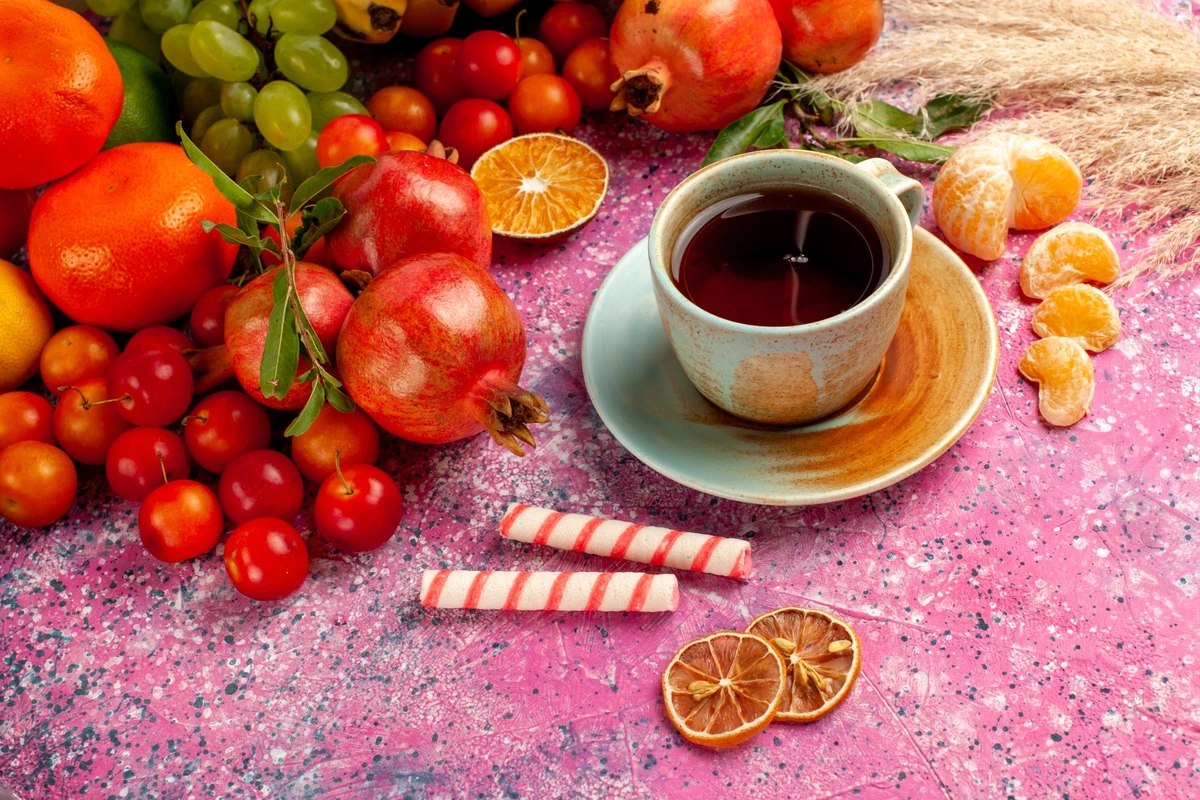
Color on a plate is often treated as aesthetics for photos. But in real food, color is rarely accidental. Greens speak of chlorophyll and bitter freshness. Orange pumpkin speaks of carotenoids and gentle sweetness. Dark berries speak of polyphenols and acidic depth. Beetroot speaks of earthy sweetness, minerality, and a dense ruby mood.
There is no need to turn color into a new form of dietary discipline. Not every meal has to be a rainbow. But when a person learns to notice color, they often naturally bring variety back into their diet. Not because of the command “eat more vegetables,” but through curiosity: what does the body want today—something green, acidic, warm, crunchy, dark, soft?
This is exactly where cooking comes close to beauty. Because beauty is not always about decoration. Sometimes it is about attentiveness to nuance.
In chocolate with salt, this is visible through contrast: sweetness becomes deeper when something salty appears beside it. In seasonal salads, it emerges through the play of bitterness, softness, and spice. In a homemade beet dish, it appears through color that does not simply decorate, but carries memory.
Beautiful Food Should Not Become Another Form of Control
There is a fine line here that matters. When we talk about food, the body, and beauty, it is very easy to slide into control: “correct” plates, fear of sugar and bread, the feeling that every dinner has to prove self-love, and every dessert is a small failure.
This is not the Union Beauty approach.
Beauty in cooking should not turn a person into a project of optimization. On the contrary, it should return more freedom, a greater ability to hear oneself, the right to simple food, to fatigue, to imperfection, to a dinner without beautiful table setting if today all you had the energy for was a warm bowl of soup.
Our article “Cooking Without a Recipe: The Art of Intuition in the Kitchen” teaches not only how to cook, but how to trust. Not everything in life has to be weighed, measured, and brought to perfection. Sometimes it is enough to know that the dish needs more acidity, that you want more greens, that the spice belongs at the end, and that the meal is already ready even though the timer has not gone off yet.
The kitchen without perfectionism
You can cook beautifully with what you have. You can eat not by rules, but by rhythm. You can love salad and borscht, chocolate and greens, simple buckwheat and a complex dish, Sunday pie and a weekday dinner made in ten minutes. Culinary beauty is not born from sameness. It is born from being right for the moment.
If the body is tired, beauty may lie in warmth. If the day was chaotic—in simplicity. If something inside feels empty—in nourishment. If you want celebration—in contrast, spices, a beautiful plate, a slow table.
That is why beautiful food is not always photogenic food. It is food after which the body does not have to justify itself.
When Food Becomes a Ritual, Beauty Stops Being Surface
Cooking does not solve everything. It does not replace medicine, sleep, therapy, care, rest, or an honest conversation with yourself. But every day it touches the place where the body meets life.
We do not eat abstract nutrients. We eat through smell, temperature, memories, color, crunch, anticipation, the hand that passes the plate, the silence after the first spoonful. And that is exactly why food can be part of beauty—not as a tool for improving appearance, but as a way of creating conditions in which the body can more easily feel alive.
Beauty in cooking is not perfect discipline. It is warm soup after a hard day. It is greens you wanted to add not “for the benefits,” but because without them the taste would be flat. It is slow braising while the house fills with aroma. It is chocolate with salt that reminds you pleasure can be complex. It is a dinner after which the body does not struggle with sleep. It is a plate that contains enough life.
Sometimes care for beauty begins not at the mirror. Sometimes it begins at the stove, when for the first time all day we stop rushing.