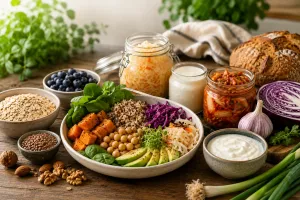






The condition of your skin and hair doesn’t depend on a single “beauty product,” but on whether your body consistently gets the nutrients it needs. Protein provides the amino acids required to form keratin and other structural proteins. Vitamin C is involved in collagen synthesis. Iron and zinc deficiencies can be among the factors that worsen hair condition and increase shedding. Fatty acids are essential for cell membranes and lipid processes, which, among other things, support the skin’s normal barrier function. Fiber works more indirectly—through overall diet, the gut, and the microbiome, whose connection to skin health is now being actively studied. So, in the context of beauty, a good breakfast isn’t a smoothie labeled “glow” or a lineup of expensive superfoods. It’s far more useful to look at how much protein, fiber, vegetables, berries, seeds, and sources of unsaturated fats you can realistically fit onto an ordinary morning plate.
We’ve put together seven such breakfasts with specific portions and estimated the calories, protein, and fiber in each. We also highlighted sources of unsaturated fats separately—olive oil, avocado, nuts, seeds, and oily fish. This is not a weight-loss menu or a universal recommendation for breakfast calories. The numbers are meant as a guide to help you gauge portion size and compare different options.
What we count—and why
Each breakfast below is built around four key markers.
Calories help roughly estimate portion size. Everyone’s energy needs are different, so these numbers shouldn’t be taken as a recommended target.
Protein is essential as a source of amino acids. Hair is made mostly of keratin, and protein structures are a crucial part of the skin and its extracellular matrix. The reference intake for healthy adults is about 0.83 g/kg per day, but in the context of physical activity, maintaining muscle mass, and healthy aging, higher intakes are increasingly being considered. Depending on age, activity level, and health status, practical targets may be around 1.2–1.5 g/kg per day, and for people with high physical activity, even higher. Distribution across the day matters too: if you eat three main meals, breakfast can reasonably provide about a third of your daily protein. That’s why our options contain roughly 23–31 g.
Fiber supports normal bowel function and serves as an important substrate for the gut microbiota. For adults, the general target is about 25 g of dietary fiber per day, so 7–11 g at breakfast is already a meaningful share of the daily amount. In the context of skin, its role is more indirect—through overall diet quality, the microbiome, and its metabolites.
Unsaturated fats are important for cell membranes and lipid processes involved, among other things, in the skin’s normal barrier function. So we look not only at the amount of fat, but also at its source. Olive oil, avocado, nuts, and seeds contain mostly unsaturated fatty acids. Flax, chia, and walnuts provide plant omega-3 ALA, while oily marine fish provide EPA and DHA.
On top of that, there are micronutrients from vegetables, berries, fruit, eggs, legumes, dairy products, and fish. Vitamin C, for example, is needed for normal collagen synthesis and helps improve the absorption of non-heme iron, while iron and zinc deficiencies can affect hair condition.
We go into more detail on how nutrition as a whole relates to skin condition in the article “Skin and Your Plate: What Food Can Really Change”.
7 everyday breakfasts: portions, calories, and easy swaps
The calculations below are approximate. The nutritional value of bread, yogurt, hummus, cottage cheese, tofu, or canned fish depends on the specific product and manufacturer.
1. Omelet with spinach, tomatoes, and toast
For 1 serving:
- eggs — 2, about 100 g;
- whole-grain bread — 70 g;
- tomatoes — 150 g;
- spinach — 50 g;
- olive oil — 5 g;
- salt, pepper, herbs — to taste.
Approx.: 400 kcal · protein 24 g · fiber 7 g · 10 min
Unsaturated fats: olive oil.
Sauté the spinach briefly in a pan, add the tomatoes, then the eggs. Serve with toasted bread.
This is a simple, balanced setup: eggs provide complete protein and a range of micronutrients, vegetables add vitamin C, carotenoids, and fiber, and whole-grain bread contributes another serving of dietary fiber. Spinach can easily be swapped for mushrooms, sweet pepper, broccoli, or fresh herbs. Leftover vegetables from dinner work too. On the weekend, you can turn the same set of ingredients into shakshuka or poached eggs on toast with vegetables.
2. Greek yogurt with berries, oats, chia, and nuts
For 1 serving:
- plain 2% Greek yogurt — 200 g;
- rolled oats — 30 g;
- berries — 100 g;
- chia seeds — 10 g;
- walnuts — 10 g.
Approx.: 430 kcal · protein 29 g · fiber 10 g · 5 min
Unsaturated fats: chia and walnuts, including plant omega-3 ALA.
Put the yogurt, oats, and berries in a bowl, then top with chia and chopped walnuts.
This combination works especially well because it pairs protein with several sources of fiber at once. Berries add vitamin C and polyphenols, while chia and nuts bring unsaturated fats. In summer, raspberries, blueberries, strawberries, or currants are great; in winter, frozen berries work perfectly. Chia can be replaced with ground flaxseed. Walnuts can be swapped for almonds, hazelnuts, or pumpkin seeds, though the fatty acid profile will be different.
3. Cottage cheese with kiwi, berries, flax, and walnuts
For 1 serving:
- 5% cottage cheese — 200 g;
- kiwi — 100 g;
- berries — 100 g;
- ground flaxseed — 10 g;
- walnuts — 10 g.
Approx.: 430 kcal · protein 27 g · fiber 9 g · 5 min
Unsaturated fats: flax and walnuts, including omega-3 ALA.
Place the cottage cheese in a bowl and add sliced kiwi, berries, flax, and walnuts. If the cottage cheese is dry, mix it with a few spoonfuls of plain yogurt.
Kiwi and berries add vitamin C, which is needed for normal collagen synthesis. Flax and walnuts increase both fiber and unsaturated fat content, while the cottage cheese forms the protein base of the breakfast. Kiwi can be swapped seasonally: strawberries, currants, citrus, peaches, or other fruit all work well. For a savory version, add tomatoes, cucumbers, herbs, seeds, and whole-grain bread to the cottage cheese.
4. Savory oatmeal with eggs, spinach, and avocado
For 1 serving:
- rolled oats — 50 g;
- eggs — 2, about 100 g;
- spinach — 50 g;
- tomato — 100 g;
- avocado — 50 g;
- salt, black pepper — to taste.
Approx.: 440 kcal · protein 23 g · fiber 11 g · 12 min
Unsaturated fats: avocado.
Cook the oats in water with a pinch of salt. Prepare the eggs separately. Add spinach, tomatoes, and sliced avocado to the oatmeal. This is one of the highest-fiber options in the roundup. The fiber comes from the oats, vegetables, and avocado all at once. Oats contain soluble fiber, including beta-glucans, so they pair especially well with other plant foods in the diet. Avocado can be replaced with a small amount of olive oil and seeds, while spinach can be swapped for mushrooms, broccoli, or roasted vegetables.
5. Toasts with sardines, avocado, and vegetables
For 1 serving:
- whole-grain bread — 70 g;
- sardines — 80 g;
- avocado — 50 g;
- tomato — 100 g;
- cucumber — 100 g;
- lemon juice, herbs, pepper — to taste.
Approx.: 450 kcal · protein 31 g · fiber 9 g · 5 min
Unsaturated fats: sardines are a source of omega-3 EPA and DHA; avocado provides mostly monounsaturated fats.
Toast the bread, mash the avocado with a fork, spread it on the toast, and top with sardines. Add tomatoes, cucumbers, lemon juice, and herbs.
Sardines make this one of the most interesting breakfasts in the selection in terms of fat composition: they contain long-chain omega-3s EPA and DHA and also provide plenty of protein. Salmon often becomes the star of “healthy breakfasts,” but sardines, mackerel, and herring are valuable sources of EPA and DHA too. Another advantage of sardines is that they’re easy to keep at home as an ingredient you can turn into a полноценний dish in just a few minutes.
6. Hummus, eggs, vegetables, and whole-grain pita
For 1 serving:
- hummus — 70 g;
- eggs — 2, about 100 g;
- whole-grain pita — 60 g;
- sweet pepper — 100 g;
- cucumber — 100 g;
- herbs, paprika, lemon juice — to taste.
Approx.: 465 kcal · protein 26 g · fiber 11 g · 7 min
Unsaturated fats: tahini (sesame paste); olive oil may also be an additional source if it’s included in the hummus.
Boil the eggs or cook them in a pan. Spoon the hummus onto a plate and add the chopped vegetables, eggs, and pita.
Chickpeas, whole-grain pita, and vegetables together provide about 11 g of fiber—a noticeable share of the daily target. Legumes also add plant protein, minerals, and other components that are often lacking in diets low in plant foods. If you have cooked chickpeas on hand, you can replace part of the hummus with whole chickpeas and warm them with tomatoes, paprika, and herbs.
We covered fiber, legumes, and the relationship between nutrition and the microbiome in more detail in the article “The Microbiome in the Kitchen: Fiber, Fermented Foods, and Skin”.
7. Tofu scramble with avocado, vegetables, and toast
For 1 serving:
- firm tofu — 180 g;
- whole-grain bread — 70 g;
- avocado — 50 g;
- tomato — 100 g;
- spinach — 50 g;
- salt, pepper, paprika, or turmeric — to taste.
Approx.: 420 kcal · protein 27 g · fiber 10 g · 10 min
Unsaturated fats: avocado; soy products also contain mostly unsaturated fatty acids.
Crumble the tofu with your fingers or a fork and heat it in a pan with the spices for a few minutes. Add the spinach and tomatoes. Serve with avocado and toasted bread. This option shows that you can build a breakfast with a solid amount of protein even without eggs or dairy. Soy provides complete plant protein, while the vegetables, whole-grain bread, and avocado bring the fiber content up to about 10 g. Tofu pairs well with mushrooms, green onions, pepper, broccoli, or leftover roasted vegetables. Avocado can be replaced with olive oil, nuts, or tahini.
How to adjust these breakfasts to your appetite
400 or 450 kcal is not the “right” breakfast calorie count for everyone. Energy needs depend on age, body size, physical activity, daily routine, and the rest of your meals. For a larger breakfast, you can add another slice of bread, a piece of fruit, more grains, or an extra serving of yogurt. If the portion feels too large, simply reduce the amount of bread, grains, avocado, nuts, or seeds a little.
Most of our options provide around 23–31 g of protein and 7–11 g of fiber. That’s already a substantial amount of protein and a meaningful share of the fiber an adult should be getting throughout the day.
If your morning meal regularly consists of nothing but coffee and sweet pastries, the issue is not that a croissant by itself “ruins your skin.” It’s simply that this kind of breakfast contains almost none of the foods that regularly supply protein, fiber, omega-3s, vitamin C, iron, zinc, and other nutrients. So instead of thinking in terms of restrictions, it’s more useful to think about what you can add: yogurt, an egg, berries, fruit, vegetables, nuts, seeds, hummus, or fish.
What to keep at home so breakfast really does come together in 5–10 minutes
A quick breakfast starts not with a recipe, but with a small stock of staple ingredients.
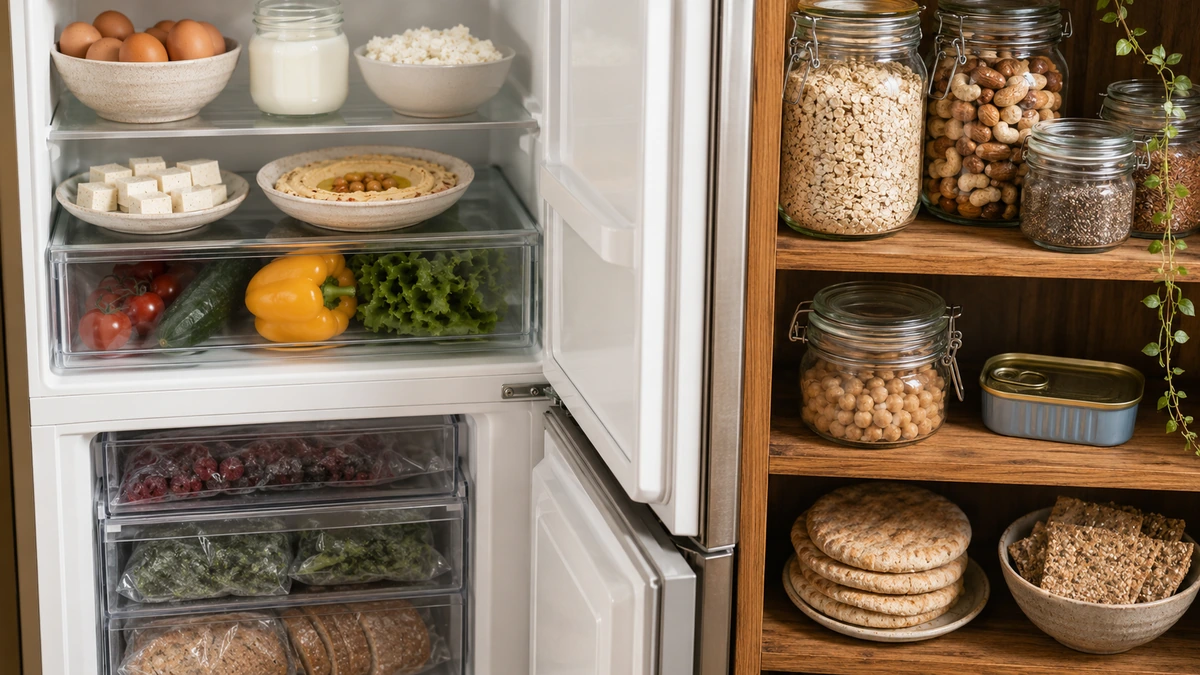
In the fridge: eggs, plain yogurt or cottage cheese, vegetables, tofu, hummus.
In the freezer: berries, spinach, pre-sliced whole-grain bread in portions.
In the pantry: oats, nuts, flaxseed or chia seeds, canned sardines, chickpeas, whole-grain pita or crispbread.
With a setup like this, you don’t need seven different shopping lists. Eggs go into an omelet today and pair with hummus tomorrow. Spinach goes into savory oatmeal or a tofu scramble. Berries go with yogurt or cottage cheese. That’s exactly the principle behind our big guide “What to Cook Today for Beauty: Breakfast, Lunch, and Dinner Ideas”: not searching for a new “perfect recipe” every day, but learning how to build полноценний meals from accessible ingredients.
One breakfast won’t change the condition of your skin or hair. But a regular diet with enough protein, vegetables and fruit, whole grains, legumes, nuts, seeds, and sources of unsaturated fats gives the body what it truly needs for normal tissue renewal, skin barrier function, and hair growth.