





A salad can be a few tomatoes and a cucumber on the side of a main dish, a big bowl of greens, or a complete meal. The difference is in what goes into it. If a salad is meant to replace a main course, vegetables alone are usually not enough: it’s worth adding a source of protein — fish, eggs, legumes, cheese, or meat — and, if needed, a grain, potatoes, or bread as well. Nuts, seeds, avocado, olive oil, or another dressing add fats, flavor, and make the dish more satisfying. For skin and hair, this kind of structure works well too: one plate can bring together protein, vegetables, sources of fat, and a range of micronutrients without turning food into a set of separate “beauty foods.”
When it comes to skin and hair, what matters most is the overall diet: enough protein, fat, and energy, along with a variety of vitamin and mineral sources. That’s exactly the approach behind our article on food for beauty and feeling good. Salads are especially convenient here: it’s easy to combine vegetables and greens with fish, eggs, legumes, or meat in one bowl, then add a grain or potatoes, nuts, seeds, and a good dressing. One salad can be a full lunch, another a light dinner, and a third a fresh side to a main dish.
How to build a filling salad for lunch or dinner
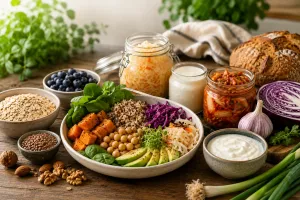
The easiest place to start is with vegetables: fresh, roasted, boiled, or a mix of several kinds. Think tomatoes, cucumbers, peppers, cabbage, beets, pumpkin, broccoli, green beans, and leafy greens. If the salad is meant to stand in for a main course, it helps to add something more substantial: eggs, poultry, fish, seafood, cheese, beans, chickpeas, or lentils. Potatoes, bulgur, couscous, buckwheat, quinoa, or a piece of bread on the side also fit in perfectly well. Olive oil, tahini, nuts, seeds, avocado, or cheese add flavor, texture, and fats.
The exact combination depends on the salad itself. Beans already provide protein, carbohydrates, and fiber at the same time, so adding a grain isn’t necessary at all. Tuna with potatoes is built differently from chicken with bulgur. And beets with feta and nuts can stay a light dish on their own, especially if served with bread or something else alongside.
What matters for skin and hair in this kind of salad
For skin and hair, it’s not one single ingredient that matters, but what you regularly get from your diet overall. That’s why in the recipes below we combine different food groups. Eggs, fish, poultry, meat, cheese, and legumes provide protein and amino acids, which the body uses to build its own protein structures. Vegetables and greens add vitamin C, carotenoids, folate, and other micronutrients, while nuts, seeds, avocado, and olive oil provide fats that, among other things, help the body absorb fat-soluble carotenoids from vegetables.
There are other important details too. Vitamin C is needed for normal collagen formation and improves the absorption of non-heme iron from plant foods. Iron, zinc, B vitamins, and enough protein are especially important for hair when the diet is lacking in them. Fish can also provide omega-3 fatty acids, although the amount depends greatly on the type. So for a “beauty diet,” it makes more sense to regularly rotate different sources of protein, vegetables, legumes, fish, nuts, and seeds rather than look for a single superfood.
7 simple and filling salads for every day
1. Salad with chicken, bulgur, cucumber, and herbs
If you have leftover chicken and bulgur from the night before, this salad comes together in just a few minutes. The chicken adds protein, the bulgur makes it more filling, and a generous amount of greens and vegetables keeps it from turning into just “meat plus a side.”
Time: about 10 minutes if the chicken and bulgur are already cooked.
Serves 2:
- 200 g cooked chicken fillet;
- 120–150 g cooked bulgur;
- 1 large cucumber;
- 8–10 cherry tomatoes or 1–2 regular tomatoes;
- a large handful of parsley;
- a little dill or mint;
- 2 tbsp olive oil;
- 1 tbsp lemon juice;
- 1 tsp mustard;
- salt and black pepper.
Slice the chicken across the grain, and cut the cucumber and tomatoes into fairly large pieces. If the bulgur has just come out of the fridge, let it warm up a little — it tastes better in this salad when it’s not ice-cold. Combine the vegetables with the bulgur and herbs, then add the chicken. In a separate bowl, whisk the oil, lemon juice, and mustard with a fork, season with salt and pepper, and dress the salad just before serving. Mint makes the flavor fresher; for a more classic version, parsley and dill are enough.
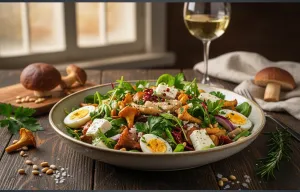
2. Warm salad with potatoes, egg, and green beans
Potatoes make this salad much more substantial and pair well with a tangy mustard dressing. Eggs add protein, while green beans bring in another serving of vegetables and fiber. Small new potatoes work especially well here.
Time: about 30 minutes.
Serves 2:
- 300–350 g potatoes;
- 3 eggs;
- 200 g green beans;
- 1 small cucumber;
- ¼ red onion;
- parsley or dill;
- 2 tbsp olive oil;
- 1 tbsp wine vinegar or apple cider vinegar;
- 1 tsp wholegrain mustard;
- salt and pepper.
Boil the potatoes until cooked through but still holding their shape. Cook the green beans separately by boiling or steaming, and boil the eggs to your preferred doneness. Cut the warm potatoes in half or into large chunks and immediately toss them with the oil, vinegar, mustard, and thinly sliced onion. That step makes a big difference: warm potatoes absorb the dressing far better than fully chilled ones. Add the beans, cucumber, and herbs, then place the eggs on top in large wedges.
3. Salad with roasted beets, feta, apple, and walnuts
This salad doesn’t include a grain or potatoes, so if you want it to be a complete dinner, you can serve it with bread or another dish. The beets, apple, and greens add plant variety, while the feta and nuts bring protein and fats.
Time: 10 minutes if the beets are ready; plus roasting time if you’re making them specifically for this salad.
Serves 2:
- 2 small beets;
- 80–100 g feta or bryndza;
- 1 sweet-tart apple;
- 30 g walnuts;
- a handful of arugula or other greens;
- 1½–2 tbsp olive oil;
- 1 tbsp balsamic or wine vinegar;
- black pepper.
Roast the beets until tender, cool them, and cut into wedges. They’re easy to make ahead — whole cooked beets will keep just fine in the fridge until the next day. Slice the apple thinly right before assembling the salad, and break the feta up with your hands. Arrange the greens, beets, and apple, then add the cheese and roughly chopped walnuts. Dress with oil and vinegar and finish with black pepper. It’s best to add salt only after tasting, since feta or bryndza is often salty enough on its own.
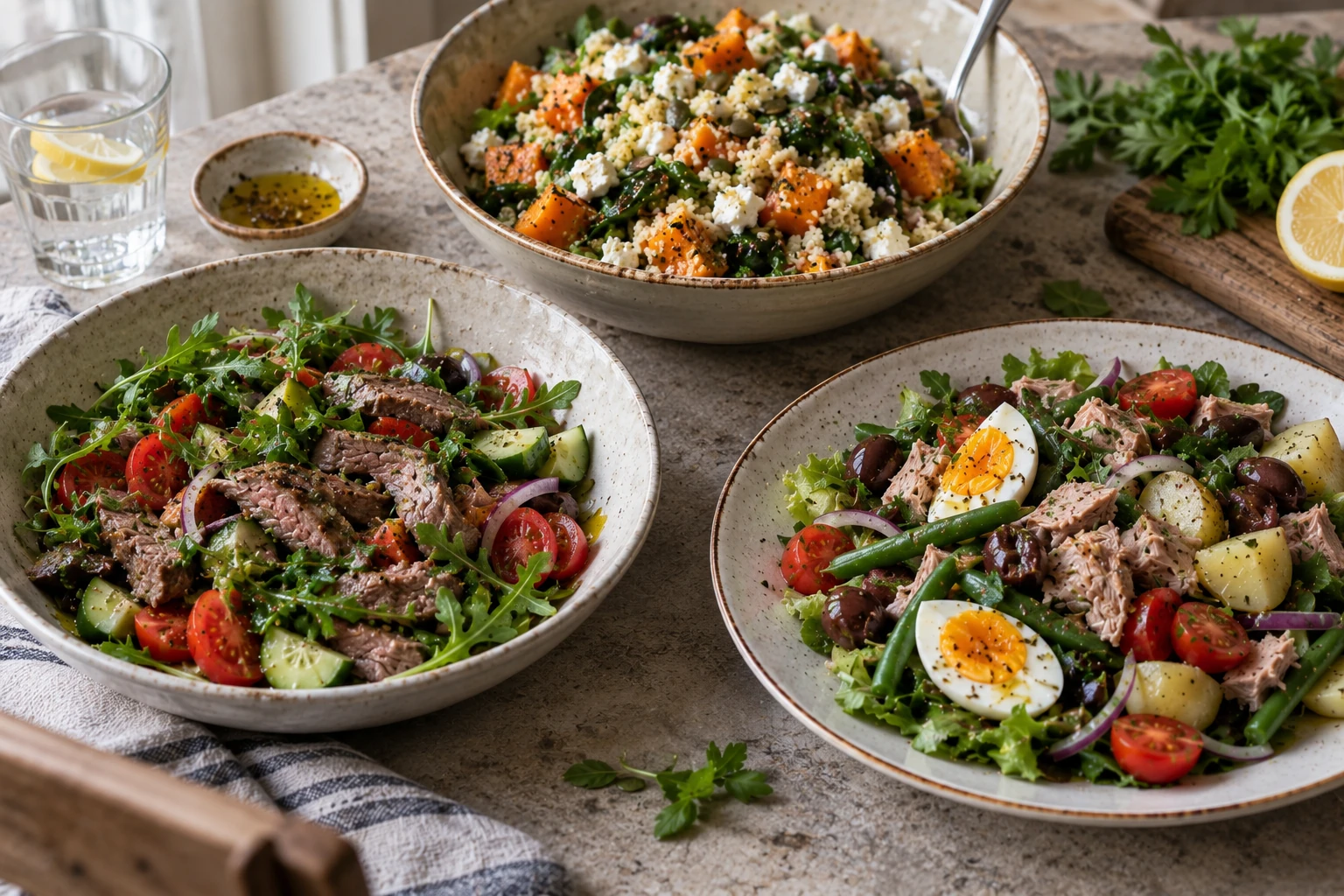
4. Warm salad with pumpkin, couscous, feta, and spinach
Here, the pumpkin is best roasted until the edges are golden rather than cooked down to a purée-like texture: the pieces should stay intact. Spinach and pumpkin add carotenoids and folate, while feta, seeds, and olive oil round the dish out with protein and fats.
Time: about 30 minutes.
Serves 2:
- 300 g peeled pumpkin;
- 100 g dry couscous;
- 80 g feta;
- 2 large handfuls of baby spinach;
- 1 tbsp pumpkin or sunflower seeds;
- 2 tbsp olive oil;
- 1–2 tsp lemon juice;
- paprika;
- salt and pepper.
Cut the pumpkin into small cubes, toss with a little oil, paprika, and salt, and roast until tender and lightly browned. Don’t crowd the pieces too closely: when the pumpkin sits in a single layer on the tray, it browns better instead of steaming in its own juices. Prepare the couscous according to the package instructions and fluff it with a fork. While still warm, toss it with the spinach so the leaves wilt slightly. Add the pumpkin, feta, and seeds, then dress with the remaining oil and lemon juice. The acidity works especially well here, balancing the sweetness of the pumpkin and the saltiness of the feta.
5. Salad with white beans, roasted peppers, and tomatoes
Canned beans are especially convenient for this recipe: just rinse them well and leave them in a colander to drain. Beans add plant protein, iron, and fiber, while sweet peppers and tomatoes provide vitamin C and carotenoids. The pairing works well nutritionally too: vitamin C helps the body absorb non-heme iron from plant foods.
Time: about 10 minutes if the roasted peppers are ready; about 40 minutes if you’re roasting them specifically for the salad.
Serves 2:
- 1 can white beans, about 240 g drained;
- 2 sweet peppers;
- 2 medium tomatoes;
- ¼ red onion;
- a large handful of parsley;
- 2 tbsp olive oil;
- 1 tbsp lemon juice or wine vinegar;
- ½ small garlic clove;
- salt and pepper.
Roast the peppers until soft, let them cool slightly, peel if the skin comes off easily, and cut into wide strips. Large white beans work especially well here: they hold their shape nicely while staying creamy inside. Toss them with the tomatoes, thinly sliced onion, peppers, and plenty of parsley. For the dressing, mash the garlic with a pinch of salt, then add the oil and lemon juice. Toss the salad and let it sit for about ten minutes so the beans can absorb some of the dressing.
You can swap the beans for chickpeas. More ideas are collected in the article “What to cook with legumes: 7 dishes with chickpeas, lentils, and beans”.
6. Salad with tuna, egg, tomatoes, and potatoes
This is a simple homemade combination inspired by Mediterranean salads — without a long ingredient list. Tuna and eggs add protein, while the vegetables and olive oil make the plate more varied and balanced. If you want to get omega-3s from fish more often, some of these salads can be made with salmon, sardines, or mackerel instead.
Time: about 25 minutes.
Serves 2:
- 120–140 g tuna, drained;
- 250–300 g potatoes;
- 2 eggs;
- 2–3 tomatoes;
- a handful of salad leaves;
- 8–10 olives;
- ¼ red onion;
- 1½ tbsp olive oil if the tuna is packed in water;
- 1 tbsp lemon juice;
- 1 tsp mustard;
- black pepper.
Boil the potatoes, let them cool slightly, and cut into large pieces. Boil the eggs and cut them in halves or quarters. Arrange the salad leaves on a plate, then add the potatoes, tomatoes, thinly sliced onion, tuna, eggs, and olives. If the tuna is canned in olive oil and you like the flavor, you can use some of that oil for the dressing instead of adding more. Mix it with the lemon juice and mustard and spoon it over the salad. Large pieces look and taste better here than a thoroughly mixed uniform mass.
We covered which fish to choose more often, which ones are highest in omega-3s, and which species deserve more attention because of their mercury content in the article “Which fish is healthiest: omega-3s, mercury, and 7 simple dishes”.
7. Warm salad with veal, vegetables, and mustard dressing
This is easiest to make with leftover roasted or pan-seared veal. There’s no need to reheat the meat for long a second time. Veal adds protein and heme iron, while the large share of vegetables keeps the dish from turning into just meat with a side.
Time: about 15 minutes in a frying pan or 25–30 minutes if roasting the vegetables.
Serves 2:
- 200–250 g cooked veal;
- 1 sweet pepper;
- 1 small zucchini;
- 150 g cherry tomatoes;
- a handful of arugula;
- 2 tbsp olive oil;
- 1 tsp wholegrain mustard;
- 1 tbsp lemon juice or wine vinegar;
- salt and pepper.
Cut the pepper into wide strips and the zucchini into half-moons or pieces about 1 cm thick. Lightly coat them with some of the oil and roast until browned, or cook in a well-heated frying pan for 5–7 minutes, turning from time to time. The vegetables should stay slightly firm. Slice the veal thinly across the grain — with already cooked meat, this makes a particularly noticeable difference to the texture. Toss the warm vegetables with the tomatoes and arugula, then place the meat on top. Mix the remaining oil with the mustard and lemon juice and spoon it over the salad. If the veal is cold, you can place it on the freshly cooked vegetables for a minute: it will warm through from their heat without drying out.
5 simple salad dressings
Oil and lemon juice make a good base, but different dressings can give the same vegetables, grains, or legumes a completely different character. A dressing also has a practical nutritional role: a small amount of fat helps the body absorb fat-soluble carotenoids from vegetables, so there’s no need to be afraid of olive oil, tahini, seeds, or nuts in a salad.
Olive oil + lemon + mustard. For 2 tbsp oil, use about 1 tbsp lemon juice and 1 tsp mustard. This dressing works well with chicken, fish, potatoes, and fresh vegetables.
Yogurt + mustard + herbs. Add 1 tsp mustard, dill or parsley, salt, and a little lemon juice to 3–4 tbsp thick plain yogurt. An especially good match for potatoes, eggs, and chicken.
Tahini + lemon + water. Mix 1 tbsp tahini with lemon juice and a pinch of salt, then gradually add cold water until the sauce turns creamy. It’s especially good with chickpeas, beans, pumpkin, eggplant, and other roasted vegetables.
Olive oil + balsamic vinegar. A good guide is about two parts oil to one part vinegar. This combination is especially suited to beets, tomatoes, greens, cheese, and fruit in savory salads.
Yogurt + garlic + lemon. Thick yogurt, just a little garlic, lemon juice, salt, and pepper. For one small bowl of dressing, half a small clove is usually enough. It pairs well with cucumbers, potatoes, roasted vegetables, and meat.
The proportions are easy to adjust to taste: one lemon may be much sharper than another, and mustard can range from mild to very hot. So it’s always best to taste the dressing before adding it to the salad.
What to keep at home for quick salads
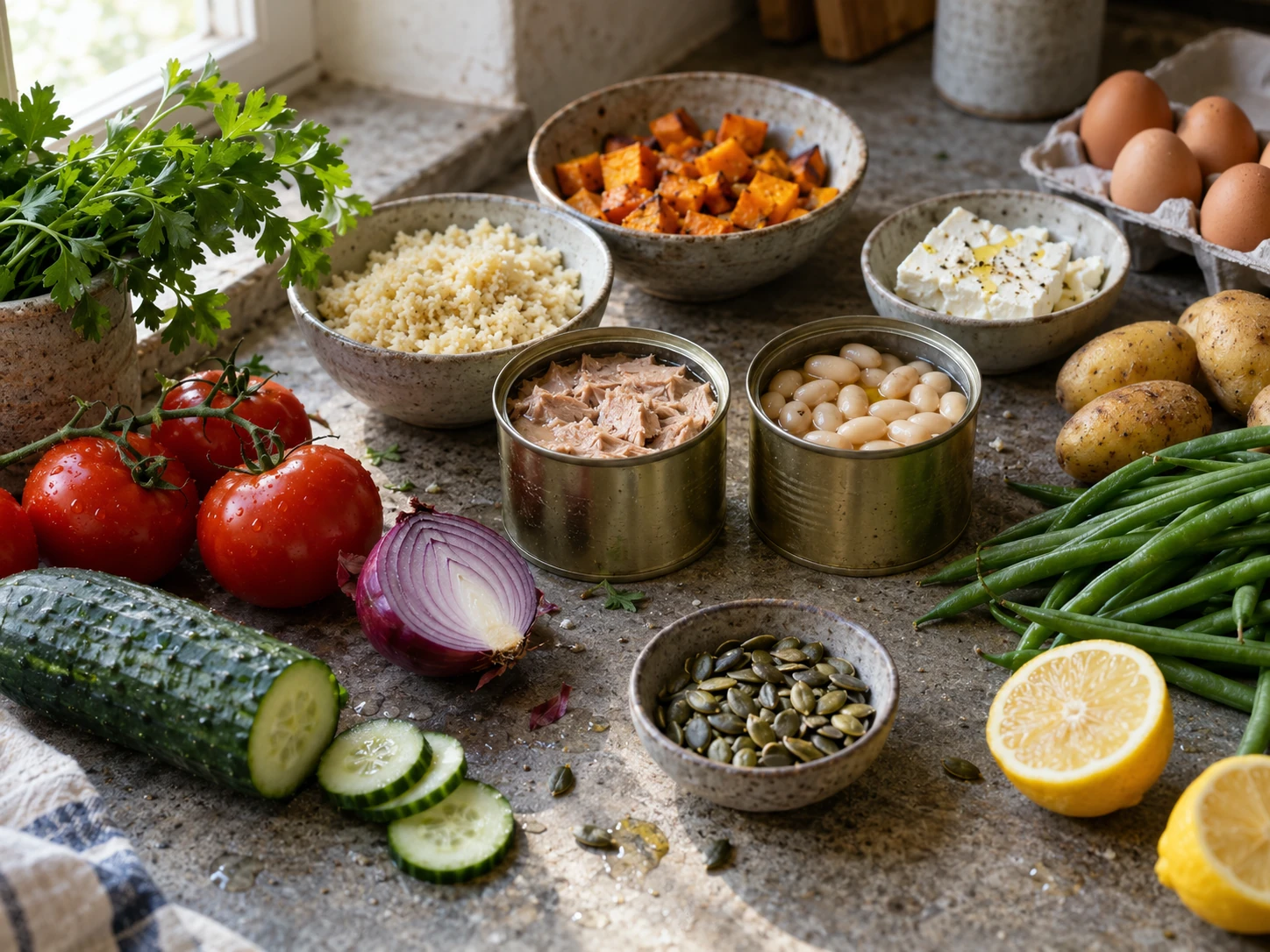
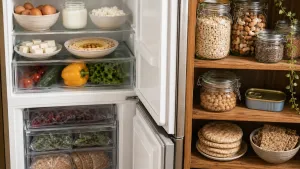
A quick salad starts less with a recipe than with what you already have in the kitchen. A can of tuna or beans, eggs, a piece of feta, nuts, and a grain left over from last night’s dinner are often more useful than a fridge stocked with salad leaves alone. Keeping this kind of backup on hand also makes it easier to build a more varied salad: not just vegetables, but vegetables plus protein, fats, and a more filling base if needed.
It’s useful to keep canned beans, chickpeas, and tuna, couscous or another grain, nuts, and seeds in the cupboard. In the fridge: eggs, plain yogurt, mustard, lemon, cheese, and a few vegetables your family actually eats. Frozen green beans, peas, or broccoli are a lifesaver when you don’t have many fresh vegetables left.
It gets even easier when part of the ingredients come from the previous night’s dinner. Roast extra pumpkin or peppers, and the next day they become the base of a salad. Leftover bulgur? Add chicken and cucumber. Have boiled potatoes? That’s already the base for a warm salad. This makes it easier to build a varied plate regularly instead of trying to cook a separate “healthy” dish from scratch every time.
If today you’re in the mood for something hot rather than a salad, in the article “What to cook for lunch and dinner” we’ve gathered seven more complete dishes built on the same logic: ordinary ingredients, proper portions, and minimal unnecessary fuss.
That’s exactly how a good everyday salad works: the recipe gives you a direction, and from there the dish adapts to the season, what’s in the fridge, and your appetite. For skin and hair, this is also a far more realistic strategy than searching for “perfect” foods: different protein sources, vegetables, fish, legumes, nuts, and seeds on a regular basis, rather than one special ingredient from time to time.