






Child motivation without pressure is about the balance between interest, demands, rest and adult support. This section brings together materials about activities, competitions, fatigue, praise, difficulty and family expectations that can either strengthen a child’s inner support system or quietly turn development into a tense family project.

Child motivation without pressure: activities, demands and resilience
How adult support helps a child keep their interest, face difficulty and feel less afraid of mistakes.
Categories:


A child is not a project: how family expectations affect motivation and connection
When adult love, pride, and anxiety quietly begin to pressure a child’s choices.:


“I Can’t Do It”: How to Help a Child Handle Difficulty
4 gentle ways to support your child when a task feels too big and they need reassurance, not pressure


Praise Effort or Talent: How to Make Praise Feel Like Real Support
How to talk about successes and mistakes so that praise doesn’t turn into a fear of losing love.

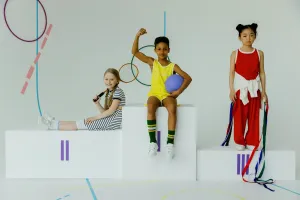
Competing Without Anxiety: How to Support Your Child Without Reinforcing the Fear of Mistakes
What a child needs isn’t a perfect performance, but an adult by their side with whom a mistake doesn’t become...


Is It Okay to Quit an Extracurricular Activity: How to Tell When It’s Time to Stop
How to tell the difference between fatigue and a real loss of interest — and end an activity without damaging...


Too Many Activities: 7 Signs Your Child Is Already Overwhelmed
How to tell when classes, clubs, and “productive development” are taking more energy from your child than they give back.


How to Support a Child’s Motivation Without Pressure: Workload, Rest, and Resilience
About activities, fatigue, pauses, praise, and adult expectations that should never break connection.
Child motivation without pressure does not begin with the phrase “you have to try harder,” but with attention to what is actually happening to the child. A child may lose interest in an activity not because of laziness, ask for a pause not because of weakness, or react sharply to mistakes not because of being difficult, but because of fatigue, fear of disappointing adults, excessive demands or the feeling that they are valued mostly for results.
This subsection brings together Union Beauty materials about children’s motivation, extracurricular activities, sports and clubs, competitions, praise, difficulty, family expectations and parental support without pressure. We look at motivation not as a button that can be pressed with the right words, but as a living system. It is shaped by sleep, rest, learning pace, the atmosphere at home, adults’ reactions to mistakes, the quality of feedback and whether the child has the right to be not only successful, but also tired, confused and ordinary.
What it means to support motivation without pressure
Support without pressure does not mean that nothing should ever be expected of a child. A child needs structure, rhythm, repetition, the experience of effort and an adult who helps them move through difficulty instead of removing it completely. But there is an important line between healthy support and psychological pressure. It is one thing to help a child understand why something feels hard. It is another to make them prove that the money, time and parental hopes invested in them were “not wasted.”
In the materials in this section, we talk about how not to confuse development with overload. Extracurricular activities, sports, music, languages, competitions and additional classes can give a child joy, skills and a sense of growth. But the same things can also exhaust them if the schedule becomes tighter than the child’s nervous system can handle, and praise is offered only when there is a win, a grade or visible progress.
What topics are collected in this section
Here you will find texts for parents who want to support their child attentively, without shame, comparisons or hidden pressure. The focus is on real family situations, not abstract advice about “proper parenting.”
- how to understand that a child is overloaded with activities and is no longer recovering between them;
- what to do if a child wants to quit an activity or asks for a pause;
- how to support a child before a competition, performance or contest without increasing anxiety;
- why praise for talent can sometimes create more pressure than it seems;
- how to help a child tolerate mistakes, frustration and difficulty;
- how family expectations can quietly influence motivation, choice and connection.
When motivation weakens, it is not always a character problem
A child may stop wanting to go to training, put off homework, become irritable before a class, cry after a setback or say, “I don’t want to do this anymore.” The first adult reaction often sounds like anxiety: “they will quit and regret it later,” “you have to finish what you started,” “all children get tired,” “without discipline, nothing will work.” There is understandable parental care in these thoughts, but they do not always help adults see the child themselves.
Sometimes, behind the loss of motivation, there is not a lack of ability or a bad character, but accumulated strain. A child may be carrying too many expectations, too many comparisons, too much “you are so talented,” too much fear of making a mistake. In this situation, the adult’s task is not to press harder right away, but first to understand what exactly has become too much for the child: the pace, the format, the coach, competition, the atmosphere at home, fear of disappointing parents or the lack of time to simply be a child.
Why rest, pauses and the right to change direction matter
In adult logic, a pause is often seen as a step backward. In a child’s nervous system, a pause can be a way to preserve interest. When a child has the right to rest, change the format, temporarily reduce intensity or honestly discuss what no longer fits, motivation does not automatically collapse. On the contrary, it gets a chance to become more internal, instead of being held up only by adult control.
This is especially important for children who are used to being “easy,” diligent or highly responsible. They may go a long time without complaining, keep attending classes, smile at the coach, complete tasks and at the same time gradually lose their living interest. For such children, the gentle question “does this still feel right for you?” can sometimes matter more than another “I believe in you.”
Who this subsection is for
It will be useful for parents of children in primary and middle school, as well as for families where extracurricular activities, clubs, competitions, performances, additional learning, ambitions and the first serious conversations about the future have already appeared. It will also help those who feel that the child seems to have every opportunity to develop, yet there is less joy, more conflict, and any conversation about activities quickly turns tense.
Union Beauty speaks about child motivation through connection, bodily signals, emotional safety and the adult’s ability to see more than behavior. Not to remove responsibility from the child, but to return human scale to support. A child can learn, train, make mistakes, grow and endure difficulty without feeling that adults’ love depends on their success.