







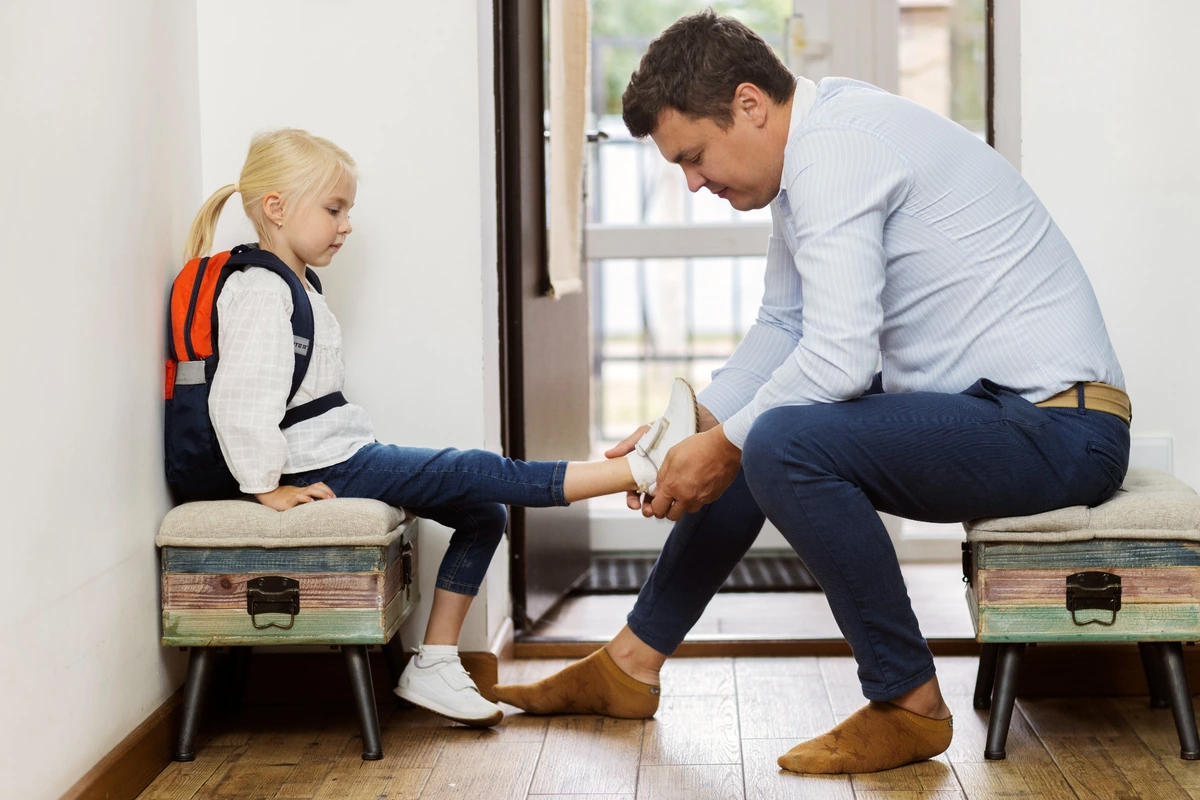
A child sits in the hallway holding a sneaker and saying nothing. Training starts in ten minutes, the uniform is already packed, the membership is paid for, the coach is waiting, and inside the adult that familiar knot starts tightening fast: “here we go again,” “she asked for this class herself,” “you can’t just quit everything,” “if I let this slide now, she’ll never learn to finish what she starts.” Meanwhile, the child barely explains anything. She only says: “I don’t want to.”
In moments like these, it is very easy to see laziness, whim, stubbornness, or a lack of character in a child. But behind a short “I don’t want to” there can be many different things: tiredness, fear of making a mistake, shame after a bad lesson, an overloaded week, conflict with the teacher, a feeling that more is being expected of her than she can handle, or simply a loss of genuine interest. A child’s motivation rarely disappears in a single day. More often, it first becomes uneven: the child still goes to the activity, but gets ready more and more slowly; still agrees to attend, but takes longer to recover afterward; still says “it was okay,” but cries more often at home, argues over little things, or speaks harshly about herself.
This article is a map. It is not about making a child more convenient, more efficient, or more “results-driven.” Nor is it about dropping all expectations so as not to upset them. It is about a different balance: how to support interest without turning it into an obligation to succeed; how to provide structure without pressure; how to notice fatigue without writing everything off as personality; how to talk about pauses, mistakes, competition, and expectations in a way that helps a child stay connected to themselves and to the adults around them.
Motivation is not a constant desire
One of the traps of the adult perspective is thinking that a motivated child always wants to do the activity. If they love music, they are supposedly meant to want to go to every lesson. If they chose a sport, they should calmly accept fatigue, repetition, and losses. If they asked for dance classes, they should not be saying two months later that they are tired of it. But a child’s interest does not work like a straight line. It rises, dips, changes shape, runs into boredom, difficulty, comparison, and the fear of not living up to expectations.
In modern psychology, motivation is often linked not only to reward, discipline, or willpower, but to three core supports: autonomy, competence, and connection. It is easier for a child to stay engaged in an activity when they have at least a small space for choice, feel they can gradually become more capable, and do not lose warm contact with the important adults in their life. But if choice is replaced by pressure, the sense of growth by shame over mistakes, and connection by fear of disappointing others, motivation may still hold on outwardly while becoming fragile inside.
That is why “I don’t want to” is not a diagnosis in itself. It needs translating. Sometimes it is short-term fatigue after a packed day. Sometimes it is a protest against a pace that has become too intense. Sometimes it is fear of failure, when the child feels it is better not to go than to feel “worse than everyone else” again. Sometimes it is a sign that the activity has genuinely stopped feeling like theirs. Each of these situations calls for a different response. That is exactly why the universal phrase “you have to finish what you start” can either provide structure or create pressure, depending on what is really happening.
When it is not about motivation
Before trying to “bring motivation back,” it is worth checking whether motivation is actually the problem. A child may not have lost interest at all, but simply have no energy left after school, commuting, noise, and homework. They may not be lazy, but afraid of the next lesson after a sharp comment from the teacher. They may not be manipulative, but simply unable to explain that tension is building up inside them. They may not be “weak,” but overloaded by a schedule that seems useful to adults and excessive to their nervous system.
This is an important distinction. If a child is tired, a motivational speech will not fix it. If they are afraid of making a mistake, “don’t make things up” will not help. If they are exhausted by expectations, one more argument about why the activity is good for their future will not support them. Motivation without pressure begins with an attentive question: not “how do I make them do it?” but “what exactly has become too much, too unclear, or too hard for this child right now?”
Workload: when too much of a good thing becomes too much
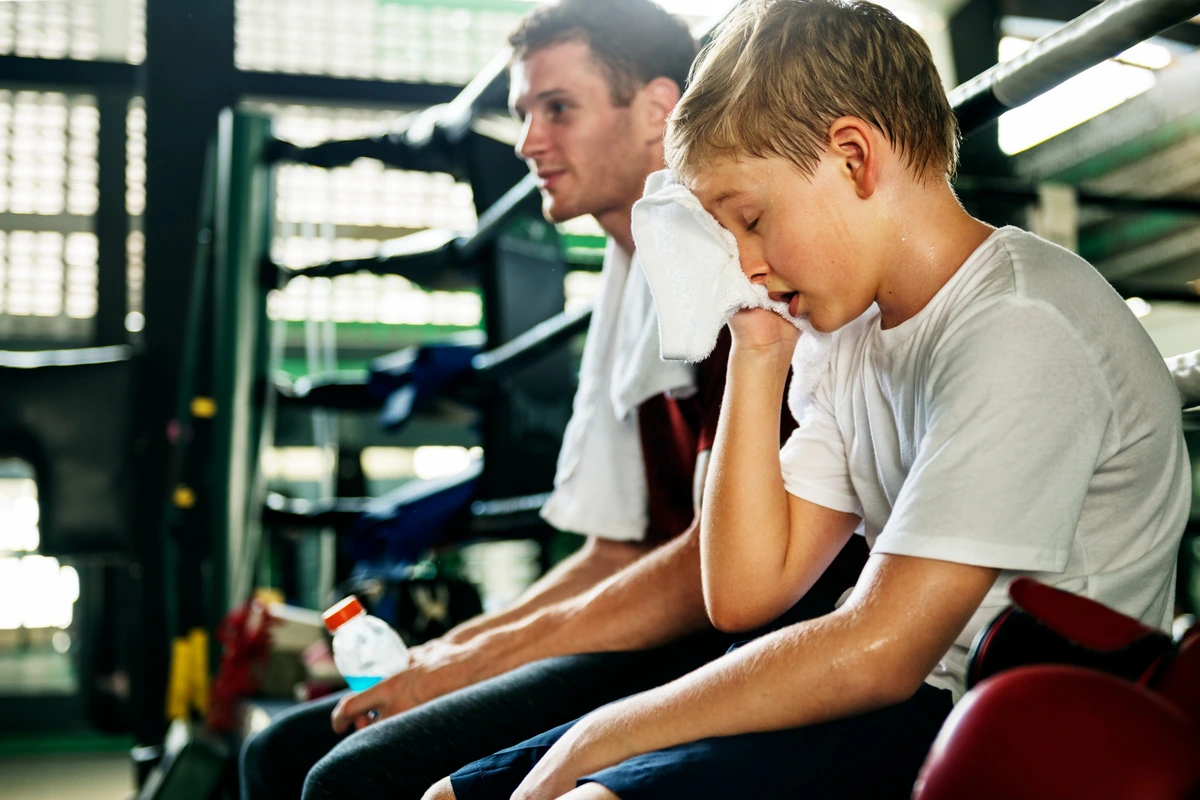
Clubs, sports, music, languages, dance, coding, art studios — all of these can be valuable experiences. The problem is not the activities themselves. The problem begins when there are almost no empty spaces left in a child’s day: no time without evaluation, without rushing, without commuting, without “hurry up and get changed,” without “we’re running late,” without an expectation of results. An adult may think they are giving a child opportunities, while the child may feel deep down that their week belongs to everyone except them.
Overload does not always look like a direct “I can’t do this anymore.” More often it shows up indirectly: the child takes longer to get ready, gets irritated more easily, sleeps worse, complains of a stomachache before class, reacts sharply to ordinary corrections, loses joy in things that used to be interesting. In situations like these, it is worth looking not only at the child’s personality, but at the architecture of their week.
You can read more about this in the article how to tell when extracurriculars have already become too much for a child. It focuses specifically on the signals that show a child may not complain in words, but their system is already asking for the pace to slow down.
Three questions not for the child, but for the schedule
Sometimes it is more useful to analyze not a child’s “laziness,” but the week itself. Is there an evening with no mandatory activity? Does the child have any time when no one is evaluating them? After school, is there at least a short transition, rather than immediately facing another demand to be collected, attentive, strong, talented? If the answer is “no” almost everywhere, motivation may be fading not because the activity is wrong, but because there is no real living space left for it.
Workload should not be measured only by the number of activities. Commute, noise, social tension, the atmosphere in the group, the teacher’s pace, expectations before performances, what time the child gets home, the quality of sleep, and how much adult frustration surrounds all that logistics matter too. Sometimes one activity in the right format becomes a source of support, while three “very useful” classes turn the evening into a constant forced march.
A pause is not always a defeat
The phrase “I want to quit” often scares adults more than it scares the child. It touches on money, time, personal hopes, the fear that “she never finishes anything,” embarrassment in front of the coach, relatives, or yourself. Sometimes the hardest part of this conversation is not for the child. It is for the adult, who has already imagined the future of this activity: performances, victories, confidence, a beautiful trajectory where today’s tiredness was only supposed to be a small obstacle.
That is exactly why an adult may respond too quickly: “no,” “you wanted this yourself,” “everyone gets tired,” “you can’t give up.” Sometimes those words really do come from a wish to teach responsibility. But if we say them before understanding the reason, the child hears not structure, but a ban on honesty.
A pause can take different forms. It is not always a final decision to quit. Sometimes it is recovery after an intense period. Sometimes it is a change of format: fewer classes, a different group, a different pace, a break until the end of the month, or stepping away specifically from the competitive part. It is important for a child to know that talking about a pause does not make them bad, weak, or ungrateful. And it is important for the adult not to confuse a pause with automatic surrender.
This is not something to decide in a rush in the car or in the hallway before class. If a child says they want to stop, it is worth understanding what exactly they want to stop: the activity itself, the pace, the group, the fear of making mistakes, the conflict, the commute, the atmosphere, or the feeling that too much is being expected of them. This area is explored in more detail in the article about when a child needs a pause, not another “don’t give up” argument.
Resilience is not born from the phrase “be strong”
Resilience is often imagined as the ability not to react: not to cry, not to be afraid, not to get angry, not to lose composure before a performance. But children’s resilience develops differently. It is not armor. It is the ability to go through something hard and gradually return to yourself: to lose and not fall apart, to make a mistake and not decide that “I’m hopeless,” to hear criticism and not lose contact with an adult, to try again not out of shame, but because there is still some inner resource left.
That is why support before competitions, contests, exams, concerts, or open classes requires precision. The phrase “you’re the best” may sound warm, but sometimes it adds pressure: if I am the best, then I am not allowed to make a mistake. The phrase “the main thing is to beat yourself” may seem gentle, but for a frightened child it can sound like one more demand. Often what works better is not a big motivational speech, but a simple signal: “I’m with you both before the result and after it.”
Support before a performance is not a promise of success. It is the experience of knowing that connection with an adult does not depend on a grade, a place, or a mistake.
For situations involving a stage, a tournament, a contest, public evaluation, or strong pressure around the result, it is worth reading separately how to support a child before a performance and after the result. The focus there is not on motivation in general, but on how not to intensify the fear of mistakes when a child is already standing under other people’s gaze.
When it is not working
There is a moment when motivation often breaks especially painfully: the child is trying, but it is not working. They cannot repeat the movement, do not understand the task, lose, get confused, hear corrections, and suddenly say: “I’m stupid,” “I’ll never be able to do it,” “I’m not going anymore.” An adult wants to soothe them quickly: “don’t say that,” “it’s easy,” “just try again.” But at that moment, the child’s problem is not only the task itself. They are experiencing a blow to their sense of self.
Here, support cannot be reduced to “don’t give up.” Sometimes the next step needs to be smaller. Sometimes the difficulty needs to be named. Sometimes there needs to be a pause for a few minutes. Sometimes the child needs help separating the mistake from their identity: “this does not mean you are incapable, it means this is hard right now.” If this theme keeps repeating, it is useful to look separately at how to help a child tolerate difficulty, mistakes, and “it’s not working” moments.
Praise: support or a hidden contract?
Praise seems safe. We praise because we love, because we are happy, because we want to encourage. But praise can work in very different ways. “You’re a genius,” “you’re the most talented,” “you’re a future champion” may sound like love, yet inside the child they can turn into a contract: I have to keep proving this image. If people see me as talented, then it is dangerous to make mistakes. If victories are expected from me, then it is shameful to get tired. If adults are this happy about the result, what happens when there is no result?
This does not mean praise should stop. A living, genuine sense of joy from an adult matters. But alongside joy over the result, a child also needs their process to be noticed: how they tried, what they changed, where they asked for help, how they got through the anxiety, how they came back after a mistake. This kind of support does not trap a child in the image of being “talented.” It helps them feel: I can learn, search, make mistakes, change my approach, and still not lose my value.
We have a separate article on why praise can either support a child or quietly increase pressure. Here, it is enough to hold on to one main point: adults’ words often become the child’s inner voice. And that voice can either help them try again or make them afraid of every mistake.
A child is not the family’s project
The deepest layer of a child’s motivation often lies not in the child themselves, but in adult expectations. Parents may love their child deeply and at the same time, often without noticing it, place their own fears into the child’s activities: so they will have more opportunities than we did; so they will not miss their chance; so they will be braver; so their talent does not “go to waste”; so the family can feel proud. There is a lot of love in these wishes. But if they become too dense, the child is no longer simply going to sports, music, or dance. They start carrying someone else’s hope.
Then motivation changes its nature. Instead of “this is interesting to me,” there appears “I must not disappoint.” Instead of “I want to try,” there is “I have to measure up.” Instead of healthy excitement, there is fear of losing admiration, respect, or warmth. And even a good activity becomes heavy not because of its content, but because of the emotional weight around it.
This is not about blaming parents. Adults often pressure not out of indifference, but out of anxiety and love. But it is easier for a child to keep a living interest when they feel: my wishes are allowed to change, my mistakes can be withstood, my result is not a family verdict, and my self is bigger than any activity. This layer is explored separately in the article how family expectations affect motivation and connection.
And if you want a broader understanding of why children of different ages react differently to fatigue, criticism, changes of plan, and adult expectations, you can turn to the foundational article child age and the nervous system: a short guide for parents.
What an adult can do right now
Supporting motivation without pressure does not begin with the perfect method, but with a different way of seeing the child. Not as a system to optimize. Not as an investment in the future. Not as proof that we are good parents. But as a person who is growing, trying, making mistakes, getting exhausted, recovering, and gradually learning to stay in touch with their own capacities.
In practice, this may not look very impressive, but trust is often built precisely in these small decisions.
- Look at the whole week, not just the activity. If a child “fell apart” after one lesson, the issue may not be that lesson itself, but the fact that school, commuting, noise, homework, and a rushed dinner came before it.
- Ask about energy, not only desire. “Are you still interested?” is an important question. But a child may answer “yes, I am” and still not be able to cope with this exact pace, this group, or this season of strain.
- Do not shame them for wanting to stop. A pause may be a way of recovering, not proof of weakness.
- Separate the result from the relationship. After a performance, a loss, or a mistake, it is important for the child to feel that the adult does not disappear emotionally.
- Praise more than just winning. It is worth noticing attempts, strategies, honesty, asking for help, coming back after a pause, and the ability to tolerate disappointment.
This does not cancel out rules. A child needs structure: agreements, responsibility, respect for other people’s time, a realistic attitude toward commitments. But structure and pressure are not the same thing. Structure explains, holds, and helps with orientation. Pressure shames, frightens, and pushes the child to abandon themselves in order to remain “good.”
When to be concerned
There are situations where motivation should not be something you try to “raise” on your own. If a child is not recovering for a long time, cries often, sleeps poorly, shows sudden appetite changes, complains of pain before classes, avoids school or activities, speaks about themselves very harshly, panics over mistakes, or loses interest in almost everything, it is worth seeking help from a professional. Depending on the situation, this may be a child psychologist, family psychologist, pediatrician, or another specialist. What matters here is not waiting for the child to “grow out of it” if their condition is already clearly affecting daily life.
It is also important to stay mindful of age. What is natural for a seven-year-old may look different in a teenager. Younger children are more likely to need adult co-regulation, bodily predictability, and simple transition rituals. Older children need more autonomy, more respect for their choices, and the chance to speak without fearing they will immediately be talked out of how they feel.
Motivation is sustained not by pressure, but by living connection
A child can be tired and still love what they do. They can want a pause and not be lazy. They can be afraid of competition and still be talented. They can get angry at difficulty and still be learning resilience. They can fail to meet adult expectations and still remain whole, valuable, and worthy of love. When an adult remembers this, motivation stops becoming a battlefield.
The best thing parents can give a child around activities, classes, success, and results is neither endless freedom nor harsh control. It is attentive presence. Seeing where the child needs structure and where they need rest. Where they have run into difficulty and where they are already exhausted. Where they need support before a performance and where it matters more to take the excess weight of expectations off their shoulders. Where praise helps and where it is better simply to say: “I can see this was not easy for you.”
Resilience is not born where a child is forced not to feel. It grows where they have gone through difficulty many times alongside an adult who is not frightened by their fatigue, anger, pause, or mistake. Motivation without pressure does not make the path easy. It makes it human.
Sources
- Children’s Health. Is my child overscheduled?
- UNICEF Parenting. What is stress?
- Center on the Developing Child at Harvard University. Resilience: A skill your child really needs to learn (and what you can do to help).
- Center for Self-Determination Theory. Basic Psychological Needs.
- Sebire S. J., Jago R., Fox K. R., Edwards M. J., Thompson J. L. Testing a self-determination theory model of children’s physical activity motivation: a cross-sectional study. International Journal of Behavioral Nutrition and Physical Activity.
- Mueller C. M., Dweck C. S. Praise for intelligence can undermine children’s motivation and performance. Journal of Personality and Social Psychology.