







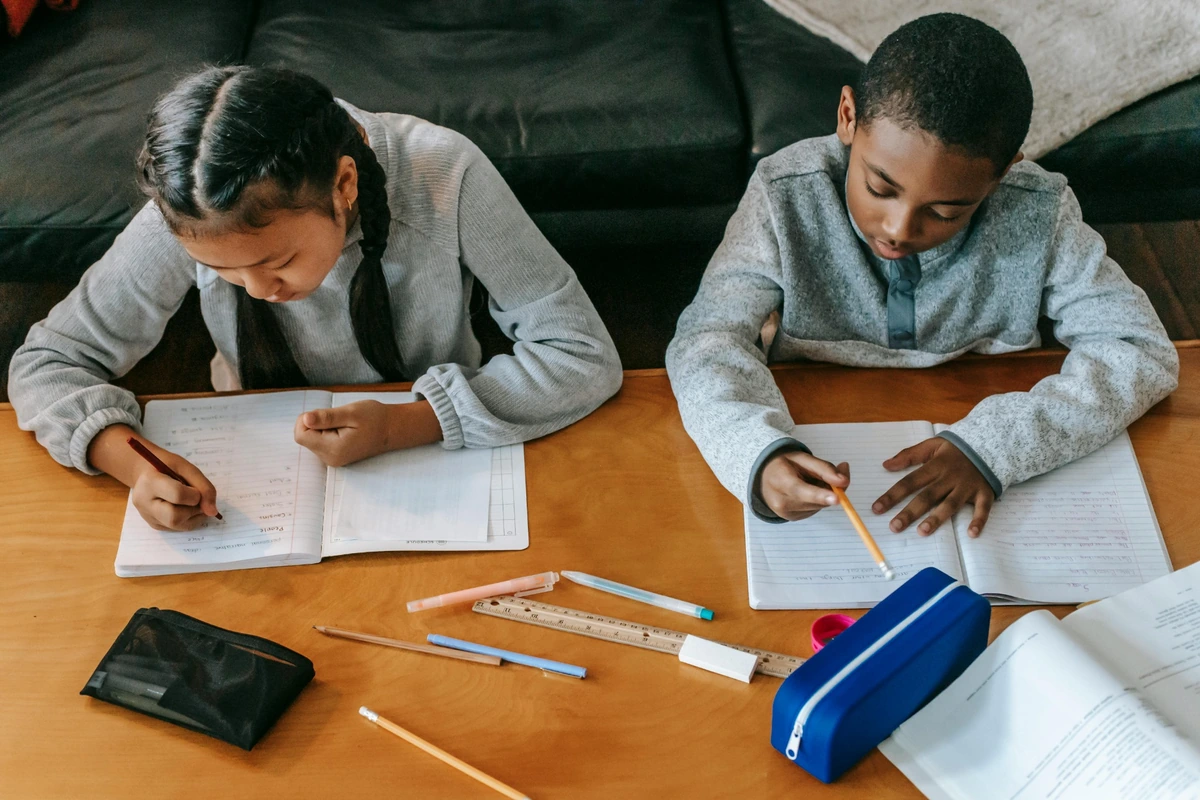
A child sits over a notebook, a construction set, a piece of music, a drawing, a math problem, or a long reading passage. At first, they’re still trying. Then they start shifting in their seat, erasing, putting the pencil down more sharply, staring out the window, getting angry at the page, at themselves, at the adult, at the whole idea of “just a little more.” And at some point the familiar words come: “I can’t,” “I won’t get it,” “this is stupid,” “I’m not doing it,” “I don’t care.”
To an adult, this often looks like laziness, stubbornness, or a lack of effort. Especially if the task doesn’t seem all that hard: it’s just a few more lines to finish, one movement to repeat, one page to read, one part to put together, two more math problems to solve. But for a child, a “long task” isn’t always about volume. It’s about the moment when quick success doesn’t come, and the nervous system runs into frustration: I’m putting in effort, but I’m not yet getting that feeling of “I did it.”
This is often where the struggle begins. The adult wants to teach perseverance and says, “Don’t give up,” “try harder,” “finish what you started.” The child hears: “How you feel doesn’t matter. The result does.” And instead of staying with the task, they begin protecting themselves from shame, failure, or adult pressure.
This article is not about how to make a child just endure it. And it’s not about finishing every task at any cost. Its focus is how to help a child tolerate difficulty in a healthy way: not fall apart after the first setback, not fuse their whole identity with a mistake, but also not ignore tiredness, overload, or the need for a pause.
Difficulty is not just about willpower
When a child is struggling, adults often want to speak the language of character: “you need willpower,” “be more persistent,” “everyone goes through this.” But the ability to stay with a task is not just about wanting to. It’s connected to attention, memory, the ability to plan, shift gears, inhibit the impulse to “forget it,” notice a mistake, and not collapse because of it. These are skills that mature gradually and need practice.
A child may genuinely want to cope and at the same time not yet have enough internal tools to get through the moment of “it’s not working.” Their body tenses up, their breathing gets shorter, their movements sharper, their face more closed off. At that moment, a long task stops being just a task. It becomes an experience: “I can’t handle this.”
If the adult responds only with pressure, the child learns not to tolerate difficulty, but to tolerate the adult. If the adult immediately does everything for them, the child learns that difficulty is something that can only be removed. Between these two extremes there is another path: helping the child stay in contact with the task while reducing it to a size their system can actually process.
That is why in the main article of this section we talk about how to help a child not give up without using pressure. Resilience is not born from the phrase “be strong.” It grows out of repeated experience: this is hard for me, but there is an adult nearby who does not shame me and helps me find the next step.
When “I can’t” actually means different things
The same phrase — “I can’t” — can come from several very different places. And it matters that the adult doesn’t respond to it automatically. Sometimes the child really has run into normal difficulty: the task is new, the movement is unfamiliar, the text is longer than usual, the same mistake keeps happening, and there’s no quick result. Here, what helps is support through small steps.
Sometimes “I can’t” means attention fatigue. The child might still be able to understand the material, but their resources are already spent: it’s been a long day, there’s been too much noise, screen time, a commute, several lessons in a row, practice, or an emotional conflict. Then the problem is not character. It’s an exhausted system.
And sometimes “I can’t” means the task has become a symbol of something bigger: fear of mistakes, shame, comparison, adult expectations, a previous experience of failure. The child is no longer fighting the worksheet or the problem itself, but the feeling that “something is wrong with me.” In that situation, one more demand to “focus” often only makes things worse.
So before using any strategy, it helps to ask yourself one quiet inner question: what exactly is the child unable to tolerate right now — the task, the fatigue, the fear of making a mistake, or my pressure? The answer determines whether we are helping them continue, or whether the more honest thing is to pause.
Strategy 1. Shrink the task to the first visible step
A long task is scary not only because it is difficult, but because it feels shapeless. “Learn the paragraph,” “write the essay,” “clean your room,” “practice the piece,” “do the project” — for an adult these are clear instructions. For a child, it can feel like fog: no clear place to start, no sense of how long it will take, no idea when it will get easier.
The first strategy is not to motivate the child with the big end result, but to reduce the task to the first visible step. Not “do all of it,” but “let’s find the first sentence.” Not “learn the whole text,” but “let’s read one paragraph and underline three words.” Not “clean the room,” but “first let’s put just the things from the floor into one box.” Not “play it without mistakes,” but “let’s slowly repeat these two bars.”
A small step does not belittle the child. It gives them a way in. When the task becomes visible, it is easier for the brain to begin. And beginning is often the hardest part, because at that point the child has no proof yet that they’ll be able to do it.
What matters for the adult here is not doing the step instead of the child. Don’t grab the pencil, don’t dictate the whole sentence, don’t build the construction set with your own hands. It’s better to stay beside them as the person who helps define the edge of the first action: “Just this part. Not the whole task. One piece.”
Strategy 2. Name the frustration instead of arguing with it
When a child gets angry at a task, adults often start arguing with the emotion itself. “Don’t get upset,” “it’s not that hard,” “don’t exaggerate,” “sit properly,” “stop making things up.” But frustration does not disappear because it was ordered to. On the contrary, the child may get even angrier, because now it’s not only the task that feels hard, but also their right to feel what they feel.
The second strategy is to briefly name what is happening: “You’re angry because it didn’t work a few times already.” “You’re tired of looking for the answer.” “It’s frustrating that the same mistake keeps happening.” “You wanted it to go faster, but it’s not coming together.” That kind of phrase does not solve the task. But it does make the child feel less alone inside the difficulty.
Naming frustration does not mean allowing the child to throw everything down, scream, or break things. The boundary still stays in place. You can say: “It’s okay to be angry. It’s not okay to rip the notebook. Let’s put the pencil down, take a breath, and look only at the first line.” In that way, the adult acknowledges the child’s state and holds the frame at the same time.
It matters for a child to experience this many times over: when things are hard for me, the adult does not shame me for my emotions. They help me return to action. This is exactly where tolerance for difficulty begins to grow.
Strategy 3. Give the task a short time container
What is hard for a child to bear is not only the work itself, but also the feeling that it will never end. “You’re not getting up until it’s done” may sound like discipline to an adult. To a child in a state of frustration, it can sound like a trap. And then they are no longer fighting for the result — they are fighting for a way out.
The third strategy is a short time container. Not “we’re sitting here until you finish,” but “we’ll work for seven minutes and then take a break.” Not “read until it sounds right,” but “let’s read one page slowly, then stop.” Not “practice until you get it,” but “five repetitions at a slow tempo, and then we’ll see what changed.”
The container has to be small enough for the child to believe in it. For one child that might be ten minutes; for another, three. Especially if the child is already exhausted, it is better to start with a very short stretch but keep the agreement honestly. If the adult says “five minutes” and then adds, “come on, just a little more,” trust in the container disappears quickly.
A pause after that kind of stretch is not a reward for obedience. It is part of working with attention and the nervous system. The child learns: difficulty can be tolerated in portions. You do not have to conquer the whole task at once.
If you can see that the real issue is attention fatigue rather than unwillingness to learn, it may help to return separately to the material on what to do when attention gets tired: 3 strategies without pressure. The focus there is not frustration from difficulty, but attention exhaustion as a distinct state.
Strategy 4. After the break, return not to everything, but to the point of breakdown
Many children are afraid to return to a task after a break because they imagine being thrown back into the same overwhelming whole. So the fourth strategy is to return not to everything, but to the point where things fell apart. Where exactly did it get hard? On which word? Which problem? Which movement? Which part of the construction set? Which moment in the piece?
This changes the feel of the task. It stops being one solid wall and becomes a map. Here the child was still coping. Here the tension began. Here they made three attempts. Here they need a different way in. This kind of view does not blame. It explores.
You can say: “Let’s not go back to all of it. Show me the spot where it started to feel the worst.” Or: “What was the last thing that still felt doable?” Or: “At which step did it feel like everything fell apart?” For a child, this can sometimes open up a new idea for the first time: a mistake is not a verdict, but a point you can work with.
After that, the adult can offer one new way — but not ten. For example: “Let’s go slower,” “let’s say it out loud,” “let’s cover part of the text,” “let’s draw a diagram,” “let’s do this movement without the music first,” “let’s first find what already makes sense.” Too much advice in a moment of frustration just turns into noise again.
All four strategies together: what it can look like
In real life, these strategies rarely unfold perfectly according to plan. The child may get upset, the adult may be tired, time may be tight, dinner may be on the stove, and the notebook may still be lying open. But even in an ordinary evening, it is possible to change the tone of the situation.
For example, a child is crying over a math problem. Instead of “stop it, there’s nothing hard here,” the adult says, “You’re upset because it didn’t work twice already.” Then they reduce the scale: “Not the whole problem. Just the first line.” They give a container: “Let’s think about it together for five minutes, then we’ll take a break.” After the break, they return to the point of breakdown: “Show me exactly where it stopped making sense.”
This is not magic. The child may not calm down right away. But they get a different kind of experience: difficulty does not mean I’m about to be shamed, abandoned, or pushed until I am completely worn out. Difficulty can be broken down. It can be reduced. It is possible to come back to it.
What is better not to do when a child is struggling
What gets in the way most is not the demands themselves, but the tone in which the child feels shame. An adult may genuinely want to help, but phrases like “what’s so hard about this,” “you’re giving up again,” “other kids manage somehow,” “you just don’t want to think” quickly move the child out of learning and into self-protection.
Instant rescue does not help either. If the adult immediately explains everything, finishes it, corrects it, rewrites it, or builds it for the child, the tension drops — but the skill does not grow. The child gets relief, but not the experience of: I can get through one small hard part.
There is another trap too: romanticizing endurance. “You have to finish what you started” may sound noble, but not every kind of pushing through is helpful. If a child has been crying for a long time already, is exhausted, not sleeping, regularly falling apart over this activity, or losing any sense of joy in it, a pause may not be weakness at all. It may be the honest way to preserve contact with themselves. More on that in the article about when a pause may be more honest than the demand to “finish what you started”.
How praise and feedback affect the willingness to try again
After a difficult task, an adult often wants either to praise the child or point out what needs improvement. Both impulses can be helpful if they are precise. “Good job” is sometimes too general. “You finally did it” may sound like reproach. “You should have done it like this from the start” devalues the path the child still managed to take.
It works better to notice a specific action: “You came back after the break.” “You found the place where it stopped making sense.” “You tried a different way.” “You didn’t quit right away, even though you were angry.” These are not just nice words. This is how the child begins to see what exactly helped them tolerate the difficulty.
Feedback is also better given in small doses. Not the full list of mistakes, but one next step: “Next time let’s try underlining the key words first.” “It seems a slower pace helps you.” “You could make a diagram before answering.” More on this in the piece about how praise and feedback affect the willingness to try again.
When it is worth looking more deeply
Sometimes difficulty in learning, sports, music, or everyday tasks is not just ordinary frustration. If a child regularly cannot get started, quickly explodes, avoids any task, harshly devalues themselves, has physical complaints before studying, suddenly loses sleep, or constantly worries that they are “stupid,” it is worth looking at the bigger picture.
The cause may be overload, anxiety, attention difficulties, learning disorders, a mismatch between demands and the child’s actual level, conflict with an adult, or experiences of shame. In such cases, it helps not just to “train endurance,” but to talk with a teacher, pediatrician, child psychologist, or another professional who can help understand what is behind the repeated meltdowns.
It is important not to turn every frustration into a problem. But it is just as important not to call something “character” when it may actually be a signal: the child needs different support, a different pace, or a different way of assessing what is going on.
The main thing
A child does not learn to tolerate difficulty through shame. They learn through experiences in which difficulty has limits, the adult stays close, mistakes do not destroy self-worth, and the task is broken down into steps they can actually see and try.
Four simple strategies — shrinking the task to the first step, naming the frustration, giving it a short time container, and returning to the point of breakdown — do not make learning easy. They make it workable for the child’s nervous system. And that is a big difference.
When a child lives through “this is hard, but I’m not alone” again and again, they gradually develop an inner sense of support. Not heroic, not performative, not built on fear of disappointing adults. But quiet and real: I may not know right away, I may make a mistake, I may take a pause, I may come back, and I can try the next step.
Sources
- Center on the Developing Child at Harvard University. A Guide to Executive Function.
- National Scientific Council on the Developing Child. Supportive Relationships and Active Skill-Building Strengthen the Foundations of Resilience. Working Paper No. 13.
- Center on the Developing Child at Harvard University. Serve and Return: Back-and-forth exchanges.
- Child Mind Institute. How to Help Kids Who Are Struggling in School.
- Centers for Disease Control and Prevention. About Children’s Mental Health.
- Mueller C. M., Dweck C. S. Praise for intelligence can undermine children's motivation and performance. Journal of Personality and Social Psychology, 1998.