







A child brings over a drawing, a test paper, a handmade craft, a dance video, the first correctly played musical passage, or simply says, “Look what I made.” Sometimes they are not looking at their own work, but at the adult’s face. They are waiting not so much for an evaluation of the drawing, the problem, or the movement, but for a signal: I am seen, someone is happy for me, I am in connection.
For an adult, the response often comes almost automatically: “Good job!”, “You’re so smart,” “So talented!”, “The best!”, “Genius!”. There is love in these words, pride, a wish to encourage, to help the child feel important. But sometimes praise itself can carry pressure the adult never intended to create.
The issue is not that children should not be praised. They can and should be. It matters for a child to know that adults notice their efforts, are happy about their progress, and see not only mistakes but also what went well. But praise is not a neutral decoration added after the result. It tells the child what the adult considers valuable: being “talented,” not making mistakes, winning, being pleasing, pushing through at all costs, or gradually learning to notice their own process.
The very same phrase can sound different depending on the context. “You’re very gifted” can be supportive if a child has not felt their own strength for a long time. But if this becomes the main language of love, the child may start to fear anything that does not confirm that role. “You tried so hard” can be a warm source of support. But if it is repeated after every failure without attention to the child’s feelings, it may sound like a hidden demand: try even harder, and then there will be something to praise.
This article is not about finding one “right” phrase to memorize. Its focus is how to make praise not a medal pinned to a child’s chest and not a tool for control, but a form of connection: the adult sees the child, notices their path, and helps them not merge their whole identity with the result or fear the next attempt.
Why praise has such a strong impact
For a child, an adult’s words are not just a comment. Very often, they are a mirror in which the child builds an idea of who they are. If adults keep saying, “You’re smart,” the child may begin to think that their main value lies in being smart. If they hear, “You’re a winner,” losing may start to feel frightening. If they are told, “You’re the most talented one in our family,” any difficulty may begin to sound like a threat: if I cannot do it, am I no longer that person?
That is why praise for talent is not always safer than criticism. Criticism hurts openly. Praise can seem uplifting while at the same time reinforcing a role the child becomes afraid to lose. This is especially visible in children who are used to getting quick results. As long as things come easily, “You’re smart” feels nice. But when the task becomes harder, the child may not think, “I need a new strategy.” They may think, “Maybe I’m not smart after all.”
What matters here is not swinging to the other extreme. A child does not need to be shielded from hearing that they have ability, beauty of movement, musicality, attentiveness, speed, creativity, or a strong memory. Adults do not need to pretend they do not see these things. The problem begins when praise focuses only on a trait and not on what the child does with it. Then praise turns into a label. And a label always has to be proven again.
Talent is not the problem. The problem is when it becomes the only story
The word “talent” is not bad in itself. It can be warm, accurate, joyful. A child really may have a natural bent for movement, rhythm, language, maths, imagery, sport, communication, or building things. Adults do not need to act as if they do not notice that. The problem starts when talent stops being one part of the child and becomes an obligation.
After a strong performance, a girl hears, “Our little performer.” Everyone smiles, hugs her, feels proud. At first, it feels good. But if over time she begins to feel that this is how the family sees her above all, the next performance stops being just a joy. It becomes a test: will I still be “the performer” if I forget a move, fail the selection round, or suddenly no longer want to be on stage?
When a child often hears, “You’re our artist,” “you’re the maths one,” “you’re the athlete,” “you’re the musician,” they may feel proud at first. But over time, a hidden condition can creep into that role: if I do not want to draw, if I hate this competition, if I lose the match, if I do not understand the problem, if I am tired of music — what happens then to my place in the family story?
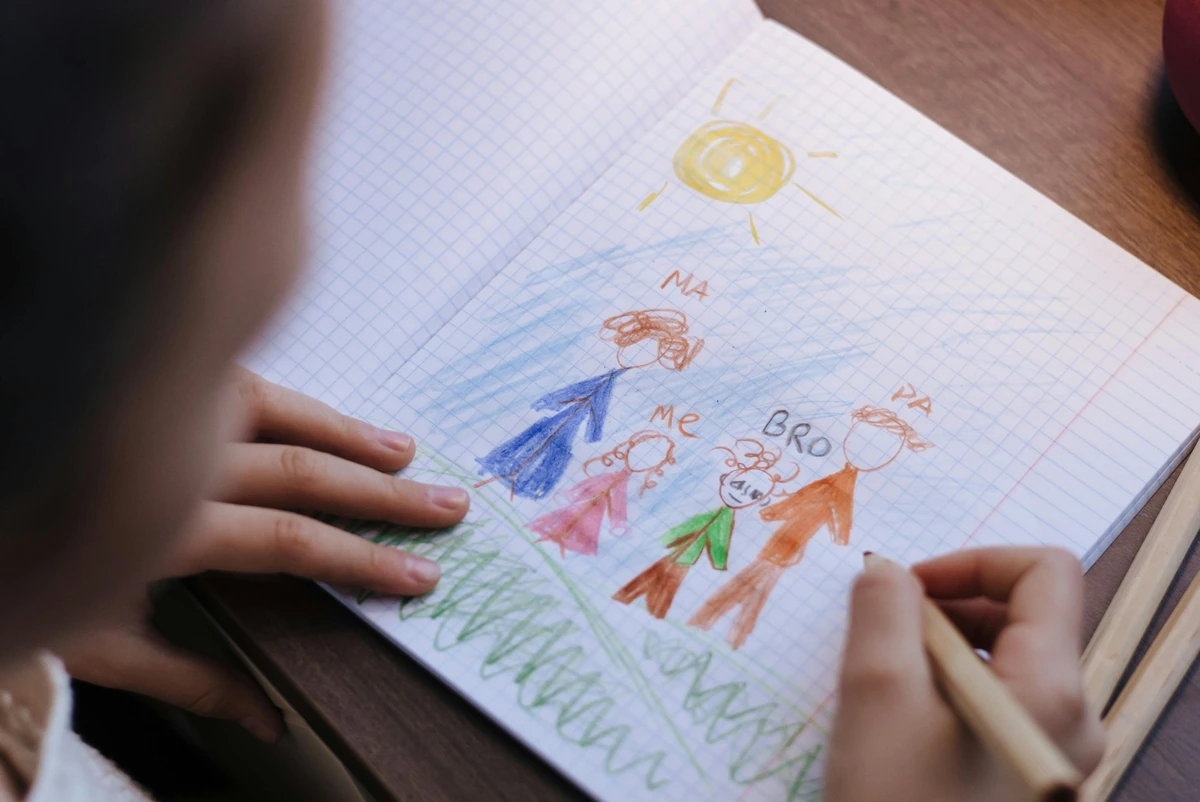
That is why it helps to widen praise. Not only “You’re talented,” but “I’m curious how you came up with this image.” Not only “You’re smart,” but “You found a different way to solve the problem.” Not only “You’re an athlete,” but “I can see you’re learning how to recover after a mistake.” In the first case, the child hears a label. In the second, they can see their own action.
This matters especially in situations involving competitions, concerts, and performances. After a strong result, it is easy for adults to say, “You were born for this.” But the next time, that phrase may land on the child’s shoulders as expectation. In a previous article, we looked at how to support a child before and after a competition or performance so that a win or a mistake does not become a test of their worth.
Why “praise effort” is not a universal formula either
A popular piece of advice sounds simple: praise effort, not talent. There is an important truth in this. When an adult notices not only the outcome but also the process, it becomes easier for the child to see that abilities can grow. They can try, make mistakes, look for strategy, instead of only protecting the image of being “smart” or “talented.”
But praise for effort can also become pressure if it lacks precision. “The main thing is to try” sometimes sounds as if the child is always to blame when things do not work out: they just did not try hard enough. “You just did not work hard enough” can dismiss tiredness, anxiety, a task that was not at the right level, poor explanation, an overloaded day, or a real need for a break. Effort matters, but not everything in child development is solved by trying harder.
A boy hears, “See? When you want to, you can do it.” The adult may have meant: I can see your potential. But the child may hear something else: before, I just did not want it enough, so all my past failures are my own fault. In a phrase like this, praise turns into blame — just wrapped in a smile.
Supportive praise does not just say, “You tried hard.” It names what the child actually did: reread the instructions, tried another way, returned to the hard part, asked for help, practised more slowly, noticed a mistake, took a break and came back. Then the child hears not an abstract demand to “try,” but a map of actions they can return to.
The best praise is specific and truthful
Children do not always need big words. Very often, they need accuracy. “Good job” is pleasant to hear, but it quickly disappears into the air. “I noticed that today you did not give up on the problem after the first mistake” leaves the child with something concrete. They understand: the adult saw not just the end result, but also the moment when it got hard.
Specific praise does not exaggerate or decorate. It does not turn every drawing into a “masterpiece,” every answer into “genius,” every attempt into an “incredible success.” It names what is real: “You mixed the colours and created a new shade.” “You checked three examples by yourself.” “You stopped when you got angry and did not tear the paper.” “You asked me to explain it again, even though you felt shy.”
This kind of praise helps a child build an inner compass. Not only “the adult is pleased with me,” but “I can notice what actually helps me move forward.” Over time, that matters more than constant outside approval.
Praise should not replace interest
Sometimes a child brings you a result not for evaluation, but for connection. They show you a drawing not because they are asking for a verdict — “is it good or not?” — but because they want to share their experience. If an adult responds every time only with an evaluation, even a positive one, the child may get used to seeing themselves through someone else’s score: liked or not, good enough or not, praised or not.
Instead of an instant “Beautiful!”, sometimes it is better to start with curiosity: “Tell me what is happening here.” “I can see you spent a long time on this part.” “What do you like about it?” “What was the hardest part?” This way the adult is not refusing praise, but is not reducing the interaction to judgment either.
This is especially important for children who depend heavily on adults’ reactions. If every action immediately gets a label like “amazing” or “not great,” it becomes harder for the child to hear their own sense of things: I’m interested, this is hard, I want to try it differently, I’m proud of this part, I’m not satisfied with the result yet. An adult’s genuine interest helps the child remain the author, not just the performer for praise.
How praise sounds at different ages
With young children, praise should be very simple and close to the action. A child aged 4 to 6 cannot always break their process down into strategies and conclusions. What matters more is a warm emotional mirror: “You were so happy when it worked,” “You put the block on top by yourself,” “You were upset, but you tried again.” At this age, praise works best when it is short, physically warm, and tied to a specific moment.
In the early school years, children become more aware of comparison, grades, other children’s speed, and the teacher’s or coach’s reaction. Here it is important to help them see the link between action, method, and result: “It helped when you reread the instructions,” “When you broke the task into parts, it became easier,” “You are starting to react more calmly when it does not work right away.” This kind of praise gradually builds not dependence on approval, but understanding of their own tools.
With teenagers, praise requires even more respect for autonomy. If it comes from above, like an evaluation of a small child, a teenager may push away even warm words. What works better here is not enthusiastic “You’re the best,” but precise recognition: “It seems to me you handled that situation very maturely,” “I can see how much you put into it, even though it was not easy,” “I will not analyse it unless you want to, but I want to say that I noticed your work.” In adolescence, support matters most when it does not take away the young person’s right to their own perspective.
What happens when there is too much praise
Adults often exaggerate praise precisely when a child seems unsure of themselves. We want to lift them up: “This is incredible!”, “You’re the best!”, “It’s perfect!”, “You’re a genius!”. The intention is good. But a child with fragile self-esteem may hear not support, but an impossible standard. If today my drawing is “incredible,” what happens when the next one is just normal? If I am a “genius,” do I still have the right not to understand the problem?
Inflated praise can sometimes make risk feel more dangerous. A child may start choosing easier tasks, where it is simpler to earn admiration again. Or they may avoid new attempts where the result is not guaranteed. On the outside, this can look like laziness or stubbornness. Inside, it is often the fear of failing to live up to the lofty image adults themselves created.
That is why the more vulnerable a child feels, the more important calm precision becomes. Not “You’re the best in the world,” but “This part really came out stronger than last time.” Not “Perfect,” but “You can see here that you tried a new approach.” Not “Genius,” but “I like the way you did not stop after the hard part.”
When praise becomes hidden control
Praise can create pressure not only through exaggeration, but through conditions. For example: “Now this is something I can be proud of.” “See? When you want to, you can.” “I love it when you are so diligent.” “You did well this time, unlike last time.” Formally, these are positive words. But the child may hear: my place beside the adult depends on behaving the right way.
Comparison-based praise is especially risky. “You’re the best in the group,” “you’re smarter than the others,” “you did better than your sister.” At first this may feel good. But later the child starts living not in contact with their own process, but in constant comparison. If I’m not the best, then who am I?
Supportive praise does not turn love into a reward. It does not hint: “be this way, and we will be closer.” It says: “I see you, I see what you did, I see your effort, I see what you are going through.” That is not the same as approving everything. An adult can set limits, give feedback, and talk about what still needs work. But the basic connection should not depend on success.
How family expectations hide inside praise
Sometimes praise is not only about the child, but also about a family dream. “We’re raising a future champion.” “Our little performer.” “You’ve got your dad’s mathematical brain.” “You’ll carry this on.” “We always knew you were special.” Such words can sound warm, but they quietly attach a script to the child.
The child may begin to feel: I am loved not simply for being me, but as the bearer of a certain hope. If I stop wanting this activity, if I choose another field, if I get tired, if I am not this bright anymore, then I am somehow letting down not just myself, but the whole family story. At that point, it is no longer praise. It is expectation in soft packaging.
That is why the topic of praise is naturally connected to how family expectations can hide inside familiar words of praise. In this article, we are not unpacking the whole theme of adult ambition, but it is important to notice: sometimes the strongest pressure does not sound like “you must,” but like “we are so proud of you.”
How to praise so a child wants to keep trying
Supportive praise does not have to be long. It can be brief, but it should stay grounded in reality. Most often, it helps to notice not just one thing but several kinds of support: effort, strategy, progress, choice, self-regulation, the courage to ask for help, the ability to come back after a pause.
- Instead of: “You’re a genius.” Try: “You found a solution that was not obvious at first.”
- Instead of: “You’re so talented.” Try: “You conveyed the mood in this drawing in an interesting way.”
- Instead of: “Good job, you finally did it properly.” Try: “Today you stayed with the task longer, even when it got difficult.”
- Instead of: “See? When you want to, you can.” Try: “It looks like breaking the task into parts really helped.”
- Instead of: “Best in the group.” Try: “You seem more confident in this movement than you were last week.”
These formulations are less flashy, but more useful. The child does not receive a label they have to wear. They receive an observation they can use.
Praise after a mistake
The hardest time to praise is not when everything worked out. The hardest time is when the child tried, but the result was weak; when they made a mistake; when they lost; when they are disappointed in themselves. In these moments, adults often either criticise or try to quickly dismiss the pain: “It’s not a big deal,” “at least you did well,” “the important thing is taking part.”
But after a mistake, a child first needs the reality to be acknowledged. “You’re upset because you wanted it to go differently.” “It’s hard for you to look at this result.” “It hurts when you put in so much and it still did not turn out the way you hoped.” Only after that can praise become support: “I can see you did not give up right away.” “You asked for it to be explained again.” “You were able to come back to the task after a break.”
This kind of praise does not make the mistake pleasant. It makes it livable. The child learns: if it did not work out, that does not mean there is something wrong with me. I can be upset, recover, look at the process, and try another way.
Praise and feedback are not the same thing
Sometimes an adult tries to combine praise and correction in one phrase: “Good job, but there is a mistake here.” “Nice, but it needs to be better.” “You tried hard, but it is not enough.” After hearing this a few times, the child stops hearing the first part. They are already waiting for the “but.” Praise turns into a preface to criticism.
It is better to separate them. First, notice what genuinely went well. Give it some space. Then, if the child is ready, move on to feedback: “Would you like me to tell you what could be improved?” or “We can look at one part now, or we can come back to it later.” A child does not always have the capacity to take in correction immediately, especially after a long day or a disappointment.
This does not mean adults should only praise and never speak honestly. On the contrary, precise feedback matters a lot. But it works better where the child does not feel that every compliment is a trap, followed by being told what is wrong with them.
When emotions are big, praise can be too much
There are moments when a child is disappointed, angry, crying, or ashamed, and no praise lands at all. The adult says, “But you did well,” and the child answers, “No!” or gets even more upset. That does not mean they are ungrateful. It may simply mean that their nervous system is not ready to take in evaluation right now, even a positive one.
At moments like this, it is better not to persuade the child that everything is fine. First, restore connection: “You’re really upset.” “You wanted it to turn out differently.” “I’m here.” “Let’s stay with this for a bit without drawing conclusions.” When the emotional wave settles, supportive words have a much better chance of being heard.
For these situations, it helps to have not a set of compliments, but a set of phrases that help a child through a strong emotional wave. More on this in the article phrases that help when emotions are big.
Praise that supports motivation
In the long run, a child does not need dependence on praise, but the ability to gradually notice their own movement. At first, the adult is almost lending the child their perspective: “I can see you did not give up,” “I can see you changed your approach,” “I can see you are reacting more calmly to mistakes.” Then the child begins to notice these things on their own.
This is the kind of praise that supports motivation without pressure. It does not say, “be better so you can be loved.” It says, “you can learn, try, make mistakes, recover, change strategies, and I can see that process.” This does not cancel out the result. But the result stops being the only place where the child receives recognition.
That is why we talk about why support works better than pressure. Support does not make a child passive. It creates the conditions in which a child can stay in contact with themselves, even when the task is hard, the result is imperfect, and adults very much want to help.
The main takeaway
Children should be praised. But not all praise is supportive. Praise for talent can feel warm, but it can also turn ability into a role that becomes scary to lose. Praise for effort can help, but it can also sound like a demand to try even harder. Inflated praise can lift a child for a moment, but make the next attempt feel more dangerous.
The best praise is precise, truthful, warm, and tied to the real process. It notices not only “who you are,” but also “what you did,” “how you searched,” “what helped you,” “where it got better,” “how you came back after a mistake.” It carries no hidden condition: be this way, and then we will be proud of you.
When praise becomes support, a child does not have to keep proving that they are smart, talented, strong, or the best. They are free to be alive: to try, make mistakes, get tired, feel joy, change their approach, ask for help, and gradually build inner stability.
Praise works best when, after hearing it, a child does not need to become “even better” in order to keep feeling seen.
Sources
- Mueller C. M., Dweck C. S. Praise for intelligence can undermine children's motivation and performance. Journal of Personality and Social Psychology, 1998.
- Henderlong J., Lepper M. R. The effects of praise on children's intrinsic motivation: a review and synthesis. Psychological Bulletin, 2002.
- Gunderson E. A. et al. Parent Praise to 1- to 3-Year-Olds Predicts Children’s Motivational Frameworks 5 Years Later. Child Development, 2013.
- Brummelman E. et al. “That’s Not Just Beautiful - That’s Incredibly Beautiful!”: The Adverse Impact of Inflated Praise on Children With Low Self-Esteem. Psychological Science, 2014.
- Self-Determination Theory. Basic Psychological Needs.
- Society for Research in Child Development. Parents’ Praise Predicts Attitudes Toward Challenge Five Years Later.


-lazy-placeholder.webp)
-medium.webp)