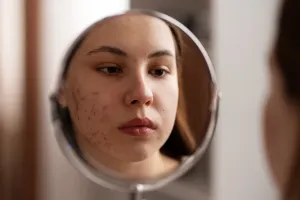






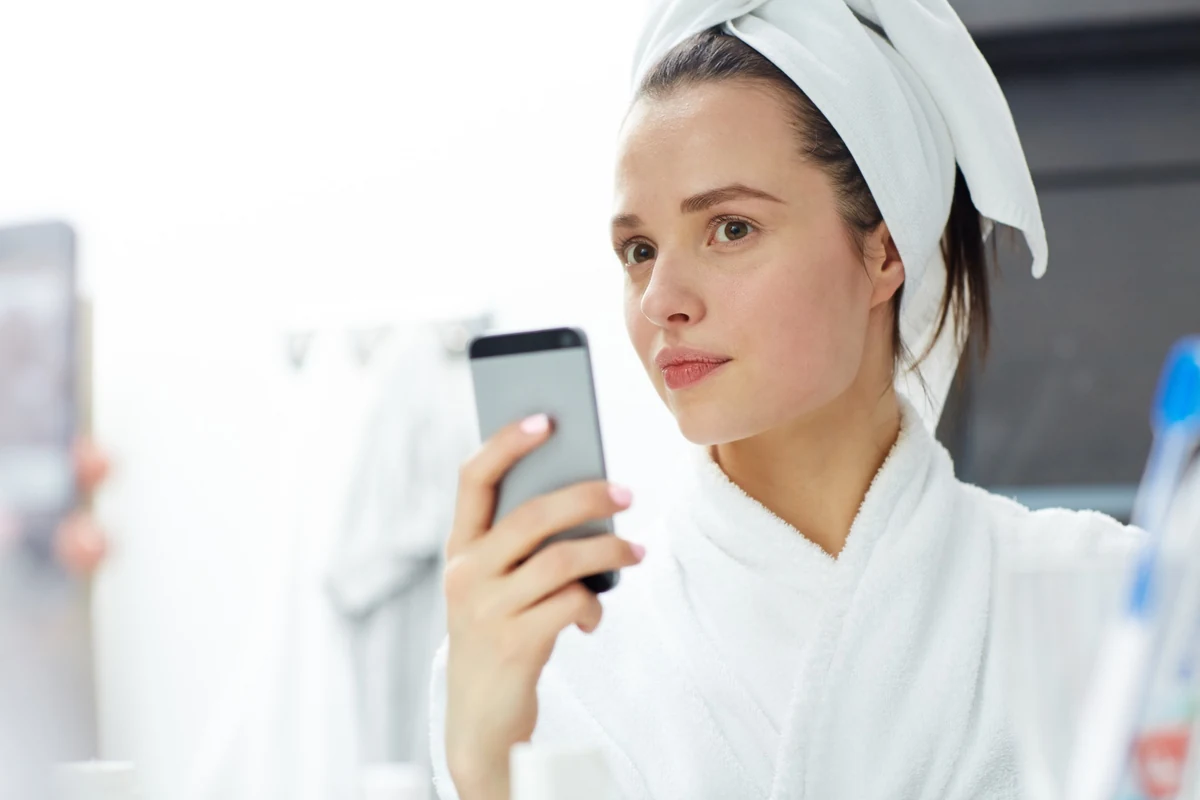
A teenager can log into social media with a normal face and log out feeling like their skin needs urgent repairs. Just ten minutes ago, a few breakouts or shine in the T-zone didn’t seem like a tragedy. But after a series of videos about “closed comedones,” “clogged pores,” “skincare mistakes,” and “mandatory retinol,” the thought arises: something is wrong with me, I’m falling behind, I need a stronger product.
In the feed, everything looks convincing. Some are advised to use an acid toner. Others are told to use retinol “for prevention.” Some are recommended a multi-step routine with essence, serum, peeling, mask, spot treatment, and yet another “must-have” that supposedly is essential for having clear skin. For an adult, this might evoke fatigue or irony. For a teenager, it stirs anxiety, curiosity, shame, and an urgent desire to fix something.
The problem isn’t that teenagers are interested in skincare. This can be a healthy part of growing up: a person learns to notice themselves, choose products, understand their body, and feel boundaries. The issue arises when skincare stops being a form of care and becomes a reaction to pressure. Not “I enjoy washing my face and applying cream,” but “I can’t leave the house because my skin texture is bad.” Not “I have a few breakouts; I need to figure this out,” but “I urgently need retinol because everyone says my skin will age without it.”
This distinction is crucial for teenage skin. At ages 12-17, skin can be oilier, more sensitive to hormonal fluctuations, prone to comedones, inflammation, or shine. But that doesn’t mean it automatically requires an adult active regimen. Often, it needs entirely different things: gentle cleansing, hydration, sun protection, patience, stability, and normal conversations without shame. This boundary—between a healthy interest in skincare and a trend-driven chase for actives—deserves separate discussion.
Why Social Media Skincare Easily Affects Teenagers
Beauty content on social media rarely sells just a product. More often, it sells a feeling of control. As if there’s one jar, one ingredient, one application order, after which the face will become “perfect”: poreless, shine-free, breakout-free, even, without fatigue, devoid of signs of real life. For a teenager, who is already living daily in a changing body, this promise is incredibly appealing.
The algorithm amplifies this quickly. Watch one video about “closed comedones,” “glass skin,” “skincare mistakes,” or “acne from SPF,” and the feed starts returning similar themes. There’s a growing sense that everyone is talking about the same thing. If everyone is talking about retinol, it seems that retinol is necessary. If everyone shows acid pads, it feels like without them, the face isn’t clean enough. If every other video starts with “you’re definitely doing this wrong,” the teenager gradually stops trusting their own feelings.
Here, skincare intersects with self-esteem. That’s why this article is important not just as a text about cosmetics. It continues the theme of how social media can undermine self-esteem through appearance, and is also tied to a broader question: when does the screen stop being merely entertaining and start replacing comfort, contact, and internal support? This is discussed in more detail in the article about screens that matter not just in hours.
Teen Skin Doesn’t Need Anti-Aging Logic
One of the main mistakes in trendy skincare is transferring adult cosmetic logic to teenage skin. In adult skincare, retinol, acids, peptides, vitamin C, strong peels, and active serums are often discussed in the context of photoaging, pigmentation, skin density, wrinkles, dullness, and loss of elasticity. In adolescence, most of these concerns simply aren’t foundational.
A teenager doesn’t need to “prevent aging” at 13, 15, or 17 years old. They don’t need to seek an anti-aging protocol unless there are medical indications. Pores, shine in the T-zone, a few breakouts before menstruation, uneven skin texture, varying skin condition on different days—these aren’t always “defects of care.” And certainly not always a reason to buy actives.
It’s important to distinguish between cosmetic retinol from a beauty routine “for smoothness,” “radiance,” or aging prevention, and dermatological retinoids, which can be used in acne treatment under a clear regimen. For an adult, retinol in cosmetics is often associated with anti-aging care. For a teenager, the conversation about retinoids should start not with a trend, but with the question: is there a real dermatological issue, or is it just a fear of not matching the image from the feed?
At the same time, it’s important not to fall into the opposite extreme. Retinoids, including adapalene or other forms, can indeed be used in treating acne. Salicylic acid can be beneficial for comedones. Benzoyl peroxide, azelaic acid, and other active ingredients also have their place in dermatological regimens. But this follows a different logic. Not a trend, not “because everyone uses it,” not an anti-aging fear, but a specific skin issue, a clear goal, the right frequency, irritation control, and, if necessary, a doctor.
Can Teenagers Use Retinol and Acids?
It would be incorrect to say, “teenagers can’t use acids and retinol.” That would sound simple but not accurate. It’s more correct to say: teenagers don’t need adult actives as a mandatory part of a beautiful routine. Actives can be appropriate when they solve a specific problem, not when they fuel anxiety.
Sometimes the desire to have an “adult” active is not just about the skin. It’s also about adulthood, autonomy, belonging to a group, and the right to choose something for oneself. A teenager may view a serum or acid toner not as an arbitrary jar, but as a sign: I understand trends, I control myself, I decide what I need. Therefore, a harsh prohibition often touches not just skincare but also the sense of independence.
That’s why the adult position should not be in the style of “you’re too young,” but rather: “let’s understand if this is really necessary for your skin.” This phrase carries less conflict and more support. It doesn’t mock the teenager’s desire, but it also doesn’t allow social media to dictate the contents of their medicine cabinet and makeup bag.
When Actives May Make Sense
- There are persistent comedones or breakouts that don’t improve with basic care. In this case, salicylic acid, adapalene, or other products can be part of a thoughtful regimen, but not all at once.
- There is acne affecting quality of life. If a teenager feels ashamed, refuses to take photos, avoids social gatherings, or constantly touches their face, this is no longer a “trivial matter.” Here, not only cosmetics are important, but also support and possibly a consultation with a dermatologist.
- There is a risk of scarring, painful inflammatory elements, or spots after breakouts. In this situation, it’s better not to experiment with trends but to consult a specialist sooner.
- The product was prescribed by a doctor or chosen very carefully after assessing the skin. Then important instructions include: frequency, amount, hydration, SPF, and signs of irritation.
The key word here is “regimen.” Not a collection of random jars from videos, but a clear route. One active at a time. Slow introduction. Gentle base around it. No peels on top of retinoids, no acids every morning and evening, no feeling that stinging is a mandatory proof of effectiveness.
Signs That a Teen Doesn’t Need Acids, Retinol, and a Complex Routine
Sometimes parents find it hard to distinguish between normal interest in skincare and excessive activity. It’s not advisable to prohibit everything at once: this often only intensifies conflict. But it’s possible to look at the situation more closely.
Actives are likely unnecessary if:
- the teenager doesn’t have persistent acne, painful breakouts, or pronounced comedones;
- the desire to buy a product arose after a specific video, not after a real skin issue;
- the skin is already irritated, burning, peeling, or reddening after care;
- the bathroom already contains several active products, but there’s no stable base: cleansing, hydration, SPF;
- the teenager talks not about skin comfort but about the fear of “ruining their face,” “aging,” or “having imperfect texture”;
- the care routine is constantly changing: today acids, tomorrow retinol, the day after peeling, then a mask, then a new “barrier” cream;
- after each new product, things get worse, but the teenager is looking for not a pause but another product.
In these cases, the question isn’t “which active to buy?” but “what is currently overwhelming the skin and nervous system?” Because sometimes the face reacts not to the absence of acid but to an excess of attempts to fix something.
What Can Go Wrong: Don’t Dramaticize, but See the Risks
Acids, retinoids, and other actives aren’t inherently “bad.” The problem is that they require context. In adult skincare, people often damage the barrier not because the product is of poor quality, but because it was introduced too quickly, combined with several irritants, or used on skin that is already fatigued. In teenagers, this can happen even faster because decisions are often made emotionally: saw it, wanted it, bought it, applied it, and expect results tomorrow.
The Barrier May Not Withstand
When an acid toner, active cleansing gel, spot treatment, retinol, and a scrub “once a week” are all applied simultaneously, the skin may start responding with dryness, burning, redness, peeling, new breakouts, or a feeling of tightness. The teenager may think: “I need an even stronger product.” In reality, sometimes a pause is needed.
Acne May Look Worse Due to Chaos in Care
If there are many products, the likelihood of a negative reaction increases. Moreover, it’s almost impossible to understand what exactly caused the reaction: acid, retinoid, fragrance, heavy cream, SPF, frequent washing, or constant touching of the face. That’s why stability is more important than the perfect jar, and even more so than a whole bunch of various jars.
Combinations to Avoid Experimenting With Alone
The most risk usually lies not in one product but in combinations. A teenager may not realize that several “beneficial” products together create excessive stress. Particularly cautious should be with such combinations:
- acid toner and retinoid in one evening without a clear regimen;
- scrub, acids, and acne treatment within one routine;
- new active on irritated, sunburned, dry, or already peeling skin;
- several new products at once when it’s unclear what exactly is causing the reaction;
- daily “drying” of breakouts without hydration and barrier protection;
- actives in the evening and lack of SPF during the day, especially if there are spots after breakouts.
This list isn’t meant to scare. It’s to return to simple logic: skin doesn’t become healthier by applying everything that seems beneficial from social media all at once.
Self-Esteem May Become Tied to Skincare
The quietest risk isn’t irritation. The quietest risk is that a teenager begins to perceive themselves as a project that needs constant improvement. Today it’s skin, tomorrow it’s hair, then the body, then face shape, then the “wrong” smile. The beauty routine becomes not a place of care but a site of endless checking: am I normal enough yet?
That’s why adult support is needed here not to confiscate jars. It’s needed to restore perspective. Skin is important. But it shouldn’t become the only way to evaluate oneself.
A Safe Base: Three Steps Often More Important Than Actives
In teenage skincare, a strong base can provide more benefit than a complex active regimen. Especially if the skin doesn’t have severe acne, and the main issues are shine, light breakouts, SPF, makeup, sports, sweat, sleep, and the habit of not going to bed with an unwashed face.
- Gentle cleansing. Not to the point of squeaking, not several times in a row, not with an aggressive “all problems” product. The task of cleansing is to remove sweat, SPF, sebum, and dirt, not to punish the skin for being oily.
- Hydration. Even oily and acne-prone skin may need a cream or light emulsion. If the skin is dehydrated by actives, it often becomes less calm, not cleaner.
- SPF during the day. Not as an adult “anti-aging discipline,” but as normal skin protection. Especially if there are breakouts, spots after them, acids, retinoids, or a lot of time spent outdoors.
This doesn’t sound as impressive as “the secret routine for glass skin.” But it works as support. If a separate simple route without overload is needed, it’s worth starting with the material on minimal skincare for ages 12-17 in three steps. It doesn’t compete with this article: there’s the basic routine there, and here’s the understanding of why teenagers don’t always need actives from the feed.
How to Talk to a Teenager About Trendy Skincare Without Prohibitions and Shame
The phrase “you don’t need this” may be true but sounds like devaluation. A teenager hears not dermatological caution but “you’re exaggerating,” “your problem isn’t important,” “adults don’t understand anything again.” Therefore, it’s better to start not with refusal but with contact.
Instead of a Harsh Prohibition, You Could Say:
- “I see that it’s important for you to understand your skin. Let’s not buy everything at once but see what specifically concerns you.”
- “Retinol isn’t bad, but it’s not a toy and not a necessary product for a teenager. If there’s acne, it’s better to choose a regimen, not a trend.”
- “I don’t want you to think of your skin as something wrong. Skincare should help, not scare.”
- “Let’s first establish a base for two to three weeks, and then we’ll see if an active is really needed.”
- “If the breakouts are painful or this really upsets you, we won’t wait for them to go away on their own. We can see a dermatologist.”
Such phrases don’t mock interest and don’t make skincare a forbidden fruit. They restore the adult function: to help distinguish real needs from content that fuels anxiety.
When Acne Is a Reason for Medical Support
There are situations where a minimal routine and a conversation about social media won’t replace a dermatologist. If a teenager has deep painful breakouts, acne spreads quickly, scars or dark spots remain, breakouts persist despite stable care, or the topic of skin significantly affects mood and social life, it’s better not to delay.
This doesn’t mean the situation is “terrible.” It means that acne should be taken seriously. Not as poor hygiene, not as “you’ll outgrow it,” but as a skin condition that can be worked on. More details on how to talk to a teenager without shame and when to see a doctor can be found in a separate article: if a teenager has acne: how to talk without shame and when to see a doctor.
It’s especially important not to use strong actives as a way to “tough it out until the skin gets normal.” If a product burns, the skin reddens, peels, or hurts—this is a moment for stopping, support, and a normal assessment of the condition.
How to Understand That the Problem Is Not Just in the Jars but in the Content
Sometimes a teenager really has a skin problem. And sometimes the problem forms at the moment of viewing. Before the video, everything was more or less fine. After the video, the thought arises: “I have terrible pores,” “I need a peel,” “I’m late with retinol,” “everyone has better skin.” This doesn’t mean the teenager is making things up. The feeling can be real. But the source of that feeling isn’t always the skin.
One can gently observe:
- whether dissatisfaction with oneself increases after specific accounts;
- whether the desire to buy a product arises after a video saying “you’re doing this wrong”;
- whether the teenager often compares their face to filtered images;
- whether they check their skin in the mirror many times a day;
- whether they feel calmer after a break from such content.
Here, it’s appropriate to talk not only about cosmetics but also about the digital environment. Not in the style of “the phone is to blame for everything,” but more accurately: which content leaves more calm after viewing, and which creates more shame? Which videos provide useful information, and which sell dissatisfaction with oneself? Which accounts explain, and which make one feel an urgent need to fix their face?
A Gentle Home Protocol Before a New Purchase
If a teenager really wants an acid, retinol, or another active from social media, it’s not necessary to immediately enter into conflict. One can suggest a short “pre-purchase” protocol. It doesn’t treat acne and doesn’t replace a doctor, but it helps reduce impulsivity and see the actual state of the skin.
Step 1. Name the Problem Specifically
Not “I have bad skin,” but what exactly: blackheads, closed comedones, inflamed breakouts, oily shine, dryness, post-acne spots, irritation, a desire for smoother texture. When the problem is named, it becomes clearer whether an active is needed at all.
Step 2. Check the Base
Is there gentle cleansing? Is there hydration? Is there SPF? Are products not changing too often? Is anything aggressive used daily? If the base is unstable, an active may not solve the problem but add noise.
Step 3. Remove Excess for Two Weeks
If the skin is irritated, burning, or peeling, it’s worth simplifying the care: gentle cleansing, hydration, SPF during the day. Without new acids, scrubs, peels, and random masks. Important clarification: if a product was prescribed by a doctor, don’t cancel it on your own—better to clarify the regimen.
Step 4. If an Active Is Still Needed, Introduce One
One new product, a small amount, slow frequency, observation of the reaction. There’s no need to start with the maximum concentration or combine several actives at once. Teenage skin doesn’t need to prove its resilience.
What’s Important to Tell a Teen About “Perfect Skin”
Perfect skin on social media is often a mix of light, camera, filters, makeup, a good day, genetics, professional care, editing, and chosen angles. In real life, skin has pores. It can shine. It can redden after exercise. It can have a few breakouts. It can change throughout the cycle, after lack of sleep, stress, heat, illness, or a new SPF. This doesn’t make a person less attractive, less tidy, or less worthy of attention.
Skincare should not be a way to prove that everything is fine with you. It should be a small part of self-care. If after beauty content a teenager feels more shame, fear, and a desire to hide, this is a signal to reconsider not only their makeup bag but also the informational environment.
That’s why in the topic of teenagers and appearance, a broader parental stance is important: to support interest in skincare but not to fuel the cult of perfection. More on this in the foundational material of the cluster about teenagers, appearance, confidence, and safe self-care without extremes.
The Main Idea: Not All Actives Are Harmful, but Not Every Anxiety Requires an Active
Acids, retinol, adapalene, salicylic acid, benzoyl peroxide, azelaic acid—all of these can have their place. But teenage skincare shouldn’t start with the strongest ingredient that was shown in the feed today. It should start with the question: what exactly is happening with the skin, what’s happening with the feeling of self, and is the teenager trying to soothe what the content has actually stirred up with a jar?
Sometimes the answer will be simple: a gentle cleanser, a light cream, and SPF are needed. Sometimes a consultation with a dermatologist is necessary. Sometimes less video content that makes one view their face as a set of flaws is needed. And most often, a combination is required: a calm base, attentive adult presence, and the teenager’s right to have living, imperfect, real skin.
A teenager needs not perfect skin by the standards of the feed, but the experience: my face can change, but that doesn’t make me less valuable.