





When a teenager looks at themselves through the lens of a camera, a filter, and the reactions of others, it's not just their mood that changes - their sense of normalcy shifts.
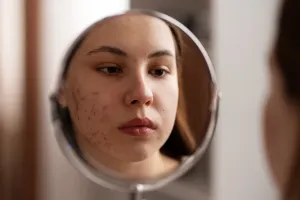
A teenager might not directly say, “I don’t like my face.” Often, it sounds different. “Don’t take my picture.” “I’m not going, I have a pimple.” “I need something normal for my skin because this is awful.” “Everyone has normal faces, except me.” Or it might not be verbalized at all: the child lingers longer in front of the mirror, checks themselves in the front camera, deletes photos, gets upset after scrolling, or declines to meet up because of breakouts or lighting that “shows everything.”
To an adult, this may sometimes seem like an exaggeration. Just a pimple. Just a bad photo. Just a filter. Just a blogger with perfect skin. But for a teenager, appearance during this period often becomes not just a part of their image but a language of acceptance: I am seen, I am judged, I am compared, I can be chosen or rejected. And if at this moment there is constantly a feed where faces have no pores, skin has no texture, and any “problem” supposedly needs to be immediately fixed, the internal scale of normal gradually shifts.
Social media doesn’t necessarily destroy self-esteem. It can be a place of taste, humor, community, style, creativity, support. The issue is not the mere existence of Instagram, TikTok, or YouTube. The issue is what exactly the teenager sees, in what state they view it, what happens to them afterward, and whether they maintain contact with reality: living skin, different faces, different bodies, different ways of being beautiful and noticeable.
In our main article teen appearance: safe care and self-esteem, we have already discussed that a teenager's appearance should not become an adult's “project.” This article is about another layer of the same topic: how digital content can gradually change a child's view of themselves and how an adult can notice this before dissatisfaction with oneself becomes a habitual background.
Social media doesn't just showcase appearance - it changes the scale of normal
In real life, we see people in motion. Faces change with light, fatigue, mood, weather, hormonal cycles, lack of sleep, laughter, excitement. Skin can shine. Pores are visible. Tone is not always even. Hair doesn’t always sit the way you want. Even a very beautiful person in reality doesn’t look like a fixed, retouched frame.
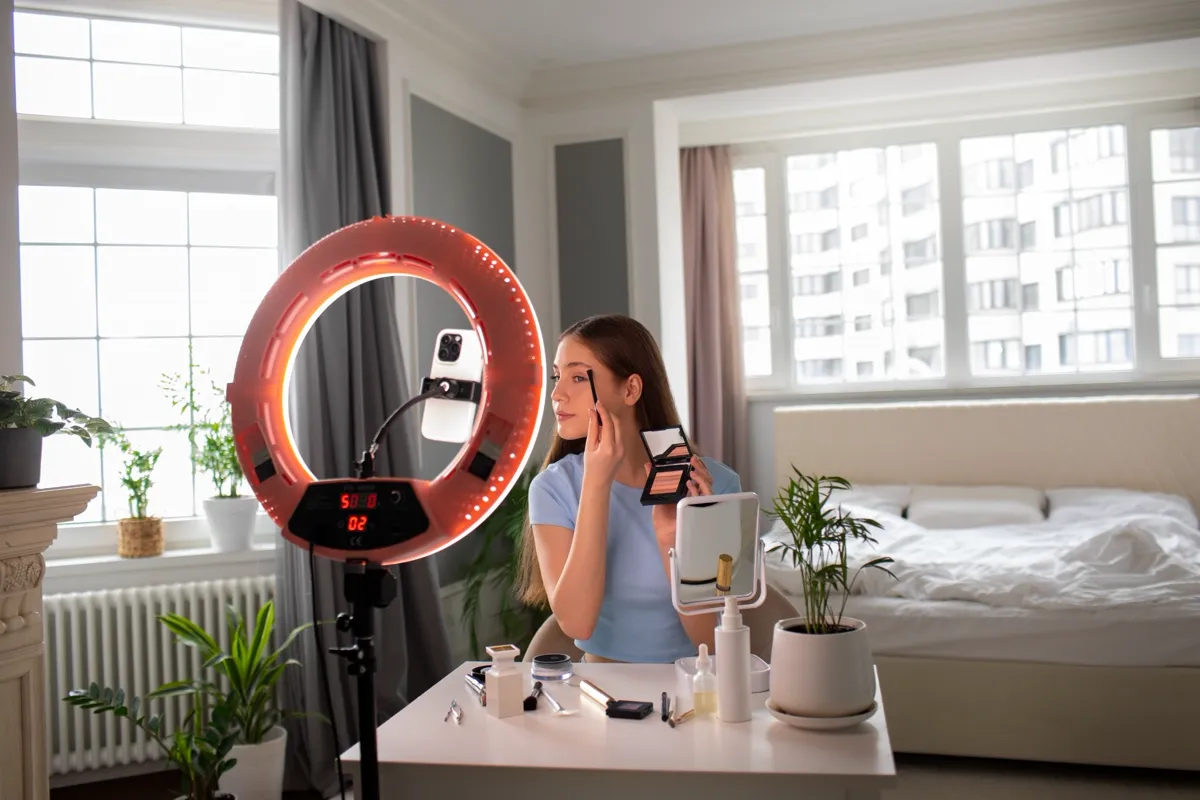
On social media, a teenager often sees a different reality: chosen lighting, the right angle, filter, retouching, editing, dozens of takes, professional makeup, the invisible work of a stylist, cosmetologist, photographer, or just an algorithm that left only the most advantageous in the frame. But the brain doesn’t always have time to mark it as “constructed.” Especially if there are hundreds of such images a day.
Thus, not a separate thought is formed, but a new background. Not “this person looks good in the photo,” but “this is how normal people look.” Not “she has a filter,” but “I have the wrong skin.” Not “this is advertising content,” but “I also need to urgently do something.” And this is where self-esteem begins to be undermined: not by one video, not by one photo, not by one comment, but by repetition.
Adolescence makes this process particularly sensitive. According to the WHO, adolescence is a time of rapid physical, cognitive, and psychosocial changes. The body changes, the brain learns to assess risks, withstand strong emotions, build identity, and separate one's own “I” from others' reactions. That is why external evaluation at this time can be experienced more acutely than in adulthood.
Why it's harder for a teenager to separate the filter from reality
An adult can also compare themselves to others, but they usually have more internal supports: experience, distance, professional role, partnership, personal decisions, memories of different life stages. A teenager is often still piecing together their self-image. They are simultaneously changing physically, seeking a group, reacting to peers' opinions, and trying to understand who they are “really.”
Social media hits this point very precisely. They don’t just show beautiful people. They show beauty as proof of success, desirability, ease, social recognition. A face without texture seems to say: “I’m okay.” A body in the right pose seems to say: “I’ve been chosen.” A ten-step skincare routine seems to say: “I control myself.” And then a teenager may begin to perceive their living, unstable, hormonally active skin as a personal failure.
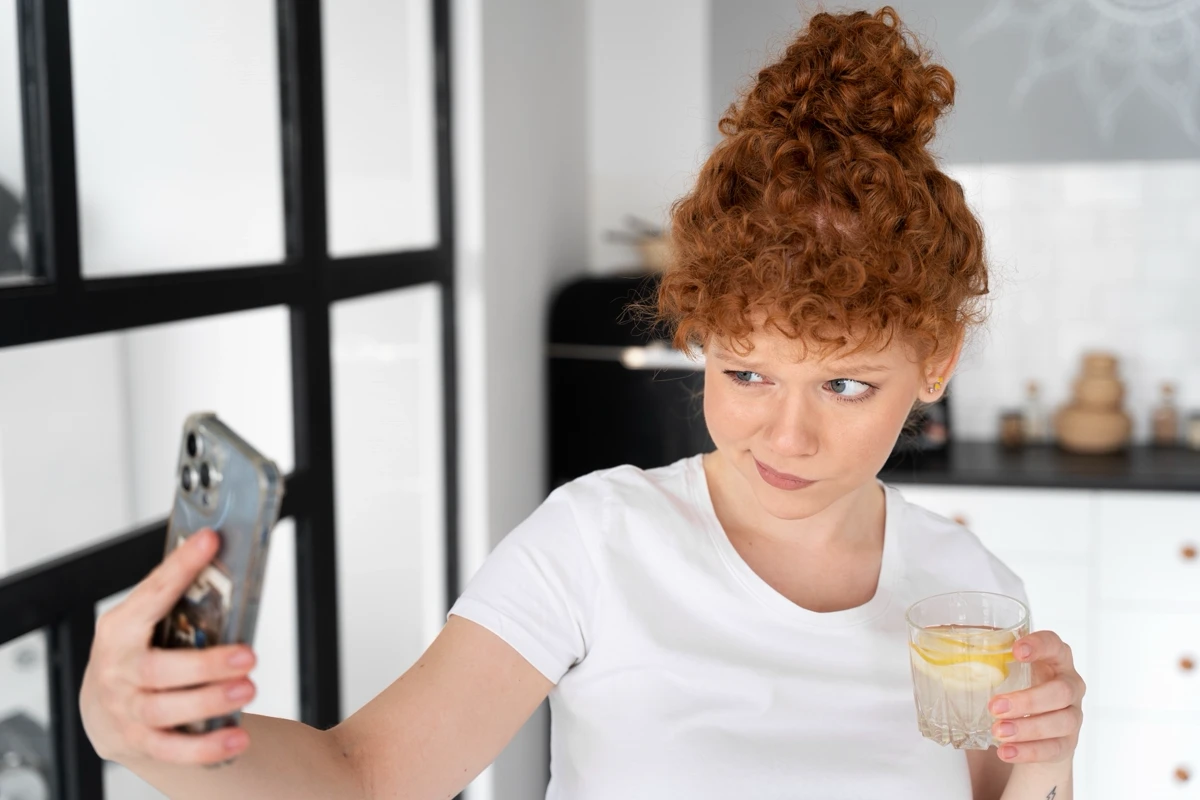
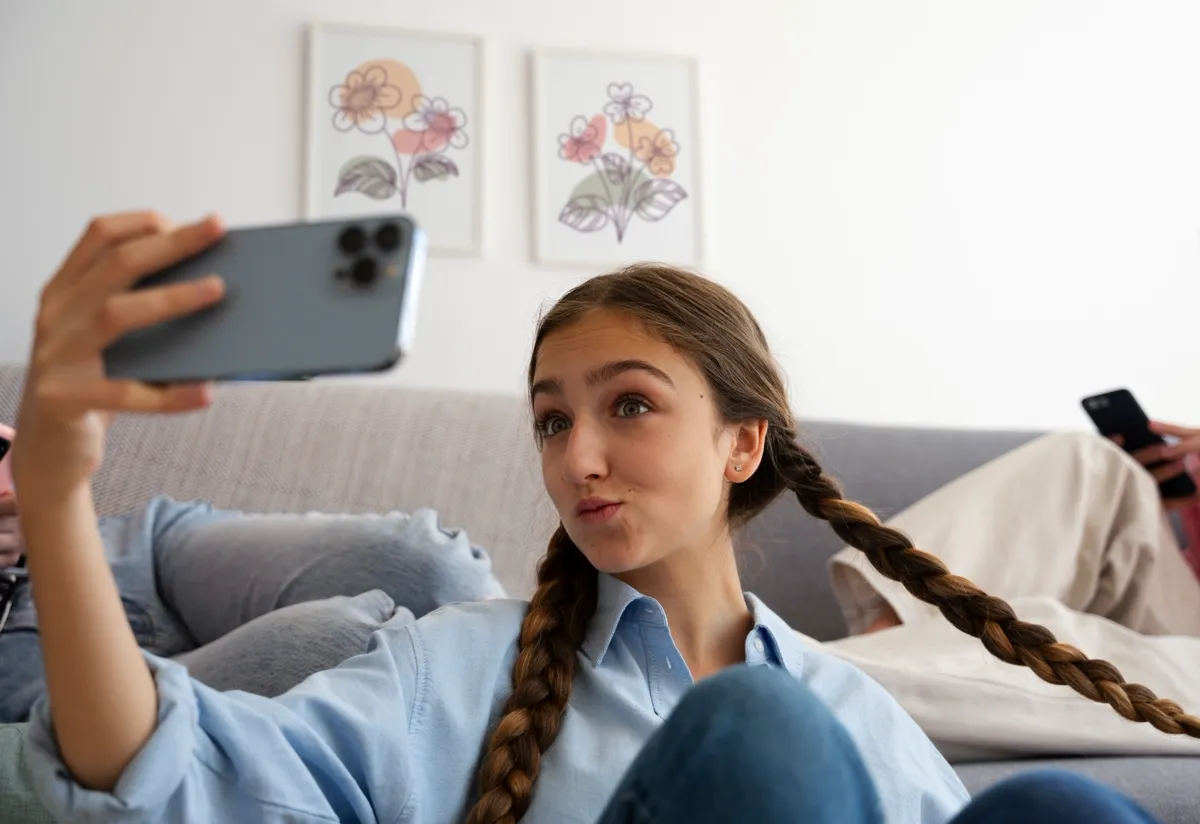
The camera effect becomes particularly strong. The front camera is not a neutral mirror: it distorts proportions, depends on light, angle, distance, lens quality. But if a child sees themselves daily through the camera and others through edited frames, the comparison becomes unequal from the start. They compare their randomness to someone else's setup.
Therefore, the phrase “don’t look at this” rarely helps. The problem is not just in viewing. The problem is that a teenager may lose the sense of where aesthetics end and pressure begins. They need not a lecture, but an adult who helps them see the boundary between image, advertisement, algorithm, and living person again.
When interest in beauty turns into anxiety
It's important not to confuse any interest in appearance with a problem. It’s normal for a teenager to want to like themselves. It’s normal to try hairstyles, clothes, fragrances, skincare, makeup, photo styles. It’s normal to look at others and seek what resonates. Beauty can be a game, a language of self-expression, a way to feel more grown-up, noticeable, more put together.
But there is a difference between “I’m interested” and “I can’t do otherwise.” Interest sounds like movement: “I want to try,” “I like this style,” “I wonder if this product will suit me,” “I want to understand my skin better.” Anxiety sounds like compulsion: “I can’t go out like this,” “everyone will see me,” “this needs to be removed urgently,” “I look terrible,” “if I don’t fix this, something is wrong with me.”
This change in intonation is often more important than the number of hours on the phone. A child can spend a lot of time online and still remain lively, communicative, interested, able to switch. Or they might watch less but become tense, angry, shy, withdrawn, or sharply dissatisfied with themselves after certain content. Therefore, in the topic of screens, it’s important to look not only at time but also at the state. We wrote more about this in the article dedicated to the fact that balance is not in hours: 5 markers of screen impact on a child.
Signs that content is starting to undermine self-esteem
Most often, it’s not one big signal, but many small changes that an adult might initially attribute to “age,” “character,” or “mood.” But if they repeat, it’s worth taking a closer look.
- The teenager starts avoiding photos. Not just dislikes being photographed, but suddenly tenses up, gets angry, hides their face, asks to delete the shot, checks each image for a long time.
- Constant comparison emerges. “She has better skin,” “he has a normal face,” “everyone looks better,” “I’ll never be like that.”
- The camera becomes a check, not a tool. The child often looks at themselves in the front camera, zooms in on skin areas, checks pores, breakouts, asymmetry, shine.
- Appearance starts to determine whether a normal day can be lived. Going to school, meeting friends, leaving the house, turning on the camera in an online class, taking a photo - all depend on “how I look today.”
- Reaction to skin becomes disproportionately painful. One pimple or redness causes not just irritation, but shame, anger, refusal of plans, desire to immediately cover or “remove” it.
- Skincare becomes an anxious attempt to fix oneself. The teenager asks for acids, retinol, peels, strong products, multi-step routines not because they are interested, but because they feel: without this, they are “not okay.”
- Mood changes after social media. The child becomes quieter, sharper, more irritable, more tired, as if returning from the feed not inspired, but diminished.
- There are phrases about oneself as “unacceptable.” Not just “I don’t like this photo,” but “I look disgusting,” “I can’t be without a filter,” “it’s better not to see me.”
Such signals don’t mean that “everything is bad” or that social media should be immediately banned. They mean that appearance has become a zone of tension for the teenager, and an adult can help not with control, but with attentiveness.
What not to say to a teenager
An adult’s first reaction often comes from a desire to reassure. “Don’t make it up.” “You’re fine.” “We didn’t even think about this at your age.” “Who’s looking at you anyway.” “Don’t watch nonsense.” “Stop winding yourself up.” We think we’re minimizing the problem. But the teenager might hear something else: “my feelings are ridiculous,” “I’m not understood,” “better not to talk.”
Mockery is especially dangerous. If a child says “I look terrible,” it’s not always a request to confirm or deny. Often it’s a way to externalize a feeling that has become too heavy inside. And if in response they receive irony, a lecture, or irritation, the shame only intensifies.
Directly devaluing social media doesn’t help much either: “it’s all fake,” “they’re all photoshopped,” “normal people don’t do this.” There may be some truth in these phrases, but they sound condescending. It’s important for a teenager not just to hear that filters exist. It’s important for them to feel that the adult sees their state, not just “wrong behavior.”
How to speak to restore support, not intensify shame
The best start is not to convince, but to name the experience. “I see it’s hard for you to look at yourself right now.” “It seems this photo really affected you.” “I think you’re not just angry at the pimple, but feel like it ruins everything.” Such phrases don’t dramatize the situation but give the teenager the experience: I wasn’t mocked, I was heard.
After this, you can gently bring back reality. Not in the format “you’re beautiful, don’t talk nonsense,” but more precisely: “Living skin has texture. On a close camera, everything looks sharper than in life. Most people don’t examine your face as closely as you do now.” This doesn’t deny the feeling but helps separate feeling from fact.
Sometimes joint exploration of the feed works. Not checking the phone, not an interrogation, not “show me what you’re watching,” but an invitation: “Let’s see after which videos you feel worse, and after which you feel okay.” This can be a very subtle difference. One beauty content gives ideas, taste, and play. Another creates a sense of defect. One blogger shows living skin, process, mistakes, different states. Another sells anxiety under the guise of care.
It’s important for an adult not to take away the teenager’s right to be interested in beauty. It’s better to help return authorship: “You can choose style, care, photos, but you don’t have to treat yourself as a problem.” For a teenager, this is a fundamental difference. They don’t become an object of repair. They remain a person who has a body, skin, taste, mood, and the right to change without shame.
Where skincare fits in: from self-esteem to unnecessary actives
The topic of social media and appearance quickly transitions into the topic of care. If a teenager sees “perfect skin” every day and dozens of videos about acids, retinol, peels, serums, scrubs, masks, spot treatments, and “overnight rescue,” they might think that normal skin is skin that constantly needs fixing. Not supporting. Not understanding. Not gently cleansing and moisturizing. But fixing.
At this point, it’s especially easy to confuse care with attack. A teenager might ask for strong products not because they truly need them, but because they feel pressure: “if I don’t do something radical, I’ll stay like this.” But teenage skin often doesn’t need adult actives in a chaotic mode. It needs a clear base, regularity, gentleness, and an adult who doesn’t add panic.
That’s why the continuation of this topic should be trendy care from social media and “adult” actives for teenage skin. If this article explains how social media changes the perception of appearance, then the next will logically show how the same mechanisms push a teenager towards unnecessary actives, aggressive care, and the idea that skin needs to be constantly “improved.”
Not just hours on the phone: what to really look at
The amount of time online matters, especially if social media takes away sleep, movement, live communication, learning, or rest. But the number itself doesn’t always explain what’s happening with the child. Two hours of chatting with friends, humor, and creativity is not the same as twenty minutes of content after which the teenager hates their face.
Therefore, an adult should look at state markers. Can the child switch after the screen? Do they not suddenly have a worse opinion of themselves after certain accounts? Is sleep not disappearing? Does appearance not become a condition for any social action? Is there experience in their life where the body is not judged, but lived: a walk, sports without a cult of results, creativity, conversation, laughter, real friendship?
This approach - looking not just at hours, but at the quality of contact with oneself after the screen - helps not to turn the conversation about social media into a struggle. It’s easier for a teenager to cooperate when an adult is interested not only in “how long you sit” but in “what happens to you after that.”
The adolescent nervous system is still learning to withstand evaluation
When we talk about self-esteem, it’s important to remember: it’s not just thoughts. It’s also the body. Shame can feel like heat in the cheeks, tension in the stomach, the desire to hide, sharp irritation, tears, fleeing to the room, refusal to speak. A teenager may look “rude” or “dramatic,” but inside, their system may be overloaded at that moment.
In the article child age and the nervous system: sensitivity to stimuli, we talked about how children’s and teenagers’ reactions are often related not to stubbornness, but to how the nervous system withstands stimuli. Social media is also stimuli: light, speed, faces, evaluations, comments, likes, comparisons, ideal images, others’ reactions. If all this overlaps with fatigue, hormonal changes, school conflicts, or lack of sleep, even a small phrase about appearance can sound very loud inside.
Therefore, adult support here doesn’t have to be perfect. It has to be regulating. Fewer sharp evaluations. Less “you’re exaggerating.” Fewer urgent decisions in the moment. More pause, a tone in which you can exhale, and phrases that bring the child back to themselves: “Right now, you’re very uncomfortable. Let’s not decide everything from this state. First, let’s calm down, then think about what’s really needed.”
Micro-practices that help return to reality
Union Beauty is not about strict instructions, but about attentiveness to the body and state. In this topic, small practices often work better than big prohibitions.
The first practice is to notice the aftertaste. Not “how long you watched,” but “what happens to you after this.” After which accounts does the teenager become inspired, calm, alive? And after which - as if smaller, worse, not enough? This can be discussed not as control, but as environmental hygiene.
The second practice is to return living skin to the field of view. In reality, people have pores, shine, unevenness, breakouts, signs of fatigue, asymmetry. You can talk about this without a lecture: “Look at how differently the face looks in daylight and in the camera. This doesn’t mean something happened to you. It means the camera is not the truth about you.”
The third practice is to postpone urgent “fixing.” If a teenager desperately asks for a strong product, new cosmetics, or a radical solution, it’s useful not to immediately say “no,” but also not to rush to buy everything out of fear. You can respond: “I see you want to quickly change something. Let’s first figure out what exactly is bothering you and what is safe for the skin.”
The fourth practice is to expand the self-image. A teenager should not be reduced to skin, nose, hair, weight, photos, or reactions on social media. An adult can gently return other dimensions: taste, humor, voice, movement, kindness, courage, attentiveness, way of thinking, ability to be a friend. Not as compensation “but you’re smart,” but as truth: a person is always more than how they came out in a photo.
When to involve a specialist
Most teenage concerns about appearance don’t require dramatization. But if shame becomes so strong that the child regularly refuses school, meetings, photos, activities, stops doing usual things, spends a lot of time checking appearance, or their mood noticeably worsens for a long time, it’s better not to leave this only within home conversations.
In such a situation, a consultation with a psychologist, adolescent psychotherapist, or doctor may be helpful if there are pronounced skin problems. This doesn’t mean something is “wrong” with the child. It means the experience has become too heavy to carry alone. Specialist support can help separate real care from anxious fixation, and the living body from the digital image.
The main thing to remember
Social media doesn’t create self-esteem from scratch, but it can greatly influence what a teenager compares themselves to. If their daily “norm” consists of filters, retouching, perfect skin, sales of actives, and constant improvement, a regular living face may start to seem insufficient. Not because something is wrong with the child. But because the environment has become too narrow and too judgmental.
The task of an adult is not to take away the teenager’s interest in beauty and not to win a war with the feed. The task is to help them not lose themselves inside the comparison. To show that care can be nurturing, not punishment. That skin can change and still remain normal. That a photo is not the ultimate proof of value. That the body doesn’t have to meet someone else’s algorithm every day to deserve peace.
Sometimes the strongest support sounds very simple: “I see it’s hard for you. I won’t laugh. We won’t urgently fix you. Let’s first return the feeling that it’s okay to be gentle with yourself.”
Sources
- American Academy of Dermatology Association. Acne can affect more than your skin.
- American Academy of Pediatrics, Center of Excellence on Social Media and Youth Mental Health.
- American Psychological Association. Health Advisory on Social Media Use in Adolescence.
- U.S. Surgeon General. Social Media and Youth Mental Health.
- Vuong, A. T., Jarman, H. K., Doley, J. R., & McLean, S. A. Social Media Use and Body Dissatisfaction in Adolescents.
- Mazzeo, S. E., et al. Mitigating Harms of Social Media for Adolescent Body Image and Eating Disorders.