

Before people joined the gym I ran, I often encountered the same belief: exercise was for younger people, or it was too late to make progress. Some were sure they would never improve. Once they started working with good coaches, many changed how they saw their abilities and their health.
That experience shaped how I think about healthy aging. For women over 40, the aim is to maintain the strength, mobility and physical capacity that make everyday life easier, alongside the bone, metabolic and cardiovascular health that protect your future.
What healthy aging after 40 should protect
Muscle supports everyday strength, whether you’re carrying groceries or rising from the floor. Bone health matters because a fracture can have consequences far beyond the bone itself. Cardiovascular and metabolic health influence longer-term disease risk. Sleep and recovery help you keep showing up for the activities that protect all of them.
Why perimenopause and menopause matter
During perimenopause, estrogen levels fluctuate. After menopause, they remain lower. These changes overlap with ordinary aging, so it would be misleading to blame every shift in weight, energy or fitness on menopause.
But some changes are measurable. In a large US longitudinal study, fat mass accumulated faster and lean mass began to decline around the menopause transition. The rate of overall weight gain did not accelerate at the same time.[1] You could see little change on the scale even as body composition shifts.
A separate study following women aged 47 to 55 found declines in several measures of muscle mass through the transition. Physical activity was associated with better muscle preservation.[2] Bone loss also tends to speed up around the final menstrual period, particularly in the spine.[3]
Metabolism shifts as well. In the same US study, LDL cholesterol rose sharply within a year of the final period, while most other heart risk factors followed ordinary aging.[4] The American Heart Association calls the menopause transition a time of accelerating heart risk. Heart disease is the leading cause of death in women.[5]
These patterns don’t dictate what will happen to you. They help explain why strength, movement, nutritious food and sleep deserve attention before a problem becomes obvious.
The foundations: strength, movement, nutrition, sleep and recovery
Start with strength and movement
If you haven’t trained in years, you don’t need a complicated program to begin. I recommend starting with a 20-minute beginner bodyweight session on YouTube. It can focus on your core, upper body or legs. The details can become more specific as you progress. First, make the habit stick. Then gradually increase the challenge. A certified personal trainer can help if you’d prefer guidance.
That starting point is different from the longer-term target. US guidelines recommend at least 150 minutes of moderate-intensity activity each week, plus muscle-strengthening work on two or more days.[6] Brisk walking counts toward the aerobic part. Resistance exercise builds strength; walking, cycling and other aerobic movement support cardiovascular fitness. Both have a place.
A review of 101 trials involving 5,697 postmenopausal women found that resistance and combined exercise were more effective for muscle-related measures, while aerobic and combined training were more effective for fat-mass outcomes.[7]
Support your training with food
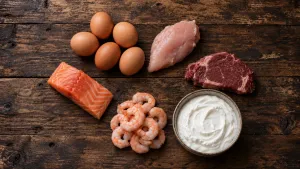
Training needs support from what you eat. My preference is to get your nutrients from food first: enough protein, varied produce, and meals that give you the energy to be active. A protein shake can help when regular meals don’t cover your needs. Across trials involving adults of different ages, extra protein alongside resistance training produced modest additional gains in muscle mass and strength.[8] That doesn’t make powder essential for every woman.
Protect your sleep and recovery
Sleep deserves the same attention. Trouble sleeping is common in midlife. In a US survey of more than 12,000 women aged 40 to 55, 38% reported it. Among women in late perimenopause, the figure was 45%.[9]
Sleep also matters for your heart and your training. In 2022, the American Heart Association made sleep one of its eight essential measures of heart health.[10] In a small lab study of 13 young adults, one night without sleep cut muscle protein building by 18% the next day.[11]
Perimenopausal night sweats can interrupt your rest, and persistent insomnia is worth addressing directly. In a trial of 106 women aged 40 to 65 with insomnia and hot flashes, six telephone sessions of cognitive behavioral therapy for insomnia (CBT-I) improved insomnia severity and reported sleep quality more than menopause education over eight weeks.[12] If poor sleep keeps returning, a healthcare professional can help identify the cause and discuss treatment.
I also used to give clients a fun week when fatigue, low energy or problems at home made their usual training feel like another burden. We’d set the program aside and choose activities they enjoyed. I still recommend that approach when life gets difficult. A week of movement for pleasure can help you stay connected to exercise without forcing yourself through every planned workout.
Which supplements may help, and where they fit
My philosophy is food first. But getting everything you need from food can be difficult. That’s where supplements can help. I recommend you to look at your needs, the evidence, the dose and the product’s quality.
Here’s how the main options compare.
| Supplement | What the research shows | May suit | Where claims go further |
|---|---|---|---|
| Protein powder | With strength training, extra protein added modest gains in muscle and strength.[8] | Women who strength train and find it hard to reach their protein target with meals. | “More is better.” Above about 0.7 g per pound of body weight a day (1.6 g/kg), trials found no extra muscle gain.[8] |
| Creatine monohydrate | In postmenopausal women, creatine with strength training added lean mass and strength.[13][14] | Women who strength train regularly. | Bone density. Results on bone are still unclear.[13] |
| Calcium and vitamin D | Calcium is essential for bone health. Vitamin D helps your body absorb it.[15] | Women who get little calcium from food, or whose vitamin D level is low. | Fracture protection for everyone. Low daily doses didn’t prevent fractures in women without a deficiency or osteoporosis.[16] |
| Collagen peptides | Some clinical trials report improvements in skin hydration and elasticity.[17] One 12-month trial in postmenopausal women with low bone density found gains in bone density.[18] | Women who want to support skin hydration and elasticity. | Bone claims. The bone result comes from one product-specific trial so far.[18] |
| Omega-3 (EPA and DHA) | Omega-3s lower triglycerides, by about 15% in a large review. Oily fish is an excellent dietary source.[19] | Women with high triglycerides, or who rarely eat oily fish. | Broad heart protection. In the same review, effects on heart attacks, strokes and deaths were small or unclear.[19] |
| Magnesium | Essential for normal muscle and nerve function. In three small trials in older adults with insomnia, magnesium shortened the time to fall asleep by about 17 minutes.[20] | Women who get little magnesium from food. | Fixes sleep. The sleep trials were small and low in quality.[20] |
| NMN and NR | Both raise NAD+ levels in human trials. In a 10-week trial, NMN improved muscle insulin sensitivity in postmenopausal women with prediabetes.[21][22] | Women who have the basics in place and want to try an option that is still being studied. | Anti-aging claims. The broad benefits so far come from animal studies.[23] |
| Resveratrol | In a two-year trial in postmenopausal women, resveratrol improved bone density in the lower spine and hip.[24] | Postmenopausal women who want to support bone health. | Longevity claims. Human results so far are for specific outcomes, such as bone density.[24] |
Choose supplements according to your needs. Check product quality and appropriate doses. Your health history and medications also matter.
Where longevity marketing is ahead of science
I work in this industry, and I see the same pattern often. An early result turns into a promise on the label. These seven claims go further than the research:
- Supplements for hot flashes. The Menopause Society doesn’t recommend supplements or herbal remedies for hot flashes.[25]
- Biotin for hair and nails. Every reported benefit came from people with a deficiency or an underlying condition.[26]
- DHEA as an “anti-aging hormone.” In a two-year trial in older women and men, it didn’t improve body composition, strength or quality of life.[27]
- Multivitamins for a longer life. Among 390,000 US adults followed for up to 27 years, daily users had no lower risk of death.[28]
- Antioxidant pills. The US Preventive Services Task Force recommends against beta-carotene and vitamin E for preventing heart disease or cancer.[29]
- Spermidine for memory. In a 12-month trial in adults aged 60 to 90, it didn’t improve memory compared with placebo.[30]
- “Reverse your biological age by 8 years.” That claim came from 42 users of one formula, with no placebo group.[31]
I want the longevity industry to communicate differently. Tell people what was studied, who participated, and what improved. Be precise about the evidence.
That responsibility applies to my own brand too. I try to be transparent, and I know we can make mistakes. People ingest our products because they trust us and expect real benefits. Their health should always matter more than gross profit.
That’s why I created CELLSHE. I wanted to build a brand I would feel comfortable offering to my grandmother and my mother.
A practical hierarchy for everyday life
- Choose one priority. Maybe you want to feel stronger, sleep better or climb stairs with less effort. Start with a goal that matters to you.
- Make movement a habit. Schedule a short strength session you can repeat. Add regular walks. Increase the challenge as you progress.
- Support your body with food. Eat enough protein and a variety of nutritious foods. Use supplements when they serve a specific need.
- Give recovery its place. Protect your sleep. Choose enjoyable movement on difficult weeks. Seek support when sleep problems persist.
- Be selective with supplements. Look for evidence of the benefit you want. Check the dose, quality and relevance to your situation.
Measure what improves
Over the next few months, notice what becomes easier. Perhaps you’re lifting more, walking farther or feeling more confident in your body.
Those improvements matter. They show you where your efforts are paying off and help you decide what to build on next.
Scientific references
- Greendale GA et al. (2019). Changes in body composition and weight during the menopause transition. JCI Insight. DOI: 10.1172/jci.insight.124865. PMID: 30843880.
- Juppi HK et al. (2020). Role of Menopausal Transition and Physical Activity in Loss of Lean and Muscle Mass: A Follow-Up Study in Middle-Aged Finnish Women. Journal of Clinical Medicine. DOI: 10.3390/jcm9051588. PMID: 32456169.
- Greendale GA et al. (2012). Bone mineral density loss in relation to the final menstrual period in a multiethnic cohort: results from the Study of Women’s Health Across the Nation (SWAN). Journal of Bone and Mineral Research. DOI: 10.1002/jbmr.534. PMID: 21976317.
- Matthews KA et al. (2009). Are changes in cardiovascular disease risk factors in midlife women due to chronological aging or to the menopausal transition? Journal of the American College of Cardiology. DOI: 10.1016/j.jacc.2009.10.009. PMID: 20082925.
- El Khoudary SR et al. (2020). Menopause Transition and Cardiovascular Disease Risk: Implications for Timing of Early Prevention: A Scientific Statement From the American Heart Association. Circulation. DOI: 10.1161/CIR.0000000000000912. PMID: 33251828.
- Centers for Disease Control and Prevention. Adult Activity: An Overview. Current US physical activity recommendations. CDC physical activity guidelines.
- Khalafi M et al. (2023). The effects of exercise training on body composition in postmenopausal women: a systematic review and meta-analysis. Frontiers in Endocrinology. DOI: 10.3389/fendo.2023.1183765. PMID: 37388207.
- Morton RW et al. (2018). A systematic review, meta-analysis and meta-regression of the effect of protein supplementation on resistance training-induced gains in muscle mass and strength in healthy adults. British Journal of Sports Medicine. DOI: 10.1136/bjsports-2017-097608. PMID: 28698222.
- Kravitz HM et al. (2003). Sleep difficulty in women at midlife: a community survey of sleep and the menopausal transition. Menopause. DOI: 10.1097/00042192-200310010-00005. PMID: 12544673.
- Lloyd-Jones DM et al. (2022). Life’s Essential 8: Updating and Enhancing the American Heart Association’s Construct of Cardiovascular Health: A Presidential Advisory From the American Heart Association. Circulation. DOI: 10.1161/CIR.0000000000001078. PMID: 35766027.
- Lamon S et al. (2021). The effect of acute sleep deprivation on skeletal muscle protein synthesis and the hormonal environment. Physiological Reports. DOI: 10.14814/phy2.14660. PMID: 33400856.
- McCurry SM et al. (2016). Telephone-Based Cognitive Behavioral Therapy for Insomnia in Perimenopausal and Postmenopausal Women With Vasomotor Symptoms: A MsFLASH Randomized Clinical Trial. JAMA Internal Medicine. DOI: 10.1001/jamainternmed.2016.1795. PMID: 27213646.
- Naddafha S et al. (2026). Creatine monohydrate for lean mass, strength, and bone density in postmenopausal women: a systematic review and meta-analysis. Journal of the International Society of Sports Nutrition. DOI: 10.1080/15502783.2026.2668435. PMID: 42141930.
- Chilibeck PD et al. (2015). Effects of Creatine and Resistance Training on Bone Health in Postmenopausal Women. Medicine & Science in Sports & Exercise. Trial also measured bench-press strength. DOI: 10.1249/MSS.0000000000000571. PMID: 25386713.
- LeBoff MS et al. (2022). The clinician’s guide to prevention and treatment of osteoporosis. Osteoporosis International. Bone Health & Osteoporosis Foundation clinician guidance. DOI: 10.1007/s00198-021-05900-y. PMID: 35478046.
- US Preventive Services Task Force; Grossman DC et al. (2018). Vitamin D, Calcium, or Combined Supplementation for the Primary Prevention of Fractures in Community-Dwelling Adults: US Preventive Services Task Force Recommendation Statement. JAMA. DOI: 10.1001/jama.2018.3185. PMID: 29677309.
- Pu SY et al. (2023). Effects of Oral Collagen for Skin Anti-Aging: A Systematic Review and Meta-Analysis. Nutrients. DOI: 10.3390/nu15092080. PMID: 37432180.
- König D et al. (2018). Specific Collagen Peptides Improve Bone Mineral Density and Bone Markers in Postmenopausal Women: A Randomized Controlled Study. Nutrients. Product-specific trial with industry-linked investigators. DOI: 10.3390/nu10010097. PMID: 29337906.
- Abdelhamid AS et al. (2020). Omega-3 fatty acids for the primary and secondary prevention of cardiovascular disease. Cochrane Database of Systematic Reviews. Includes serum triglyceride outcomes. DOI: 10.1002/14651858.CD003177.pub5. PMID: 32114706.
- Mah J, Pitre T. (2021). Oral magnesium supplementation for insomnia in older adults: a Systematic Review & Meta-Analysis. BMC Complementary Medicine and Therapies. DOI: 10.1186/s12906-021-03297-z. PMID: 33865376.
- Yoshino M et al. (2021). Nicotinamide mononucleotide increases muscle insulin sensitivity in prediabetic women. Science. DOI: 10.1126/science.abe9985. PMID: 33888596.
- Martens CR et al. (2018). Chronic nicotinamide riboside supplementation is well-tolerated and elevates NAD+ in healthy middle-aged and older adults. Nature Communications. Placebo-controlled crossover trial. DOI: 10.1038/s41467-018-03421-7. PMID: 29599478.
- Igarashi M et al. (2026). Sustained NAD⁺ augmentation by high-dose nicotinamide mononucleotide supplementation in older adults: a 24-week randomized, double-blind, placebo-controlled trial. npj Aging. Funded by MIRAILAB BIOSCIENCE Inc., which supplied NMN. DOI: 10.1038/s41514-026-00482-7.
- Wong RHX et al. (2020). Regular Supplementation With Resveratrol Improves Bone Mineral Density in Postmenopausal Women: A Randomized, Placebo-Controlled Trial. Journal of Bone and Mineral Research. DOI: 10.1002/jbmr.4115. PMID: 32564438.
- The North American Menopause Society (now The Menopause Society). (2023). The 2023 nonhormone therapy position statement of The North American Menopause Society. Menopause. DOI: 10.1097/GME.0000000000002200. PMID: 37252752.
- Patel DP et al. (2017). A Review of the Use of Biotin for Hair Loss. Skin Appendage Disorders. DOI: 10.1159/000462981. PMID: 28879195.
- Nair KS et al. (2006). DHEA in elderly women and DHEA or testosterone in elderly men. New England Journal of Medicine. Two-year placebo-controlled trial. DOI: 10.1056/NEJMoa054629. PMID: 17050889.
- Loftfield E et al. (2024). Multivitamin Use and Mortality Risk in 3 Prospective US Cohorts. JAMA Network Open. DOI: 10.1001/jamanetworkopen.2024.18729. PMID: 38922615.
- US Preventive Services Task Force; Mangione CM et al. (2022). Vitamin, Mineral, and Multivitamin Supplementation to Prevent Cardiovascular Disease and Cancer: US Preventive Services Task Force Recommendation Statement. JAMA. DOI: 10.1001/jama.2022.8970. PMID: 35727271.
- Schwarz C et al. (2022). Effects of Spermidine Supplementation on Cognition and Biomarkers in Older Adults With Subjective Cognitive Decline: A Randomized Clinical Trial. JAMA Network Open. DOI: 10.1001/jamanetworkopen.2022.13875. PMID: 35616942.
- Demidenko O et al. (2021). Rejuvant®, a potential life-extending compound formulation with alpha-ketoglutarate and vitamins, conferred an average 8 year reduction in biological aging, after an average of 7 months of use, in the TruAge DNA methylation test. Aging. Retrospective analysis without a placebo group. DOI: 10.18632/aging.203736. PMID: 34847066.
About the author

Florian Rivas
Florian Rivas is an entrepreneur with experience in sports, fitness, and health coaching. He founded a professional training center for physiotherapists and sports coaches and a Sports & Health fitness center. He is also the founder of CELLSHE, a healthy-aging company focused on women in midlife.