





Trends in the skincare industry rarely shift overnight. They move gradually—first in professional conversations, then in formulas and treatment protocols, and eventually in what clients ask for. That is exactly what is happening with anti-age today. It is not disappearing or being cancelled, but it is no longer the single center around which the entire logic of skincare is built.
Another focus is coming to the forefront: well-age. Not as a loud declaration or a new ethical code, but as a practical approach, visible in the way ideas about results, normality, and the very purpose of skincare are changing. In a broader context, this shift fits neatly into the mechanics of modern trends, which we explored in detail in our article on how the “new” emerges—and why it becomes outdated so quickly.
This is not a revolution. It is a shift in the center of gravity.
Why anti-age is no longer the only center
For decades, anti-age set the rules of the game. Its logic was clear and effective: correcting age-related changes, delivering visible results, and relying on clear markers of efficacy. “Before” and “after,” active concentrations, intensive courses, and effects limited in time.
This model worked well in a context where achievement, rapid change, and control were highly valued. It was convenient for the market and easy for consumers to understand. But over time, another feeling began to emerge: the result is there, but stability is not.
What exactly began to change
The first signs of this shift appeared not only in marketing campaigns, but also in everyday practice. Fewer aggressive protocols. More attention to tolerability. Requests were no longer for the “maximum effect,” but for skin to remain in a stable condition.
Gradually, this took shape as a clear direction: from intensity to sustainability. What matters is no longer the peak result, but the ability to maintain it without constant setbacks. Not a short course after which the skin needs recovery, but a long-term horizon in which skincare remains part of real life.

Anti-age, well-age, and skin longevity: what is the difference?
These concepts are often used side by side, although they do not describe exactly the same thing. Anti-age focuses primarily on correcting visible signs of aging: wrinkles, uneven tone, loss of firmness, volume, or contour definition. In this system, the result is usually assessed by how noticeably a specific concern has been changed.
Well-age does not reject that kind of correction, but it changes the criteria for choosing it. What becomes important is not only the strength of the effect, but also tolerability, gradual progression, and the preservation of skin function, facial expression, and individual features. This is not a separate method or a category of cosmetics, but a principle that shapes the entire strategy.
Skin longevity adds another perspective to the conversation: the long-term preservation of the skin’s functional capacity. However, scientific research into aging processes, commercial “biological age” tests, and marketing promises of skin longevity do not always speak about the same thing. We discuss the possibilities and limitations of this direction in more detail in the article “Skin longevity and biological skin age: where science ends and marketing begins”.
So, anti-age mainly answers the question “what can be corrected,” skin longevity asks “how can skin functions be supported for longer,” and well-age helps determine which of the available tools are truly appropriate for a specific person.
How well-age is changing skincare and aesthetic medicine
At-home skincare: results within the limits of tolerability
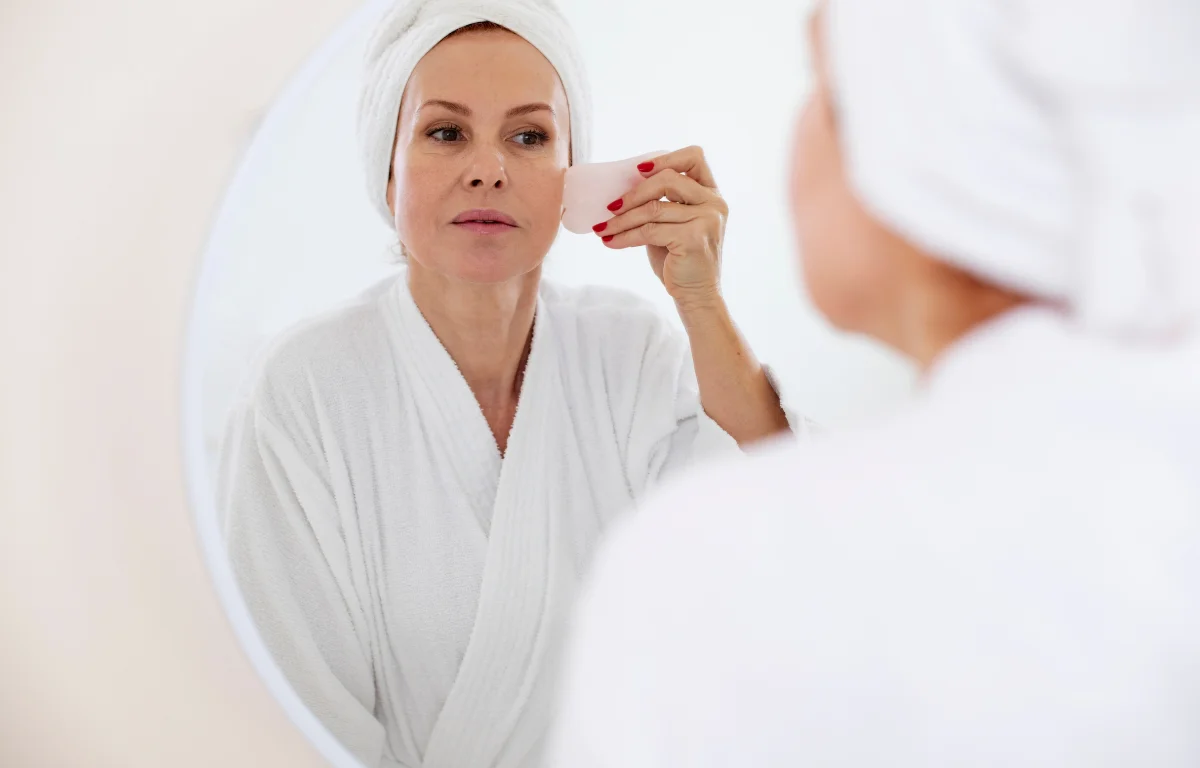
In at-home skincare, well-age is easy to recognize by the shift in priorities. The focus moves to barrier stability, sun protection, the skin’s ability to recover, and its ability to tolerate the chosen routine without constant irritation. Active ingredients do not disappear, but they stop piling up in a routine simply because each of them, on its own, promises some beneficial effect.
A well-built system does not try to fix every possible sign of aging at once. It relies on a clear foundation, one or several justified priorities, and the skin’s actual response. We broke down a practical framework for this approach in the article “Not younger, but more resilient: how to build a well-age routine without overloading the skin”.
Aesthetic medicine: correction without losing individuality
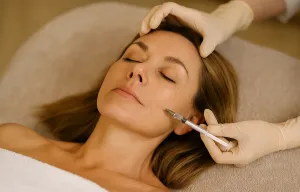
In aesthetic medicine, the very idea of a good result is changing. The goal is no longer an abstractly younger-looking face, but precise work with what genuinely concerns the person: a tired appearance, shifts in proportions, uneven tone, skin quality, or loss of structural support in certain areas.
This approach begins not with the name of a procedure, but with diagnosis, a discussion of expectations, and defining the features a person wants to preserve. A minimally sufficient plan may include one procedure, several sequential stages, or a conscious decision not to intervene. To see how this logic works at the level of concrete decisions, read the article “Well-age in aesthetic medicine: how to correct age-related changes without erasing the face”.
What remains of anti-age in the new system
Anti-age is not disappearing. Its role is changing. Correction remains a tool, and active ingredients and professional procedures remain available ways to address specific changes. But they no longer define the entire strategy or subordinate it to a single goal: looking as young as possible.
Well-age does not oppose anti-age; it removes its role as an ideology while preserving its practical function. A good result is assessed not only by the visibility of the correction, but also by whether facial expression, individuality, comfort, and the ability to maintain the chosen system over time have been preserved.
The shift in center is also visible on the level of aesthetics. Demonstrative results are gradually giving way to imperceptible effort, natural facial mobility, and visual quietness. This aspect of the trend is explored in more detail in the article “The ‘I didn’t try’ aesthetic: why it is the new luxury”.
The well-age trend did not emerge because anti-age “got it wrong.” The request itself has changed. Correction remains possible, but it is no longer a mandatory program of fighting every sign of time. What moves to the center is not an attempt to stop age, but the ability of the skin and face to change without losing resilience, comfort, or recognizability.
Published: 30.01.2026
Updated: 28.07.2026


-lazy-placeholder.webp)
-medium.webp)