






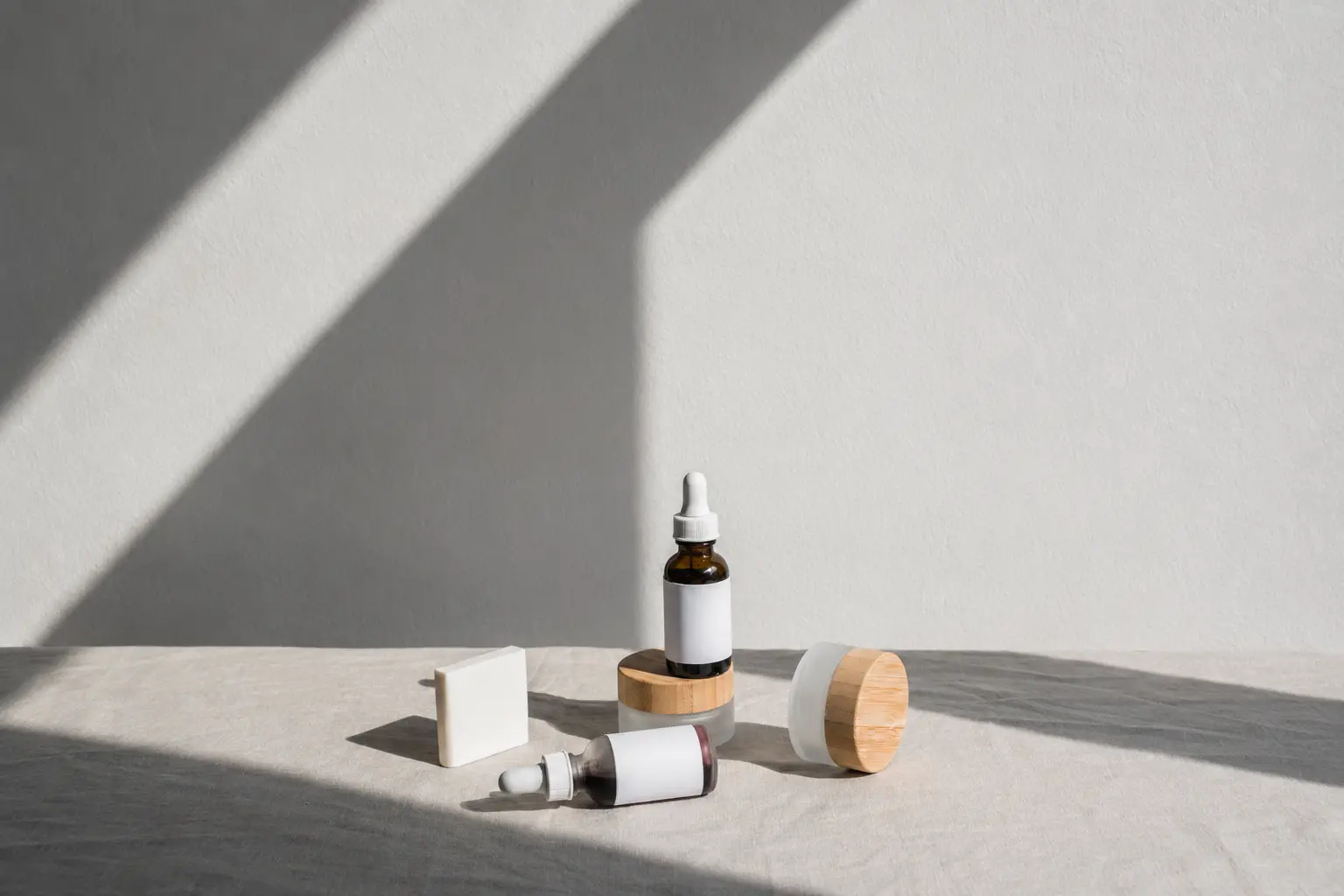
In a well-stocked bathroom shelf, it’s easy to spot the logic of modern skincare: one product for glow, another for pigmentation, an acid for texture, a retinoid for wrinkles, peptides, antioxidants, and a few formulas “for repair.” Each purchase may be justified on its own, but together they do not necessarily create a strong system. When there are too many potentially irritating products, skincare can end up sustaining dryness, burning, and inflammation instead of delivering steady improvement in the skin’s condition.
Well-age offers a different standard of quality. The goal of this kind of care is not to make the face look “younger” at any cost, but to preserve the skin’s functions for longer and address visible changes within what it can comfortably tolerate. In our article on why well-age is gradually replacing the conventional anti-age logic, we looked at this shift on an industry level. Now let’s bring it into practice: what to keep in a daily routine, how to choose an active, and when to reduce the load if you’ve chosen a well-age strategy.
Skin overload doesn’t start with the number of jars
There is no universal limit such as “no more than five products.” Three poorly combined formulas can irritate more than seven neutral ones, and a product one person uses every evening may only be acceptable for someone else once a week. The load depends on the concentration and form of the active, the product’s acidity, the formula base, frequency of application, simultaneous use of other potentially irritating ingredients, and the skin’s starting condition. Season, humidity, sun exposure, dermatological conditions, and professional treatments also matter.
Most often, the problem does not come from ingredient “incompatibility” in the literal sense. A retinoid, glycolic acid, and an acidic form of vitamin C do not necessarily neutralize one another on the skin. But each of these products can increase irritation, and using them at the same time or too often raises the total burden. A combination that works on paper becomes impractical if a person cannot use it consistently without ongoing discomfort.
Burning should not be taken as proof of effectiveness, either. Brief, mild tingling can happen with some acidic formulas, but persistent burning, increasing redness, itching, swelling, soreness, or peeling do not mean the product is “working deeper.” These are signs to assess tolerance, not successful renewal. If familiar products suddenly start causing discomfort, it helps to look separately at why skin tolerance can change with age. A persistent or unclear reaction, especially with a rash, swelling, or oozing, requires a dermatologist’s consultation: irritant and allergic contact dermatitis, rosacea, and other conditions are not treated by simply rearranging cosmetics.
There are quieter signs of overload too: tightness after water, a sudden need to apply cream several times a day, shine together with flaking, worsening tolerance to sunscreen, or burning from formulas that used to feel comfortable. A single symptom does not diagnose anything, but a shift from your skin’s usual state is a sign that the routine should be simplified and watched over time.
The well-age foundation: protect what is already working
The foundation can be reduced to three functions: cleanse gently, support the barrier, and reduce ultraviolet stress. This is not a “level zero” before the real actives, but part of the strategy for mature skin. The stratum corneum limits water loss and the penetration of external substances, and its stability affects both comfort and tolerance to everything that comes next. Sun protection works on another key level: it reduces part of the cumulative photo damage. In a randomized study, daily sunscreen use over 4.5 years was associated with less progression of visible signs of aging compared with discretionary use.
Cleansing should remove sunscreen, makeup, sebum, and impurities without leaving prolonged tightness. That does not mean everyone needs double cleansing or must wash with a cleanser twice a day. If the skin feels comfortable in the morning, water alone may sometimes be enough; if a dense or water-resistant SPF does not come off in one step at night, two gentle steps may make sense. The criterion here is not ritual correctness, but clean skin without friction or that stripped feeling.
A moisturizer also does not need the longest possible list of trendy actives. Humectants such as glycerin draw water into the stratum corneum and help retain it; emollients smooth the surface; occlusive components reduce evaporation. Ceramides, cholesterol, and fatty acids can complement lipid support, but the result depends on the formula as a whole, not on the presence of one buzzword on the label. The right texture depends on the skin’s condition and the climate: oily skin may still need hydration, and dry skin is not always satisfied with a lightweight serum.
Sunscreen should protect against UVA and UVB, have a sufficient SPF, and feel comfortable enough to be applied in the proper amount and reapplied depending on time outdoors, sweating, swimming, and friction. In this category, the product a person uses consistently is often more practical than the “perfect” filter that sits in a drawer because of a heavy texture or irritation. Consistency is exactly what separates long-term prevention from skincare that only works in theory.
At the start: one priority and one main active
Once the foundation is stable, it helps to define one main goal for the next few months: wrinkles and photo damage, uneven tone, dryness, breakouts, or redness. When building a home routine on your own, it is practical to start with one main active. This is not a universal treatment rule: a dermatologist may prescribe a well-justified combination of products. But in regular cosmetic skincare, this limitation helps keep every newly noticed wrinkle from turning into a separate project and makes it easier to understand what exactly caused an effect or a reaction.
For correcting signs of photoaging, topical retinoids—especially prescription tretinoin—have the strongest research base. In a two-year randomized trial, a 0.05% tretinoin cream improved clinical signs of photo damage, although irritation was among the adverse effects. Cosmetic retinol works more gently and has a different evidence base, so percentages of different retinoids cannot be compared directly. The practical takeaway is not that every skin needs the strongest possible retinoid, but that even a well-supported active only makes sense in a regimen the skin can realistically tolerate. Retinoids are not used during pregnancy, and if pregnancy is being planned, the regimen should be discussed with a doctor in advance. We covered forms, pace of introduction, and combinations in more detail in our guide to using retinol.
If a retinoid is not suitable or the main goal is different, the choice should not be reduced to finding a “natural replacement.” In studied formulas, niacinamide may moderately improve uneven tone, spots, redness, and fine lines while also supporting barrier processes. Vitamin C is interesting as an antioxidant and as part of pigmentation-focused care, but its effect depends on the form, concentration, pH, stability, and delivery system: the same name on two labels does not guarantee the same performance. Hydroxy acids can improve texture and pigmentation, but they are not a mandatory step in every well-age routine, especially if the skin is already adapting to a retinoid.
Age also does not dictate an automatic list of ingredients. After 40 or during the menopausal transition, dryness and sensitivity may become more pronounced, but the calendar does not tell you which formula a specific person needs. In our article on how hormonal changes affect skin after 40, the key point is context: when the skin changes, it may be necessary to rethink textures, active frequency, and the limits of tolerance—not simply add another “age-specific” serum.
It is better to introduce one new active at a time without simultaneously changing your cleanser, moisturizer, and SPF. The starting frequency depends on the formula and the skin’s condition, so a universal schedule like “twice a week for everyone” creates false precision. It is wiser to begin less often than you eventually plan to use the product and increase frequency only if there is no persistent irritation. With retinoids and acids, this is usually more important than complicated rotation schemes. Improvements in texture, tone, or wrinkles should not be assessed after a few days: visible change takes weeks and months, while an unwanted reaction may show up earlier.
A rhythm you can maintain for years
A practical well-age routine does not look identical every day. It has a stable core and room to adjust frequency.
The minimum logic of a well-age routine:
- morning: cleansing as needed, moisturizing, and sun protection;
- evening: cleansing, one targeted active on schedule, and moisturizer;
- on nights without an active: cleansing and moisturizer, without needing to “replace” it with an acid, mask, or booster;
- if persistent irritation appears: simplify the routine and gradually reintroduce products once comfort returns.
An ordinary evening with just a moisturizer is not a missed opportunity. It helps preserve a regimen in which the skin can tolerate the main intervention, and skincare does not turn into an endless rotation of actives.
When burning, marked tightness, or noticeable peeling appear, the first step is usually to pause potentially irritating products, not to try covering the reaction with a new repairing serum. During this time, stick to gentle cleansing, your usual neutral moisturizer, and sunscreen if it does not cause discomfort. Reintroduction should begin after comfort is restored, with one product and at a lower frequency. If symptoms do not pass, worsen, or go beyond familiar irritation, a dermatologist is needed.
It is more useful to review the system not every week, but after a sufficient period of consistent use. The questions for review are simple: is the routine addressing the main goal, does the skin stay comfortable between applications, can you clearly explain the role of each product, are you actually using SPF, and do you regularly have to “repair the barrier” after your own skincare? If a product has no clear function, duplicates another one, or constantly forces you to compensate for irritation, removing it may make the system stronger.
Masks, scrubs, and peels: additions, not a separate system
Additional products do not need to be completely excluded from well-age skincare. A mask may quickly reduce the feeling of dryness, a clay formula may temporarily absorb excess sebum, and exfoliation may make the skin’s surface feel smoother. But these products do not create a mandatory layer of “deep care,” nor do they compensate for a weak foundation. The most useful question before using them is not “when was the last time I did a mask,” but “what specific need is this supposed to meet today?”
The word “mask” describes a format, not an action. It may hide an ordinary moisturizing formula, a concentrated acid treatment, clay, an occlusive overnight mask, or a product with fragrance and botanical extracts. So a mask should be evaluated by its composition and function in the same way as a cream or serum. A moisturizing or soothing mask may be a comfortable situational step, but it does not have to work better than a well-chosen moisturizer. Clay masks can help absorb some sebum, but the feeling of maximum tightness after drying is not a sign of cleanliness or benefit.
A scrub is not automatically “bad,” and an acid is not automatically gentler. The result of mechanical exfoliation depends on the abrasive particles, the amount of product, pressure, massage time, and frequency. A chemical peel depends on the acid, its concentration, pH, the formula base, and contact time. Both methods may be acceptable for one skin and excessive for another. If there is active inflammation, marked redness, a damaged barrier, or a flare of a dermatological condition, experiments with exfoliation are best postponed.
A home acid or enzyme peel should be counted not as a neutral SPA step, but as an active. If the routine already includes a retinoid, an acid, or another product that affects stratum corneum renewal, the peel adds to the total load. It should not automatically be placed on the same evening as other potentially irritating products unless such a combination is intended by the manufacturer or doctor and has been tested for tolerance. Professional peels differ in depth and risk level, so the home routine before and after the procedure should be coordinated with the specialist performing it.
Enzyme powders, cleansing brushes, sponges, patches, and boosters follow the same logic. They may offer convenience, sensory pleasure, or a short-term visible effect, but each one needs a clear role. If an extra product duplicates the main active, causes a reaction that then requires you to “save the barrier,” or is used only out of fear that your care is not enough, it stops being an addition and becomes a source of unnecessary load.
Conclusion
This is the practical continuation of the idea of skin longevity as the skin’s long-term resource. No home routine stops biological aging or guarantees a “younger age” on a skin analyzer screen. What it can do is something far more honestly measurable: reduce part of photo damage, support the barrier, address certain visible changes, and avoid sustaining chronic irritation through skincare itself.
In well-age skincare, fewer products do not always mean better, just as more actives do not automatically mean more effective. A strong routine is one in which the basics are repeated effortlessly, the main active has a clear purpose, and the extras do not break this logic. Skin does not need to constantly recover from our efforts to perfect it. Here, sustainability is not a compromise on results, but the condition that allows results to build over time.
Sources
- Hughes M. C. B., Williams G. M., Baker P., Green A. C. Sunscreen and prevention of skin aging: a randomized trial. Annals of Internal Medicine. 2013;158(11):781-790.
- Kang S., Bergfeld W., Gottlieb A. B., Hickman J., Humeniuk J., Kempers S. et al. Long-term efficacy and safety of tretinoin emollient cream 0.05% in the treatment of photodamaged facial skin: a two-year, randomized, placebo-controlled trial. American Journal of Clinical Dermatology. 2005;6(4):245-253.
- Bissett D. L., Miyamoto K., Sun P., Li J., Berge C. A. Topical niacinamide reduces yellowing, wrinkling, red blotchiness, and hyperpigmented spots in aging facial skin. International Journal of Cosmetic Science. 2004;26(5):231-238.
- Misery L., Ständer S., Szepietowski J. C., Reich A., Wallengren J., Evers A. W. M. et al. Definition of sensitive skin: an expert position paper from the Special Interest Group on Sensitive Skin of the International Forum for the Study of Itch. Acta Dermato-Venereologica. 2017;97(1):4-6.
- Lodén M. Role of topical emollients and moisturizers in the treatment of dry skin barrier disorders. American Journal of Clinical Dermatology. 2003;4(11):771-788.
- Sanabria B., Berger L. E., Mohd H., Benoit L., Truong T. M., Michniak-Kohn B. B. et al. Clinical efficacy of topical vitamin C on the appearance of wrinkles: a systematic literature review. Journal of Drugs in Dermatology. 2023;22(9):898-904.
- Kornhauser A., Coelho S. G., Hearing V. J. Applications of hydroxy acids: classification, mechanisms, and photoactivity. Clinical, Cosmetic and Investigational Dermatology. 2010;3:135-142.
- Jin S., Li K., Zong X., Eun S., Morimoto N., Guo S. Hallmarks of skin aging: update. Aging and Disease. 2023;14(6):2167-2176.



-lazy-placeholder.webp)
-medium.webp)