






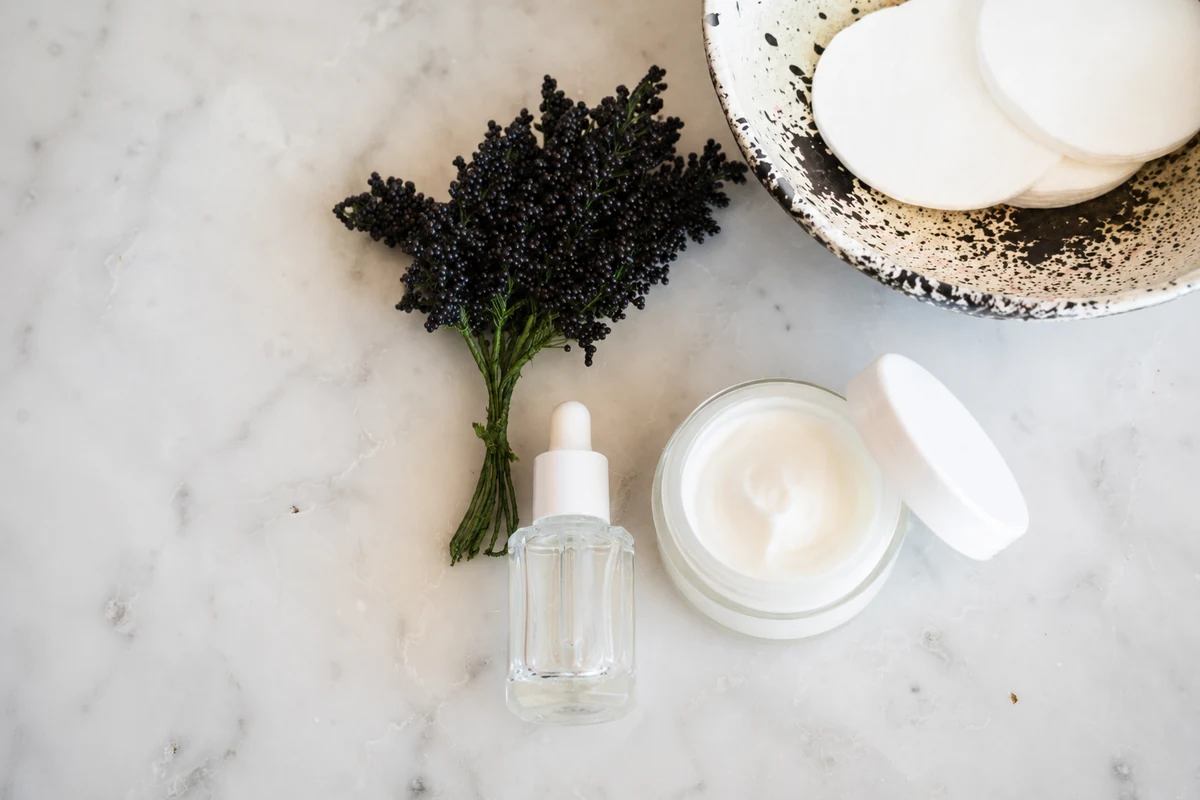
There are creams we remember for more than just the results. You may forget the exact product name, not recall the ingredient list, or even fail to recognize the jar after a packaging update — and still remember how it smelled in the bathroom after a warm shower. A little clean, a little herbal, powdery, milky, citrusy, almost pharmacy-like, or so soft that the scent doesn’t seem to have a name at all, but simply creates a mood.
Sometimes it is the fragrance itself that turns skincare from a mechanical act into a small transition. From the workday into the evening. From morning rush into composure. From inner noise into a brief moment where you apply cream not on autopilot, but more slowly. Not because cosmetics are meant to replace rest or therapy, but because the body recognizes repeated signals very well. If a certain scent has appeared many times alongside care, it begins to work like a door into a familiar state.
There is nothing superficial about that. Smell is closely tied to memory, emotion, and a sense of safety. A scent can return a person to a certain mood faster than any logical explanation: “this is my cream,” “this is my evening,” “this is what calm smells like.” That is why fragrance in cosmetics often works not as an unnecessary embellishment, but as part of the sensory experience.
But skin does not always live in the same rhythm as our love for beautiful scents. It may be dry, irritated, overheated after the sun, tired after actives, tense after stress, or simply more sensitive than usual that day. And then a fragrance that felt comforting yesterday suddenly becomes too much today. As if someone turned on music in a room that already had too many sounds in it.
Fragrance in skincare is not just about “like” or “dislike”
People often talk about scent in skincare too bluntly. Either as a luxurious detail that makes a product feel “expensive,” “feminine,” “clean,” or “spa-like.” Or as an unwanted ingredient that should be crossed out of the routine of every person with sensitive skin. Both approaches are too flat.
In real life, scent can be a pleasant part of a ritual, a source of irritation, a marker of habit, a reason to stop using a product, or simply extra noise at a moment when the skin is asking for minimalism. The very same cream can feel different in different periods: during a stable week, like a soft evening gesture; after a retinoid or too much sun, like something overly active, even though the formula itself has not changed.
That is why the real question is not whether skincare should smell nice. A more precise question is this: when does fragrance help a person stay connected to their routine, and when does it begin to demand more from the skin than it can currently handle?
Why fragrance becomes a ritual so quickly
Memory does not ask for INCI
Fragrance in skincare does not work only through the skin. It works through the nervous system, memory, expectation, and repetition. If the same scent regularly appears in moments of care, it gradually becomes a marker: time to pause, wash your face, apply cream, come back to yourself for at least a few minutes.
Scientific evidence explains well why smells can trigger an emotional response so quickly. Olfactory signals have a direct connection to brain areas involved in emotion and memory, particularly the amygdala and hippocampus. Harvard Gazette describes this connection as one of the reasons scent activates emotional memory so quickly, while a review in Frontiers in Behavioral Neuroscience summarizes evidence that odors can influence emotions and mood.
In cosmetics, this has a very practical dimension. A person may stick to a regular routine better not because someone explained once again the importance of barrier care, SPF, or hydration, but because the process itself has become pleasant. A cream with a soft fragrance may not “treat” the mood, but it can help you not skip your evening ritual. A cleanser with a delicate scent may become associated with cleanliness and the end of the day. A body lotion may be not only about lipids and water, but also about a feeling: I can sense my body again not as a task, but as a place where I get to live.
This is especially noticeable not in an idealized routine description, but in everyday life. A person comes home, washes their hands, sees a familiar bottle, catches the scent — and the body already understands that the day is shifting into another mode. It does not necessarily become calm. The tiredness does not necessarily disappear. But a small familiar action appears, one that does not have to be reinvented from scratch every time.
Ritual is not held together by discipline alone
And this is where fragrance should not be dismissed too quickly. In editorial or dermatology-focused texts about sensitive skin, scent is often immediately placed in the “remove it” category. It is simpler that way. But real life is more complicated. To some people, a fragrance-free cream feels faceless, and because of that it never truly settles into their routine. For others, it matters that a product smells clean. For some, fragrance helps skincare feel like care rather than a medical obligation.
There are people who can buy a very correct, basic cream, place it on the shelf, and barely use it because they never feel drawn to reach for it. And there is the product that does not look revolutionary, yet becomes part of the evening precisely because it feels sensorially pleasing. This does not cancel out formula quality, evidence, or tolerability. It simply shows that skincare exists not inside an ideal instruction manual, but inside lived everyday life.
The problem does not begin where fragrance exists in cosmetics. The problem begins when fragrance becomes more important than the condition of the skin.
When fragrance — or its absence — becomes part of a brand’s philosophy
In professional skincare, fragrance can work in different ways. It is not always just a “pleasant smell” added at the end of a formula. Sometimes it becomes part of a line’s character, supports its mood, and helps a person recognize the product even before the skin shows results. And sometimes, on the contrary, a brand’s strategy is to remove excess aromatic presence and leave the skin with a sense of cleanliness, calm, and neutrality.
VITAL C: a citrus scent as morning activation
This is easy to see in the example of IMAGE Skincare. The VITAL C line is built around the idea of radiance, hydration, antioxidant support, and waking the skin up in the morning. Its citrus aroma of natural orange peel works not only as a smell, but as part of the whole image: fresh application, an energized start to the day, the feeling of livelier, more hydrated skin. Here, fragrance supports the line’s emotional tone — it does not replace what the formula does, but it makes the ritual more recognizable and more physically enjoyable.
ORMEDIC by Image: neutrality and a sense of cleanliness for skin prone to reactions
A completely different philosophy is seen in the ORMEDIC line. These are formulas designed for skin that needs softness, predictability, and less sensory noise. In this approach, the goal is not to create a vivid aromatic signature, but rather to offer a feeling of cleanliness without an intrusive scent. For skin prone to reactions, that can be an equally valuable sensory solution: the product does not “sound” loudly on the face, does not interrupt the skin’s own sensation of itself, and does not force a person to keep noticing every minute that something has been applied.
These two examples show that fragrance in skincare is not always a question of “good” or “bad.” In VITAL C, it becomes part of morning activation and the association with freshness. In more neutral formulas for sensitive or reactive skin, the value may lie precisely in aromatic restraint. One approach creates a mood. The other leaves more silence. And both can be appropriate if they match the skin’s condition, the moment in life, and how a person wants their skincare to feel.
Fragrance is not the enemy. But it should not be the main argument
For healthy, stable, intact skin, a fragranced product does not necessarily cause a problem. Many people use creams, serums, oils, or body products with parfum, essential oils, or fragrance blends for years without reactions. It would be incorrect to say that any scent in skincare is automatically harmful.
But it is just as incorrect to pretend that fragrance is a neutral detail for everyone. Fragrance compositions can contain many different substances, some of which have allergenic or irritating potential. DermNet notes that fragrances are among the common causes of contact reactions to cosmetics, and that fragrance allergy is a form of allergic contact dermatitis that usually requires prior sensitization and may appear with a delay — hours or even days after contact.
What matters here is keeping a calm tone. Fragrance in cosmetics should not be demonized automatically. But it should not be romanticized to the point where burning, itching, redness, or a persistent urge to wash the product off are ignored. Stable skin, reactive skin, skin after actives, and skin during a flare are not the same context.
Not every sting is an allergy
This is where it is very easy to get confused. A product may simply smell unpleasant to you: too sweet, too sharp, “luxurious” but suffocating. It may cause subjective burning or tingling, though that does not automatically mean allergy. Or it may be a true contact reaction that should be assessed by a dermatologist, sometimes with patch testing. That is exactly the point worth addressing separately: when a reaction to fragrance may be more than just discomfort.
This distinction matters not only medically, but psychologically as well. If every tingle is immediately called an allergy, a person starts being afraid of all skincare. If, on the contrary, every reaction is explained away as “just sensitivity,” a situation that really needs a dermatologist can be missed. Between these extremes lies the calm position: notice, track repetition, do not dramatize, but do not ignore it either.
There is no need to turn scent into a cosmetic villain. Fragrance can support a ritual. It can be part of pleasure. It can help a person stay consistent with care. But if the skin is already in defense mode, the best strategy often sounds simpler: fewer signals. Fewer experiments. Less of everything that is not essential.
Where fragrance really has a place
There are skincare categories where fragrance may be more appropriate than in a cream for a reactive face. For example, body products, hand creams, balms, oils, shower gels that rinse off well, or products used away from irritated areas. In these formats, scent often works as part of the bodily scene: shower, towel, warm skin, slow application of cream, the feeling that the day has finally become a little less sharp.
Body care has a different sensory script than facial care. On the face, a product sits close to the nose, eyes, and lips, so fragrance is perceived more intensely and for longer. On the body, scent can be a softer background, especially if the formula is not being applied to irritated areas and not used immediately after aggressive scrubbing, shaving, or sun overheating.
That is why, for some people, fragrance in a body cream remains a pleasant part of the ritual, while fragrance in a face cream already feels excessive. This is not a contradiction. It is about different proximity to mucous membranes, different contact area, different duration of sensation, and different degrees of skin vulnerability.
A stable routine can tolerate more sensoriality
Fragrance can also be supportive in simple, stable routines. When a person has used a product for a long time, tolerates it well, is not simultaneously introducing acids, retinoids, peels, or other actives, and the skin is not signaling with burning, tightness, or new redness. In such cases, fragrance should not be demonized just because it is there. Skincare should not only be correct, but also something a person genuinely wants to repeat.
This is especially noticeable in products where sensoriality almost inevitably becomes part of the experience: body creams, balms, oils, hand products, gentle cleansing formulas. Even here, however, fragrance should not overpower everything else. If after application you want to inhale the scent once more, that is one story. If the smell “sits” on the face, interferes with sleep, causes a headache, or reminds you of the cream all evening, that is no longer a ritual but an intrusive stimulus.
There is another detail people often forget: a sensory formula is made up of more than scent alone. How a product spreads, whether it leaves stickiness, how quickly it absorbs, whether it creates a film — all of this often affects skincare adherence no less than fragrance. You may love the smell of a cream but be unable to tolerate its density. Or the opposite: a fragrance-free product may become a favorite because for once your face no longer feels “coated.” That is why, alongside this topic, it also makes sense to read about how cream texture affects the feeling of comfort.
Sometimes a person says, “the smell doesn’t suit me,” when in fact they are tired of the product’s whole sensory construction: a heavy film, a sweet fragrance, a long-lasting feel on the skin, shine, stickiness. And sometimes the opposite happens — the scent is moderate, but the texture is so comfortable that the formula feels calm and easy to wear. That is why fragrance should not be assessed in isolation, but together with how the product behaves on the skin after five minutes, after an hour, and the next morning.
When skin needs silence
“Silence” in skincare is not a rejection of beauty. It is the moment when a formula needs to be as legible to the skin as possible. No unnecessary sensory showmanship, no strong scent, no feeling that the product is trying to impress. Sometimes the best cream is the one you stop thinking about ten minutes after applying it.
Most often, a fragrance-free strategy makes sense when the skin is dry, irritated, prone to redness, burning, itching, atopic dermatitis, rosacea, or frequent reactions to new products. The American Academy of Dermatology recommends choosing products labeled fragrance-free for dry and sensitive skin and explains that unscented does not always mean there are no fragrance components at all: sometimes the smell is simply masked. The AAD also advises caution with unscented and botanical formulas if fragrance itself is what triggers a reaction.
After actives, there are already too many signals
Skin may also need silence after active skincare. For example, when a person is introducing retinoids, acids, acne treatments, peels, or intensive brightening ingredients. During such periods, the barrier may temporarily be more vulnerable, and nerve endings may become more sensitive to any stimulus. If, against this background, you add a cream with a distinct fragrance, it becomes harder to understand what exactly caused the burning: the active, the base formula, the fragrance composition, the product combination, or the skin’s condition itself.
This is one reason why, when introducing actives, it is better to keep the base as calm as possible: a gentle cleanser, a straightforward moisturizer, an SPF that does not provoke its own separate sensory drama. When the base is quiet, it is easier to see how the skin is reacting to the active itself. When every product in the routine has a scent, a complex texture, and its own “character,” the number of signals becomes overwhelming.
And this is not only about diagnosis. When the skin is already stinging a little from an active, an aromatic cream on top may be perceived psychologically as “something else happening again.” A person starts listening to their face, touching their skin, checking the mirror, applying an extra layer of something soothing. That is how a simple routine turns into a nervous micro-drama, when sometimes what the skin really needed was not more complicated help, but fewer irritants.
Around the eyes, fragrance often feels stronger
Silence matters around the eyes too. The skin there is thinner, and discomfort from fragranced formulas is often felt more sharply: eyes water, burning appears, you want to wash your face, even though the exact same product feels fine on the cheeks. This is not always an allergy. But it is enough of a signal not to convince yourself to “push through because the cream was expensive.”
Extra caution is needed when a face product is not intended for the eye area, yet a person applies it too close to the eyelids. Fragrance, volatile components, a rich base, actives, or simply an unsuitable texture may all create irritation. Sometimes it is enough to keep more distance from that area. Sometimes it is better to choose a separate, simpler fragrance-free product.
“I react to everything” mode is not the time for a beautiful sensory story
A separate situation is the period when the skin is already reacting “to everything.” In those moments, people often look for a very gentle, very beautiful, very “soothing” product. And this is exactly where fragrance can become confusing: in the jar the cream feels tender, almost therapeutic, but on the skin it suddenly turns out to be one more irritant. So when the face is already burning, tight, or red, it is better not to look for a prettier sensory story, but to reduce the number of variables and return to the basics.
It is better to read about labeling in more detail not within this article, but in a separate guide on how to read fragrance-free, unscented, and parfum on a label. Here, the main idea is different: when the skin is overloaded, scent stops being decoration and becomes additional noise. And sometimes that noise needs to be removed, at least for a while.
Natural fragrance is not always gentler
One of the most common traps is assuming that synthetic parfum is suspicious, while essential oils, plant extracts, and “natural fragrance” are automatically gentler. Emotionally, this is understandable. Lavender, citrus, rose, or eucalyptus sound closer to nature than the abstract word parfum. We instinctively want to perceive them as something soft, almost homelike.
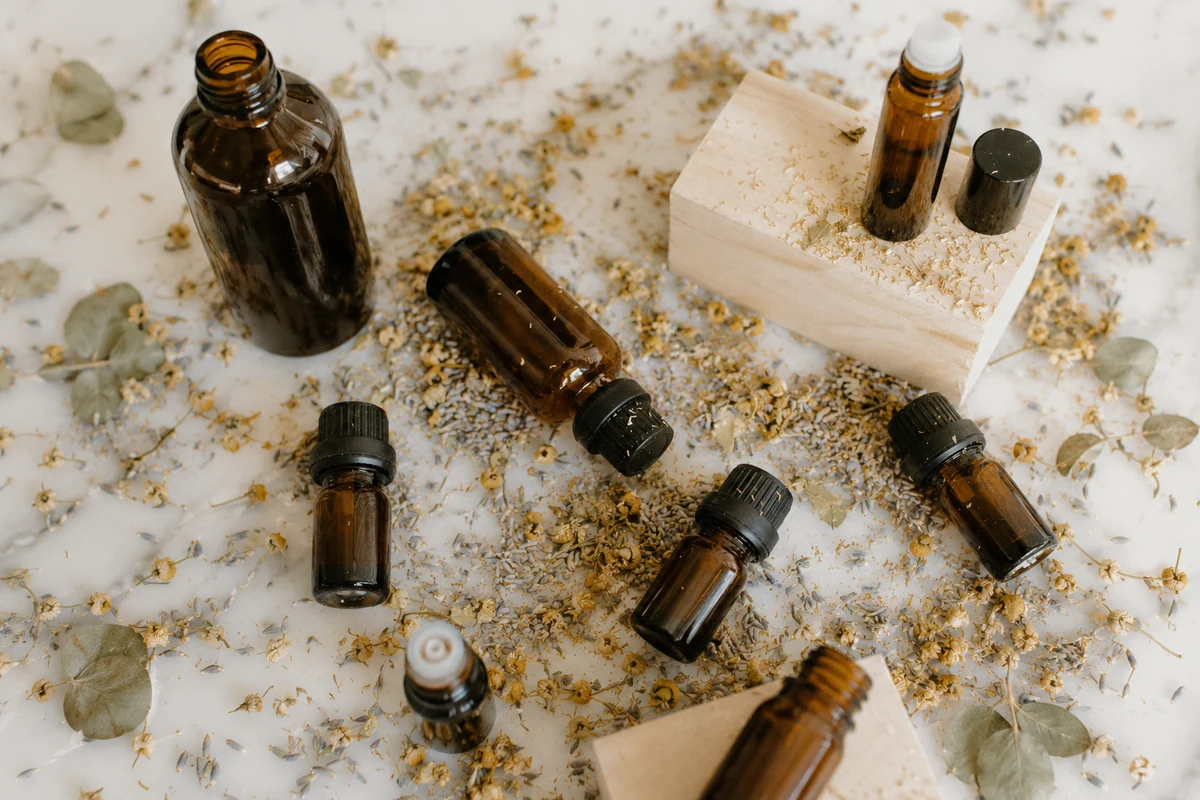
But for skin, the origin of a substance is not a guarantee of tolerability. Natural fragrance components can also contain potential allergens. DermNet notes that fragrance ingredients may be either natural or synthetic, and in 2023 the EU updated its rules on labeling fragrance allergens in cosmetics, expanding the list of substances that require individual declaration at certain concentrations.
So the question is not whether a product smells “natural.” And not whether the fragrant part sounds beautiful in the brand’s description. The question is both simpler and more difficult: how does your skin tolerate this formula right now? For stable skin, a product with a natural aromatic composition may feel pleasant and be well tolerated. For reactive skin, it may be just as unnecessary as any other fragrance.
This does not mean that all essential oils or all plant-based aromatic components should automatically be excluded from life. It means they should not be granted a moral advantage just because they come with the word “natural.” In cosmetics, gentleness is defined not by the romance of origin, but by actual tolerability, concentration, context of use, and the current condition of the skin.
This is often where a more mature approach to cosmetics begins: not treating any word on the label as magical. “Natural,” “clean,” “gentle,” “botanical,” “unscented,” “hypoallergenic” — all of these may be useful clues, but none of them replaces observing your own skin. A formula has the right to call itself gentle only when the skin truly experiences it as gentle.
A small check-in: is the fragrance helping, or already getting in the way?
Sometimes a person does not immediately connect a reaction to the fragrant part of the formula. They may like the product. The packaging is beautiful. The brand is trusted. In store, or on the hand, the scent seemed soft, even “calming.” And the brain easily reaches for other explanations: maybe it’s the weather, maybe my skin is just tired today, maybe I applied too much.
Sometimes that is true. But if the same product regularly produces similar sensations, it is worth putting it on pause. Not forever. Not dramatically. Just to see what happens when the skin gets a few days without that signal.
Signs that a fragranced product may not be the best choice right now:
- after application, there is burning, tingling, or an urge to wash the product off quickly;
- the skin turns red not just for a few seconds, but for a long time;
- the product seems “fine,” but the face feels tight or dry more often after using it;
- the scent is pleasant in the jar, but becomes intrusive on the skin;
- the reaction repeats after every use, even if you apply less;
- after a pause and a switch to a fragrance-free base, the skin feels calmer.
This list is not a diagnosis. It simply helps you notice a pattern. If there is pronounced redness, itching, swelling, rash, cracks, oozing, or if the reaction keeps returning again and again, it is better not to guess based on the label, but to consult a dermatologist.
It is important not to turn every discomfort into a horror story. But it is just as important not to dismiss the body’s response. If, after a product, you feel like you need to “push through,” “wait for it to pass,” or “apply something soothing on top,” that is already not the best scenario for daily care. A good basic product should not ask the skin for endurance.
How to bring fragrance back, if you really want to
Fragrance-free does not have to be a lifelong rule for everyone. For some, it is a permanent need, especially with a confirmed allergy or chronic reactivity. For others, it is a temporary recovery mode after irritation. What matters is not turning skincare into a list of prohibitions if the skin does not require that.
Not during a flare, not together with an active, not immediately on the whole face
If you really want to bring back a fragranced product, it is better not to do it during a flare, not at the same time as a new active, and not immediately all over the face. The AAD advises testing new products on a small area of skin for 7–10 days to assess a possible reaction. This is not a perfect method for every type of allergy, but it encourages discipline and helps you avoid introducing several new formulas at once.
In practice, this may look like reintroducing fragrance first in body care rather than on the face. Choosing a product that does not stay on the most sensitive areas. Not applying it to irritated skin. Not combining it with acids or retinoids on the same evening. Watching not only what happens after ten minutes, but also how the skin looks and feels the next morning.
Another useful tactic is not changing the whole routine for the sake of one beautiful scent. If your base is working, there is no need to introduce a new fragranced cream, a new serum, and a new SPF all at once. The skin cannot “tell” you what exactly did not suit it. It is better to give one product a few days of space and only then draw conclusions.
Reintroducing fragrance should not be a gesture of “I can finally use everything again,” but a calm check-in. If the skin stays quiet, the product does not cause burning, does not worsen dryness, and does not create an intrusive feeling on the face, it may stay. If the discomfort returns, that is not failure and not fussiness. It is information.
Sometimes it is better to keep fragrance nearby, not on the skin
Sometimes the compromise is not a fragranced face cream, but scent placed next to the ritual. A candle in another corner of the room. Tea. Clean bedding. A shower gel that rinses off well. A hand cream, if the hands tolerate it. This way the nervous system still gets sensory support, but the face does not necessarily come into contact with the fragrance composition.
This is especially important for people who truly love scents and do not want “sterile” skincare. You can keep fragrance in the space without always keeping it on irritated skin.
This approach removes the feeling of loss. A person is not giving up pleasure altogether, but simply moving fragrance from a formula that touches reactive skin into a safer sensory context. For some, that becomes the best compromise: the skin gets silence, while the ritual does not become cold or clinical.
What “quiet” skincare means
Quiet skincare is not necessarily boring. It can be very high-quality, elegant, and sensorially pleasant — its pleasantness is simply not built on scent. It may come from the softness of the texture. From the absence of burning. From the fact that after application the skin stops asking for attention. From the feeling that the cream does not “work loudly,” but quietly restores comfort.
For reactive skin, that is often the most important luxury. Not a strong scent. Not an instant wow effect. Not the feeling of aggressive activity. But the ability to apply a product and forget about your skin because it does not hurt, feel tight, turn red, or demand that you wash something off immediately.
That is why fragrance in skincare should be assessed not abstractly, but in context. During a stable period, it may be part of the ritual. During irritation, it may be extra noise. For one person, scent creates a feeling of care. For another, it becomes a trigger for discomfort. Even for the same person, the answer may differ from day to day.
There are days when you want your cream to smell beautiful. And there are days when you want only one thing: for your face to finally go quiet. And that too is a normal need of the skin, no less important than the pleasure of ritual.
This point matters a great deal in mature skincare. We often want to find one final answer: fragrance is good or bad, fragrance-free is necessary or not, natural scents are gentler or more dangerous. But skin does not always answer in a simple “yes” or “no.” It answers through its condition. Sometimes that condition allows for more sensoriality. Sometimes it asks for minimalism.
Quiet skincare is not skincare without character. It is skincare in which the character of the formula does not drown out the needs of the skin. It may be almost unnoticeable, but sometimes that very unobtrusiveness is the clearest sign of a good choice.
The main rule: do not romanticize fragrance more than you listen to your skin
Cosmetics stopped being only about function a long time ago. They are about touch, scent, rhythm, repetition, and a sense of self. And that is normal. Skincare that brings no pleasure at all rarely lasts for long in real life.
But a mature approach to fragrance begins where we can acknowledge its power while also seeing its limits. Scent may support a ritual, but it should not justify burning. It may create emotional comfort, but it should not mask poor tolerability. It may be a beautiful part of a formula, but it is not proof of quality.
When the skin is calm, fragrance can be a language of pleasure. When the skin is tired, reactive, or recovering, it often needs a different language — short, simple, without extra noise. In that silence, skincare does not become less beautiful. It simply finally begins to speak to the skin in a way it is able to hear right now.
Perhaps that is the most mature way to relate to scent in cosmetics: not to ban it automatically, not to worship it, not to fear it, not to buy a product only because of a first impression from the jar. But to ask a simpler question: is this fragrance helping my ritual, or is my skin already asking for silence?
Sources
- American Academy of Dermatology Association. Dermatologists’ top tips for relieving dry skin.
- American Academy of Dermatology Association. How to test skin care products.
- DermNet. Fragrance allergy.
- DermNet. Contact reactions to cosmetics.
- European Commission. Fragrance allergens labelling in cosmetic products.
- Harvard Gazette. How scent, emotion, and memory are intertwined.
- Kontaris I., East B. S., Wilson D. A. Behavioral and Neurobiological Convergence of Odor, Mood and Emotion: A Review. Frontiers in Behavioral Neuroscience, 2020.