






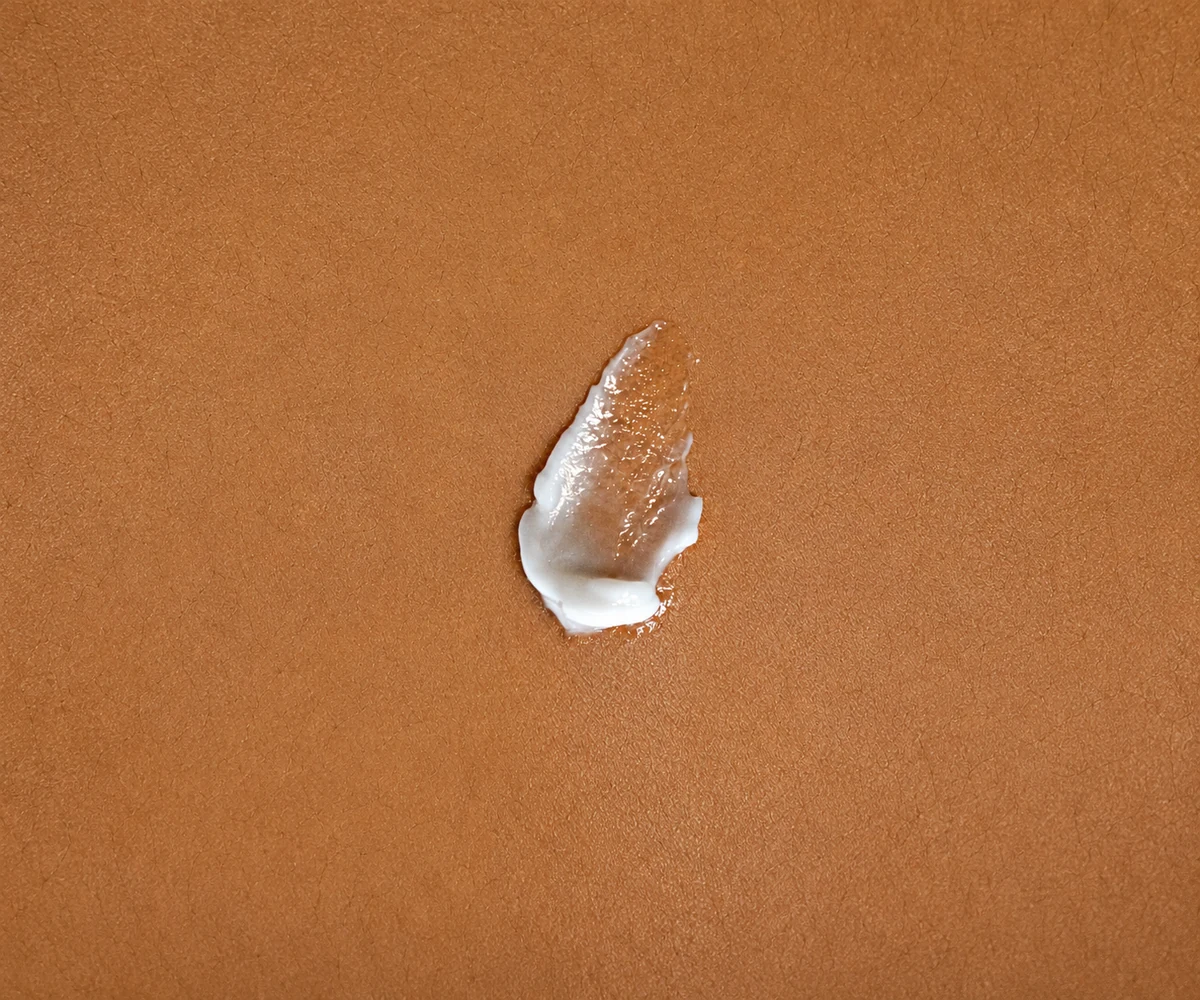
Sometimes a cream seems impossible to fault on paper. It doesn’t cause breakouts, sting, or redden the skin, and there’s nothing obviously harsh about the formula. You could even call it a good product: the actives make sense, the brand is trustworthy, and the claims don’t sound unrealistic. And yet a minute after application, a very physical, almost impatient urge appears — to go to the bathroom and wash it all off your face.
The cream feels like it’s just sitting on top. It clings to the hair near your temples. It gets in the way of your facial expressions. It leaves shine where you wanted a calm, natural finish. Under your fingers, it doesn’t feel like care — it feels like an extra layer. And that’s often when people decide: “This cream doesn’t suit me.” Sometimes that’s true. But the reason isn’t always that the formula is bad or unsafe. Very often, the issue is something else: the texture doesn’t match the way this particular skin, in this particular climate, within this particular rhythm of life, experiences comfort.
In skincare, we talk a lot about actives. Retinol, acids, peptides, ceramides, vitamin C, niacinamide, hyaluronic acid — all of it can seem like the main event, because actives are the easiest thing to explain and sell. But between the ingredient list on the label and real daily use, there’s another layer: the sensory one. It sounds quieter, less “scientific” in advertising, but it’s often exactly what determines whether a product becomes part of your routine or remains a beautiful jar you open once every few weeks out of guilt.
The skin feels a cream before we ever see results
Skin is not a passive surface we simply apply a formula to. It perceives touch, pressure, temperature, tension, itch, pain, glide, shifts in moisture, and the sensation of a layer on its surface. So for skin, cosmetics are not just a set of ingredients. They are also that first cool touch, the density under your fingers, how quickly the product spreads, the way it settles, whether it leaves a film, whether it feels sticky, whether it creates softness, whether it makes you want to touch your face again.
That’s why two creams with a similar promise can feel completely different in real life. One “moisturizes” and almost disappears into the skin, leaving behind a sense of calm. Another also “moisturizes,” but sits on top, looks shiny, takes forever to absorb, and keeps reminding you it’s there. At the level of marketing claims, they seem close. At the level of lived, physical experience, they belong to two different worlds.
This is where it matters not to dismiss your own perception. In skincare, people often try to persuade themselves to put up with things: the cream was expensive, the ingredients are good, the esthetician recommended it, a friend loves it, “maybe it’s supposed to feel like this.” But if a product feels unpleasant every single time, your skin — and your habits — will almost certainly start sabotaging consistency. You’ll apply less, skip days, replace it with something else, or use it only when you feel you “should.” And a cream doesn’t work from the shelf. It works when it’s actually used.
“A heavy cream” isn’t one property — it’s a whole tangle of sensations
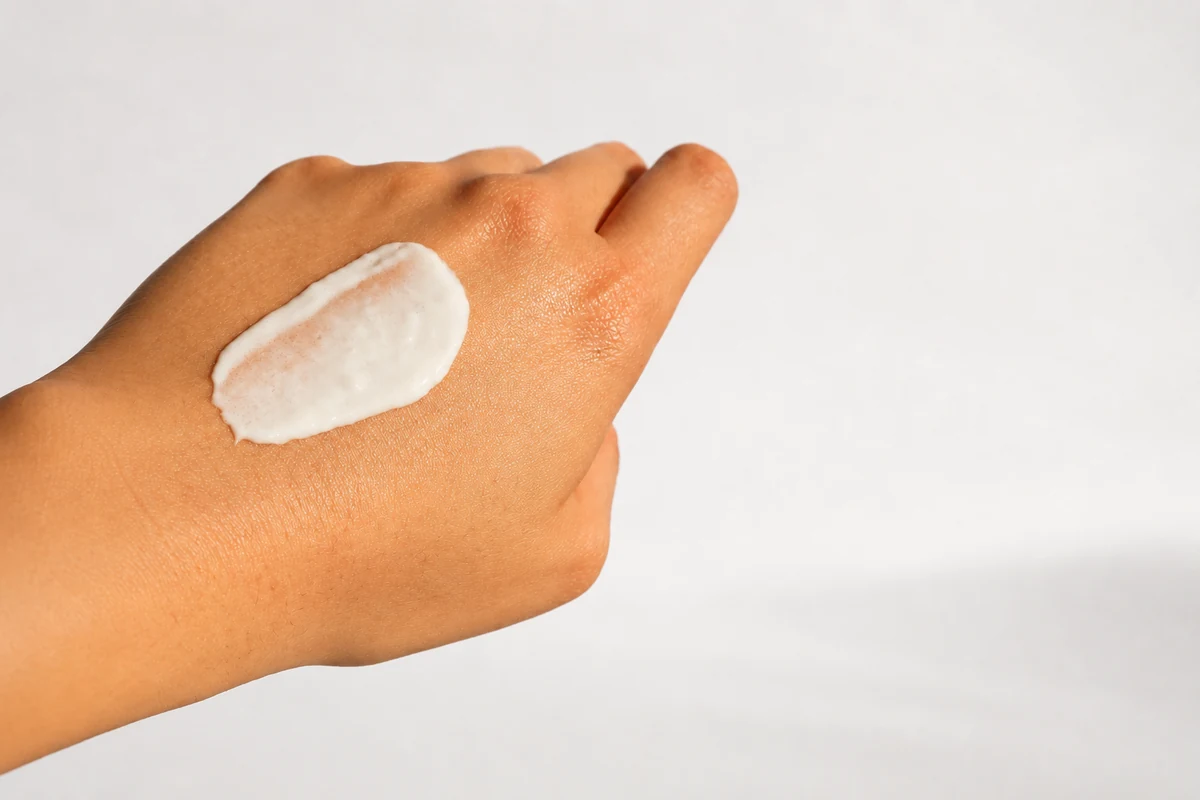
When someone says, “this cream feels heavy on me,” they rarely mean thickness alone. That phrase can hold several things at once: greasiness, slow absorption, shine, stickiness, a dense film, a feeling of warmth under the layer of product, fear of clogged pores, or simply the impression that the face feels less free. The same description can hide very different sensory problems.
Sometimes the skin truly does need a richer formula. In cold weather, after actives, during periods of dryness, with a compromised barrier, or on areas that lose moisture quickly, a denser cream may feel not “heavy” but protective. But sometimes that same richness reads as overload. Especially if the skin is combination, if the humidity is high, if SPF, foundation, or powder will go on top, or if the person simply can’t stand the feeling of a noticeable film on the face.
A cream’s texture is not only about whether it contains “a lot of oils or very few.” Emollients, occlusives, humectants, silicones, emulsifiers, thickeners, polymers, and the ratio of the water and oil phases all shape how it feels. One cream can be nourishing yet silky and almost weightless. Another can look light but feel sticky after application. A third may appear matte in the mirror yet feel very present whenever you move your face.
So the phrase “thick creams don’t work for me” doesn’t always mean thickness itself is the problem. Maybe it’s a specific type of finish that doesn’t suit you. Maybe you dislike an occlusive film. Maybe the cream is being used at the wrong time of day. Maybe the issue isn’t richness at all — it’s that the product just doesn’t fit into your morning routine.
The same cream can feel great at night and wrong in the morning
This is a very common story. In the evening, we’re more forgiving of texture. We don’t need to apply SPF ten minutes later, leave the house, touch up makeup, talk on the phone, or brush a scarf against our cheek. A night cream can be denser, slower, more noticeable. It has permission to stay on the skin.
In the morning, the rules are different. A daytime product has to spread quickly, not clash with sunscreen, not pill, not leave a sticky surface, not make you apply less SPF, and not create the feeling that your face is already “wearing too much” before you’ve even left the house. This is exactly where texture stops being a cosmetic detail and becomes a condition for consistency.
If a morning cream or SPF feels unpleasant, people almost inevitably start cutting the amount, skipping application, or looking for a compromise: “I’ll go without this layer today.” That’s why comfort in daytime skincare can’t be dismissed as a superficial preference. It supports discipline in the place where discipline shouldn’t have to feel like self-punishment.
In our piece on why morning skincare has to account not only for comfort, but also for photoprotection, we spoke separately about sun protection as a daily habit, not just the “right” product. In the context of texture, that matters even more: even an excellent SPF loses its meaning if it’s impossible to wear comfortably on the face.
Gel, fluid, cream, balm: the format is not inherently better or worse
Light gels and fluids are often loved for their speed. They spread easily, feel cooling, settle quickly, don’t leave obvious greasiness, and usually fit better into a morning routine. For combination or oily skin, that can be a very comfortable format. But lightness does not automatically mean a product is better.
If the skin is dry, dehydrated, mature, or barrier-compromised, a texture that’s too light may feel lovely only for the first few minutes. It seems refreshing, but an hour later tightness appears. That often happens when a formula delivers water, but not enough softening or protective support. People say, “the cream disappeared,” when in reality the skin simply didn’t get enough of what helps comfort last longer.
Creams usually have a more complex physical presence: they can soften, smooth, support the barrier, and create the feeling of “dressed” skin. For some, that feels calming. For others, excessive. Balms and ointment-like textures are denser still: they can be incredibly useful locally — on lips, hands, dry patches, irritated areas — but not everyone will tolerate them as a full-face product.
And there’s a nuance here that often gets lost in simple advice. Sensory lightness does not always equal weak care, and richness does not always equal better repair. A well-formulated lightweight emulsion may support the skin better than a thick cream that just sits on top and doesn’t fit into real life. And a rich balm may be indispensable in one specific moment, yet too much for an everyday routine.
What people really mean when they say “my skin can’t breathe”
The phrase “my skin can’t breathe” is not a precise biological description. Skin does not breathe the way lungs do. But as a language of sensation, the phrase is very clear. Usually, what’s behind it is a dense film, overheating, stickiness, excess shine, or the feeling that the face has lost its natural mobility under a layer of product.
Formulas with strong occlusivity are often perceived this way. And it’s important not to demonize occlusive ingredients. They can be extremely helpful: they reduce water loss, support the barrier, and protect the skin from external stressors. For dry, cracked, irritated, or depleted skin, that kind of film is sometimes exactly what’s needed.
But a useful property does not always equal a pleasant feeling. If the skin is combination, if the weather is warm and humid, if several more layers are going on top, if the person dislikes shine and constantly feels the product on the face, that same protective film may read as simply “too much.”
So in skincare, it helps to separate two questions. First: is the formula biologically appropriate for the skin’s needs? Second: is it sensorially acceptable for this particular person? The ideal daily product usually sits exactly at the intersection of those two answers.
Stickiness and pilling shouldn’t be brushed off as “being fussy”
Stickiness can come from the nature of the water phase, polymers, humectants, or the way a formula dries down on a particular skin. Some people enjoy the feeling of a slightly springy, hydrated surface. Someone else experiences it as a sticky layer and starts subconsciously touching their face, powdering over it, or using less of the product next time.
Shine doesn’t always mean oiliness either. It may come from emollients, silicones, light-reflecting particles, a hydrating film, or simply because the formula hasn’t fully settled on the surface yet. But if that shine keeps someone from feeling at ease, it changes behavior. And behavior affects skincare no less than the formula’s theoretical quality.
Pilling is its own story. It often doesn’t mean the cream is “bad.” Sometimes it’s a conflict between layers: too much product, not enough pause between steps, a mix of polymer-heavy serums, silicone-based primers, SPF, foundation, or a cream that hasn’t had time to set. In those cases, it makes sense not to write the product off immediately, but to adjust the amount, the order, or the waiting time.
But if a cream pills consistently in your real routine, that’s also an answer. Not a laboratory answer, not a universal one, but a practical one. A product can be good and still be a poor fit for your morning.
When it’s no longer about texture
There’s a line here that matters. Not every unpleasant sensation can be explained by finish or format. If alongside “heavy,” “sticky,” or “I want to wash it off,” you also get stinging, persistent redness, itching, dry tightness, breakouts, or the feeling that your skin has started reacting to almost everything, it’s worth looking beyond a single cream.
Sometimes discomfort happens because the entire skincare system has become too intense. Too many actives. Too many layers. Cleansing too often. Unlucky combinations. Rushing into retinoids, acids, or vitamin C. In that case, even a neutral texture can feel sharper and more irritating, simply because the skin is already in a state of reduced tolerance.
We spoke separately about situations where an unpleasant reaction to a cream isn’t about texture, but about an overloaded routine in our piece on over-skincare. It’s an important distinction: one thing is when a cream is simply too dense or too sticky for you. Another is when the skin is signaling that its ability to adapt has already been pushed too far.
In the first case, it makes sense to look for a different texture, a different time of application, or a smaller amount. In the second, it’s better to simplify the routine for a while and restore the skin’s basic tolerance — not to keep searching for yet another “perfectly lightweight” product on top of an overloaded system.
After 35-40, familiar textures can suddenly start to feel wrong
Sometimes someone uses the same type of cream for years and then suddenly notices: something has changed. What once felt comfortably nourishing now feels heavy. A light texture that used to be perfect starts leaving the skin tight. A cleanser that once seemed fine now leaves dryness behind. A night cream that used to feel “saving” now only feels tolerable on specific areas.
With age, it’s not only the appearance of the skin that changes. Its ability to retain moisture, recover after irritation, and respond to cold, wind, cleansing, actives, and richer formulas can change too. That doesn’t mean the skin has “become bad.” It means its adaptive reserve no longer works exactly the way it once did.
That’s why after 35-40, texture becomes even more important. It’s no longer always enough to choose an “anti-aging cream” or a “moisturizer.” You need to look at how it actually behaves on the skin: whether it softens enough, whether it leaves too much film, whether it worsens tightness, whether it clashes with SPF, whether you can wear it regularly without feeling that skincare has turned into a compromise.
Our piece on why skin can become less tolerant of even familiar formulas with age complements this topic well. It doesn’t replace the conversation about texture — it explains why familiar products can start feeling different at a certain point.
How to give a cream a fair chance
Not every product that disappoints on first application belongs immediately in the “failed purchases” pile. Sometimes the problem isn’t the cream, but the amount. Sometimes it was applied to skin that was too wet. Sometimes the previous serum hadn’t fully settled. Sometimes a product that performs poorly in the morning turns out to be excellent at night. Sometimes it doesn’t get along with a specific SPF, but behaves perfectly well without it.
Before deciding for good that a texture just isn’t for you, it’s worth making a few simple checks:
- apply a smaller amount and see whether the feeling of excess disappears;
- let the previous layer settle completely;
- try the cream in your evening routine if it feels intrusive during the day;
- apply it to slightly damp, but not wet, skin;
- judge not only the first few seconds, but also how it feels after 20-30 minutes.
If after that you still want to wash the cream off, if it stays sticky, sits like a film, interferes with facial movement, pills, or makes you skip your routine, you can honestly admit it’s not your product. Without drama. Not as proof that the product is bad. And not as proof that something is wrong with your skin. Simply as a mismatch between the formula, your skin, the climate, the time of day, your habits, and your personal sensory profile.
Texture is not decoration — it’s part of a formula’s real-world effectiveness
In cosmetics, it’s tempting to think ingredients are what matter and sensation is secondary. But real life is more complicated. A product doesn’t only have to be well formulated. It has to be something a person can apply regularly, in a sufficient amount, without inner resistance and without a constant desire to replace it with something “lighter,” “nicer,” or “less in the way.”
That’s exactly why texture is not a whim and not a decorative part of a product. It shapes whether a cream will actually be used, whether it can survive a morning routine, whether it will interfere with SPF, whether it will clash with makeup, whether it will become a source of sensory fatigue. It doesn’t replace actives, but it helps actives stay in your life long enough to have a chance to work.
Some people need a lightweight emulsion that disappears quickly into the skin. Some need a soft cream without shine. Some need a dense balm at night and an almost weightless fluid in the morning. Some love silicone smoothness, while others experience it as a film. There is no single right answer for everyone.
A good cream is not one that necessarily feels expensive, rich, or almost imperceptible. A good cream is one that meets the skin’s needs without forcing a person to negotiate with their own discomfort every day. That’s where sensory skincare begins: not with magic, not with a trendy word, but with a very simple question — how does the skin feel after we’ve touched it?
Sources
- StatPearls / NCBI Bookshelf. Anatomy, Skin (Integument).
- StatPearls / NCBI Bookshelf. Physiology, Sensory Receptors.
- The Journal of Clinical and Aesthetic Dermatology. Update on Moisturizers.
- Adejokun D.A., Dodou K. Quantitative Sensory Interpretation of Rheological Parameters of a Cream Formulation. Cosmetics. 2020;7(1):2.
- Huber P. et al. How to Choose an Emollient? Pharmaceutical and Sensory Attributes for Product Selection. Skin Pharmacology and Physiology. 2025.
- Union Beauty. When Beauty Becomes a Reaction: How to Avoid the Over-Skincare Trap.
- Union Beauty. Why After 35-40 Skin Suddenly Starts Reacting to Everything: Barrier Function, Hormones, Sensitization, and Low-Grade Inflammation.
- Union Beauty. Sun Protection 360°: Why SPF Alone Is No Longer Enough.