

Facial acids have long moved beyond the treatment room. Today, you’ll find them in toners, serums, creams, cleansers, and at-home peels. Some help target comedones, others even out tone, smooth the skin, or reduce visible signs of photoaging.
But what should you do when a label says AHA, BHA, or PHA, while the next shelf over has serums with azelaic, mandelic, and glycolic acids? Is one acid really better than another? And do you need several products if you want to address blackheads, pigmentation, and early fine lines at the same time?
The best place to start is not the ingredient name, but the concern you want to address. Comedones, pigmentation, and uneven texture call for different approaches. First, let’s clarify how to choose — then we’ll look at how acids work and how finished formulas differ.
Which acid to choose depending on your skin concern
One person may be looking for something to help with blackheads and closed comedones; another may want to improve dullness and roughness. Both may be offered an “acid peel,” even though their goals are completely different. Here’s where to start.
| Skin concern | Acids to consider | How to choose |
|---|---|---|
| Blackheads and comedones | Salicylic, azelaic | Salicylic acid — when clogged pores are the main issue; azelaic acid — when inflammatory breakouts are also present. |
| Acne and breakouts | Azelaic, salicylic, mandelic | Azelaic acid — for inflammation and post-acne marks; salicylic acid — for comedones; mandelic acid — mainly in exfoliating formulas. |
| Pigmentation and uneven tone | Azelaic, glycolic, lactic, mandelic | Azelaic acid — especially for post-inflammatory dark marks; AHAs — to improve surface tone and texture. |
| Dullness and roughness | Glycolic, lactic, PHA | Glycolic acid — for more active renewal; lactic acid and PHA — when a gentler formula matters. |
| Early fine lines and photoaging | Glycolic, lactic, PHA | Glycolic and lactic acids have clinical data showing improvement in signs of photodamage. |
| Sensitive skin | PHA, lactic, azelaic — depending on the concern | PHA — for gentle exfoliation; azelaic acid — for certain inflammatory concerns; if the skin is irritated, acids are best paused temporarily. |
| Papules and pustules in rosacea | Azelaic | One of the evidence-backed treatment options, primarily in medicinal formulas. |
If you have several concerns, decide which one bothers you most. For example, if you have inflammatory breakouts and brown marks left behind, azelaic acid may be a better first step than an exfoliant focused only on comedones. Next, it helps to understand why different acids have different specialties.
AHA, BHA, PHA — what these labels mean
AHA stands for alpha hydroxy acids. This group includes glycolic, lactic, and mandelic acids. They help loosen the bonds between surface dead skin cells, encouraging exfoliation. That’s why they’re often used to improve uneven texture and dull tone.
BHA stands for beta hydroxy acids. In cosmetics, this usually refers to salicylic acid. Its lipophilic properties make it especially relevant for skin with comedones.
PHA stands for polyhydroxy acids, including gluconolactone and lactobionic acid. They are also used to renew the skin’s surface, but in many formulas they act more gently than traditional AHAs.
Azelaic acid does not belong to any of these three groups. It is a dicarboxylic acid valued primarily for its action on acne, inflammation, and pigmentation disorders — not as a conventional exfoliant.
This classification can help you read labels, but on its own it won’t tell you what to buy. Let’s look at the differences through specific ingredients.
How facial acids differ
Salicylic acid: when pores need special attention
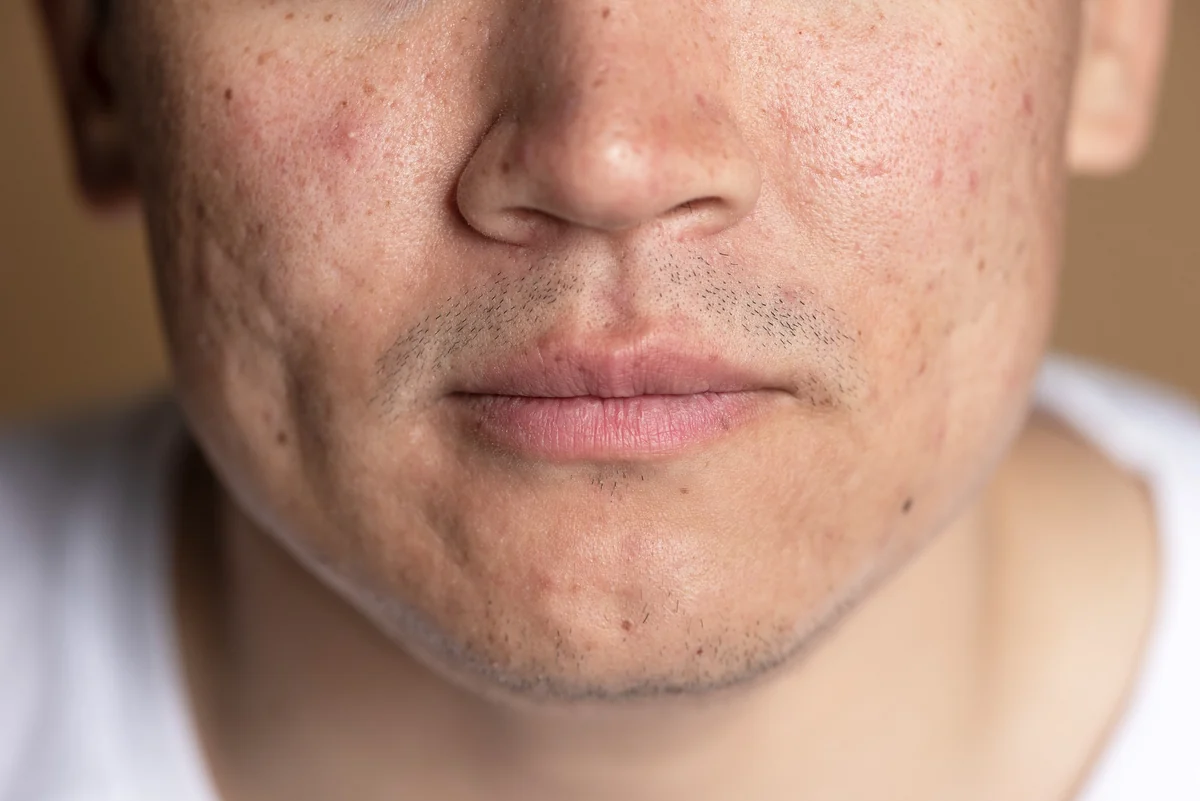
Salicylic acid works in two ways at once. Because it can interact with lipids, it penetrates well into areas of the hair follicles where sebum and dead skin cells build up. The acid helps loosen the bonds between these cells, making them easier to shed and reducing the formation of comedones — blackheads and closed white bumps.
But its action doesn’t stop there. Salicylic acid also has anti-inflammatory properties, so it may help reduce red inflammatory breakouts. In other words, it can be useful not only for clearing pores, but also in routines for skin with mild acne, especially when comedones appear alongside inflamed lesions.
In at-home anti-acne cosmetics, the most common salicylic acid concentrations are 0.5% to 2%. But the percentage is not the only factor: contact time matters too.
Gels and foaming cleansers: apply — cleanse — rinse.
These usually contain 0.5–2% salicylic acid. They work during cleansing and are then rinsed off with water. Formulas with 2% salicylic acid have also been studied in mild to moderate acne. This is a convenient option if you want to combine cleansing with anti-comedone action without adding another skincare step.
Toners, serums, and lotions: apply — leave on the skin.
These products also commonly use 0.5–2% salicylic acid. Concentrations of 0.5–1% can be considered for gradually introducing the active, while 2% is often used for regular care of skin with comedones.
What is the key difference? During cleansing, the acid is in contact with the skin only briefly, and most of it is rinsed away with the product. A serum stays on the face for hours, giving the acid more time to penetrate the superficial layers of the skin and hair follicles. So even at the same concentration, a leave-on product may have a longer-lasting effect.
What the research shows
Salicylic acid and acne
12 weeks · 0.5% salicylic acid · leave-on pads twice daily · compared with a vehicle without the active
According to the 2024 American Academy of Dermatology guidelines, one randomized study of 0.5% salicylic acid showed the following changes compared with a vehicle without the active ingredient:
| Measure | Result compared with the control formula |
|---|---|
| Inflammatory acne lesions | 25% greater reduction |
| Open comedones | 11% greater reduction |
What this means: salicylic acid is a well-supported choice for caring for skin with blackheads and mild acne. Its benefit is linked primarily to its action on comedones and breakouts — not simply to making the skin look more matte.
Source: American Academy of Dermatology, Guidelines of care for the management of acne vulgaris, 2024.
By the way, dark dots on the nose are not always comedones. Often, they are sebaceous filaments — natural structures within the pores that gradually become visible again after cleansing. So the goal of skincare is to control clogging, not to achieve completely “empty” pores.
Azelaic acid: for acne, inflammation, and marks after breakouts
What if comedones are only part of the problem, and inflammatory breakouts plus post-acne marks are present too? This is where azelaic acid becomes especially interesting. Unlike standard exfoliants, it acts on several processes involved in the development of breakouts.
First, azelaic acid helps normalize keratinization inside hair follicles, reducing the tendency of pores to become blocked. Second, it has antimicrobial properties, including activity against Cutibacterium acnes, the bacteria involved in acne development. Thanks to its anti-inflammatory action, it also helps reduce red inflammatory lesions — papules and pustules.
Another advantage is its effect on pigmentation. Azelaic acid inhibits tyrosinase, an enzyme involved in melanin production. That is why it is used not only for active breakouts, but also to brighten the brown marks that can remain after them.
Azelaic acid also has confirmed efficacy in papulopustular rosacea — a condition in which inflammatory breakouts appear against a background of facial redness.
What the research shows
Azelaic acid in rosacea
Two randomized clinical trials · 15% gel · 12 weeks
In two randomized studies, a 15% azelaic acid gel was compared with a vehicle gel without the active ingredient.
| Reduction in inflammatory lesions | Azelaic acid | Control |
|---|---|---|
| Study 1 | 58% | 40% |
| Study 2 | 51% | 39% |
What this means: azelaic acid has confirmed efficacy against inflammatory lesions in rosacea. It may be especially useful when redness is accompanied by papules and pustules.
Source: Thiboutot et al., 2003, Journal of the American Academy of Dermatology.
In rosacea studies, a medicinal gel with 15% azelaic acid was used. Acne treatment also commonly uses products at 15–20%, while everyday cosmetics often feature formulas with 10% active ingredient. These can be a convenient skincare option, but their efficacy should not automatically be equated with the results of medicinal products.
Interestingly, azelaic acid may help not only with brown marks, but also with red post-acne marks. A 2024 clinical study examined the effect of a 15% gel on both types of post-inflammatory changes. These marks differ in origin: brown marks are linked to excess pigment, while red marks are mainly associated with changes in superficial blood vessels. Azelaic acid is interesting because it may be useful in both cases.
Glycolic acid: for smoother texture, more even tone, and signs of photoaging
If your main goal is to make the skin feel smoother, reduce roughness, and even out tone, glycolic acid is one of the most interesting AHA ingredients. Its small molecule helps it penetrate the superficial layers of the skin. It loosens the bonds between dead skin cells, making them easier to shed, while uneven texture gradually becomes less noticeable.
Glycolic acid is not just about the instant smooth feeling after a peel. It is used in routines for dullness, uneven tone, and signs of photoaging. In a randomized study of a 5% glycolic acid cream, participants applied the product to the face and neck daily for three months. Compared with the vehicle cream, overall skin texture and uneven discoloration improved. For wrinkles, this study did not find a convincing difference between the groups.
In at-home skincare, glycolic acid can be found in toners, serums, and creams, including at concentrations around 5–10%. However, percentage alone does not determine intensity: the pH of the finished product also matters. Professional glycolic peels are a different format, with higher concentrations and controlled application time.
If your skin is dry and you want to combine renewal with support for hydration, lactic acid is also worth considering. In the next study, we’ll see how these two AHAs performed in creams with the same concentration.
Lactic acid: renewal, hydration, and work on early fine lines
Lactic acid belongs to the AHA family, but its action is not limited to exfoliation. It helps loosen the bonds between dead skin cells, so the skin’s surface gradually becomes smoother, while dullness and roughness become less visible. At the same time, lactic acid and its salts — lactates — help support skin hydration. Lactates are part of the natural moisturizing factor, which helps retain water in the stratum corneum. Studies have also shown that lactic acid may support the formation of lipids needed for normal barrier function.
That is why lactic acid is especially interesting for dry, rough, and dull skin: it allows surface renewal to be combined with skincare aimed at supporting hydration. It can be found not only in acid peels, but also in creams, lotions, and serums for regular use.
Lactic acid also has anti-aging potential. In a clinical study of products with 5% and 12% lactic acid, both concentrations improved skin smoothness and the appearance of fine lines. The 12% formula additionally increased the thickness and firmness of the epidermis and dermis. So lactic acid may influence not only surface exfoliation, but also other indicators of skin condition.
How does it compare with glycolic acid? This was tested in a separate study of creams for photodamaged skin.
What the research shows
Glycolic or lactic acid for photoaging
74 women aged 40–70 · 22 weeks · creams with 8% acid
In a randomized study by Stiller and co-authors, creams with 8% glycolic acid, 8% lactic acid, and a vehicle cream without active ingredient were compared. Participants applied the products twice daily. Researchers assessed the overall severity of facial photodamage on a nine-point scale from 0 to 9. Improvement was defined as a decrease in the score by at least one point.
| Product | Participants with improvement |
|---|---|
| Cream with 8% glycolic acid | 76% |
| Cream with 8% lactic acid | 71% |
| Vehicle cream without acids | 40% |
What this means: both AHA acids improved the overall condition of photodamaged skin. Lactic acid produced a result close to glycolic acid, so it is also worth considering for skin with uneven texture, dullness, and early age-related changes.
Source: Stiller et al., 1996, Archives of Dermatology.
If your skin is dry, dull, or has lost smoothness, creams and serums with lactic acid are worth a closer look. At-home products often use concentrations around 5–10%. These formulas can gradually improve skin texture, while a well-designed formula can also support hydration.
Mandelic acid: gentle renewal, acne, and post-acne marks
Mandelic acid belongs to the AHA family, like glycolic and lactic acids, but it has its own features. Its molecule is larger than the glycolic acid molecule, so it is often used in formulas designed for more gradual exfoliation. At the same time, it should not be seen only as an “acid for sensitive skin”: mandelic acid is also interesting in skincare for acne, uneven texture, and post-inflammatory marks.
Its main action is linked to renewal of the skin’s surface layer. Mandelic acid helps loosen the bonds between dead skin cells, making exfoliation easier. This can make the skin smoother, reduce roughness, and improve the look of uneven tone. In acne-prone skin, this effect is also useful because cell build-up inside hair follicles contributes to the formation of comedones.
Another interesting property of mandelic acid is its use for post-acne marks and pigmentation. In professional peels, it is used to improve uneven tone and superficial marks after breakouts. It can also be part of a routine for skin where comedones appear together with inflammatory lesions.
But does mandelic acid work only in in-office peels? There are studies of regular cosmetic products too. In a 2015 study by Dębowska and co-authors, 60 people with papulopustular acne used cosmetics with 5% or 10% mandelic acid for two months. Both groups showed a reduction in the number of comedones, pustules, and other inflammatory lesions. Acne severity scores were similar between the two groups.
This gives a practical reference point: mandelic acid is not limited to professional procedures. At-home creams with 5–10% active ingredient have also been studied for acne-prone skin. And if a more intensive effect on comedones is desired, interesting results have been seen with a combination of mandelic and salicylic acids in professional peels.
What the research shows
Salicylic and mandelic acids for acne
44 participants · 6 professional peels at two-week intervals · 12 weeks
In a study by Garg and co-authors, two types of professional peels were compared: a combination of 20% salicylic acid and 10% mandelic acid, and 35% glycolic acid. Both options improved acne-prone skin, but the combination peel performed better across several measures.
| Measure | Salicylic + mandelic | Glycolic |
|---|---|---|
| Reduction in total acne score | 85.3% | 68.5% |
| Reduction in number of comedones | 90.2% | 35.9% |
| Reduction in number of inflammatory papules | 81.7% | 77.8% |
| Reduction in number of pustules | 85.4% | 75.7% |
The table shows the percentage reduction in each measure from baseline, not the proportion of participants whose acne disappeared.
What this means: the combination of salicylic and mandelic acids worked especially well on comedones and also reduced inflammatory breakouts. In this study, the combination peel produced better results than 35% glycolic acid for overall acne score and lesion counts.
Source: Garg et al., 2009, Dermatologic Surgery. The results are also summarized in a 2018 systematic review.
For at-home care, mandelic acid can be found in creams, serums, and toners, including formulas with 5–10% active ingredient. It is worth considering when you want to gradually improve skin texture, reduce roughness, and support care for comedones and post-acne marks. And if a product contains several acids at once, it is important to assess the whole formula: the combination of ingredients — not merely the presence of mandelic acid — will determine how it acts.
PHA: gentle renewal, hydration, and support for the skin barrier
PHAs, or polyhydroxy acids, are often described as a gentler alternative to AHAs. The best-known members of this group are gluconolactone and lactobionic acid. They also help exfoliate dead skin cells, improving smoothness and texture, but they have an important feature: their molecules are larger than glycolic acid molecules, so penetration into the skin happens more slowly. This is one reason why PHA products often cause less irritation.
The second advantage of PHAs is their ability to bind moisture. Thanks to their chemical structure, gluconolactone and lactobionic acid can bind water molecules. They also help support the protective properties of the stratum corneum, reducing water loss through the skin. That is why PHAs are interesting in routines that aim to combine surface renewal with hydration.
But is this gentle action enough to improve skin with signs of aging? In a 12-week clinical study by Edison and co-authors, two routines were compared: products with 4% gluconolactone in the morning and 10% in the evening, and cosmetics with 8% glycolic acid.
Both regimens improved signs of photoaging. Glycolic acid showed slightly better results for yellowish skin tone and the skin’s ability to quickly return to shape after light compression. The gluconolactone regimen, however, generally caused less irritation. This makes PHAs an interesting option for those who want to address dullness, uneven texture, and early age-related changes without intensive exfoliation.
How do you choose a PHA product? For regular use, a cream or serum with gluconolactone may be worth considering, especially if the skin is prone to dryness. Lactobionic acid is also interesting in moisturizing formulas. If the main goal is gentle surface renewal, a toner or leave-on exfoliant with PHAs can be a convenient option.
That said, sensitive skin and irritated skin are not the same thing. If your usual routine does not cause discomfort, PHAs can be a good way to add exfoliation. But if the skin already burns, flakes, or reacts to a regular cream, it is better to restore comfort first.
How to choose an acid product: concentration, pH, and format
Why the acid percentage does not tell the whole story
Labels often display 2%, 5%, or 10% in large numbers. But percentage is only part of the story. pH, the product base, and contact time with the skin matter too.
For exfoliating acids, pH affects the proportion of free acid: at a lower pH, there is usually more of it, and the action may be more intense. So a cream with 5% glycolic acid can turn out to be more active than another product with a higher percentage but a more neutral formula.
As a reference point for at-home AHA products, concentrations up to 10% at a pH of 3.5 or higher are often used, provided the product is used correctly and sun protection is applied.
Toner, serum, cream, or peel?
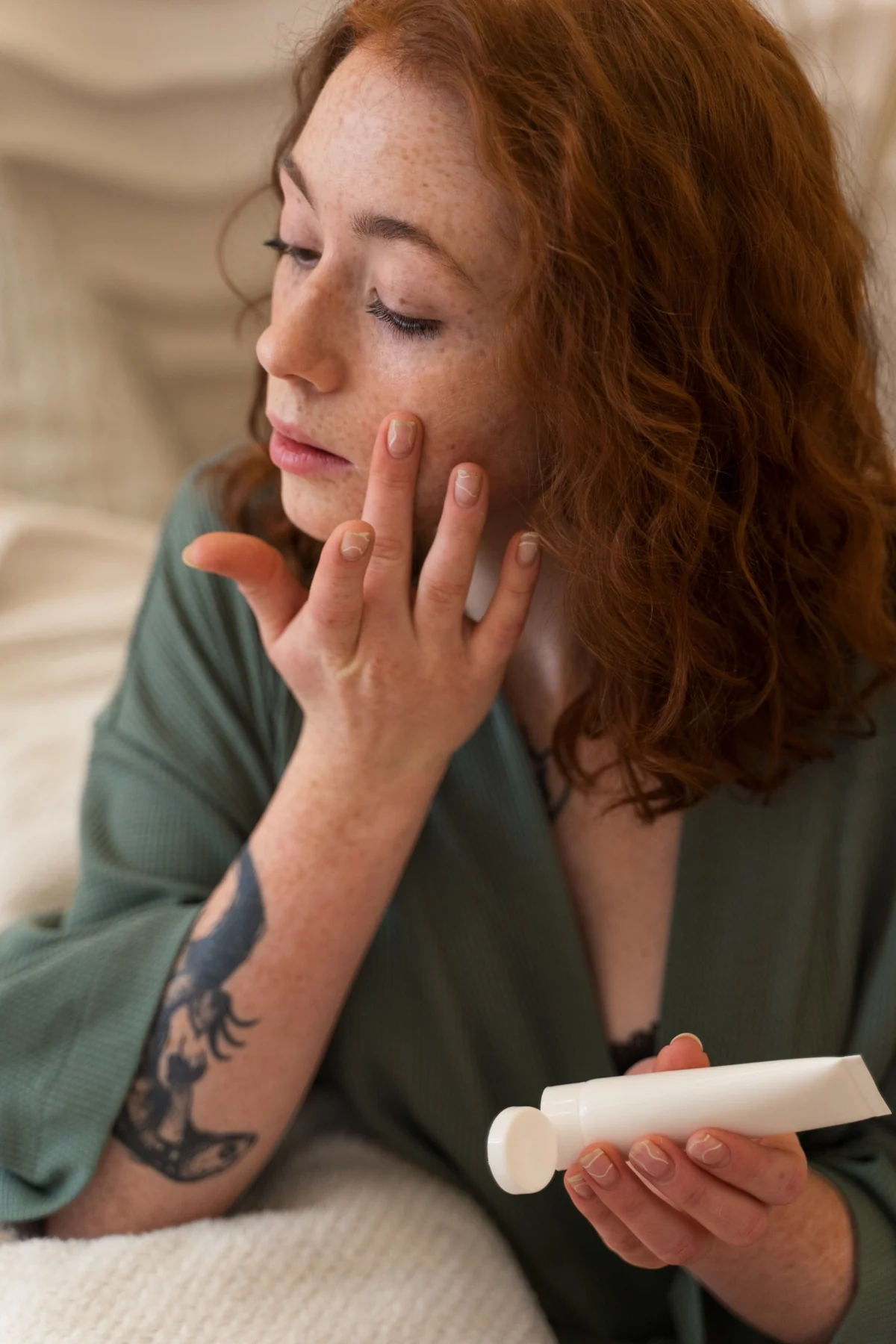
The format name does not automatically determine a product’s strength. A toner can be quite active, while an acid cream can be gentle — and the opposite can also be true. The difference lies in how long the product stays on the face and what role it plays in the daily routine.
Cleanser. The simplest format, but contact time with the skin is short. The effect depends on how well the formula is designed for rinse-off use.
Toner or liquid exfoliant. Stays on the skin; convenient for regular work on texture or comedones.
Serum. May combine an acid with hydrating and soothing ingredients. Here, the whole formula matters especially — not just the highlighted active.
Cream. Combines an acid with basic skincare and may be a more comfortable way to renew the skin gradually.
At-home peel. Often designed for short, more intensive use. Instructions and application time are important. Professional peels are a separate category, with different concentrations and specialist control.
If you don’t like multi-step routines, choose a format that fits easily into your usual routine — for example, a cream instead of another acid toner.
For products that need to be rinsed off after a set time, read the instructions carefully: extending the exposure time does not turn an at-home peel into a professional procedure and does not guarantee a better result, but it can increase the risk of irritation.
When one acid is better — and when a combination makes sense
If your skin has one main concern, there is usually no need to start with a combination of acids. For example, for blackheads and comedones, you can choose a salicylic acid product; for dullness and roughness, one with glycolic or lactic acid. This makes it easier to select an effective concentration and assess the result.
Combinations become interesting when you need to address several different concerns at once. For example, salicylic acid helps reduce pore clogging, while AHAs improve texture and superficial uneven tone. That is why products for skin with comedones and post-acne marks sometimes combine BHA and AHA.
We have already seen one such combination in the study of professional peels with salicylic and mandelic acids. They showed good results for comedones and inflammatory breakouts. This does not mean that any mix of two acids is more effective than one, but it does show how ingredients with different properties can complement each other.
Another example is skin with active breakouts and brown marks left after them. Here, azelaic acid alone is often enough: it acts on inflammation, comedone formation, and post-inflammatory pigmentation. In other words, several concerns do not always mean you need several actives.
So is it better to combine acids in one product or use them separately? Ready-made combination formulas are developed with concentrations, pH, and ingredient compatibility in mind. If you use separate products, you can divide them across different days or areas of the face. For example, apply a salicylic exfoliant to the T-zone with comedones without using it on dry cheeks.
If your routine already includes a retinoid, you don’t need to add acids just to have more actives. In our comparison of retinal and retinol, we explained why consistency in skincare is no less important than choosing a specific ingredient.
So the rule of thumb is simple: one acid — when it already covers your main concern; a combination — when different ingredients are meant to complement each other’s action. Sometimes one well-formulated product is enough; sometimes it is more convenient to split your routine into several steps.
How to use acids without overloading the skin
Acids can work well in a regular at-home routine. The key is not to try to speed up results by adding several active products at once. Here’s how to build a simple, clear routine.
- Start with one acid product.
Choose the acid according to your main skin concern. If this is the first exfoliant in your routine, don’t add an acid mask or peel at the same time. This way, you can assess the result of one specific product.
- Decide how often to use it.
A new leave-on AHA or BHA exfoliant is often easiest to start using one or two evenings a week, gradually increasing the frequency if your routine requires it. Follow the manufacturer’s instructions. Products with azelaic acid are often designed for daily use, so their schedule may differ.
- Apply products in the right order.
In the evening, the sequence is simple: cleanse → acid toner or serum → moisturizer. If the acid is part of a cleanser, use it at the cleansing step and rinse with water. Use at-home peels according to the instructions for the specific product.
- Separate active products when needed.
If you already use retinol or retinal, you can leave an acid exfoliant for other evenings. For example: retinoid on Monday and Thursday, acid on Saturday, and basic skincare on the remaining evenings. This is only an example schedule; adjust it to your routine.
- Use sun protection.
In the morning, apply a broad-spectrum sunscreen with SPF 30 or higher. This is especially important when using AHAs, which may increase sensitivity to ultraviolet radiation, and in routines targeting pigmentation. We covered seasonal nuances in more detail in the article “Acids, retinoids, and vitamin C in summer”.
- Give the product time to show results.
The skin may feel smoother after the first few uses. Noticeable reduction in comedones or improvement in uneven tone usually takes several weeks. Assess results by the condition of your skin, not only by how it feels immediately after application.
- Pay attention to your skin’s reaction.
If persistent burning, pronounced redness, soreness, or severe flaking appears, stop using the product and return to gentle cleansing and moisturizing. We explain how to recognize irritation in the article “When skincare stings: the formula at work or a stop signal?”.
A simple guide: one well-chosen acid, regular use, and basic skincare often do more for the skin than a complicated routine with several exfoliants.
What to choose if you have several concerns at once
We have already looked at when one acid is enough and when it is worth considering a combination of several actives. But there are situations where the choice is not so obvious. Let’s focus on two examples where it is important to consider not only the skin concern, but also the overall state of the skin.
Sensitivity and uneven tone. Here, the first step is to distinguish sensitivity from irritation. If the skin burns, flakes, or reacts even to a regular cream, it is better to pause acid care temporarily. But if the skin is simply prone to sensitivity, the choice depends on the type of uneven tone. For brown marks after acne, azelaic acid may be considered; if dullness and roughness are the main concerns, gentle formulas with PHAs or lactic acid may be a better fit.
Dull tone and early fine lines. Here, it is important to understand what exactly is making the skin look older. If it is roughness, uneven texture, and fine superficial lines, glycolic or lactic acid may noticeably improve its appearance. For skin prone to dryness, creams with lactic acid are especially interesting because they combine renewal with hydrating care. If deeper wrinkles are the main concern, exfoliation alone is not enough — other anti-aging actives, including retinoids, are worth considering.
So which acid is the best?
The best acid is not the one that is trending right now, and not the one with the highest percentage on the label. The best one is the acid that matches your skin’s needs and gives results without constant irritation.
Sources
-
Reynolds R. V. et al. Guidelines of care for the management of acne vulgaris. Journal of the American Academy of Dermatology. 2024;90(5):1006.e1–1006.e30.
-
Thiboutot D., Thieroff-Ekerdt R., Graupe K. Efficacy and safety of azelaic acid (15%) gel as a new treatment for papulopustular rosacea: Results from two vehicle-controlled, randomized phase III studies. Journal of the American Academy of Dermatology. 2003.
-
Effects of 15% Azelaic Acid Gel in the Management of Post-Inflammatory Erythema and Post-Inflammatory Hyperpigmentation in Acne Vulgaris. Dermatology and Therapy. 2024.
-
A Double-Blind Randomized Clinical Trial on the Effectiveness of a Daily Glycolic Acid 5% Formulation in the Treatment of Photoaging. Dermatologic Surgery. 1998;24:573–578.
-
Smith W. P. Epidermal and dermal effects of topical lactic acid. Journal of the American Academy of Dermatology. 1996;35(3):388–391.
-
Stiller M. J. et al. Topical 8% glycolic acid and 8% L-lactic acid creams for the treatment of photodamaged skin: A double-blind vehicle-controlled clinical trial. Archives of Dermatology. 1996;132(6):631–636.
-
Dębowska R. M. et al. Evaluation of the efficacy and tolerability of mandelic acid-containing cosmetic formulations for acne skin care. Dermatology Review / Przegląd Dermatologiczny. 2015;102(4):316–321.
-
Garg V. K., Sinha S., Sarkar R. Glycolic acid peels versus salicylic-mandelic acid peels in active acne vulgaris and post-acne scarring and hyperpigmentation: A comparative study. Dermatologic Surgery. 2009;35(1):59–65.
-
Chen X., Wang S., Yang M., Li L. Chemical peels for acne vulgaris: A systematic review of randomised controlled trials. BMJ Open. 2018;8:e019607.
-
Edison B. L., Green B. A., Wildnauer R. H., Sigler M. L. A polyhydroxy acid skin care regimen provides antiaging effects comparable to an alpha-hydroxyacid regimen. Cutis. 2004;73(2 Suppl):14–17.