






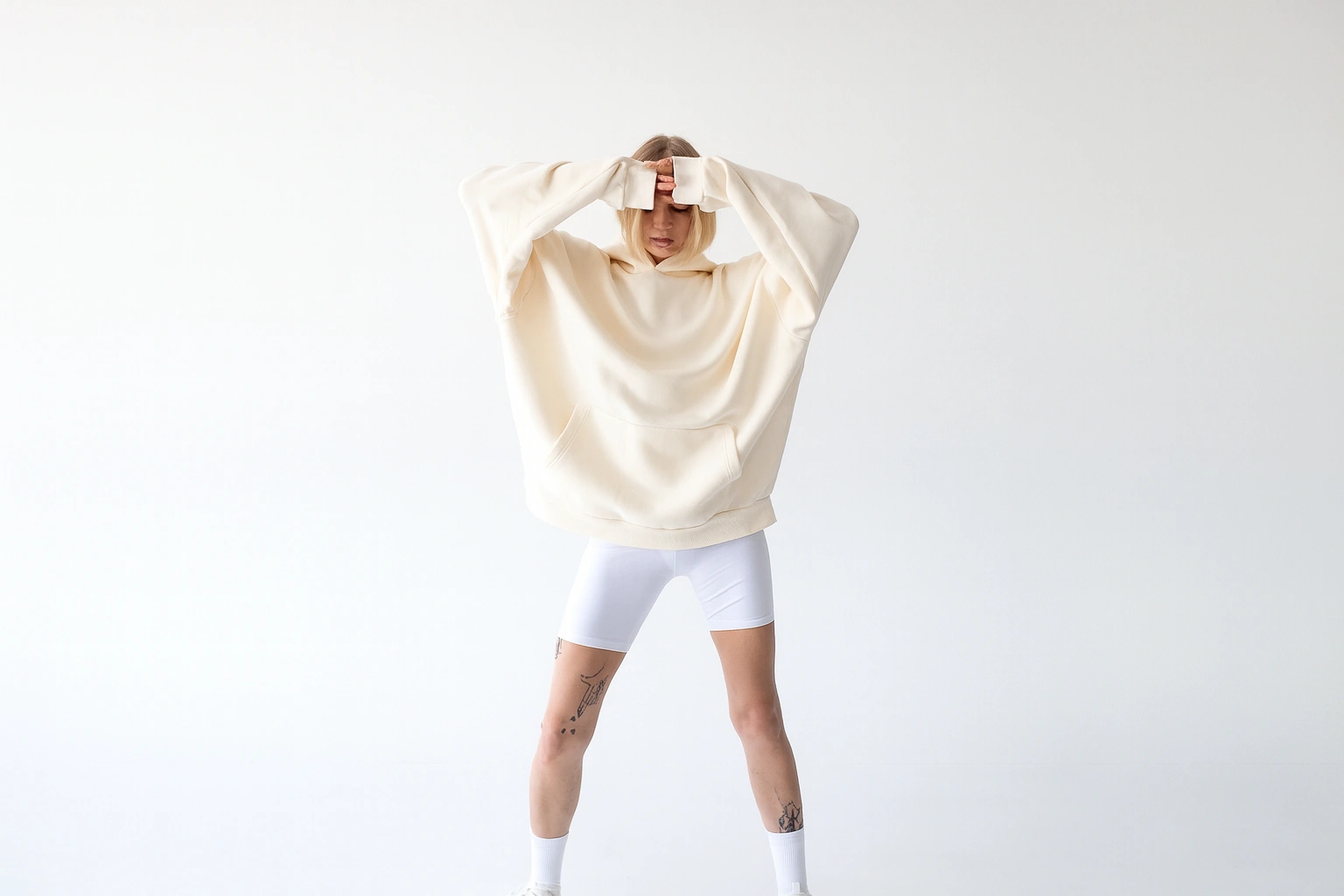
We rarely think about style through the body, yet the body is the first to “see” clothing. Not the eyes. Not the mirror. The skin, the muscles, the breath, the gait, the nervous system. What we wear is never only about aesthetics — it is about how we feel inside. About stability, clarity, groundedness, and inner presence.
In this article, we look at style from the perspective of embodiment: how fabrics affect the nervous system, how silhouettes shape the body’s boundaries, how the weight of clothing calms, and how walking in different shoes changes the rhythm of thoughts. To understand how these sensations turn into hormonal reactions, read “Fashion and hormones.” To explore how seasonality and climate change the way we sense clothing, see “Seasonality and motion.”
How the body reads clothing: the sensory language we forget
The skin is the largest sensory organ. It “speaks” to the world through four types of mechanoreceptors: some respond to light touch, others to vibration, deep pressure, or tissue stretch. When we put something on, the skin instantly registers everything — the direction of the weave, the density of the fibers, the temperature of the material, even its acoustics: rustle, whisper, silence.
Some fabrics are “cold”: silk, viscose, satin — they glide, creating clarity, fluidity, lightness. Some are “dry”: linen, coarse cotton, certain types of wool. They give textural grounding, a sense of form. Others are “warm”: cashmere, merino, flannel. They do more than warm; they create a soft-cloud effect for the nervous system — something it instinctively trusts.
In the article Soft and structured textures: how fabric shapes the state of the body we will explore how microstructure changes tone: why gentle knitwear increases a sense of safety, while coarse linen weave can enhance inner “gathering.”
Often we explain discomfort through aesthetics: “I don’t like it,” “something’s off.” But the body evaluates differently. It cares about whether the fabric slides or clings, warms or cools, distributes pressure evenly or irritates in points, supports movement or disrupts rhythm. These tiny signals shape our entire day.
The weight of clothing: why heaviness calms
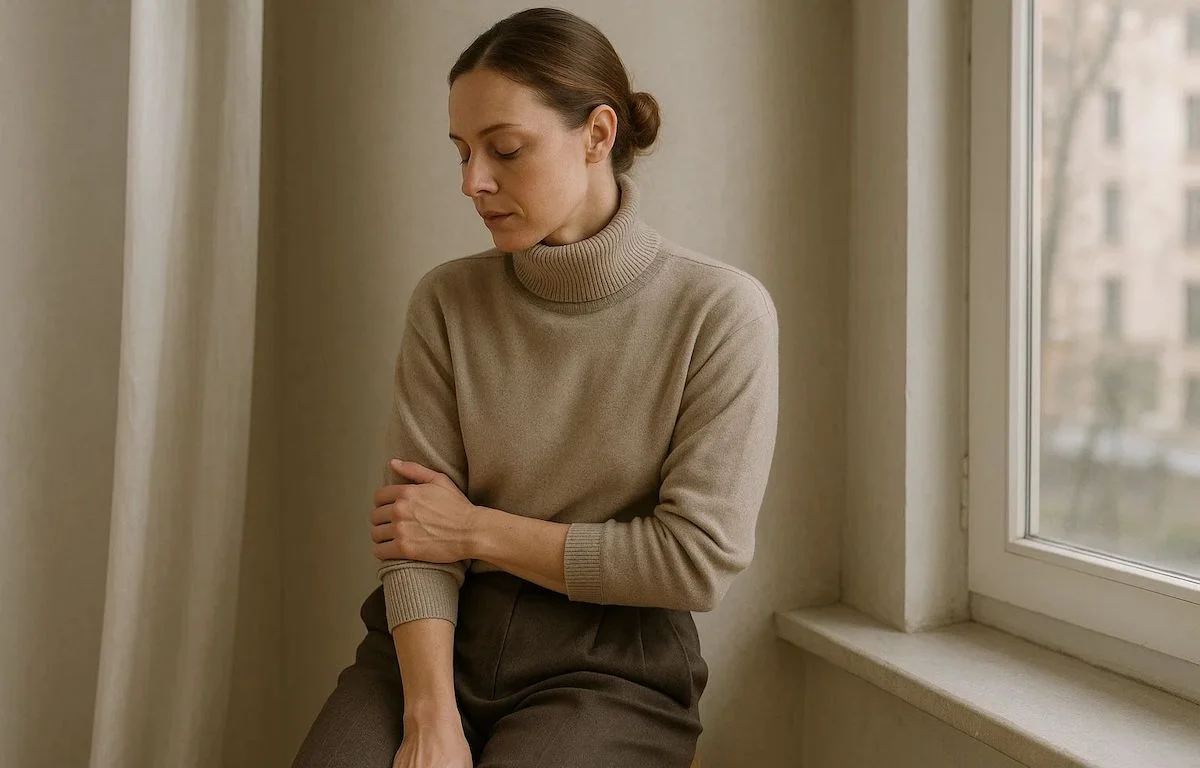
If you think about the clothes in which you feel “more collected,” they are often items with noticeable weight: a coat with thick lining, a structured blazer, a dense cotton trench, a heavy cardigan. Weight is one of the most important yet least recognized properties of clothing.
Deep pressure activates proprioceptive receptors in muscles and joints — the same mechanisms involved in hugs or weighted therapeutic blankets. The body receives a message: “you are here, you have boundaries, you can relax.”
Dense fabrics absorb small muscular micromovements, stabilize the torso, and slightly reduce “internal noise.” A cashmere coat is not merely aesthetic — it reduces load on the sympathetic system. A well-tailored jacket is almost like added structure for the upper body.
We explore this further in Weighted clothing and the nervous system: how added weight calms and stabilises the body, looking at which fabrics create “calm pressure” and which produce excessive, draining weight.
Fabrics that shape emotion: how texture shifts our tone
Fabrics do not only warm or cool — they create emotional backdrop. Velvet absorbs light, slowing and deepening movement. Silk reflects it, creating flow. Tweed is structured, “collected,” reminding the body of form. Flannel is the softest “soothing” material. Denim has its own character — always stable and weighted. Linen is dry, honest, grounding. Viscose is soft, warm, flexible — it builds bodily trust.
This is not about fashion; it is about how the body interprets the world through material — how texture becomes emotion.
Silhouettes as bodily boundaries
A silhouette is a way to give the body edges. Something that is felt even with eyes closed. Structured shoulders create a sense of clear form. Oversized shapes allow exhalation and expansion. A fitted silhouette gathers the body, but can also create tension if someone is highly sensitive to restriction.
In the article Silhouettes and body boundaries: how form influences attention and inner presence we will discuss how different shapes interact with the rib cage, shoulder girdle, and pelvis, influencing the inner sense of stability.
Silhouettes also influence social behavior. In a structured blazer, we don’t simply look different — we move, stand, and speak differently. It’s not about playing a role. It’s the body receiving boundaries and interacting with space in a new way.
Gait and posture: movement as part of style
Clothing literally changes how we walk. Stiff soles shorten the step and make rhythm tighter. Soft soles diffuse movement, making it more fluid. Heel height changes pelvic tilt and step length. An ankle-length dress creates a different movement vector than a shorter one. Even fabric density across the back affects stabilizing muscles.
This means style always interacts with biomechanics. Sometimes one garment changes the rhythm of thought simply because it changes the rhythm of gait.
This will be explored in Style that reshapes gait and confidence.
Sensory basic wardrobe: when the basics are sensations, not items
A sensory basic wardrobe consists of clothes the body perceives as safe: soft, structured, or balanced enough that no adaptation is needed. Clothing that doesn’t distract. Doesn’t create micro-irritation. Doesn’t steal attention.
For some, it’s a soft cotton long-sleeve. For others, clean-weighted denim. For someone else — a leather jacket that gives the body contour. It is not about universality — it is about bodily trust.
The article Sensory basic wardrobe: how clothing calms the nervous system and supports stability will help you create your own sensory matrix — garments the body “accepts” without resistance.
Inner presence as a complete form of style
When style begins with the body rather than the mirror, our sense of presence shifts. We no longer feel like a “look” — we feel like a human being moving, breathing, living the day with a certain degree of internal clarity.
The sensory qualities of clothing become nervous-system regulation. Silhouettes become psychological boundaries. Weight becomes a calming force. Texture becomes emotion. And together, they form not a style — but a state.