





The body is constantly reading light, temperature, humidity, wind and the pace of the day — and it adjusts our style long before we consciously notice it. In different seasons, we move differently, breathe differently, think in a different rhythm. Clothing becomes part of this biological adaptation: it echoes the light, supports hormonal balance, regulates energy and helps us return to presence.
In the article “What the body feels in clothes” we explored tactility, weight and silhouettes. In “Fashion and hormones” — the internal chemistry of style: cortisol, dopamine, oxytocin. Now we turn to how the world around us shapes our styles through light, climate and movement.
Light as a quiet force that shapes our state
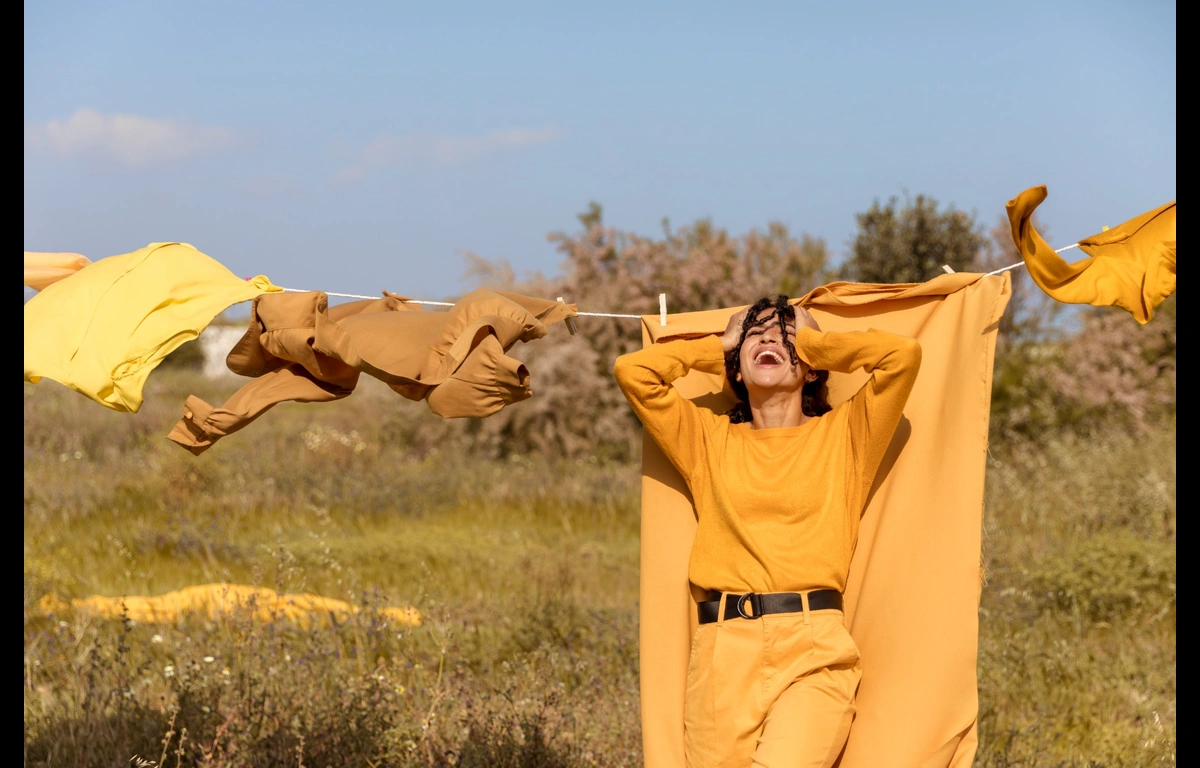
Light is the most underestimated element of style. Early summer light is sharp and transparent: it makes colours clearer, fabrics lighter, silhouettes more fluid. Winter light is soft and low on the horizon: it calls for slowing down, warmth, deeper tones and denser textures.
The body responds to light immediately: after a bright morning beam, breathing becomes quicker and movement broadens; after a dim winter morning, we instinctively seek structure and weight, as if the world were asking for additional boundaries.
It’s a direct route: light → hypothalamus → hormones → style. We simply echo the tone of the light, even when we’re unaware of it.
Sometimes the rhythm of nature shifts not by the calendar, but by sensation — as in early autumn, when the light softens, the air cools, and the day becomes quieter. The body begins to lean toward textures that slow us down and deepen our breath. We explore this transition, and the tactile language of autumn softness, in “Autumn textures and slowing down”.
Temperature, humidity and wind: how microclimate transforms style
We rarely consider that air itself — not only temperature but also humidity, wind and the contrast between morning and daytime sensations — shapes the physiology of style.
In heat, the body increases skin blood flow, and we gravitate toward airy fabrics that don’t create a “micro-chamber.” In cold weather, the body constricts peripheral vessels, and we choose density, weight and layering to maintain stability.
Humidity makes fabric heavier and slower. Dry air emphasises textural contrast. Wind demands mobility: it changes silhouette and walking rhythm, creating the need for fabrics that offer no resistance.
Clothing becomes part of this micrometeorology. It responds to the state of the air no less than to the season.
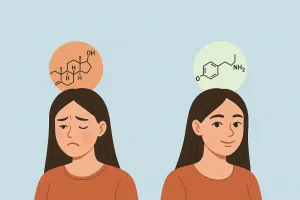
Seasonal hormonal rhythms: why we want different clothing at different times of the year
Seasonality isn’t aesthetics. It’s biology. Each season shifts hormonal patterns, and hormones shift our bodily sensations — and our style.
- Summer: light, movement, warmth. Elevated serotonin and a desire for freedom. Light silhouettes, open fabrics, pale colours.
- Autumn: declining energy, rising inner focus. A need for boundaries, layers, earthy tones.
- Winter: more melatonin, less sunlight. Warm textures, weight, density — fabrics that soothe and envelop.
- Spring: rising dopamine, impulses for movement. A pull toward renewal, colour and new forms.
Our seasonal style is a way of balancing our own biochemistry.
Movement as hormonal and emotional dynamics
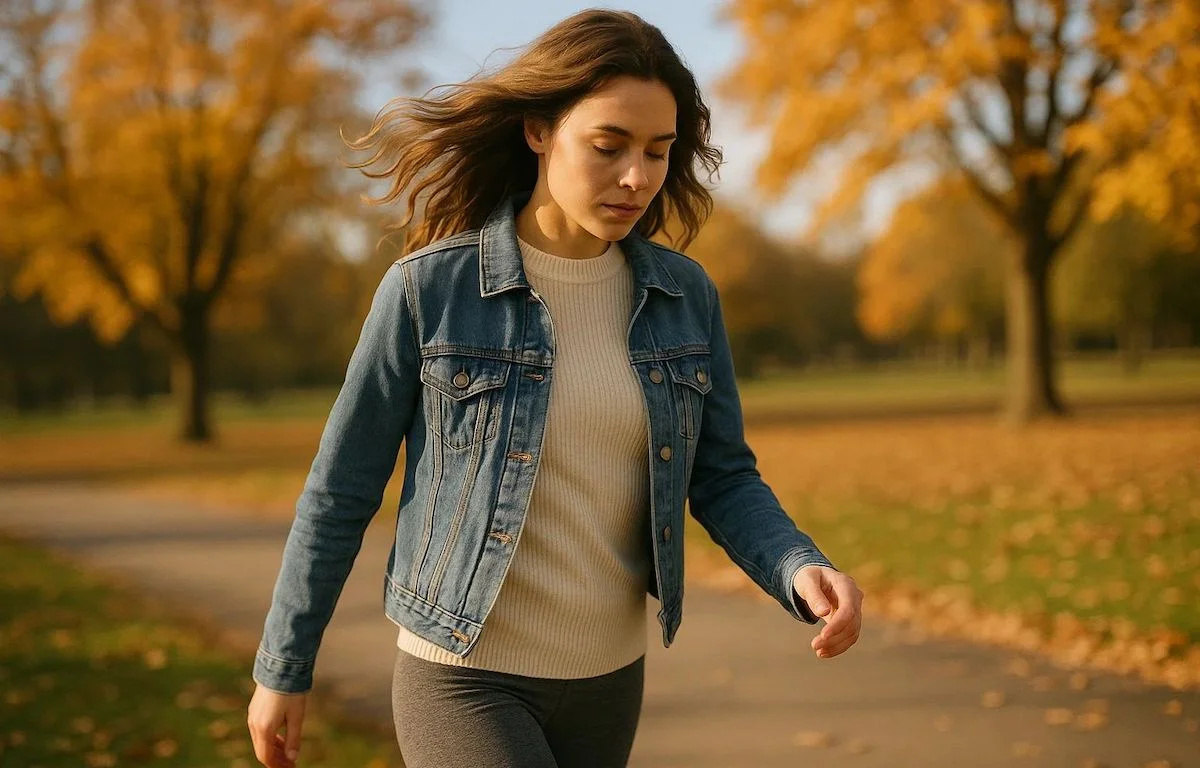
Movement is the body’s own language. It shifts mood and hormone levels as powerfully as light. A change in walking tempo, the sway of the shoulders, the length of the stride — all of it influences our inner rhythm.
In summer, movements are broader, lighter, less angular. The body wants fabrics that don’t restrict, don’t overheat and don’t create unnecessary friction. In winter, movement becomes more compact. The body reduces amplitude to preserve warmth — and it needs garments that act as “structure” and “shell.”
Even garment length changes our movement: a long dress or coat slows us down, softens the step; shorter silhouettes make us quicker and more agile. The feel of fabric across the back influences stabilising muscles — and therefore posture.
Footwear also shifts our state: a soft sole creates “flow,” a firm one creates “focus,” and a small heel changes pelvic mechanics and the centre of gravity. We move — and change our mood through movement.
Sometimes the shift in rhythm comes not from the season, but from the place. Travel, new climates, different light and sound — all of these act like “microseasons” that reset our internal tempo and subtly reshape the way we dress. We look deeper into how style adapts to these changing environments in Travel as microseasons.
When light and style fall into resonance
There are moments when everything aligns. When fabric responds to temperature. When colour matches the tone of the day. When movement is in rhythm with the air.
This is an almost intangible sensation: subtle, like the perfect step at the perfect moment. We feel part of the space. Style doesn’t protrude, contradict or distract — it weaves itself into the fabric of the season.
This is presence: a state in which the body, hormones, light and style move in the same direction.
Read also: Travel as a shift in inner rhythm: what happens to the body and the nervous system
Sources
- Brainard, G. C., et al. (2001). Action spectrum for melatonin regulation in humans. Journal of Neuroscience. URL: https://www.jneurosci.org/content/21/16/6405
- Cajochen, C. (2007). Alerting effects of light. Sleep Medicine Reviews. URL: https://pubmed.ncbi.nlm.nih.gov/17936041/
- Van Someren, E. J. W. (2000). Circadian rhythms and sleep in human aging. Brain Research Reviews. URL: https://pubmed.ncbi.nlm.nih.gov/10719134/