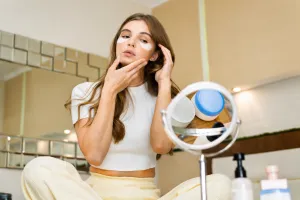






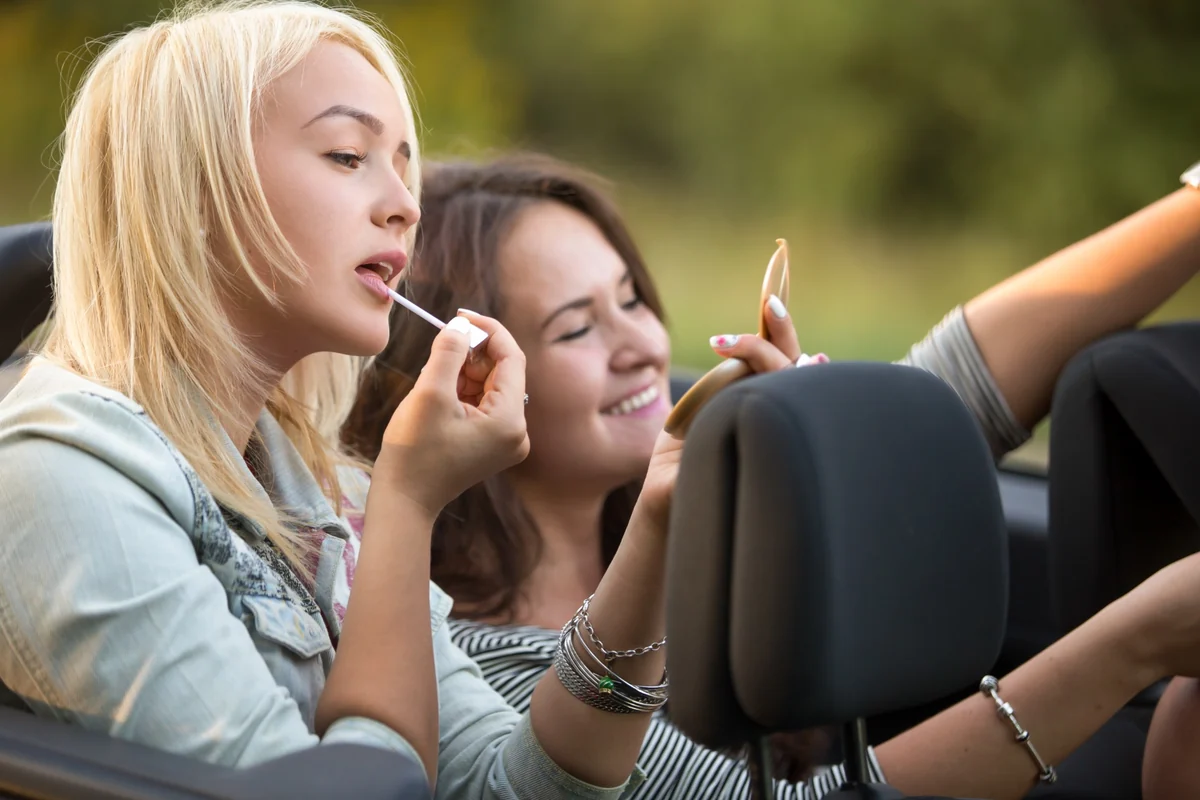
The first or regular makeup in adolescence is almost never just a story about mascara, concealer, or lip gloss. More often, it's a way to slightly influence how you see yourself in the mirror. To accentuate the eyes. To hide redness. To make the skin visually smoother before school, a meeting, a photo, or just a regular day when you particularly don't want anyone to notice a pimple. And there's nothing wrong with that. Makeup can be a game, a style experiment, a means of self-expression, or a small ritual of confidence.
The problems don't start because a teenager is "too early" interested in cosmetics. More often, they arise from other issues: dirty sponges, shared mascara, old lip gloss, sleeping with foundation on, aggressive cleansing "to the squeak," thick layers where the skin is already struggling. Teenage skin often lives under conditions of hormonal changes: it can be oilier, more sensitive, prone to comedones, acne, redness, or quick reactions to new products. Therefore, it doesn't need a ban on makeup, but rather clear hygiene and a gentle care logic.
If a broader framework on appearance, self-esteem, and safe care without pressure is needed, it's worth starting with the material teen appearance: safe care without extremes. Here, we'll focus on the practical question: how to use makeup so that it doesn't become an additional stress for the skin.
Makeup doesn't "ruin the skin," but it can complicate its life
It's important not to scare a teenager with phrases like "if you wear makeup, you'll ruin your face." This is inaccurate and usually unhelpful. Makeup itself is not a disaster for the skin. Even with acne, people can use cosmetics if the products are chosen carefully, do not provoke new breakouts, and do not replace normal care. But makeup becomes a problem when it's applied to the skin without a system: over sebum, sweat, dust, SPF residues, after touching with hands, and then left on overnight or removed so roughly that the skin gets even more irritated.
For teenage skin, simplicity works best, not a "perfect" complex scheme. If there's a desire to use makeup, it's better to have a few clear products than a large makeup bag with random items. For example: a light foundation or spot concealer, mascara, clear or light brow gel, balm or lip gloss. In many cases, this is enough for a teenager to feel groomed and not overload the skin with layers.
Basic care should remain simple: gentle cleansing, moisturizing, and SPF during the day. This logic is discussed in the article minimal care 12-17: 3 steps. Makeup should not replace care, and care should not turn into a multi-layered experiment after every new video on social media.
Can teenagers use foundation and concealer
They can, but what's important here is not the name of the product, but its texture, amount, and how it behaves on specific skin. If a teenager wants to cover a few redness or traces after breakouts, a spot concealer often works better than a heavy foundation all over the face. When a foundation becomes a "shield," it's usually applied in large amounts, refreshed throughout the day, powdered, and then hard to remove. As a result, the skin may experience more friction, more product residue, and more reasons to react.
A useful rule: don't cover the entire skin if only a few specific areas are bothersome. The face looks more natural, and the skin feels lighter. If foundation is needed all over the face, it's better to choose light textures that don't give a mask-like feeling, don't burn, don't provoke itching, and don't make you want to wash everything off in an hour. Labels like non-comedogenic, oil-free, or "doesn't clog pores" can be a useful guide, but they don't guarantee that the product will perfectly suit every person. The skin's reaction is always more important than the promise on the packaging.
If there's acne, makeup can be psychological support, but it shouldn't become the only way to "solve" the problem. When breakouts are painful, deep, leave marks, or significantly affect mood and self-esteem, it's better not to wait for the teenager to "outgrow" it. More details on this are in the material acne: how to talk and when to see a dermatologist.
First rule: cosmetics should be personal
In teenage groups, a "shared makeup bag" often appears: one mascara, one gloss, one concealer, one sponge, one brush for everyone. It seems trivial, especially if it's about close friends. But cosmetics touch the skin, lashes, lips, sometimes areas with breakouts, micro-irritations, or inflammation. Along with the product, skin oil, cell residues, dust, and microorganisms can be transferred.
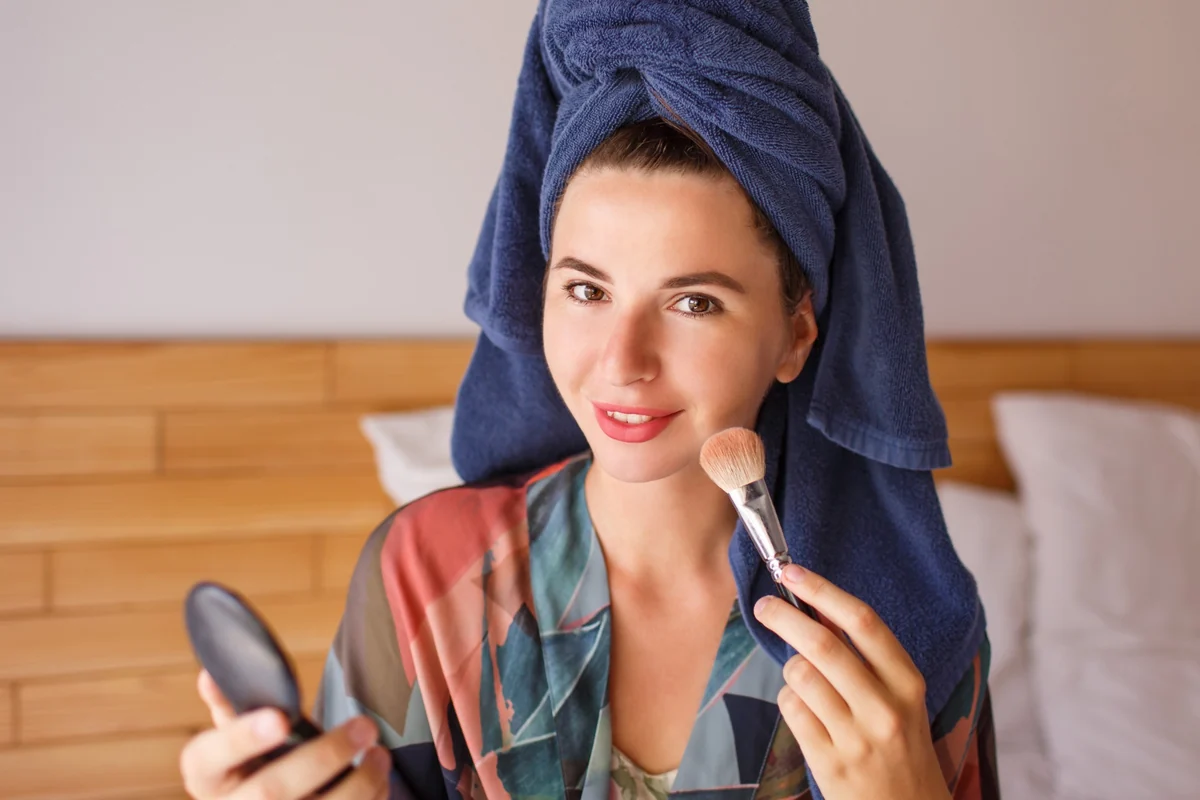
Therefore, the basic rule is simple: mascara, eyeliner, eye pencils, lip gloss, sponges, brushes, and applicators should be personal. It's not about distrust or coldness in friendship. It's the same hygiene as not using someone else's toothbrush, face towel, or lenses. Special care should be taken with eye and lip cosmetics, as these areas are more sensitive to infection and irritation transfer.
Testers in stores also require caution. If a product has been used by many people, it shouldn't be applied directly to lips, eyelids, or the face. If it's necessary to check the shade, it's safer to use a disposable applicator and not apply the product to the mucous membrane or irritated area.
Separate risk zone - eyes
Eyes don't like cosmetic experiments with someone else's products, old mascara, or applying "on the go." Mascara, eyeliner, and pencils touch areas where irritation can quickly become very unpleasant: redness, itching, tearing, a feeling of sand in the eyes, eyelid inflammation. Therefore, eye cosmetics shouldn't be borrowed even by close people, and mascara should be regularly replaced. If it has dried out, don't add water or saliva: this makes it easier for bacteria to get into the product, and the protective system of the formula may work worse.
If there's eye redness, eyelid inflammation, discharge, pain, severe itching, or suspicion of infection, eye makeup should be temporarily removed. Products used during an infection are safer not to return to the makeup bag. This may sound unpleasant, especially if the mascara was new or expensive, but eyes are not a place to skimp on safety.
Second rule: hands, sponges, and brushes must be clean
Makeup is often applied in a hurry: before school, in the bathroom, in the room, sometimes on the go. But the simplest step is to wash hands before application. Especially if the teenager applies concealer or foundation with fingers. Hands always have microorganisms, skin oil, dust, and residues of everything a person has touched during the day. When this is transferred to the face, it's harder for the skin to stay calm.
Brushes and sponges also need regular cleaning. It doesn't have to be a complex ritual. It's enough to wash brushes with warm water and a gentle cleansing agent once a week or approximately every 7-10 days, rinse well, and dry on a clean surface. Sponges that remain constantly wet especially easily accumulate product residues and dirt, so they need to be washed more often and replaced in time.
There's a very simple check: if a tool touches the face daily, it can't live at the bottom of a makeup bag for months without cleaning. A dirty sponge or brush doesn't always immediately cause a problem, but it adds extra stress to the skin. And if the skin is already reacting, has acne or irritation, this stress can become more noticeable.
How to properly remove makeup for a teenager
Sleeping with makeup is one of the most common causes of morning irritation, dullness, a feeling of "clogged" skin, and new breakouts. Even if a product is labeled as non-comedogenic, it doesn't mean it can be left on the skin overnight. Throughout the day, makeup, sebum, dust, SPF, sweat, and hand touches mix on the face. In the evening, all this needs to be gently removed so that the skin doesn't spend the night under a layer of daytime residues.
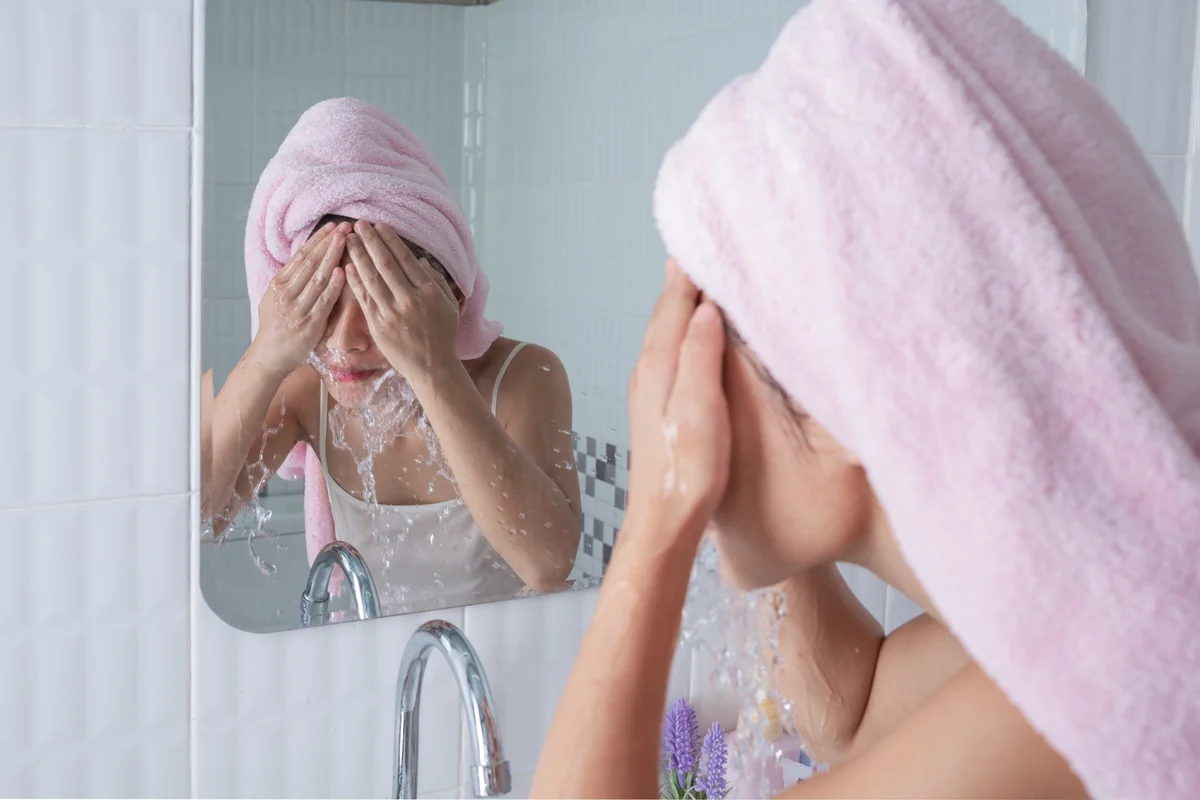
But "remove" doesn't mean rubbing the skin until it's red. This is a common mistake: a teenager sees breakouts, feels oiliness, worries that the skin is "dirty," and starts cleansing it too aggressively. In response, there may be tightness, burning, peeling, or even more desire to apply a heavy foundation the next morning. This creates a vicious circle: makeup covers discomfort, rough cleansing irritates, irritation wants to be covered again.
- First, remove makeup with a gentle product suitable for the face and eyes.
- Then wash with a delicate cleansing agent without harsh rubbing.
- After that, apply a light moisturizing cream if there's dryness, tightness, or discomfort.
If a teenager is very tired, it's better to use makeup removal wipes than to fall asleep with foundation and mascara. But wipes shouldn't become a daily replacement for normal cleansing: they often leave a film on the skin and provoke extra friction. They can be seen as a backup option for rare situations, not as the main evening care.
"For problem skin" doesn't always mean gentle
On the packaging of cosmetics and care products, there are often words that sound reassuring: "for problem skin," "mattifying," "cleansing," "antibacterial," "detox," "drying." But teenage skin doesn't always need drying. If it's constantly being degreased, rubbed, cauterized, and covered with heavy textures, it may respond with even more oiliness, tightness, burning, or new breakouts.
For daily makeup, it's better to focus not on aggressive promises, but on skin comfort. The product shouldn't burn, cause itching, sharp redness, a mask-like feeling, or the desire to wash it off immediately. If the skin regularly looks worse after a product, it's not an "adaptation period" that needs to be heroically endured. It's a signal to stop and look at the composition, texture, application method, number of layers, or compatibility with care.
Special care should be taken when makeup is combined with active care: acids, retinoids, alcohol tonics, scrubs, drying agents. If the skin is already irritated, it doesn't need a new "strong" action every evening. It often needs a pause, gentle cleansing, moisturizing, and fewer experiments.
Makeup from social media: why a trend doesn't always suit a teenager
A separate complexity is that today makeup on social media is often mixed with care. A teenager sees not just mascara or gloss, but a whole sequence: acid toner, serum, retinoid, primer, heavy base, contouring, fixer, oil for glow. In the video, it looks beautiful, fast, and convincing. But the skin behind the scenes doesn't always withstand such a number of layers, and irritation often doesn't make it into the edit.
Teenage skin usually doesn't need an adult anti-aging care logic. It often needs stability, gentleness, clean tools, and minimal irritation. That's why it's important to distinguish makeup as a means of self-expression from a trendy "care marathon," where a new active appears every week. This topic is covered in detail in the article why not all cosmetic trends from social media suit teenage skin.
What should be in a teenager's makeup bag
There is no universal makeup bag for everyone. Some are satisfied with lip balm and mascara, while others find it important to have concealer because without it, the day feels less calm. The task of an adult is not to ridicule this desire, but to help make the makeup bag safer. It doesn't necessarily have to contain expensive or "professional" products. It's more important that the products are personal, clean, not expired, and easy to use.
- Better: spot concealer. Caution: heavy foundation daily all over the face if the skin gets worse after it.
- Better: own mascara and clean applicator. Caution: someone else's mascara, old mascara, dried mascara with added water.
- Better: gentle makeup removal in the evening. Caution: sleeping with makeup or aggressive rubbing until redness.
- Better: a few clean brushes that are easy to wash. Caution: one sponge for months without cleaning.
- Better: simple care after cleansing. Caution: acids, scrubs, and drying agents every time a pimple appears.
This list is not about perfect discipline. A teenager won't always do everything flawlessly, and that's normal. But even a few stable rules significantly reduce chaos: not sharing cosmetics, washing tools, removing makeup before bed, not using a product that burns or worsens the skin condition.
How to talk to a teenager about makeup without arguing
For an adult, makeup may seem like an unnecessary concern, an attempt to appear older, or an imitation of bloggers. For a teenager, it's often much more sensitive: "I want to look normal," "I don't want everyone to see this pimple," "I feel calmer this way," "I like to experiment." If you start with criticism, the teenager is more likely to defend themselves. If you start with respect, the chance of reaching an agreement is much higher.
Instead of saying "don't wear makeup, it's too early for you," you can say: "I don't mind makeup, but I want your skin to be okay. Let's make sure you have your own products, clean brushes, and proper cleansing in the evening." Such a phrase doesn't take away control but helps build a framework without shame. It contains care, but no humiliation. There's a boundary, but no war.
It's important for a teenager to hear that skin care is not a punishment for makeup and not proof that something is "wrong" with them. It's a skill of self-care. Just like brushing teeth, washing hands, washing clothes, or not wearing lenses longer than allowed. When an adult speaks from this position, makeup stops being a field of conflict and becomes a topic where agreements can be made.
When makeup is better temporarily removed
There are situations when the skin really needs a pause. Not forever, not as a ban, and not as a punishment, but as a short recovery period. For example, if there's severe burning, sharp redness, swelling, itching, oozing, a rash after a new product, or irritation around the eyes. In such cases, it's better to remove the new product, not cover the reaction with new layers, and not experiment with actives.
If the reaction doesn't quickly subside, spreads, or affects the eyes, a doctor's consultation is needed. Special care should be taken with cosmetics for the eyelids, lashes, and mucous line of the eye. Eyes are not a zone for life hacks from social media, old products, or testing everything that looks beautiful in videos.
Short memo for a teenager
- Wash your hands before applying makeup.
- Don't share mascara, gloss, sponges, and brushes.
- Wash brushes about once a week or every 7-10 days.
- Don't sleep with makeup, even if you're very tired.
- Don't rub the skin harshly when removing makeup.
- Don't cover irritation with even more products.
- Don't add water or saliva to dried mascara.
- If a product burns, itches, or constantly worsens the skin condition - stop using it.
- If acne is painful, severe, or greatly affects mood - it's better to see a dermatologist.
Conclusion
Makeup in adolescence doesn't necessarily have to be a problem. It can be a game, a means of self-expression, a small ritual of confidence, and even a way to more calmly go through a period when the skin changes faster than you'd like. But the skin feels better where there are no prohibitions, but clear rules: personal cosmetics, clean tools, gentle makeup removal, simple care, and respect for the body's signals.
The best strategy for an adult is not to fight makeup, but to help the teenager make it safer. Don't shame for concealer. Don't ridicule experiments. Don't scare with every pimple. But calmly show: beauty doesn't require chaos, the skin doesn't like aggression, and care can be very simple.
Sources
- American Academy of Dermatology Association. Can the right makeup help you have fewer acne breakouts?
- American Academy of Dermatology Association. 10 skin care habits that can worsen acne
- American Academy of Dermatology Association. How to clean your makeup brushes
- U.S. Food and Drug Administration. Cosmetics Safety Q&A: Eye Cosmetic Safety
- American Academy of Dermatology Association. Dermatologist’s guide to skin care for tweens