

Peptide serums make plenty of promises: to stimulate collagen production, restore firmness, smooth wrinkles and even replace botulinum toxin injections. But under the word “peptides,” brands group together dozens of different molecules. Some have been tested in humans, others are supported mainly by laboratory data, and for some, efficacy is backed only by studies of finished cosmetic formulas.
So which peptides can actually reduce wrinkles? How do Matrixyl, Argireline and copper peptides differ? And is it worth buying an expensive serum if the brand cites research on collagen taken orally?
The short answer: certain peptides have shown positive results in clinical trials, particularly for fine lines. The best-known controlled studies involve Palmitoyl Pentapeptide-4, also known as Matrixyl. However, for most cosmetic peptides, high-quality human studies are still limited. They can be a useful addition to an anti-aging routine, but there is no solid basis for considering them a true replacement for retinoids or botulinum toxin treatment.
What peptides are and how they work in the skin
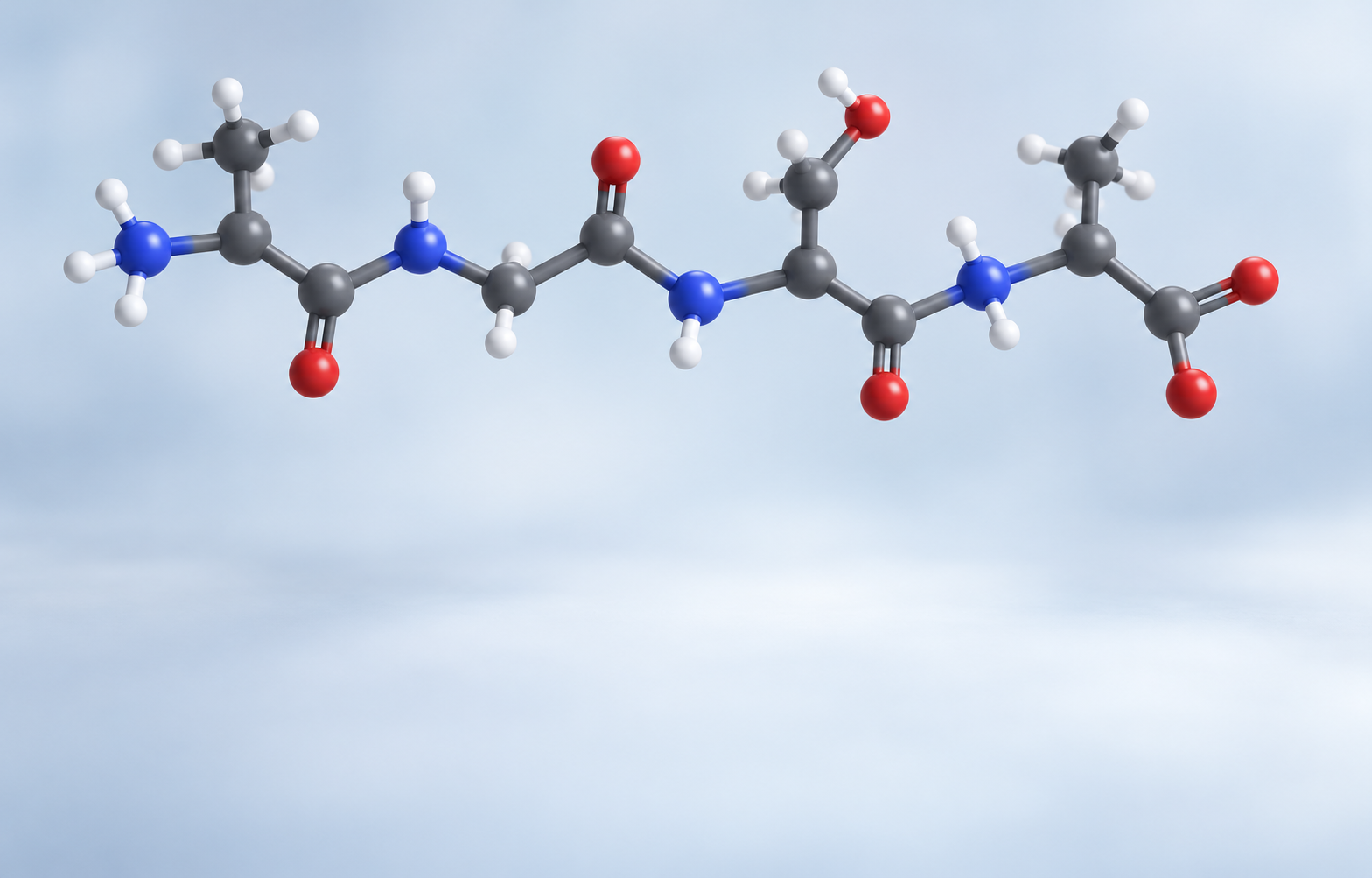
Peptides are molecules made up of amino acids linked together. In living organisms, they perform many functions, including helping transmit signals between cells. This is the property cosmetic ingredient developers are trying to use.
The idea is appealing: if a particular peptide can influence processes related to collagen synthesis or remodeling of the extracellular matrix, perhaps it can be used in skincare for signs of aging. This is how signal peptides entered the picture — ingredients now found in many anti-aging creams and serums.
However, there is an important difference between a possible mechanism of action and proven efficacy. A result observed in cells in a laboratory does not mean that a cream with the same substance will visibly reduce wrinkles. For that to happen, the peptide must remain stable in the cosmetic formula, reach the relevant skin structures and produce a measurable clinical result.
Signal, copper and neuromodulating peptides
In cosmetics, peptides are often grouped by their proposed mechanism of action.
Signal peptides are studied for their ability to influence the synthesis and remodeling of extracellular matrix components. This group includes Palmitoyl Pentapeptide-4, the ingredient best known under the trade name Matrixyl.
Carrier peptides can bind certain substances, including metal ions. The best-known example is GHK-Cu, a tripeptide complex with copper. It is studied in relation to tissue repair and the regulation of cellular activity.
Neuromodulating peptides are used in cosmetics aimed at softening expression lines. The best known is Argireline, or Acetyl Hexapeptide-8. Its action is linked to a possible effect on nerve-signal transmission. However, there is still no convincing evidence that, when applied to the skin, it can affect facial muscles in the same way as injected botulinum toxin.
Can peptides penetrate the skin?
This is one of the key questions when evaluating peptide skincare. The outer stratum corneum limits the penetration of many substances, especially large and water-soluble molecules. For some peptides, this is a serious obstacle. Manufacturers try to improve delivery by changing the chemical structure of molecules, attaching fatty-acid fragments or using special delivery systems.
Argireline is a particularly telling example. Studies on the penetration of Acetyl Hexapeptide-8 have produced mixed results: some experiments recorded passage of the peptide into the skin, while others showed mainly accumulation in the upper layers. A 2025 review emphasizes that delivery issues and uncertainty around the mechanism remain major limitations of this ingredient. In other words, it is not enough for a cosmetic peptide to show biological activity in a test tube. It needs to be shown to work after being applied to the skin in a specific product.
Which peptides have clinical evidence of efficacy
Dozens of peptides are used in the cosmetics market, but the level of research behind them varies widely. Some have controlled clinical trials; others are supported mainly by laboratory experiments or studies of multi-ingredient creams, where it is difficult to isolate the contribution of one specific substance.
The most valuable studies compare a peptide product with the same formula without the peptide. After all, a moisturizer alone can make fine lines look less visible. Without a control group, it is easy to attribute that effect to the peptide, even though it may have come from glycerin, emollients or other components.
Below is a brief comparison of the best-known cosmetic peptides and the current state of the evidence.
| Ingredient | What was studied | What the evidence suggests |
|---|---|---|
| Palmitoyl Pentapeptide-4 Matrixyl |
Fine lines, signs of photoaging | Positive controlled studies exist, but independent confirmation is needed |
| Acetyl Hexapeptide-8 Argireline |
Expression lines, skin penetration | Clinical data are limited and inconsistent; a botulinum toxin-like effect has not been proven |
| Copper Tripeptide-1 GHK-Cu |
Tissue repair, cellular processes | Substantial laboratory evidence, but not enough convincing clinical data for cosmetic use |
| Palmitoyl Tripeptide-1 + Palmitoyl Tetrapeptide-7 Matrixyl 3000 |
Signs of aging in cosmetic formulas | Data from individual formulas cannot be applied to all products containing the complex |
| New cyclized peptides | Wrinkles, skin texture | Preliminary positive results exist, but broad conclusions would be premature |
Matrixyl: a peptide with positive clinical results
Matrixyl is one of the best-known names in peptide skincare. The classic Matrixyl is associated with Palmitoyl Pentapeptide-4, also known in scientific literature as pal-KTTKS. It is a synthetic peptide with an attached fatty-acid fragment.
One of the most important studies was published in the International Journal of Cosmetic Science. It included 93 women aged 35–55. For 12 weeks, participants applied a moisturizer with the peptide to one side of the face and an identical product without the active ingredient to the other. The allocation was randomized, and neither the participants nor the researchers knew which product was used on which side.
Based on skin image analysis, the formula with Palmitoyl Pentapeptide produced a statistically significant improvement in fine-line parameters compared with the control. This is an important finding: the researchers were not simply assessing participants’ impressions but trying to separate the peptide’s effect from that of the moisturizing base. Still, there are limitations. The study lasted only three months, involved a specific group of women, and its authors worked for Procter & Gamble.
A small randomized study from 2023 involving 21 women also found positive changes in the appearance of wrinkles around the eyes after the use of creams with Palmitoyl Pentapeptide-4 and Acetyl Hexapeptide-3. The Palmitoyl Pentapeptide-4 formula showed promising results in photographic and subjective assessments. However, differences in several instrumental measurements did not reach statistical significance, and the small number of participants substantially limits the reliability of the conclusions. This study supports the need for further trials rather than definitively proving the peptide’s efficacy.
What does this mean for the buyer? Palmitoyl Pentapeptide-4 is not just an ingredient with a polished marketing story. It does have positive controlled studies behind it. But the evidence is still not strong enough to guarantee a noticeable result from every serum carrying this name.
It is also important to distinguish between Matrixyl and Matrixyl 3000. The latter is a complex of Palmitoyl Tripeptide-1 and Palmitoyl Tetrapeptide-7. It is not the same ingredient, so it is not correct to apply the Palmitoyl Pentapeptide-4 study results to Matrixyl 3000.
Argireline: where the “Botox in a bottle” nickname came from
Argireline is often called “Botox without injections.” The comparison did not appear out of nowhere: laboratory studies have shown that this peptide may influence processes related to nerve-signal transmission to muscles. This is the basis for the promise of reducing expression lines without injections.
But there is a significant difference in how these approaches work. Botulinum toxin is injected directly into the muscle, where it blocks the nerve signals that trigger contraction. As a result, the muscle temporarily relaxes, and the wrinkles formed during facial movement become less visible. This effect is well studied. With an Argireline serum, things are more complicated. To influence muscle activity, the peptide would need to pass through the skin and reach nerve endings. Whether it can do this in sufficient amounts after ordinary facial application has not been proven.
At the same time, some studies have shown that products with Argireline can reduce the visibility of wrinkles. However, results vary, and high-quality independent studies remain limited. A 2025 scientific review also notes that data on peptide penetration into the skin do not always align with the results of cosmetic product trials.
So, an Argireline serum may improve the appearance of fine lines, but calling it a replacement for Botox is inaccurate. At present, there is no convincing evidence that a peptide applied to the skin can relax facial muscles in the same way as injected botulinum toxin.
GHK-Cu copper peptides: laboratory promise and clinical limitations
GHK-Cu is a complex of the natural tripeptide GHK with copper ions. In cosmetic formulas, it is most often listed as Copper Tripeptide-1. This ingredient has become especially popular in serums that promise repair, improved firmness and better overall skin condition.
Unlike many newer cosmetic ingredients, GHK-Cu has a fairly large experimental base. It has been studied in relation to tissue repair, cellular activity, inflammatory responses and extracellular matrix components.
Most of these findings come from laboratories rather than human cosmetic trials. Results from cell or animal experiments cannot predict how much wrinkles will improve after using a cosmetic serum. Even if a molecule can influence certain biochemical processes, researchers still need to establish whether it retains these properties in a finished formula and whether it reaches the necessary skin structures.
A 2026 scientific review devoted to GHK-Cu describes the molecule’s potential, while also highlighting delivery challenges, lack of formula standardization and the shortage of large-scale clinical studies. For now, copper peptides can be considered an interesting direction in cosmetic development, but there is not enough evidence to call them a proven way to restore collagen or significantly reduce wrinkles.
Peptides are only one of the directions being studied in connection with skin repair. Read more about other approaches, including polynucleotides, exosomes and injectable techniques, in our article “Regenerative cosmetology: methods, injections and exosomes”.
New peptides and multi-ingredient formulas: why they are harder to assess
Modern peptide skincare has long moved beyond Matrixyl and Argireline. Manufacturers are developing new signal molecules, cyclized peptides and complexes combining several active ingredients. Some newer formulas show promising results in short-term clinical trials. However, even a positive study of a multi-ingredient cream does not always show which ingredient produced the result. If a product contains peptides, niacinamide, humectants and antioxidants at the same time, the improvement may be due to their combined effect.
In some studies, new peptides performed better than retinol. But the comparisons used retinol at very low concentrations. These results therefore do not justify the claim that peptides as a category are more effective than retinoids.
What peptides can do — and what you should not expect from them
When someone buys an anti-aging serum, they usually care less about fibroblast activity in a lab and more about the visible result: whether wrinkles will look softer, whether the skin will feel firmer, and how long it will take to tell. With peptide skincare, the answers depend on the type of change in question.
Fine lines. Some peptide formulas have shown positive results in clinical trials. Improvements were usually assessed after several weeks of use.
Deep wrinkles and expression lines. There is no convincing evidence that ordinary peptide cosmetics can substantially correct these changes. In particular, you should not expect an effect comparable to botulinum toxin injections.
Firmness and skin density. Some laboratory findings look promising, but clinical data are insufficient to confidently state that a peptide serum restores dermal structure or increases collagen content in human skin.
Hydration and smoothness. Here, results may appear more quickly, but they are often due to the overall formula. Humectants, emollients and film-forming ingredients can temporarily reduce the appearance of fine lines regardless of peptides.
What the 2026 meta-analysis actually showed
In March 2026, a systematic review and meta-analysis of 19 randomized studies involving a total of 1,341 participants was published. The authors assessed the effect of peptides on hydration, elasticity, wrinkles and other skin parameters. The overall analysis found positive results for some outcomes, including hydration and wrinkle severity.
However, there is one detail that is easy to miss when reading marketing materials: the vast majority of included studies looked at peptides taken orally. This is mostly a different category of products, including collagen peptides for oral use. They cannot be equated with signal peptides in cosmetic creams, because their composition, route of entry into the body and studied mechanisms differ.
Moreover, the overall effect on wrinkles was small and was largely driven by results from oral products. For topical use, the available data are not sufficient to draw equally confident conclusions.
Peptides or retinol: which works better against wrinkles?
When peptides are compared with retinoids, retinoids are clearly ahead in both the quantity and quality of clinical research. The best studied is tretinoin, a prescription form of vitamin A that helps reduce fine lines and improve skin texture. Standard cosmetic retinol also has a fairly convincing evidence base, although results depend on its concentration and the product’s formulation.
Peptides cannot yet claim the same volume of research. But that is not a reason to dismiss them. A good peptide serum can absolutely complement a routine, especially if it feels pleasant to use and suits the skin well. What is less justified is buying an expensive peptide complex instead of retinol and expecting the same wrinkle-reducing effect. At this point, the scientific basis for that is insufficient.
There is also a practical nuance: retinoids can irritate the skin, especially in the first weeks of use. Peptide products are sometimes better tolerated, although everything depends on the specific formula. So the choice is not always simply about which ingredient is more effective. It also matters how comfortably the skin responds and whether the product can be used consistently.
We covered how to choose products based on skin needs in more detail in our article “Serums after 35: how to choose an anti-aging active”.
How to choose and use peptide skincare
Peptide products range from affordable serums to expensive creams with ingredient lists so long that it is easy to get lost. How do you know what you are paying for, what to look for in the formula, and how to add peptides to a daily routine correctly?
What to look for in the ingredient list
The first step is to find the exact peptide name in the INCI list. For example, Palmitoyl Pentapeptide-4, Acetyl Hexapeptide-8 or Copper Tripeptide-1. The phrase “peptide complex” on the front of the packaging is not enough to understand which molecules the product actually contains.
The second step is to check whether there is research on the ingredient — and ideally on the finished formula. This is especially important when a brand promises specific percentages of wrinkle reduction. It is worth finding out how many people took part in the trial, how long they used the product and whether there was a control group.
Do not judge efficacy only by where the peptide appears in the INCI list. Concentration cannot be determined precisely from ingredient order, and some peptides are used in very small amounts. Data on the specific formula and its testing matter more.
The base of the product is just as important. Dry skin will benefit from moisturizing and softening ingredients; reactive skin needs a formula free of ingredients likely to trigger irritation. Even a promising peptide will not rescue a formula that does not suit your skin.
Can peptides be combined with retinol, acids and vitamin C?
Peptides can be used together with retinol, acids and vitamin C. The key is to consider the properties of the specific products and how your skin responds to them.
For example, if you already use retinol, a peptide serum can be added to your usual routine. You do not necessarily need to apply them on different days if the combination does not cause irritation.
Acids and vitamin C come with some nuances. Some peptides are sensitive to an acidic environment and may lose stability, so much depends on the composition and properties of the products. But the common advice to never combine peptides with acids is too categorical: it does not apply to every formula.
Follow the manufacturer’s recommendations and do not try to use every active at once. If dryness, stinging or redness appears after adding a new product, it is better to temporarily reduce the number of products and work out what exactly caused the reaction.
We explain why using too many actives does not always improve results in the article “Well-aging skincare: how not to overload your skin with actives”.
When to expect results
The first changes may appear fairly quickly: if a cream hydrates well, the skin can feel smoother and more comfortable after just a few applications. But this is not yet the anti-aging effect for which peptide skincare is usually purchased. Assessing an effect on wrinkles takes more time. In clinical studies, peptide products were most often tested for 8–12 weeks. So a realistic timeframe is roughly two to three months of regular use. That said, this does not mean every serum will necessarily deliver a visible result within that period: it all depends on the specific peptides and the overall formula.
Do you need to start using peptides after 30, 35 or 40? No — there is no special age threshold here. If your current routine works for you, adding another serum just because of age makes little sense. If you want to try peptides, start by assessing your skin’s current condition and needs.
In general, peptide products often have fairly gentle formulas, but sensitive skin can still react to them. Pay attention not only to the active ingredient, but also to the cream or serum as a whole.
And one more point: even the most expensive peptide complex will not replace sunscreen. Regular UV protection has far stronger evidence for preventing premature skin aging.
So, is peptide skincare worth buying?
Yes, if you like the product, it suits your skin and the price does not feel unjustified. Some peptides really have shown good results in studies, so it would be unfair to dismiss the entire category as pure marketing.
But there is no need to overpay for a long list of peptides on the packaging. If your budget is limited, it is wiser to first focus on a solid basic routine, sun protection and actives with well-studied efficacy — and only then experiment with additional serums.
Ultimately, what matters most is not how many peptides a brand has added to a cream or how convincingly it describes their action. What matters far more is whether the product was tested in humans and what results were obtained. That is what helps you understand what you are paying for and what you can realistically expect from the purchase.
Scientific sources
- Nukaly H. Y. et al. Oral and topical peptides for skin aging: systematic review and meta-analysis of randomized controlled trials. Frontiers in Medicine, 2026. PubMed.
- Robinson L. R. et al. Topical palmitoyl pentapeptide provides improvement in photoaged human facial skin. International Journal of Cosmetic Science, 2005. PubMed.
- Aruan R. R. et al. Double-blind, Randomized Trial on the Effectiveness of Acetylhexapeptide-3 Cream and Palmitoyl Pentapeptide-4 Cream for Crow's Feet. Journal of Clinical and Aesthetic Dermatology, 2023. PubMed.
- Zdrada-Nowak J. et al. Acetyl Hexapeptide-8 in Cosmeceuticals—A Review of Skin Permeability and Efficacy. International Journal of Molecular Sciences, 2025. Full text.
- Mateescu D.-M. et al. GHK-Cu as a Bioactive Metallopeptide and Drug-Delivery Cargo: Coordination Chemistry, Formulation Science, Therapeutic Evidence, and a Translational Roadmap. Pharmaceutics, 2026. Full text.