

There’s a jacket hanging in the wardrobe that used to be a favorite. It fits well, the fabric has held up, the color still suits you. But every time you wear it with the same blouse and trousers, it feels as if you’ve stepped ten years back in time. Sound familiar? The same can happen with jeans, dresses, cardigans. The pieces are still good, but the outfits no longer feel exciting. Often, the reason is simple: we keep combining clothes the way we did years ago.
After 40, this situation feels especially familiar: your wardrobe already has trusted cuts, favorite colors, and pieces you don’t want to part with. And why should you, if they still suit you? It’s far more interesting to try new combinations, change the proportions, or add one detail that makes a familiar piece read completely differently.
Modern fashion gives us plenty of freedom to do exactly that. A fitted blazer can look just as current as an oversized one, and skinny jeans can become part of a modern outfit. What matters is fit, proportion, color, and the way pieces work together. We’ve already discussed the principles of a modern wardrobe at any age in the article “How to Dress Modern After 40”. Now let’s move on to practice: we’ll look at familiar pieces and see how to change their character without replacing your entire wardrobe.
What makes a familiar outfit look outdated
Imagine a black pencil skirt, a fitted blouse, a cropped jacket, pumps, and a small structured handbag. It’s a classic office formula that was considered foolproof for years. Today, it can look too predictable: all five pieces support the same formal style.
But a pencil skirt also works beautifully with a soft oversized sweater, a leather jacket, or tall boots. And that same blazer can be worn with jeans or wide-leg trousers. The point is not that you must always mix styles. A restrained classic suit can look modern too. What matters is the cut, fit, proportions, materials, and details.
An outfit most often feels dated when several elements at once echo the fashion of a specific period. It may be the shape of the shoes, the length of the top, the rise of the trousers, the print, or even the habit of matching all accessories in the same style. Fashion cycles are getting shorter, while familiar pieces stay with us much longer. We wrote about this difference in the article “When Trends Became Faster Than Us: Why Style Is Becoming More Restrained”. So instead of asking, “Is this piece still fashionable?” it’s more useful to ask, “What exactly do I want to change in this outfit?”
How to wear familiar pieces so they look modern
The blazer: fitted, cropped, or oversized
A fitted blazer with a defined waist often stays in a wardrobe for years, especially if it is well tailored. Problems usually begin when it is automatically paired with other pieces from the same era: a tight blouse, slim ankle-length trousers, and classic pumps.
A cropped fitted blazer and wide-leg trousers
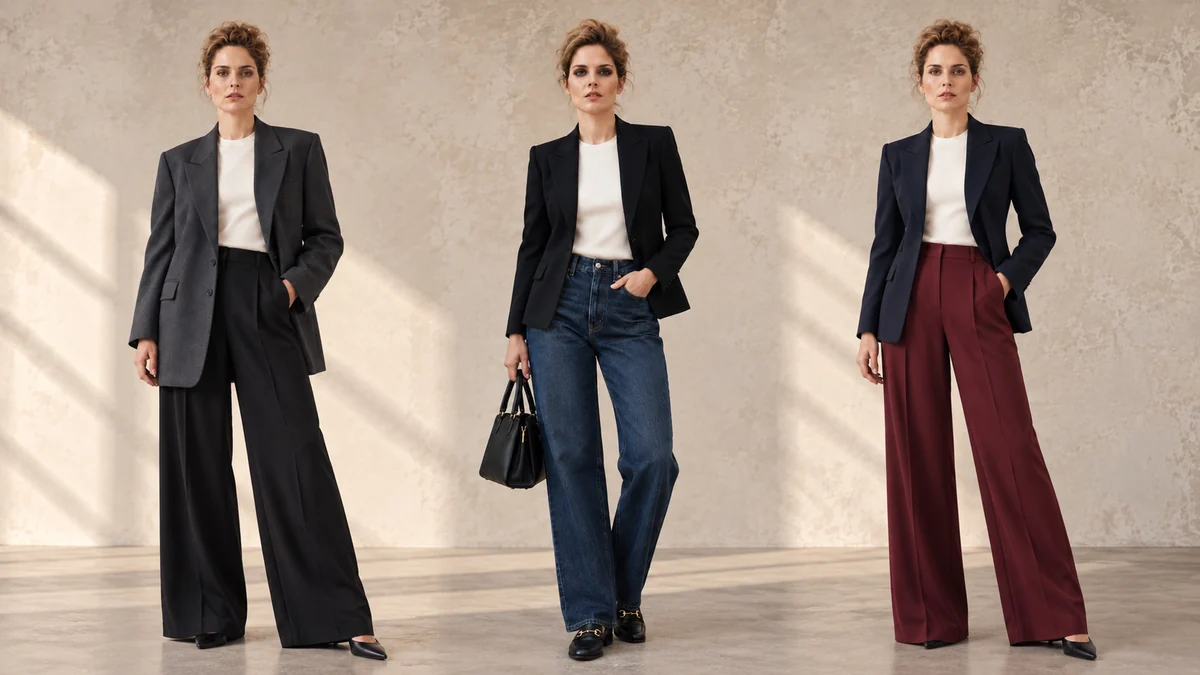
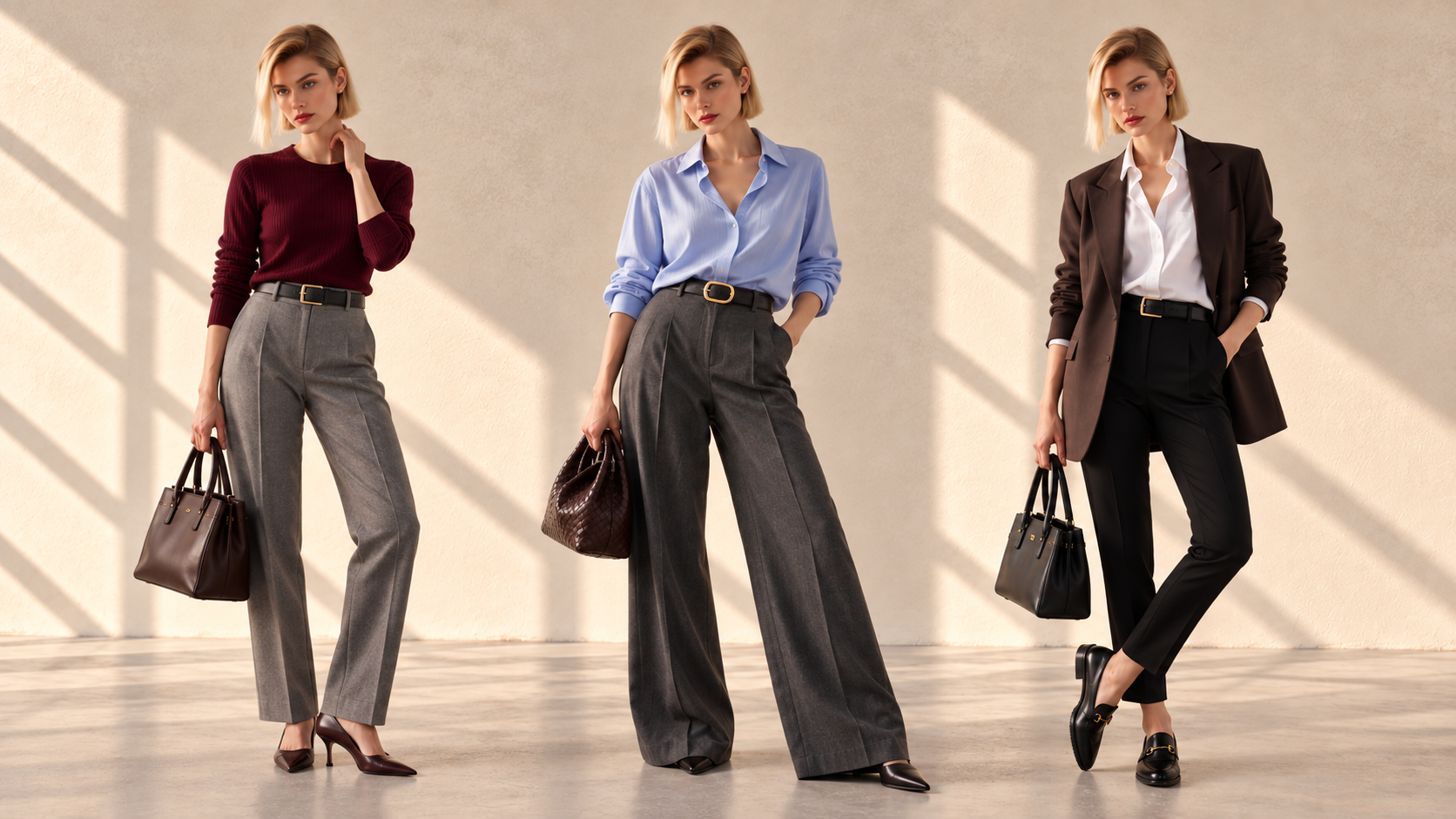
Take a blazer with a defined waist and pair it with trousers that fall loosely from the hips. Underneath, choose fine knitwear or a smooth top. The shorter upper part and the longer trouser line create a strong silhouette. The blazer no longer looks like a leftover from an old office suit — it becomes the main structural element of the outfit. Combinations of close shades work especially well: a navy blazer with charcoal trousers, chocolate with beige, or black with black. Different textures will keep the outfit from looking flat.
A tailored blazer and jeans
What matters here is not simply the idea of pairing classics with denim, but which jeans you choose. Dark straight-leg jeans without fading will preserve the blazer’s elegant mood. Washed denim with a looser fit will make it feel less formal. And skinny jeans with tall boots will create a silhouette where long vertical lines become the main focus. By the way, the shoes do not have to be sporty. Loafers, ballet flats, or pumps can all work. The style of the outfit is defined by the whole combination, not by one pair of shoes.
What about a large oversized blazer?
The most common mistake is trying to balance its volume only with slim trousers. That is just one option. An oversized blazer can look interesting with wide-leg trousers or a long straight skirt. In this kind of outfit, construction is key: the blazer should hold its shape at the shoulders, and the fabric on the bottom should fall beautifully without creating unnecessary folds.
If you want to emphasize the waist, wear a belt over the blazer. This works best with styles made from fabric soft enough not to create too much bulk under the belt. Decorative jackets deserve special attention too — bouclé, tweed styles, options with contrasting buttons. You do not have to support them with a dainty bag, a necklace, and classic shoes all at once. A jacket like this can be the only dressy piece in an outfit with simple jeans.
Jeans: why changing the combination matters more than changing the cut
Few pieces have lived through as many fashion bans as skinny jeans. They were declared outdated, replaced by wide-leg styles, and then brought back into designer collections. Today, skinny, straight, and wide jeans can easily coexist in one wardrobe. Each cut creates different proportions.
Skinny jeans: from a 2010s formula to a modern silhouette
A long tunic, skinny jeans, a cropped cardigan, and ankle boots — this combination is instantly recognizable as early-2010s styling. For a different result, keep the skinny jeans but change the top. For example, add a crisp cotton shirt with a defined shoulder line and a long coat. If you replace ankle boots with tall boots, the skinny jeans become an extension of the shoe silhouette. Another option is a fitted blazer, a fine top, and pumps. This combination can look expressive and modern without relying on oversize. The length of the blazer, the quality of the denim, and the neat fit of the jeans are especially important here.
Straight-leg jeans: check the hem
One problem that is often underestimated is an unsuccessful length. If straight-leg jeans bunch over boots in several uneven folds, the lower part of the outfit can look heavy. Try the same pair with different shoes: perhaps they will work better with lower-cut loafers or boots with a thicker sole. Sometimes shortening the jeans by a few centimeters is enough. But before taking them to a tailor, decide which shoes you will wear with this pair most often.
Wide-leg jeans: play not only with volume, but also with texture
Instead of the usual cropped top, try a fine shirt tucked into the waistband and a structured leather belt. Or a soft wool sweater and a long coat. A contrast of materials can be especially interesting: rough denim with a silk blouse, dense denim with fine cashmere, faded jeans with a smooth leather bag.
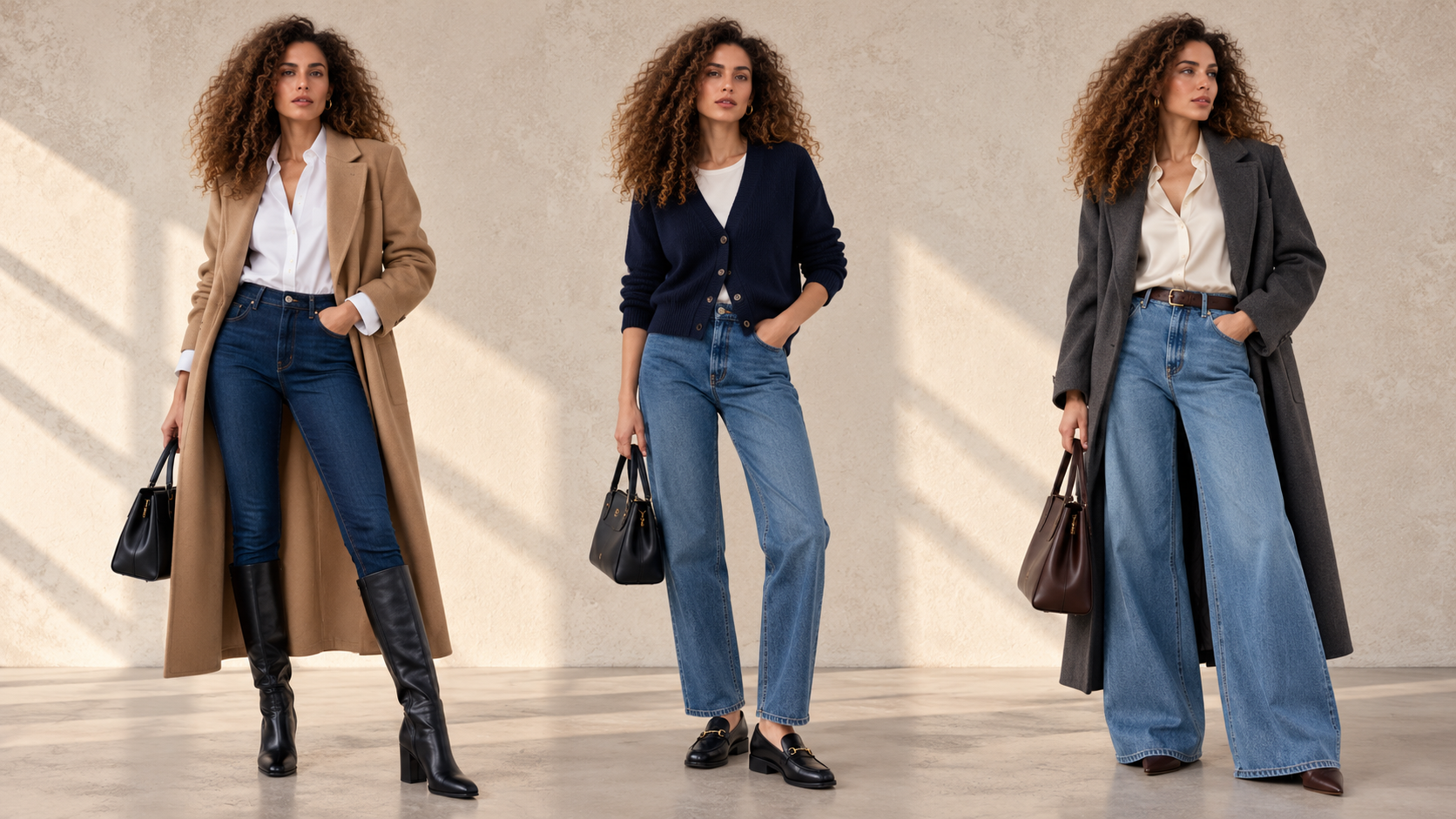
If your jeans have prominent fading, decorative seams, or unusual pocket shapes, keep the rest of the outfit more minimal. That way the focus stays on the denim, and the look does not become overloaded with details.
The cardigan: how to change the impression of fine knitwear
A fine cardigan has a reputation as a restrained, almost invisible basic — especially when worn over a tank top with classic trousers. The same cardigan can look completely different if you change its role in the outfit.
A cardigan instead of a blouse
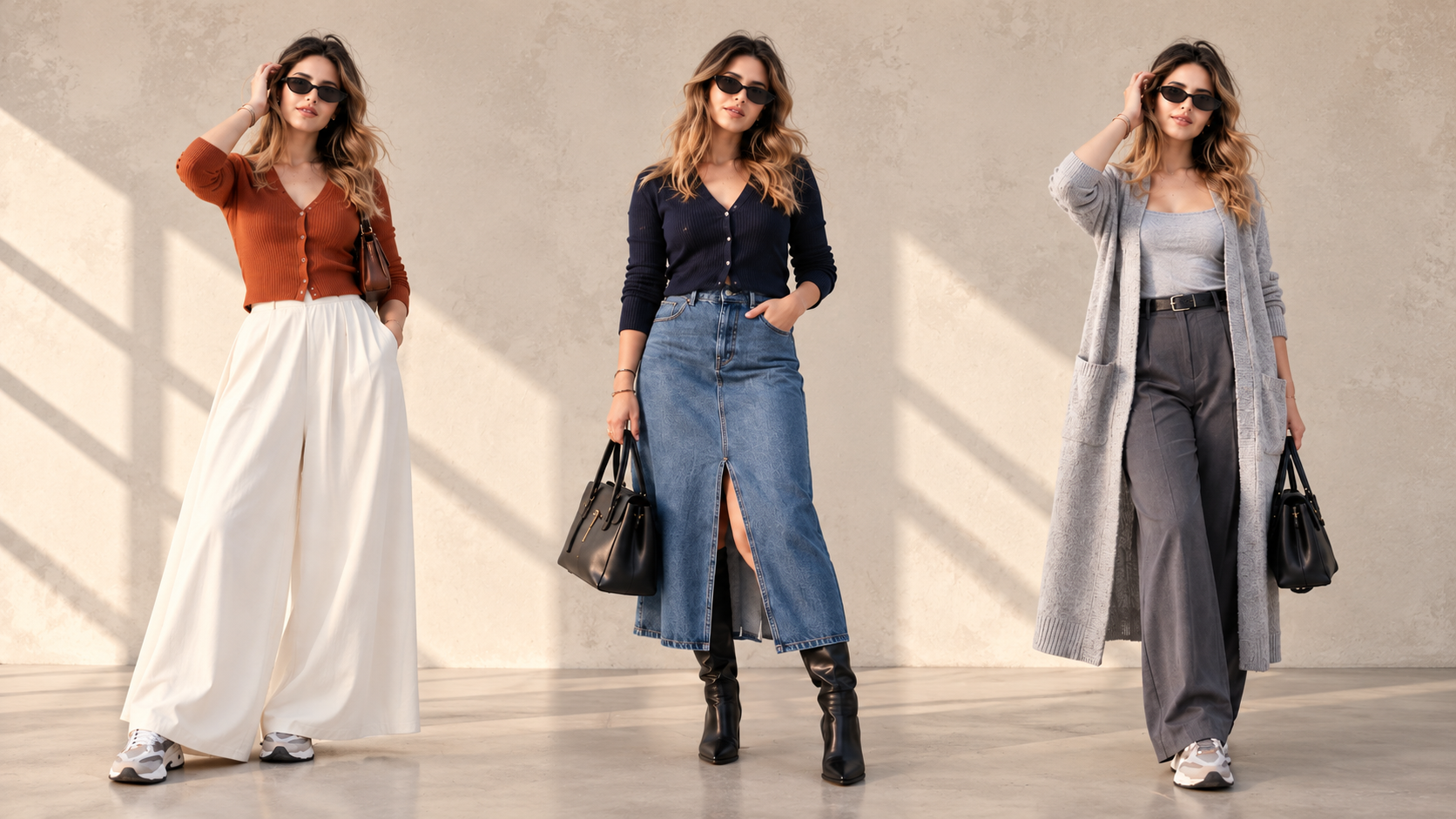
A short cardigan with small buttons can be worn as a top in its own right. It looks especially interesting with a long A-line skirt or high-rise wide-leg trousers. There is no need to add another T-shirt, collar, or layer. The neckline, buttons, and texture of the knit already create a finished top.
A cardigan and an unexpected skirt
Try pairing a simple cardigan with a leather skirt, denim, or a style with a pronounced texture. For example, a fine navy cardigan with a chocolate leather or denim midi skirt. The contrast comes from the soft knit against the denser material, while the outfit remains calm in color.
A long cardigan without the loungewear effect
If a long cardigan does not have a clearly defined shape, avoid adding several more soft, shapeless pieces just out of habit. Straight-leg jeans, a smooth top, a structured bag, and shoes with a defined shape will create a more pulled-together outfit.
Another interesting technique is to combine a long cardigan with clothes in related shades. For example, a gray cardigan, charcoal trousers, and a light gray top. The difference in textures and tones will make the outfit expressive without bright accessories.
The pencil skirt: not just an office classic
For a long time, the pencil skirt was part of a rather strict formula: blouse, fitted blazer, pumps, and a small structured bag. But its main feature is a narrow straight silhouette, not its office purpose. That is exactly what you can work with.
How to change a strict outfit
A black pencil skirt and a soft oversized sweater create different proportions than the same skirt with a tight blouse. The sweater can fall slightly over the waistband or end near the waist. The main thing is to keep a shape you like, rather than hiding the entire upper part of the skirt. With tall boots and a long coat, you get an outfit for colder weather. With a light shirt and ballet flats, it becomes more everyday.
How to wear a printed pencil skirt
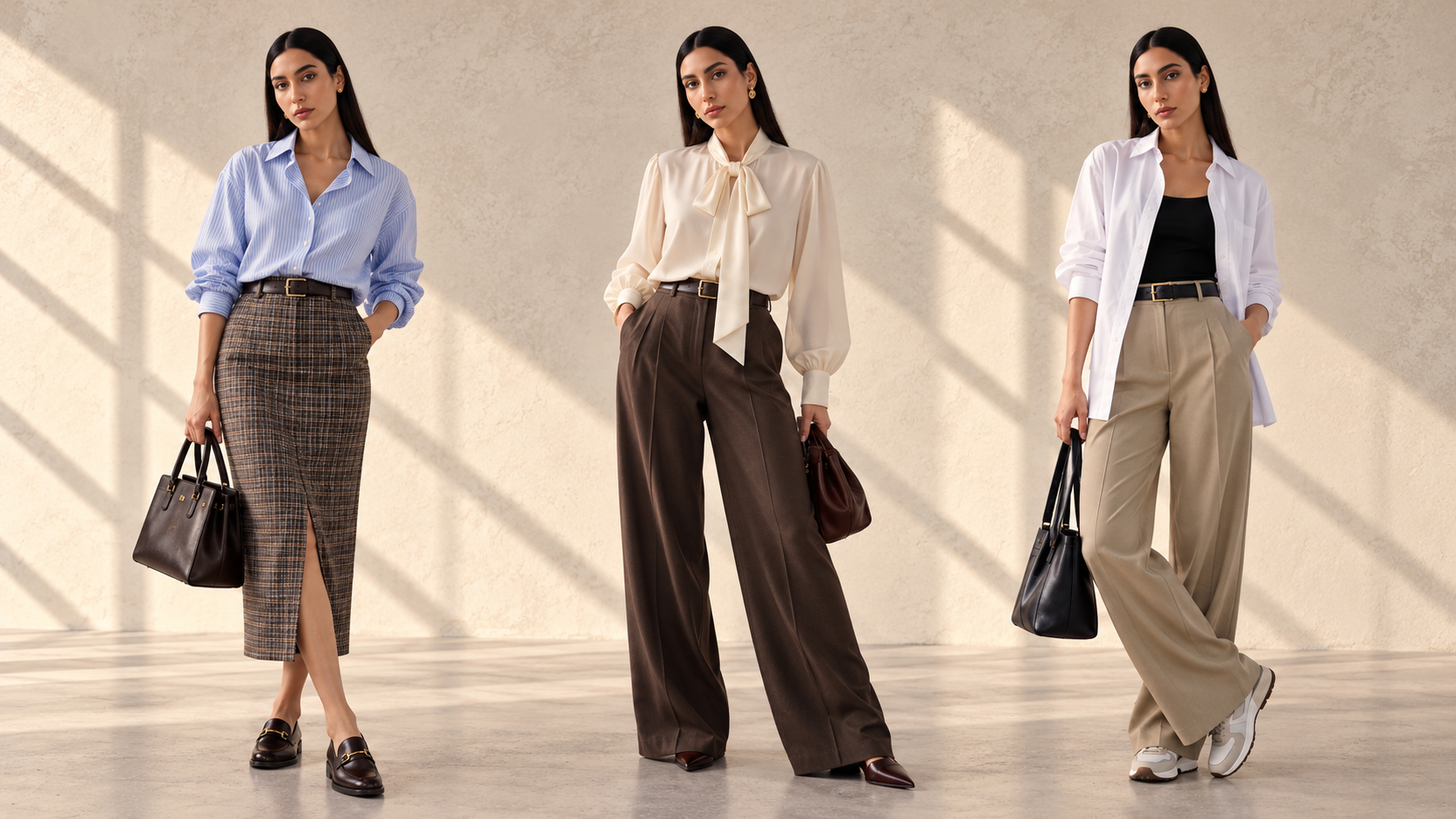
Checks, stripes, or geometric patterns can look especially expressive if you do not try to repeat all their colors in your accessories. For example, a gray-blue checked skirt, a white shirt, and a burgundy bag. Burgundy does not have to appear in the print: it adds a separate accent. There is also a bolder option — combining two prints. A fine striped shirt and a larger checked skirt can work well together when they share colors but differ in scale.
A denim pencil skirt
A long denim style with a slit feels much less formal. It can be worn with a fine polo, shirt, cardigan, or simple top. It is especially worth checking how the skirt interacts with footwear. Tall boots will create a long silhouette, ballet flats will reveal the ankle, and loafers will give the outfit a more defined shape.
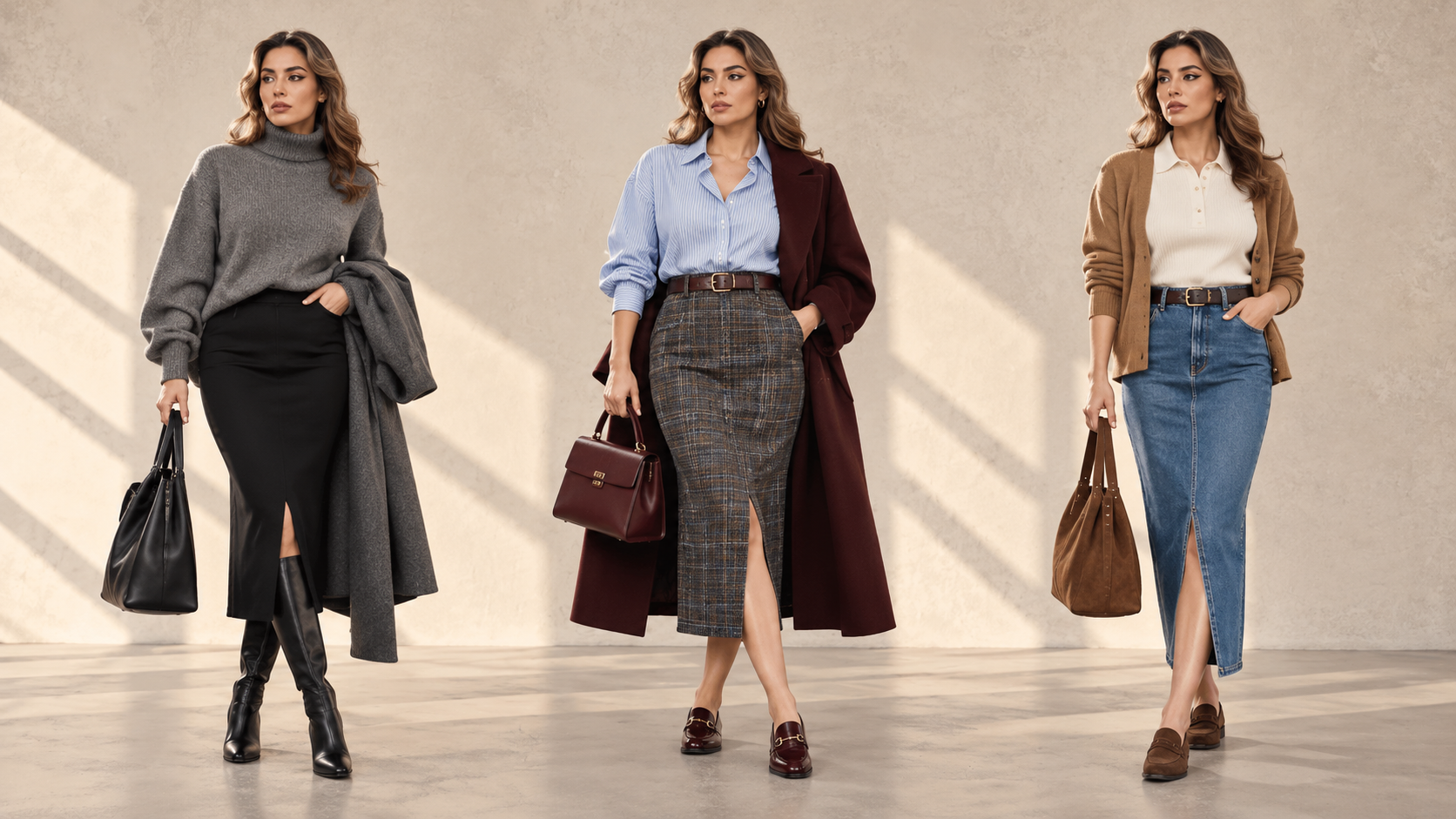
You do not need to make a pencil skirt more casual every time. A fully elegant outfit can feel current too — for example, a midi skirt, a fitted blazer with a defined waist, sculptural earrings, and pumps. Here, modernity comes from thoughtful proportions and the character of the details, not from abandoning classics.
The dress: how to change the look with details
Dresses are a special case. Unlike jeans or a skirt, a dress already forms a large part of the finished look. That is why the top layer, shoes, accessories, and the way you work with the waist become decisive.
A sheath dress: change not only the shoes, but the whole mood
If you wear a sheath dress for years with pumps and a short jacket, it will remain mostly an office piece. For a different mood, try a long coat or a leather jacket. A structured top layer changes the silhouette, while the shoes can support the new character of the outfit.
But there is an even more interesting route: keep the look elegant and change only the accessories. For example, a black sheath dress, burgundy pumps, a large metal piece of jewelry, and an unusually shaped bag. There is nothing sporty or relaxed here, but the outfit no longer looks like a standard office set.
A floral dress
Small flowers, lace, ruffles, and light fabric can create a very romantic look. If you add a straw bag, delicate sandals, and floral jewelry, all the details will point in the same direction. To change the impression, simply remove some of the romantic accents. A smooth leather bag, simple sandals, a minimal belt, or a blazer with defined shoulders will create a different character.
Color matters too. If the dress contains several shades, you do not have to match the bag and shoes to one of them. Neutral accessories can make the print the main focus, while a contrasting color can make the outfit more expressive.
A knitted dress: working with vertical lines
A long knitted dress pairs well with a coat, blazer, or cropped jacket. But the effect depends on the length of the top layer. A long coat close in color to the dress will create an elongated silhouette. A cropped jacket will emphasize the waist and change the proportions. A blazer that ends at mid-thigh will add a separate horizontal line, which can become an expressive part of the outfit.
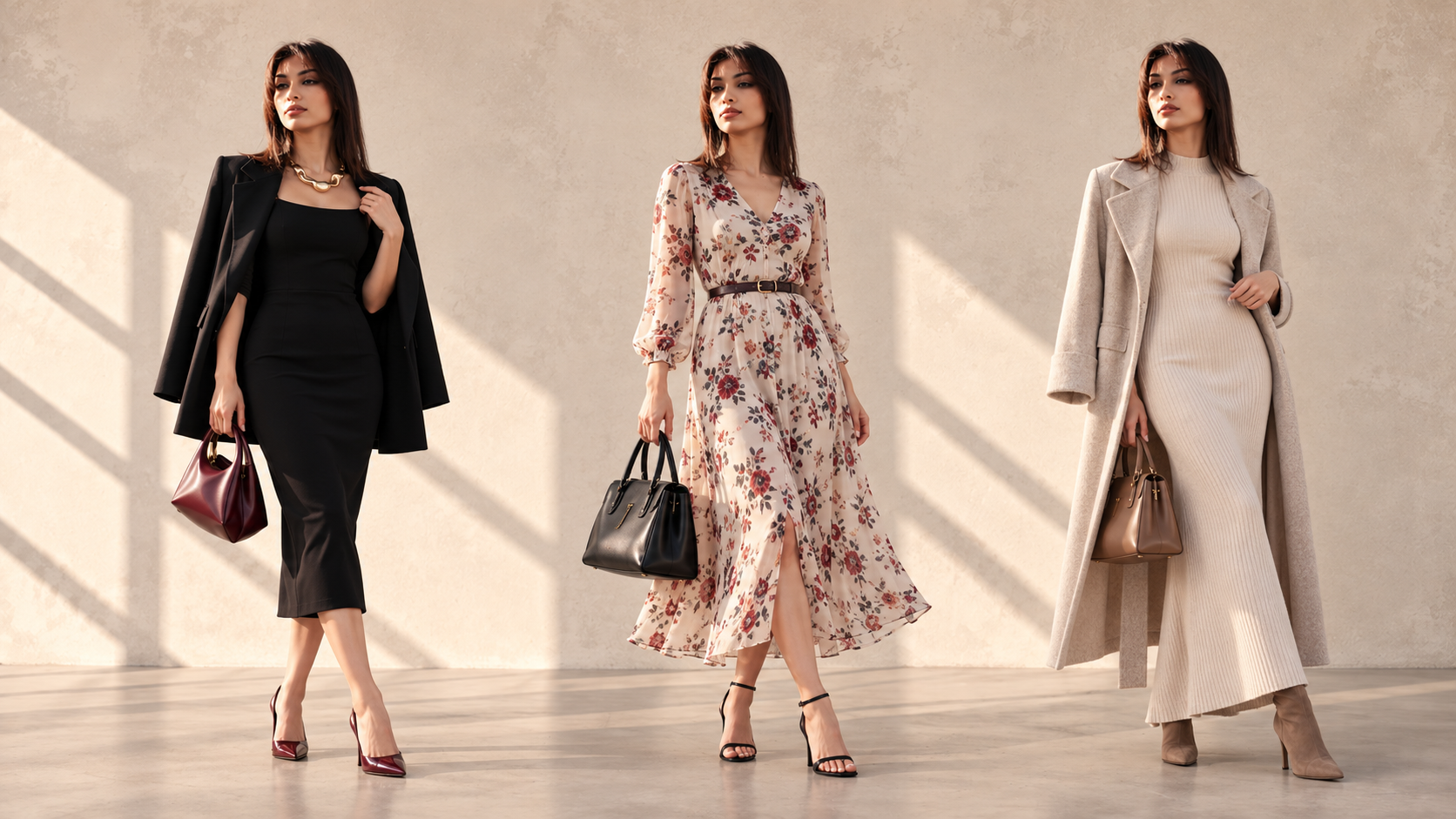
Try comparing these options in front of the mirror. That way, you will see which proportions you personally like best.
The shirt and blouse: how to change shape and work with decoration
A white shirt is one of the simplest examples of how the way you wear something affects the impression it gives. Fully tucked into trousers, with the collar fastened, it creates a strict silhouette. The same shirt worn untucked can look relaxed, while left open over a top it can work as a light outer layer. But the most interesting possibilities appear when you do more than change the tuck.
An oversized shirt and a narrow skirt
In this outfit, the difference in shapes matters. The shirt can create a little volume above the waistband, while the skirt keeps a straight line. Sleeves can be left long for a stricter composition or pushed up to reveal the wrists. It is a small change, but it affects how volume is distributed in the upper part of the look.
A striped shirt
If you have a classic shirt with pale blue or blue stripes, do not limit it to plain trousers. Try adding a small checked skirt or a neck scarf with a geometric pattern. To keep the prints from competing, let one be smaller and the other larger. A shared color will help connect them. Another option is to use the striped shirt as an accent in an almost monochrome outfit: navy trousers, a blue shirt, and a navy blazer.
A romantic blouse with a bow or ruffles
A piece like this does not need extra romantic jewelry if you want the outfit to feel more restrained. A silk blouse with a bow looks interesting with wide tailored trousers, a leather belt, and a minimal bag. The bow remains the main decorative element. A lace blouse can be paired with dark denim and a sharply shaped blazer. The contrast between delicate fabric and structured pieces will make the decoration stand out without looking overly dressy.
Classic trousers: changing color, texture, and details
Tailored trousers are most often made to look more modern with a T-shirt and sneakers. That works, but it is far from their only possibility. In reality, classic trousers are an excellent base for experimenting with color and texture.
Gray trousers and less obvious color combinations
Instead of the traditional white blouse, try a burgundy, dark green, chocolate, or powder-blue top. For example, gray wool trousers, a fine burgundy sweater, and a black belt. Or charcoal trousers, a blue shirt, and a chocolate bag. These color combinations add character even to a very simple outfit. You do not need a bright print or an unusual cut to achieve that.
Wide-leg trousers with creases
They already have a clear structure, so they pair well with soft materials. Fine cashmere, a silk shirt, or a knitted cardigan create contrast with the strict suiting fabric. For a more expressive look, you can add a leather belt with a noticeable buckle or shoes with an unusual shape. One such accent often works better than several small decorative details.
Slim trousers
With these, fit and length are especially important. Trousers that pull at the knees, bunch near the crotch, or twist along the leg will look untidy no matter how current the cut is. If the fit is good, slim trousers can be worn with a blazer, a long shirt, fitted knitwear, or a structured coat.
Sometimes a simple change of shoes solves the proportion problem — for example, when cropped trousers end at the widest part of a boot shaft. A different shoe height or a cleaner line around the ankle can make the silhouette feel more complete.
Universal techniques: how to evaluate a finished outfit yourself
Once you have put together an outfit, look at it full-length. Not at the individual pieces, but at the overall composition.
Here are a few questions that will help you understand what may be worth changing:
- Where is the attention focused? If the outfit contains a bright print, a decorative jacket, a statement bag, and bold jewelry all at once, decide which of them should be the main focus.
- Do you like the proportions? Check the length of the top, the waistline, the balance of volume, and how the clothes look with the specific shoes.
- Do all the pieces have the same character? A fully classic, romantic, or sporty outfit can be successful. But if the look feels too predictable, change one detail rather than everything at once.
- How do the colors and prints work? They can repeat, contrast, or create an almost monochrome look. What matters is that the result feels intentional.
- Does the outfit suit the situation and your lifestyle? Even the most interesting combination will not become a favorite if it is uncomfortable to move, walk, or spend the whole day in.
One of the most useful techniques is to photograph the same outfit in two or three versions. For example, change only the shoes, then the top layer, then the bag. In photos, it is easier to notice which change truly affects the overall look.
When styling will not help and a piece is better replaced
There are situations where new combinations will not solve the problem.
The first is poor fit. A blazer that pinches at the shoulders, trousers that twist, or a skirt that constantly rides up while walking will remain uncomfortable even with the right accessories.
The second is the condition of the piece. Misshapen knitwear, stretched knees, worn edges, and fabric that has lost its shape affect the look of an outfit more than how fashionable the cut is.
The third is a mismatch with your lifestyle. You may come up with a dozen stylish ways to wear a dress, but if none of them suits your everyday routine, the dress will stay in the wardrobe.
Some problems are worth fixing at the tailor’s: adjusting the length of trousers, improving the fit of a skirt, replacing buttons, or repairing the lining. Other pieces are better donated, sold, or replaced. When many such pieces accumulate, the issue is no longer about one outfit. Then it is worth reviewing your wardrobe as a whole: what you truly wear, which pieces work together, what is missing, and which purchases would actually be useful.
Conclusion
Sometimes a new look requires only a different trouser length, an unexpected color combination, or a bag you used to wear with completely different pieces. And sometimes changing one element does nothing — and the whole outfit is worth reconsidering.
The ability to style clothes begins with understanding how pieces influence one another. Why a classic skirt looks strict next to a blazer but takes on a different character with knitwear. How the length of jeans changes the impression of shoes. Why a blouse with strong decorative details can look more interesting in a minimal outfit than in a fully romantic one.
When you see these connections, your wardrobe becomes much more flexible. And the question “What should I buy to look more modern?” increasingly gives way to another: “How else can I wear what I already have?”