





.webp)
Why are we even talking about a separate wardrobe after 40? Nothing happens to jeans, skirt lengths, or bright colors on your 40th birthday. But after 40, women are especially persistently told what they “shouldn’t” wear anymore, what is “aging,” what is “youthful,” and what proper grown-up elegance is supposed to look like. The very idea of a separate fashion category for this age is quite questionable.
By this stage of life, a lot really can change: your figure, job, pace of life, attitude toward comfort, number of formal occasions, and personal taste. A wardrobe built over ten or fifteen years can simply stop matching the life you have today. That is a real reason to take another look at it. Not with the question “what am I allowed to wear now?” but with a more useful one: why do some outfits still look fresh, while others suddenly start to feel too familiar or clearly from another era. It is also worth looking separately at why clothes start to look outdated: it is far from always about the age of the item itself.
What it means to dress in a modern way
Usually, the search starts with shopping: new jeans, different shoes, a bag in a more current shape. Sometimes one piece really does transform several outfits, and sometimes it simply becomes one more purchase that has to be specially “worked into” the rest of the wardrobe.
A blazer may have been bought five years ago and still look great if its length, shoulder line, and degree of structure work well with the bottoms and shoes. A dress can easily last through several seasons if the shoes and accessories do not tie it to the aesthetic of one specific period. Even jeans that are formally long past their peak can sometimes look better than a new pair if they fit well and work with the rest of the look.
In general, it is now difficult to name one single “correct” shape. Wide-leg jeans are still a visible part of modern fashion, while at the same time Vogue is already talking about the return of skinny jeans and narrower silhouettes. So the rule that “modern jeans must only be wide” stops working very quickly. The same is happening with outerwear and tailoring: long coats exist alongside short jackets, and relaxed silhouettes alongside more defined shapes.
Claims that after 40 you cannot wear minis, denim, bright colors, body-hugging pieces, sneakers, or oversized blazers are not particularly helpful. It is much more useful to look at a specific outfit.
A quick check can look like this:
- are the proportions clear, or did the lengths and volumes come together by chance;
- do the shoes match the overall character of the outfit;
- is there a piece that requires an overly specific context;
- would the outfit still feel cohesive if you removed the trendiest detail;
- do you actually want to leave the house in it.
The last question is especially useful. Many things live beautifully in saved images and much less successfully on an ordinary Monday. And appearance is only one side of the issue: clothes also have to feel right on the body throughout the day. At Union Beauty, we have looked separately at how fit, fabric, weight, and the shape of clothing are felt by the body and why something that looks good in the mirror does not always turn out to be something you want to wear for several hours straight.
What changes the impression of an outfit the most
We rarely look at clothing in separate parts. First, we see the whole silhouette. For example: a cropped fitted blazer, slim ankle-length trousers, a fine blouse, and neat shoes. There is nothing wrong with any of these pieces, but together they can recreate the aesthetic of a certain period very precisely. Replace the trousers with a longer, looser pair, and the image changes immediately. Sometimes changing the shoes has a stronger effect; sometimes a different blazer is enough, especially if the shoulder line and length change.
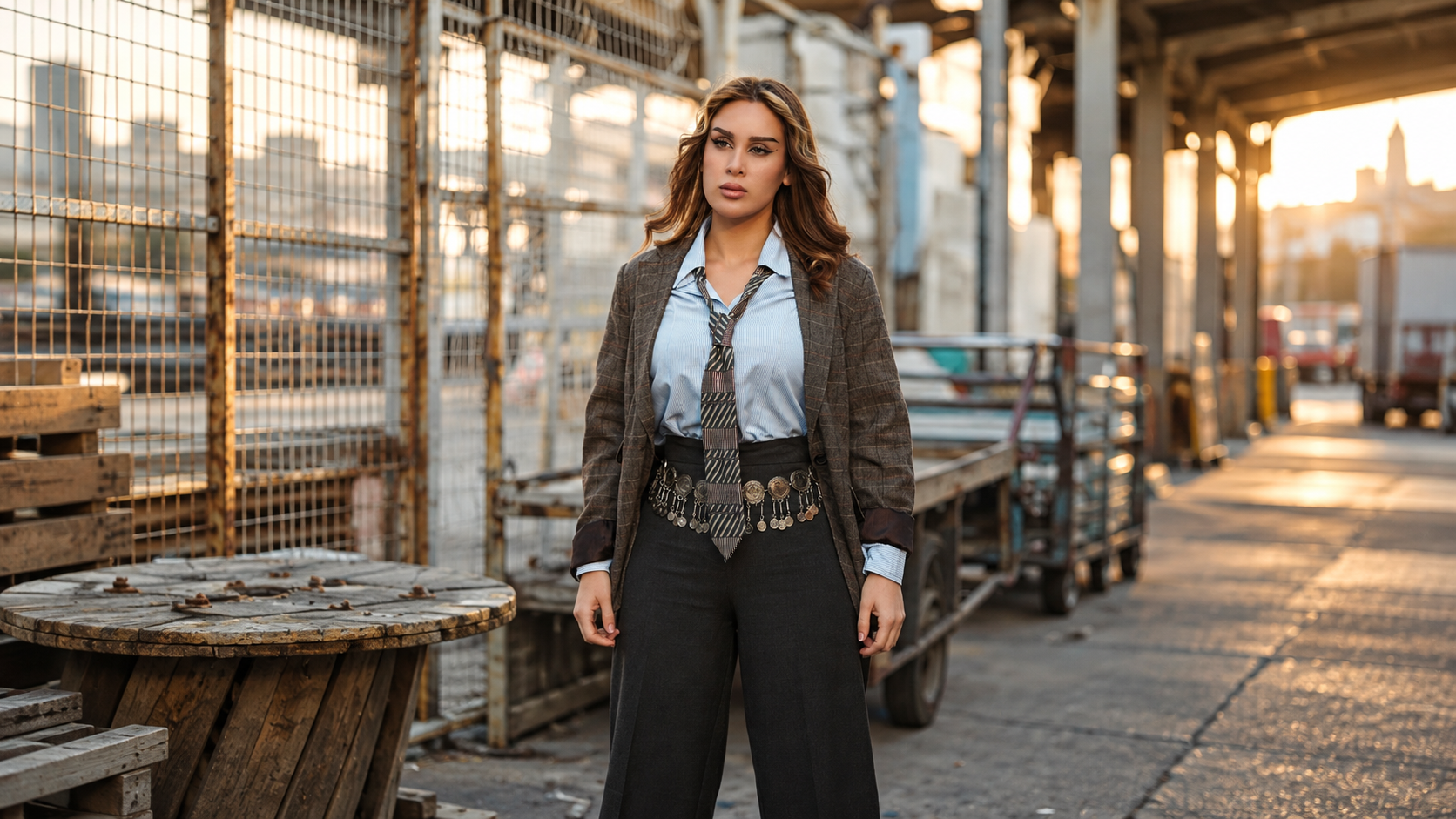
Proportions. After 40, the body often changes even without a noticeable change in weight: the waist may become less defined, and volume may shift in the stomach, bust, or hip area. That is why the old rule “define the waist at all costs” may no longer give the desired effect. Sometimes a longer top works better; sometimes, on the contrary, a cropped blazer with high-rise trousers. It is worth looking at where the main volume sits now and whether the clothing is cutting the figure at its widest point.
Fit. Something that fit well ten years ago may stop working even in the same size. This is especially noticeable with blazers, trousers, and dresses: the piece seems to fasten, but pulls across the bust, gathers at the stomach, or does not sit well across the back. Oversized clothing also requires precision — it should look like intentional volume, not like an attempt to hide the body in a larger size.
Length. After 40, generic advice such as “midi is best” is especially pointless. The same skirt can look heavy with one pair of shoes and great with another. The same goes for trousers: a few centimeters can noticeably change the silhouette. If your usual length suddenly stops looking right, it is worth checking exactly where it ends in relation to the calf, ankle, and shoes.
Shoes. This is where two demands often collide: you want to look current, but you no longer want to suffer through uncomfortable lasts for the sake of the look. Modern fashion has long stopped requiring heels as a mandatory sign of a “put-together” outfit. Loafers, ballet flats, sneakers, flat boots, and stable heels can all be part of a grown-up wardrobe — what matters is the shape and how the shoes relate to the length of the trousers or skirt.
Familiar combinations. After 40, it is often not the item itself that becomes dated, but the outfit that has been styled the same way for years. A blazer with the same blouse, slim trousers with the usual shoes, a dress with the same type of bag — and the whole look is quickly read as belonging to a certain period. Sometimes it is enough to replace just one familiar element, and the piece starts to look completely different.
If you do not like an outfit, you do not necessarily need to look for a replacement right away. It is worth looking at the whole silhouette: where the top ends, whether a random length is cutting the figure in the wrong place, whether there is too much volume at once on both top and bottom, whether one detail is clearly throwing everything off. Very often, the problem turns out to be local.
What to do with trends
Trends still shape how we perceive length, volume, color, shoe shape, and combinations. If collections start featuring more short outerwear, what matters first is the shift in proportion. If a certain color returns, you do not have to buy a coat in it — sometimes knitwear or an accessory is enough. If the shape of shoes changes noticeably, that is worth keeping in mind too, but there is no need to rebuild your entire wardrobe around it.
There is a simple filter: some trends really affect the basic construction of an outfit — silhouette, length, fit. These are useful to at least notice. Others exist mostly as decorative micro-trends and can easily pass you by if they have nothing to do with your wardrobe.
Before buying something new, it is worth asking yourself:
- what will I wear it with tomorrow;
- can I create at least three outfits with it using what I already have;
- does it add new possibilities, or does it require an entire separate mini-capsule.
If a new purchase drags along shoes, a bag, outerwear, and several more pieces, it most likely just does not fit well into your current wardrobe. An unfamiliar silhouette, on the contrary, can sometimes turn out surprisingly well, so wide trousers, an oversized blazer, a short jacket, or a bright color are best tried on first, and only then decide whether they are “you” or not.
When your wardrobe really is worth rethinking
Sometimes styling alone is no longer enough. One common reason is that your figure has changed. Your weight may stay almost the same, while the distribution of volume becomes different. Then the usual rise of your trousers, the length of your blazer, or the shape of your dress starts to look different too. Repeating old purchases just because they once felt foolproof is not always the best strategy.
Another reason is that your lifestyle has changed. A beautiful business wardrobe may still be hanging in the closet even though your work has long since become less formal. Or you may have a lot of “going-out” clothes when what you actually need is comfortable city dressing. Sometimes it is more complicated: you like the pieces individually, but the outfits still look as if they were put together many years ago.
You should think about a full wardrobe review not when you are tired of one skirt or have stopped liking one particular pair of jeans. A more telling situation is when the problem repeats itself: favorite pieces are hard to combine with each other, your usual outfits have stopped feeling good on you, there are plenty of clothes and yet it still feels like there is nothing to wear. At that point, it is no longer about one unsuccessful purchase.
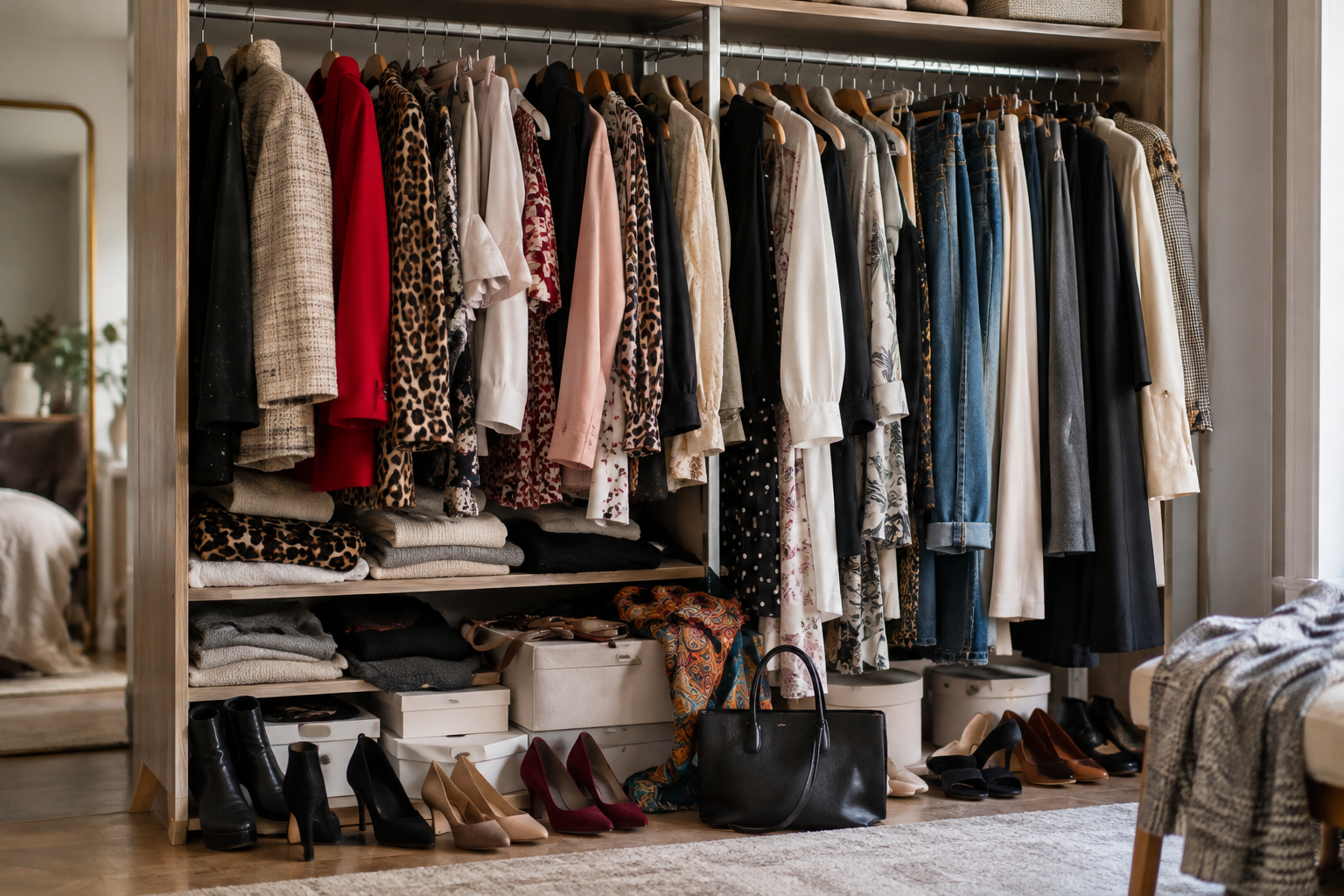
Sometimes it is not about fashion at all. A person starts dressing for an image they believe is “appropriate” for their age. That is how these supposedly foolproof formulas appear: a good coat, a neat blazer, a safe skirt length, a neutral bag. Everything is high-quality and appropriate, yet in the mirror it still feels like someone else.
In practice, a grown-up wardrobe offers more freedom, not less. It is already built, it contains good pieces, clear preferences, and a personal history. From there, the task is entirely practical: figure out what you truly want to wear now, what can be styled differently, and what is staying in the closet only out of habit. And only after that does it make sense to decide how to refresh your wardrobe after 40 without replacing everything.
-lazy-placeholder.webp)
-medium.webp)