






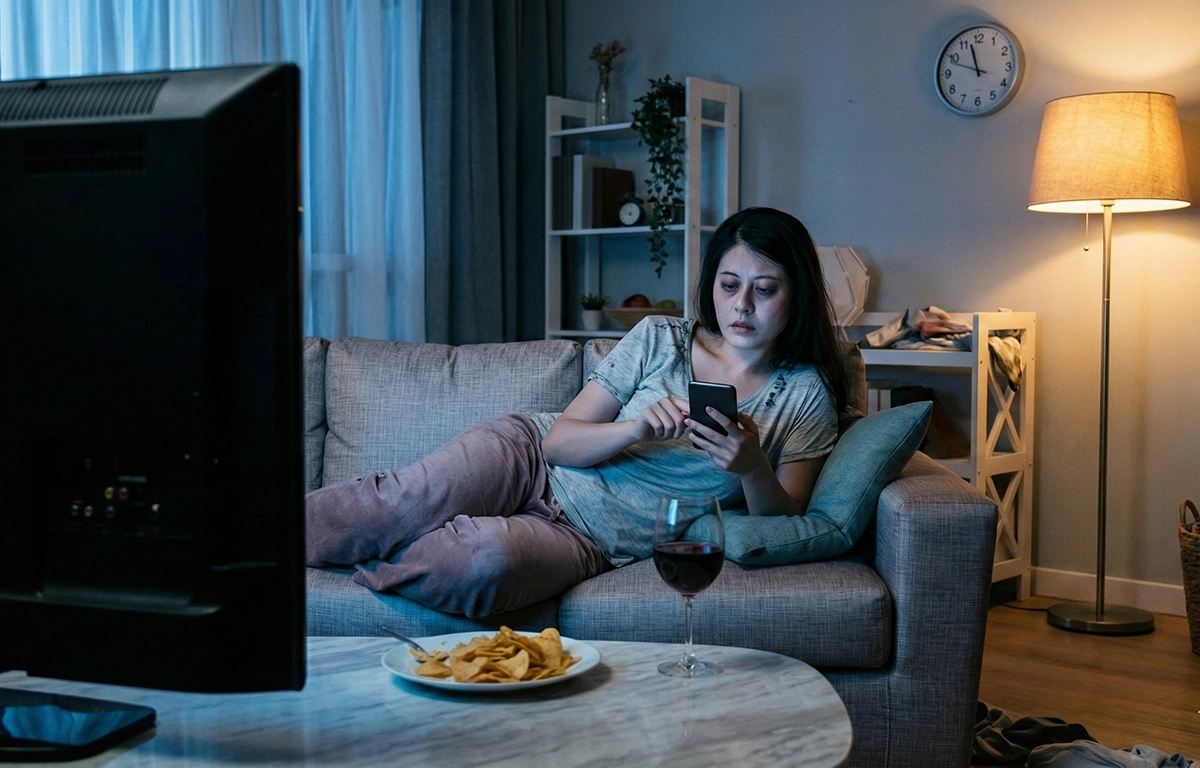
Many people genuinely believe that sleep problems start at night: “I just can’t fall asleep” or “I wake up several times a night.” In reality, sleep is often undermined long before we get into bed. The evening, which should have been a time of recovery, fills up with TV series, news, endless scrolling and “one more thing” to do before sleep.
This article will help you see how exactly evening habits steal deep sleep and what you can change without radical bans. It is part of our larger guide to sleep and the nervous system. In the full guide to sleep and the nervous system we look not only at the evening, but also at the morning, daytime, microsleep, hormones and “quiet fatigue.”
When the evening works against your sleep
For many people, the evening is the only time “for themselves.” This is when you can finally stop replying to work messages, get at least something done around the house, spend time with loved ones or simply “switch off your head” with series or social media. The problem is that this is exactly the time when the brain and nervous system should be slowing down, not getting a new dose of stimulation.
If the day is spent in tension and the evening turns into a marathon of finishing tasks and staring at screens, the body simply does not have time to switch from “survival mode” to “recovery mode.” Sleep becomes shallow and fragmented, mornings feel heavy, and pleasant evening “habits” gradually steal your energy.
In the article “When calm brings no joy: how the brain gets used to stress” we have already written that the brain can get so used to tension that silence starts to feel scary. That is when the evening fills up with background noise – series, news, messages – just to avoid being alone with yourself.
Evening habits that quietly steal your sleep
“Just one more episode” and fast-paced content
Series, shows and videos with dynamic editing are among the most common evening pastimes. It seems like a safe way to relax: you are just lying down and watching. But the brain is actively following the plot, empathising with the characters, tracking unexpected twists, laughing or being frightened.
Each new episode is another dose of emotions and stimulation for the nervous system. And when you tell yourself “just 20 more minutes and then bed,” your body receives a completely different signal: “we are still in the process, it is too early to relax.” As a result, the time of falling asleep shifts and sleep quality gets worse.
Doomscrolling and evening news
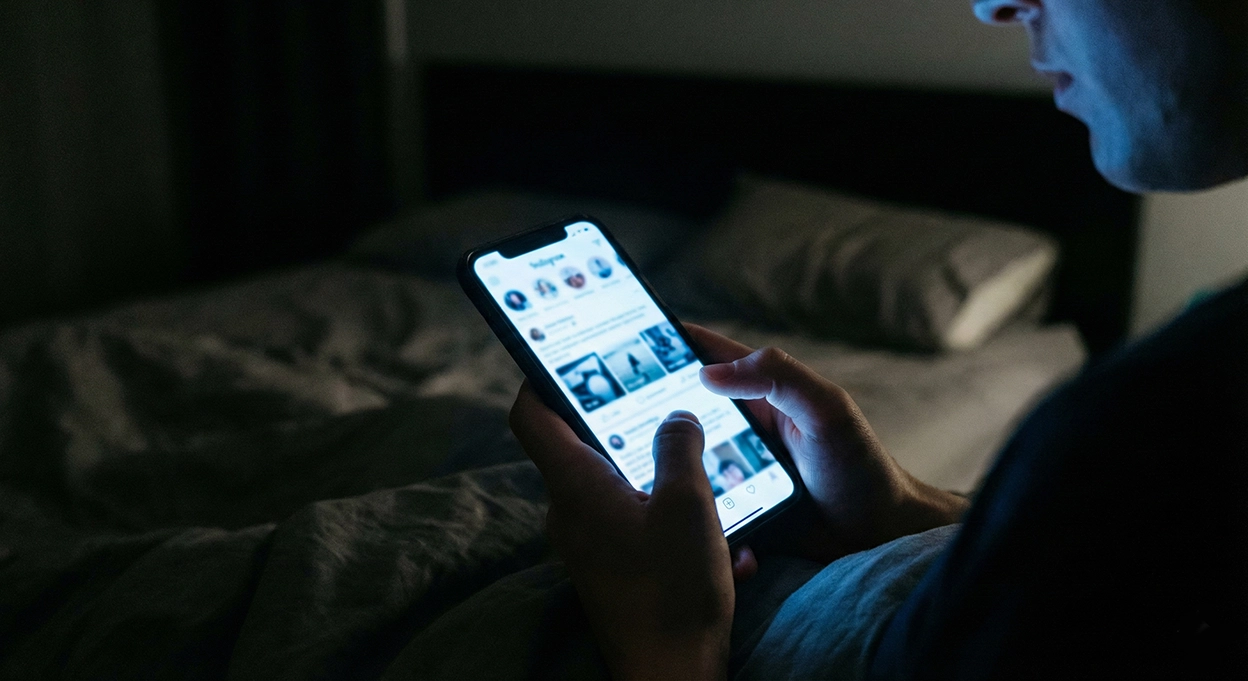
The habit of “quickly checking the feed before bed” seems harmless. But for the nervous system it is a marathon of small triggers: alarming news, other people’s successes, conflict-ridden comments, advertising promises of an “ideal life.” Each of these fragments causes a small emotional reaction – from irritation to fear.
If you end the day not with a quiet routine, but with your social media feed, the brain stays in analysis, comparison and reaction mode until the very last moment. Falling asleep after such an “information shower” is much harder than after a quiet evening without screens.
Alcohol as “help” for falling asleep
Many people notice that if they drink a little alcohol in the evening, it seems easier to fall asleep. In fact, alcohol really can speed up falling asleep, but at the same time it disrupts the structure of sleep, increases the number of night-time awakenings and reduces the depth of restorative phases.
In the morning this leads to feeling “shattered,” a dry mouth, brain fog and the desire for more coffee. And the more often you use alcohol as a “sleeping pill,” the weaker the body’s own ability to calm down without it becomes.
Late meals and “heavy” evening snacks
Another way to “treat yourself” in the evening is to eat late or have a hearty, sweet, fatty snack. At this moment the body receives new work: to digest food instead of starting restorative processes.
If this happens regularly, the body gets used to the idea that late evening is a time of active digestion, not preparation for sleep. A feeling of heaviness in the stomach, heartburn, thirst and night-time awakenings become the new normal.
Why drastic bans almost never work
A logical reaction of someone who is tired of poor sleep is to try to “start a new life on Monday”: completely give up series, social media, sweets, alcohol, go to bed at 22:00 and get up at 6:00. In practice this approach usually lasts a few days and then ends with a breakdown and a feeling of failure.
The reason is that evening habits are not only about “harmful” or “healthy.” They often perform an important emotional function: give a sense of control, compensation, a small reward after a hard day. If you simply take old rituals away and offer nothing in return, the nervous system will cling to them even more.
How to gently change your evening: small steps instead of perfection
Choose 1–2 habits, not your whole life
It is worth starting with an honest inventory: what your evening actually looks like during the week. How much time goes to work, house chores, children, screens, food, “doing nothing.” In the sleep and anxiety diary (which we talk about in the guide) you can spend a few days simply recording what happens from 7 p.m. until you fall asleep.
After that, choose one or two habits that steal sleep the most: for example, news after 10 p.m. and late snacks, or series until one in the morning. Do not try to change everything at once – it is better to make a small but realistic step than a perfect but short-lived leap.
Reduce instead of banning abruptly
If you are used to watching series for two hours every evening, a sudden ban will almost certainly cause protest. Instead, you can try to reduce the time: for example, watch not two episodes but one, or move viewing to an earlier time, leaving 30–40 minutes “without screens” before sleep.
The same goes for social media: instead of swearing you will “never scroll in bed again,” you can make a concrete deal with yourself about a cut-off time – for example, after 10:30 p.m. the phone stays on the charger outside the bedroom.
Create a ritual of transitioning from day to night
One of the most useful decisions is to invent a simple, repeatable transition ritual from work mode to rest mode. It does not have to be perfect or “Instagram-worthy,” the main thing is that body and brain recognise it as a signal: “we have finished the day.”
It could be:
- a warm shower or bath not just as “hygiene,” but as a mark of the end of the day;
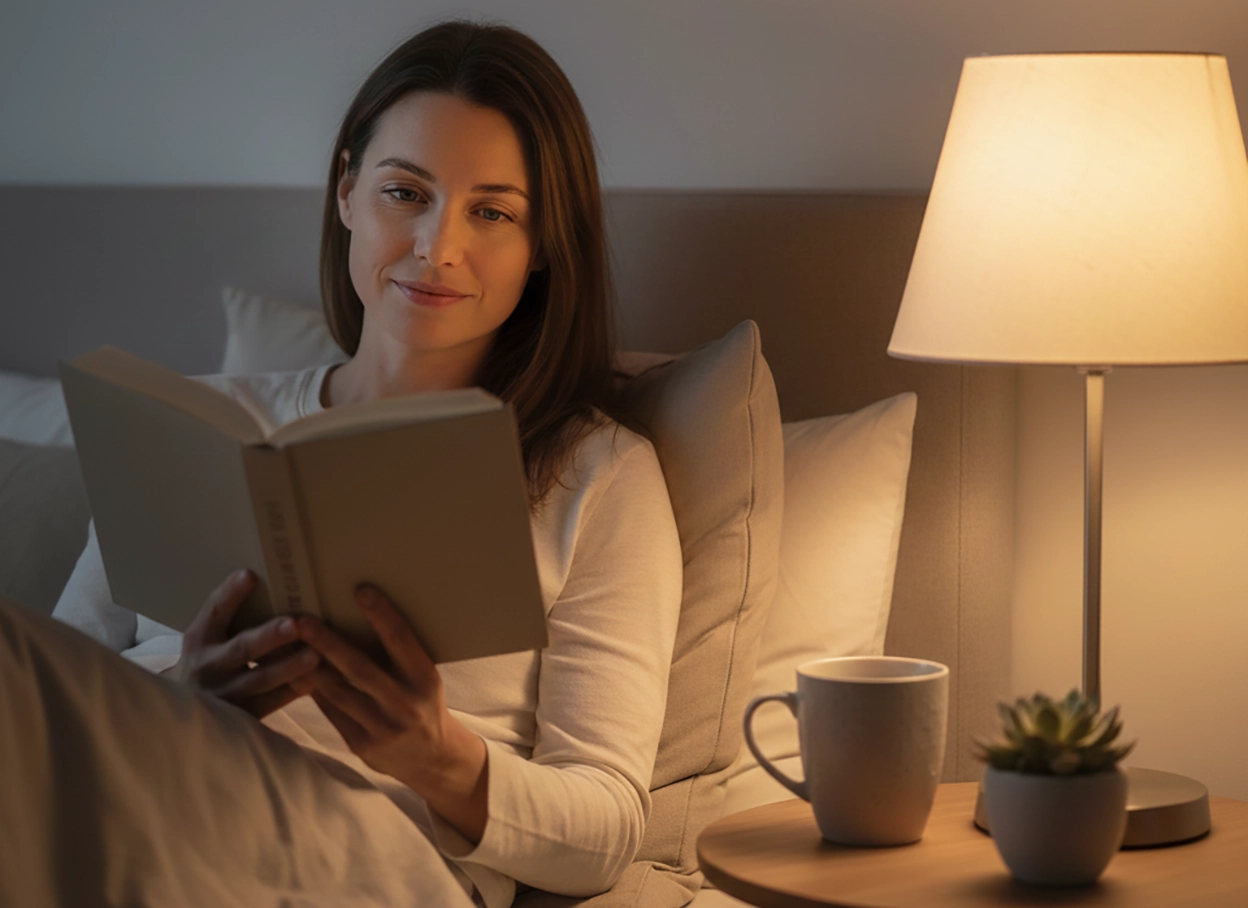
- switching from bright lighting to softer light, turning on a floor lamp or string lights instead of a ceiling light;
- a short stretch, gentle yoga, a few minutes of rolling your back on a mat;
- hugs with a partner, child or pet, a few minutes of self-massage of the feet or neck.
In the article “How much touch the body needs: the neurophysiology of tenderness” we explain in more detail how physical contact helps the nervous system move from “fight or flight” into “I am more or less safe.” You can make such touch part of your evening ritual.
Instead of a screen – hobbies that calm the body
Completely giving up gadgets in the evening is often unrealistic. But you can at least partly replace “noisy” content with activities that soothe the body and give a sense of presence in the moment.
The nervous system is especially helped by hobbies that involve water, rhythmic movement, nature and working with your hands. In the article “The body’s favourite hobbies: how gentle activities reduce stress and restore the nervous system” we have collected concrete examples, from evening walks along water to simple cooking rituals and creative activities at home.
One or two such activities a week can noticeably change how your evening feels: instead of empty scrolling, you get time when the body really rests.
Examples of realistic evening scenarios
To avoid turning the evening into yet another checklist, it is helpful to have several “templates” you can switch between depending on circumstances.
If you work a lot in the evening
- Set a conditional “lid” for work – for example, no later than 9:30 p.m.
- After that, do a short day-closing ritual: write down tasks for tomorrow, tidy your desk, put your laptop to sleep.
- Spend at least 20–30 minutes without screens: a light stretch, a shower, hugs, calm music.
If you have small children
- Accept as reality that your schedule may be far from ideal – and that is okay.
- Try to make something that calms you part of your child’s bedtime ritual: quiet cuddles, a story, talking about the day.
- After the child falls asleep, give yourself at least 10–15 minutes of a “quiet evening” without your phone, even if you go to bed late.
If evening silence makes you anxious
- Remember that the brain can get so used to stress that calm feels suspicious. This is not “your defect,” it is a neuropsychological mechanism.
- Instead of complete silence, try a gentle background: calm music, an audiobook, the sound of rain or the sea.
- Add grounding body practices: a warm blanket, hugs, a hot water bottle, self-massage of the feet.
When it is worth looking more closely at your condition
Sometimes changing evening habits alone is enough for sleep to gradually improve. But there are situations when sleep problems are only one piece of a bigger puzzle.
Take a closer look at your condition if:
- you wake up exhausted even after a full night’s sleep;
- daytime sleepiness follows you every day and it is hard to concentrate on basic tasks;
- activities you used to enjoy no longer bring pleasure;
- you experience strong panic attacks or a sense of hopelessness.
In the article “Quiet fatigue: how the female body responds to constant stress and why simple rest no longer helps” we talk in more detail about the state in which the body no longer recovers even after weekends and holidays. In such cases evening rituals are important, but on their own they do not replace professional help.
Where to start this evening
You do not need to rewrite your whole evening at once. Choose one thing you are really ready to change today: putting your phone away 30 minutes earlier, not reading the news after a certain time, adding a short shower or stretch before bed, asking for a hug or giving yourself a foot massage.
Each such small step is a signal to the nervous system: “our evenings are becoming safer.” Together with the other elements we talk about in the full guide to sleep and the nervous system, this can gradually bring back the feeling that the night truly restores you, instead of just “pushing today’s fatigue into tomorrow.”