






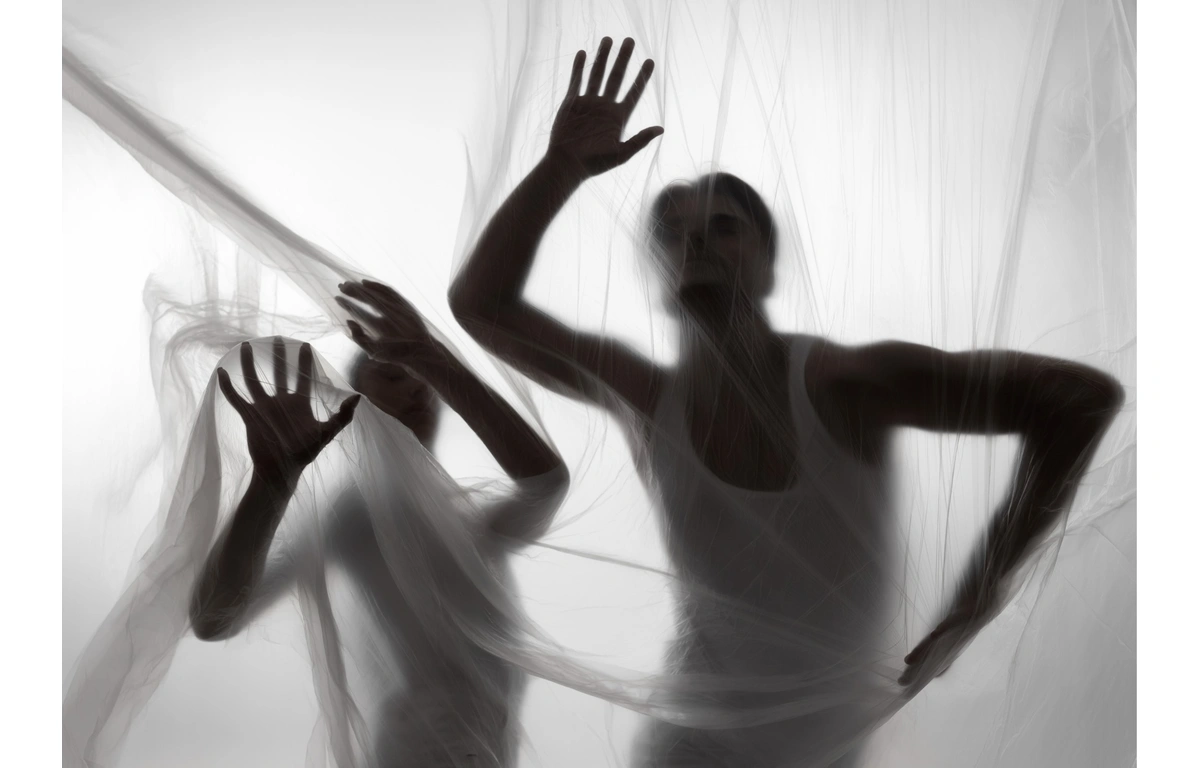
There is a moment when the silhouette of clothing outlines the body. It does not restrict — it frames. The brain understands faster than we do: here is where “I” end, and the world begins. Form stops being merely aesthetic and becomes a way to support attention, stability, and inner presence.
We have already explored the sensory dimension of clothing in “What the body feels in clothes: the sensory and postural nature of style” and touched on tactility in Soft and structured textures: how tactility shapes emotional stability. This time we move further — into form. Into silhouettes that interact with the nervous system as deeply as fabrics and textures, subtly shaping how we perceive our own boundaries throughout the day.
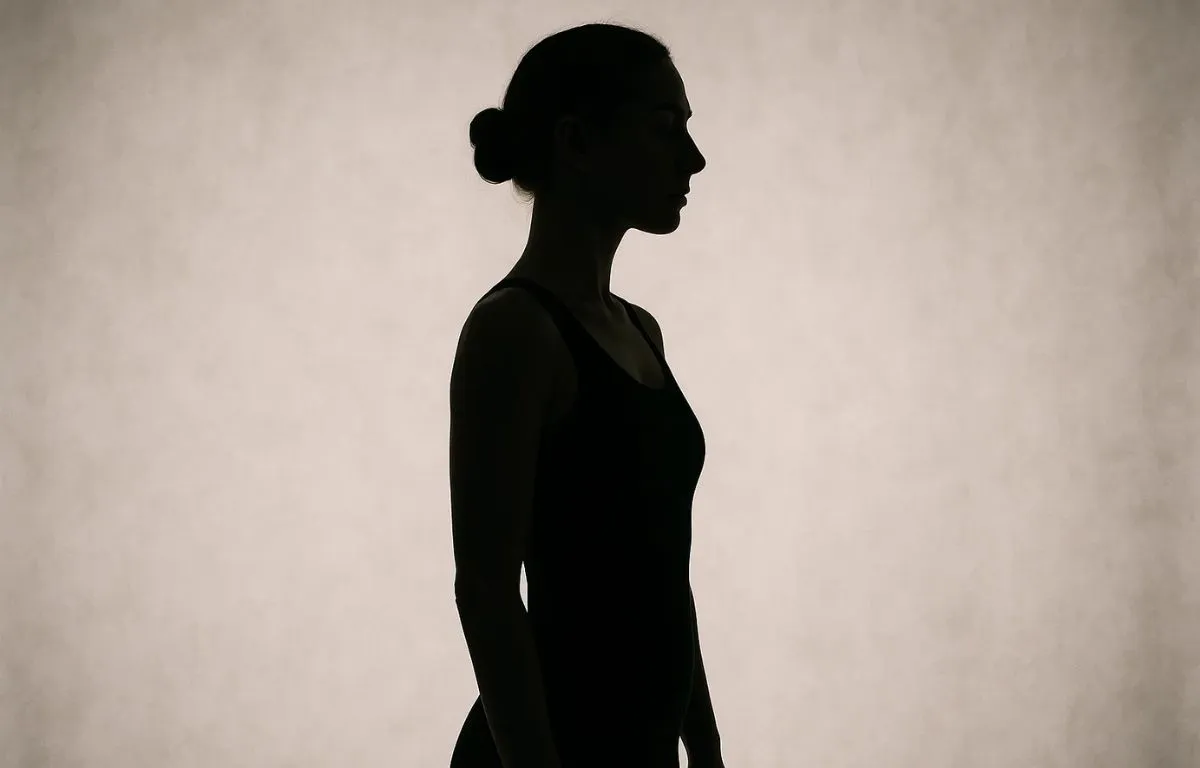
Body boundaries as a language of the nervous system
The body continuously tracks its own limits: through proprioception (signals from muscles and joints), through the slight pressure of fabric on the shoulders, waist, or hips, through the way clothing shifts as we walk. Even when we are not conscious of it, the sensorimotor cortex constantly updates the “body map.” The silhouette is one of the clearest cues for this map. When clothing has a defined form, the nervous system receives a precise outline of where the body ends and space begins. When the silhouette is diffuse, the body must “fill in the boundaries” itself — which requires additional attentional energy.
Imagine a fitted blazer with a marked shoulder line and clean fronts. Even if the fabric is soft, the construction creates a sense of verticality and clarity. Now imagine an oversized hoodie that moves with every step. In the first case, the body feels centered within the form; in the second, more expanded, less defined. For some, this is relief; for others, a loss of coherence. The reaction depends on nervous-system sensitivity, fatigue, and context.
People with high anxiety or sensory sensitivity often gravitate toward silhouettes that offer noticeable but non-aggressive structure — a “frame” that helps them orient internally. In moments of creative exploration or rest, many naturally choose forms with looser boundaries, allowing the line between body and space to soften.
Silhouette as a tool of attention
Form affects not only how we feel in the body, but also how attention works. Tailored, elongated silhouettes that emphasize verticality tend to “collect” focus along the spine. The nervous system receives a cue: we are in task-oriented mode. This is especially noticeable on days filled with negotiations, studying, or presentations — many choose such shapes intuitively.
Voluminous silhouettes with dropped shoulders, soft edges, and mobile fabric work differently. They expand the sense of surrounding space, reduce tension, and allow attention to move more freely: observing, noticing, imagining. Such shapes support associative thinking, planning, and daydreaming — but make tight focus harder to sustain.
The prefrontal cortex, responsible for attentional control, is highly sensitive to visual framing. When clothing creates a clear silhouette, the brain receives an additional “boundary” that helps filter noise: fewer distractions, easier return to the task. A fluid silhouette with no defined form makes attention itself more fluid — sometimes helpful, sometimes not.
Soft structure and firm structure: two models of bodily safety
Soft structure appears when form exists but does not press. A cardigan with a clean front line but no rigid shoulders; a robe-style coat that wraps but does not restrict. Such silhouettes create an “embrace of form”: fabric that gently holds the body, providing perceptible yet flexible support. For the nervous system, this signals safety — boundaries present but not rigid. These are the shapes in which conversation, decision-making, and emotional processing often feel easier.
Firm structure — a blazer with a defined shoulder, a jacket with architectural seams, a coat with sculpted lines — activates a different mode. The body enters a more “directed” form, where every movement feels more precise. This can add confidence when role clarity is needed: a presentation, a negotiation, a moment requiring defined boundaries. But if firm structure dominates daily life without softness to balance it, the nervous system may fatigue from chronic “mobilization.”
Balance matters. A wardrobe of only soft forms may lack a sense of coherence; a wardrobe of only firm forms may disconnect us from the body, keeping us in a constant social posture without space to restore.
When silhouette shapes the boundary between “self” and world
Clothing always communicates distance — even when unintended. A structured silhouette with a closed neckline, long sleeves, and minimal fabric movement conveys protection but also inaccessibility. The world stops at the shoulder line. This can be essential in environments where we do not feel safe, or where professional clarity is required.
Oversized shapes, semi-transparent textiles, wide sleeves, or deep necklines open the boundary instead. For some, this is freedom: the body breathes, the shoulders feel space, the skin receives more sensory cues from air and light. For others — vulnerability, especially when the nervous system is overstimulated or the day promises heavy social load.
Highly sensitive people feel this particularly strongly. On days when external stimulation is overwhelming, they instinctively choose silhouettes that more clearly outline the body — internal distance becomes easier to maintain. On calmer days, when connection and softness are desired, they allow themselves more open forms — a form of regulation rather than mere “wardrobe mood.”
Morning silhouette ritual: how form sets the day
Morning is a transitional moment — the body has not yet fully entered the role of the day. Here, the silhouette can become an instrument rather than a default choice. Before opening the wardrobe, it helps to briefly scan inward: What is my state right now? Is there fatigue, anxiety, dispersion, or overstimulation? Do I want visibility today, or is it safer to remain in softer shadows?
- What is my current state — focused, scattered, exhausted, calm?
- What does my body need: structure, framing, softness, or space?
- What rhythm lies ahead — social, intense, creative, quiet?
If the day is packed with events, decisions, or interaction, a silhouette with a clear vertical — a blazer, a structured dress, a coat with a defined shoulder — can serve as bodily support. If deep focus is required at the computer, shapes that do not disperse visually work best: minimal movement of fabric, a stable contour around the torso.
On days meant for creativity, caregiving, or slow domestic tasks, softer silhouettes allow the nervous system to lower its tone without losing presence. A straight-cut dress in soft fabric, loose trousers, or an unrestrictive sweater may function as regulation. The key is that the body reads the form as safe.
A simple morning ritual may help: choose a silhouette, put it on, stand before a mirror, and focus not on the image but on sensation. How does the fabric rest on the shoulders? How does the abdomen respond? Does breath deepen? If the form supports breathing rather than constricting it, it is the right one.
Evening silhouettes: how the body retrieves its boundaries
Evening requires another mode — release of form. Even if the day was spent in soft silhouettes, the fact of social presence, decisions, and contact leaves traces in the nervous system. Changing silhouette becomes a signal: “the day is complete.”
For some, this means taking off a structured blazer and putting on a soft cardigan or hoodie. For others — replacing fitted jeans with loose trousers, loosening the waistband, letting the diaphragm regain space. These simple actions help the body reestablish natural boundaries: not those required by daily roles but those native to personal rhythm.
A small ritual can enhance this: slowly removing the garment that structured the day, feeling its weight, running fingers along the seam or fabric edge — a brief farewell to the external form that served its function. Then, putting on an evening silhouette — rounder, softer, with fewer angular lines. For the brain, this is a clear message: tension may fall; attention may widen; the body may rest.
Seasonal silhouettes: how form shifts with inner rhythm
Seasonal transitions are not only changes in weather — they shift the body's rhythms and the way we perceive our boundaries. In colder months, we gravitate toward layered, dense silhouettes that act as an external “shell” for the nervous system. In summer, forms open and lighten — affecting not only thermoregulation, but also vulnerability, freedom, and sensory openness.
Silhouettes intersect with themes explored in “Seasons and motion: how the body shifts with environmental rhythms” , as well as in Soft and structured textures: how tactility shapes emotional stability” and “Autumn textures and slowing down. Form becomes part of our seasonal cycle — a bodily microsystem constantly adapting to the world.
The first cool mornings, when we reach for a coat, signal the nervous system: support now comes from both inside and outside. The first warm days after winter, when we expose ankles or wrists, shift boundary perception again: the world comes closer, the skin receives more cues, and the brain moves into a different mode.
Conclusion: silhouette as a way to reclaim the shape of the day
The silhouette is not merely a contour in a picture — it is the working geometry of our day. It offers the body a frame for stability, helps the brain reduce noise, and allows the nervous system to sense boundaries — soft or defined, depending on what we need.
We do not have to analyze every garment through neuroscience. It is enough to notice how the body feels in one form versus another. On which days we want more structure, and on which — more space. Then clothing ceases to be only expression and becomes support: a way to regain the shape of the day — one in which we can be present, coherent, and alive.
Sources
- Abraira, V. E., & Ginty, D. D. “The sensory neurons of touch.” Neuron. URL: https://doi.org/10.1016/j.neuron.2013.07.051
- Grandin, T. “Calming effects of deep touch pressure.” Journal of Child and Adolescent Psychopharmacology. URL: https://www.liebertpub.com/doi/10.1089/cap.1992.2.63
- Kamalha, E., Zeng, Y., Mwasiagi, J., & Kyatuheire, S. “The comfort dimension: A review of perception in clothing.” Journal of Sensory Studies. URL: https://onlinelibrary.wiley.com/doi/10.1111/joss.12070
- Tadesse, M. G., Loghin, C., et al. “Comfort evaluation of wearable functional textiles.” URL: https://pubmed.ncbi.nlm.nih.gov/34771993/