






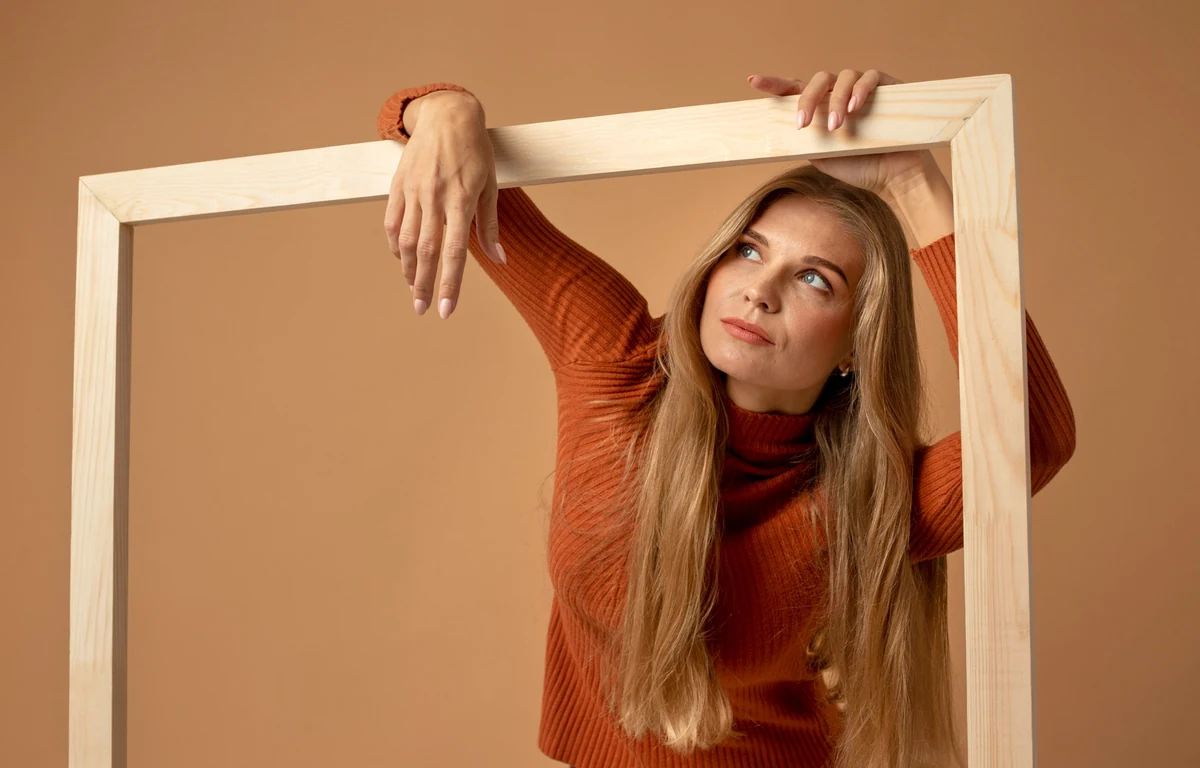
Is it possible to grow and feel alive without turning development into yet another job - and how to understand where to start for you.
Sometimes it looks very mundane: you open notes with goals - and you want to close the phone. You seem to "know what you need," but the body does not pick it up. In such moments, it is important not to tighten the requirements but to change the logic.
Self-realization is often sold as acceleration: more goals, more discipline, more results. But the nervous system reads it differently: as a signal that you need to "hold on" again. In this place, desire does not blossom - it shrinks. And then a person seems to do the right things, but inside it becomes empty: less energy, higher sensitivity, and the sense of meaning does not increase.
There is another subtle marker: when development turns into control, you start "measuring yourself" more often than feeling. And then even good decisions do not bring relief.
This article is about a different logic. About self-realization that does not accelerate but gathers. It does not strip you with demands but returns internal support: through the body, rhythm, infrastructure of small changes, and honest criteria for success. If you are now at a point where it seems "something needs to change," but resources are scarce, start with a short text on how to regain desire when there is fatigue inside, so as not to pressure yourself at a moment when pressure only worsens.
And one more thing: self-realization does not have to be a "big project." Often it starts with a small return to yourself - to what truly suits you.
Why Self-Realization Sometimes Exhausts, Although It Should Inspire
It is not the development itself that exhausts, but its form. When self-realization becomes proof of one's own value, the brain switches to threat mode: mistakes become dangerous, pauses - "lost time," and any stop - a reason for internal criticism. On the physiological level, it often resembles a background where the sympathetic nervous system is more active than necessary: sleep is worse, tension in the body lasts longer, recovery shortens. In simple words - you seem to be constantly "on duty," even when there is objectively nothing urgent to save.
From the outside, it may look "normal": you go to work, respond, do things. And inside there is a feeling as if the pedal is constantly pressed in the body. And it is this that consumes resources faster than any tasks.
There is another trap - confusing motivation with dopamine "push." Dopamine works well for a start, but it is not about stability. When self-realization is based only on stimulation, over time, stronger triggers are needed: deadlines, external approval, fear of "not making it." At some point, the body begins to protest - and this is not laziness, but a signal of system overload.
Here it is important to hear yourself honestly: if you "can" only on adrenaline, it is not about strength of character. It is about the system lacking support.
Support 1. The Body as a Compass: How to Distinguish Growth from Overstrain
The simplest way to understand - "is it mine or not" - is not with the head, but with the body after you have done something. If the path is yours, it usually leaves two feelings: it becomes clearer and warmer inside.
-
Clearer - when thoughts seem to be arranged on shelves, and there is less noise in the head.
-
Warmer - when the body does not tense, does not "clench into a fist," but on the contrary: breathes more freely, wants to move further without coercion.
Sometimes these are very small things: you exercised for 10 minutes - and suddenly noticed that your shoulders dropped on their own. Or you took a step - and you do not want to "gnaw" yourself with thoughts that it is not enough. There is no internal blow - there is a calm "okay, I am in the process."
You can check even more simply. After any step, ask yourself:
-
Did it become a little easier inside?
-
Is there a readiness to repeat it tomorrow, at least in a mini-version?
If at least one question is answered "yes" - the direction is likely resourceful. If both are "no" - this does not mean something is wrong with you. More often, it means the form does not fit or the pace is too high.
Support 2. Hobbies as a Resource, Not Another "Useful Task"
Hobbies are one of the softest forms of self-realization because they return the feeling of "I can" without betting on the result. But it works only when it does not turn into a project with KPIs. A successful hobby does not require the focus "like at work," but on the contrary - gives the brain a different mode: more play, mistakes without shame, learning without threat.
Here, permission is often needed: a hobby does not have to be useful, monetized, or "smart." Its task is to return you to contact with life.
If you want to choose a hobby not by fashion, but by bodily logic, check out the selection of most pleasant hobbies for the body - it shows well that "pleasant" is sometimes more important than "prestigious." And if you feel that growing up has taken away the right to learn and try, it is useful to reread how adults grow in hobbies - there is a lot about the normality of slow progress.
What is "pleasant" for you may look very simple: slow walking without a goal, clay, music, cooking, plants, reading, repairing small things. And this is not "too little." This is exactly the level from which the nervous system allows you to start moving.
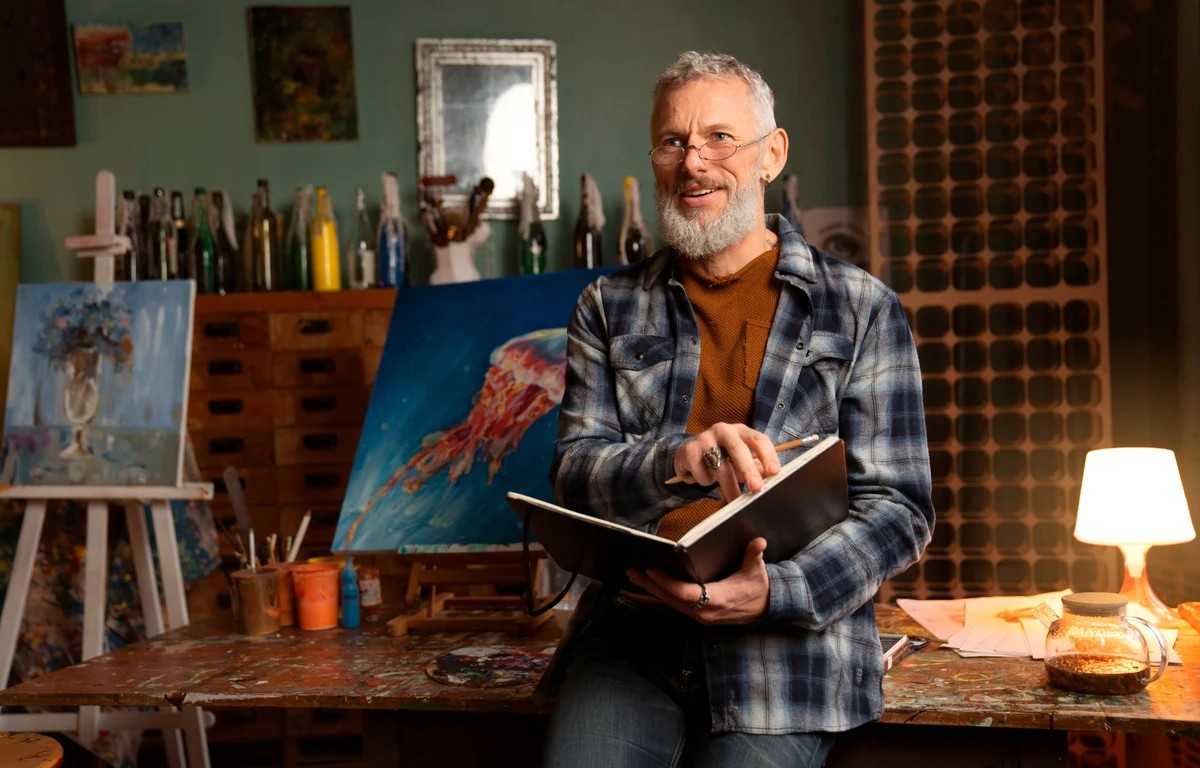
An important detail: a hobby as a resource is not only what you do, but also how you allow yourself to do it. When you choose "a little, but regularly" instead of "perfectly, but rarely," the nervous system begins to trust the process. This is often where the feeling of self-realization begins: with the return of the right to live, imperfect, but yours.
Sometimes the best sign is when you do not want a "reward" in the form of scrolling or sweets after a hobby. Because you have already received what you were looking for: a change of mode.
Support 3. Infrastructure of Change: Why Motivation Does Not Hold Without It
People often overestimate willpower and underestimate the environment. But the brain is arranged this way: it is easier for it to repeat what is already "set up" - in time, space, and sequence. The infrastructure of change is not about a rigid regime, but about convenient supports: when you have a place, time, and a minimal scenario for the action to occur without internal struggle.
For example: if the tool for a hobby is far away, the step requires extra decisions. If "time for yourself" has no place in the calendar, it always loses to the urgent. Small supports sometimes solve more than inspiration.
A well-working approach is detailed in the text about the power of habit and small actions. It contains an important thought: small steps are not "too small," they are the only ones that consistently pass through real life, where there is fatigue, children, work, unpredictability, and a nervous system that does not always want heroism.
And this is a key shift in focus: you do not "break yourself," you set up the system so that it is easier for you to be yourself.
Support 4. Success Criteria That Do Not Destroy from Within
Old success criteria often sound like this: "I am good if I am effective." But effectiveness without internal consent gives a strange result: as if everything works out, but you do not want to live. Self-realization without overload requires different criteria - those that support the nervous system, not compete with it.
Sometimes it sounds unexpectedly simple: "I manage to live" - also a criterion. "I do not lose myself when I move" - also a criterion. This is not about weakness, this is about duration.
One of the most accurate shifts is reorienting from "how my success looks" to "how I feel in it." This is well revealed in the material inner beauty as a new form of success - it is about why internal parameters (stability, clarity, dignity, ability to recover) are often a more honest currency than external attributes.
When criteria become humane, you stop "proving" and start building. These are very different feelings in the body.
Where to Start If Resources Are Low
When resources are low, the best start is without conflict with the body. Not "take yourself in hand," but create conditions where you can not betray yourself. Here is a soft sequence for 7 days that usually does not provoke internal resistance:
One important condition: if any day is disrupted, it is not a failure and not a "loss of discipline." It is information about your real rhythm. The task is not to punish yourself, but to adjust the step so that it becomes possible again.
- Day 1: choose one action for 2-5 minutes after which you feel a little easier (not "more useful," but easier).
- Day 2: tie it to an existing point (after coffee, after a shower, before bed).
- Day 3: make it even simpler than you want - so there is no heroism.
- Day 4: add a "start signal" (one song, one page, one tool in a visible place).
- Day 5: write down one phrase: "after this step I felt..." - without evaluations.
- Day 6: repeat, but with the condition "at 60%" - learn not to give your all.
- Day 7: decide whether you are ready to continue for another week - or what should be changed.
This plan is not about "pumping up," but about returning manageability. When steps are small, you do not spend resources on fighting yourself - you spend them on life.
If you prefer structured support, it is useful to have examples of micro-habits that take root - they show how to make changes "within life," not on top of life.
How to Choose a Direction for Self-Realization After 30, So It Truly Nourishes
After 30, the choice often becomes more complicated: we already know what we can do, and that is why we are afraid to make a mistake. Plus, life fatigue is added - not dramatic, but accumulated. Here it is important not to look for the "perfect thing," but to look for "live contact": what causes a feeling of internal movement without tension.
Sometimes "live contact" sounds quiet. Not like euphoria, but like interest that does not disappear after the first attempt. Like the thought "I want to try this again?" even if it did not turn out perfectly.
This is very practically helped by the text how to choose a hobby after 30 - it is about how to approach the choice without self-deception and without the pressure of "having to find your own." In the context of self-realization, this is important: sometimes "your own" is not one big path, but several small ones that together make life more yours.
And one more criterion that is rarely voiced: the direction should be compatible with your life, not require a "new life" to start.
Final: The Formula for Self-Realization Without Overload
Try to remember a simple formula. Self-realization without overload is when your development simultaneously meets three conditions:
In short: your growth should be such that you can live in it. Not survive, not prove, but live.
- The body does not protest - after steps you have more stability, not more tension.
- There is infrastructure - the action occurs thanks to supports, not thanks to "effort of character."
- Success criteria are humane - they support your dignity and ability to recover.
In this logic, self-realization ceases to be a chase and becomes a process of gathering oneself. Not quickly, but truly.
And this is already enough to start.
Sources
-
Ryan, R. M., Deci, E. L. (2000). Self-determination theory and the facilitation of intrinsic motivation, social development, and well-being. American Psychologist.
-
Lally, P., van Jaarsveld, C. H. M., Potts, H. W. W., Wardle, J. (2010). How are habits formed: Modelling habit formation in the real world. European Journal of Social Psychology.
-
Gollwitzer, P. M. (1999). Implementation intentions: Strong effects of simple plans. American Psychologist.
-
McEwen, B. S. (1998). Stress, adaptation, and disease: Allostasis and allostatic load. Annals of the New York Academy of Sciences.
-
World Health Organization. (2019). Burn-out an “occupational phenomenon”: International Classification of Diseases.
-
Medic, G., Wille, M., Hemels, M. E. H. (2017). Short- and long-term health consequences of sleep disruption. Nature and Science of Sleep.