






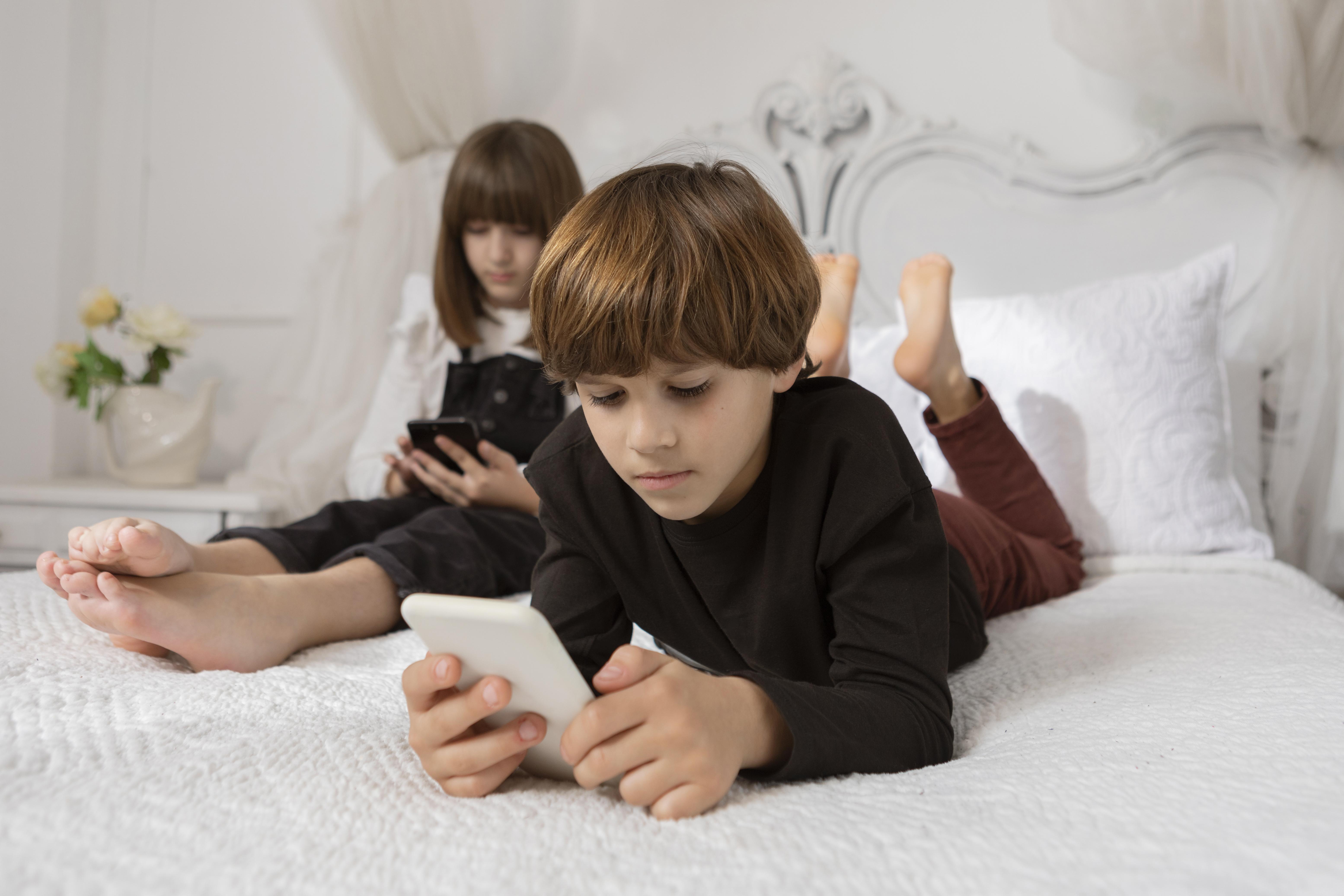
It's important not only how much time a child spends in front of a screen, but also what role the screen plays in their day—whether it supports, fills a pause, or has already begun to replace what should gradually emerge in real life.
In discussions about children and gadgets, adults often seek a single number that explains everything. How much is acceptable? When is it too much? When should we start worrying? This desire is understandable: numbers provide reassurance by giving a sense of control. However, in real life, two identical hours of screen time can mean entirely different things. For one child, it might be a calm family movie on a weekend, a shared viewing, and a gentle end to the day. For another, it could be an endless stream of short stimuli, making it difficult to stop, return to their body, endure silence, and even hear themselves.
Therefore, it's more useful to ask a different question: not just how much, but why. A screen in a child's day can be a tool, a bridge, a break, sometimes even a way to briefly exhale. But it can also gradually start to replace several important functions at once: soothing, contact, boredom, internal interest initiation. In such cases, the problem is not the hours themselves, but that the screen occupies too much space in the child's system.
This is especially important to remember if there is a feeling at home that the child not only loves the screen but clings to it as the most reliable support. In such cases, it's worth looking not at "willpower" or "indulgence," but at the nervous system, daily rhythm, fatigue, and what the screen has started to compensate for. We have already discussed part of this background in the material about how to reduce overstimulation: screens, light, sleep, and attention. Here, we will narrow the focus and look more closely: when the screen truly helps, and when it subtly replaces life.
Not Every Screen is a Problem
It's important to start with honesty: the screen itself is not an automatic enemy of development. What matters is not just the medium, but the content, the way it's used, its place in the routine, and whether there is a live adult presence nearby. A video call with a loved one, watching something calm together, a short screen episode as part of a predictable ritual—this is one reality. Auto-play, endless changes of stimuli, background noise that fills the house for half the day, or the screen as a universal answer to any discomfort—quite another.
This is why in some families, the screen remains just a tool for a long time, while in others, it quietly becomes the central regulator of the day. Not because parents are "raising their children wrong," but because fatigue, the pace of life, overload, lack of support, and short live transitions often push the family towards the quickest solution. The screen works quickly. It quickly captures attention, quickly switches, quickly dulls boredom, quickly gives the adult a pause. That's why it's so easy to place it at the center of the system, even if no one intended to.
Why Hours Alone Aren't Enough
Numbers are useful as a guideline, especially for young children. But if you focus only on them, you might miss the main point. A child can spend relatively little time with a screen and still be deeply dependent on it as a means of self-regulation. Conversely, sometimes screen time itself doesn't seem alarming, but it's integrated into the day in a way that doesn't disrupt sleep, contact, and interest.
A good question sounds like this: what happens before the screen, during it, and after? Is it a short, understandable, and limited episode after which the child can return to other activities? Or is it a zone where everything falls—fatigue, irritation, loneliness, an unfilled pause, unwillingness to wait, boredom, difficulty transitioning? This is where the function of the screen becomes visible.
Age is also important. What an older child can already handle as a transition, a younger one may perceive as a loss of support. The nervous system matures unevenly, and the "norm" of endurance to pauses, boundaries, waiting, or switching is not the same for a three-year-old, a six-year-old, and a ten-year-old. We have written more about this in the material child's age and nervous system: why "norm" varies. Therefore, it's always better to evaluate the screen not abstractly, but in a specific age, specific pace, and specific family day.
Marker 1. The Screen Has Become the Main Way to Calm Down
The first strong marker is when the screen stops being one of the options and becomes the main or almost the only way to relieve tension. The child is tired—needs a screen. Upset—screen. Needs to wait for something—screen. Awkward, empty, noisy, unclear, sad—again screen. This doesn't mean the family is doing something "wrong." It means the screen has started to function as a quick external regulator.
The problem here is not moral but physiological. When the same tool too often takes on the role of calming, the nervous system trains less to go through short states of tension differently: through voice, body, rhythm, closeness, predictable transition, simple hand action, change of environment. As a result, the boundary between "I'm bored," "I'm having a hard time," "I need to calm down," and "give me the screen" becomes almost invisible.
It's important not to be afraid of the fact itself. In many families, the screen indeed temporarily becomes a quick fix. The concern is not a one-time episode but a pattern where the child almost stops knowing other ways to enter calm. If tension sharply increases without the screen, and with it everything seems to "fall into place," it's not just a habit to content. It's a hint that the function of calming has been outsourced.

Marker 2. It's Hard to Return to Contact and the Body After Screen Time
The second marker is visible not so much during viewing as after it. The child finds it hard to stop, hard to hear an address, hard to transition to eating, washing, getting ready, traveling, sleeping, or even just talking. They seem not to be here yet. Eyes, attention, body, mood—all take some time to catch up with reality. For an adult, this often looks like stubbornness or "not listening on purpose." In reality, it's often a transition problem.
That's why it's so important not to abruptly tear the child away from the screen, as if flipping a switch. If every time after viewing there is a small crash, it's worth looking at the bridge between the two states. We have separately analyzed this in the text why it's hard to stop after the screen: a bridge in 2 minutes. Sometimes the problem is not in the screen itself, but in the fact that the system falls every time from a bright, fast, predictably pleasant environment straight into demand, haste, and frustration.
If after the screen the child consistently finds it harder than before, it's a sign that the screen not only takes up time but also changes the threshold for entering the next action. That is, it already affects not just the schedule, but the very way of transitioning between states. This is one of the most important moments when it's worth evaluating not "how many minutes," but "at what cost for the rest of the day."
Marker 3. The Screen Takes Away the Pause from Which Interest Arises
Not all boredom is harmful. In a child's life, there is a special interval that adults often want to fill immediately: the game hasn't started yet, the idea hasn't arisen yet, there's no impulse yet on what to do. From the outside, it looks like emptiness, whim, wandering, "I don't know what to do." But very often, it's in this undefined pause that internal interest is born—if it's not cut too quickly by a stimulus.
When every such pause is automatically closed by a screen, the child less often reaches the moment of self-initiation. Not because they are "lazy" or "spoiled," but because the external stimulus comes before the internal one can form. Thus, gradually, the screen begins to replace not only entertainment but also the very mechanism of interest creation.
This is one of the most subtle forms of balance shift. It seems that the child just loves cartoons or videos. In reality, they encounter the quiet pause less and less, where something of their own could arise: a game plot, conversation, movement, building, inventing, even normal short boredom without immediate rescue. That's why the topic of boredom is not as simple as it seems, and we will highlight it separately in the material How to Restore Interest Without Constant Entertainment: Boredom as a Resource (and How to Endure It)
Marker 4. Real Life Starts Losing by Default
The fourth marker is when the screen not only appeals but becomes the "default" option that almost always wins over other forms of life. Not because the child is uninterested in principle. But because live activities require more entry: waiting, inventing, negotiating, enduring a small difficulty, not getting an instant result. In this sense, the screen often provides too easy a start and too quick a reward.
It's important to notice not only direct refusals of other activities but also quieter signals. For example, a book, conversation, construction, walk, drawing, or even a joint game become possible only after long persuasion. Or the child agrees but seems without internal engagement and quickly deflates. Or real life constantly requires a "sweetener"—a screen before, after, or alongside.
In such moments, it's worth being attentive because it's not just about a media habit. The screen begins to rewrite the very economy of interest in a child's day: what is considered bright enough, fast enough, easy enough to want to start at all.
Marker 5. Boundaries Are Perceived Not as Rules, but as a Loss of Support
The fifth marker is the reaction to limitations. Of course, children are not obliged to calmly love any boundaries. Discontent, bargaining, requests for "a little more" are not a drama in themselves. But when ending screen time is regularly experienced as a small collapse—with sharp affect, disorganization, a feeling as if the last support was taken away—it's already an important signal.
In such a reaction, it's often not just about "not getting what they want." It's the sharp loss of what held together a tired, overloaded, or emotionally unstable system. That's why for some children, the boundary on screen time sounds not like a usual rule, but as if being thrown out of a state where it was at least a bit easier. And if you only see the behavior, you might start fighting the symptom without touching the cause.
What to Do Without Abrupt Withdrawal
The worst thing you can do in such a situation is try to win solely by force of prohibition. Yes, sometimes boundaries are necessary. But if the screen has already taken on the functions of calming, transitioning, or filling internal emptiness, simple withdrawal rarely restores balance. It more likely exposes the problem.
A different logic works: first understand what exactly the screen is doing for the child now, and then gradually withdraw this function from its monopoly. If the screen calms—new short routes to calm are needed, not lectures. If it helps endure a pause—it's necessary to gently restore the tolerance of a quiet interval. If it closes the difficulty of transitions—build softer bridges between states. If it holds interest where real life seems too "slow"—then it's necessary to change not only prohibitions but also the very structure of the day.
Usually, not a global reform helps, but a few specific supports:
- do not use the screen as a universal answer to any discomfort;
- know in advance where in the day the screen is truly needed, and where it just automatically fills a void;
- make transitions to and from the screen softer and more predictable;
- maintain live unchanging zones without the screen—meals, short contact, part of the evening, moments of travel or waiting, where the child can still endure reality not through stimulus, but through presence and rhythm;
- do not confuse protest at the boundary with a "spoiled character" if the system is already tired and clings to a familiar way of self-regulation.
The paradox is that a child often finds it easier not when the screen disappears completely, but when it stops being the center of everything. When other small but repetitive paths appear: how to calm down, how to transition, how to endure a pause, how to wait, how to withstand an imperfect moment without immediate digital "rescue."
When to Look Beyond the Gadget
Sometimes adults try to reduce screen time, but nothing changes. This is also an important clue. Perhaps the reason is not only in the gadget itself. Very often, behind "screen" tension lies a combination of factors: lack of sleep, an overloaded evening, too much background, frequent switches, few predictable rituals, too long demands without pauses, too complex transitions for a specific age.
If you only look at the device, you might miss that the screen has simply become the most visible place where the general fatigue of the system manifests. Therefore, in this topic, it's almost always useful to think more broadly. Not "how to remove the gadget," but "why it has become so necessary." Not "why the child clings to it," but "what is currently lacking in their nervous system outside the screen."
That's when the conversation about screens stops being a war over minutes and becomes a conversation about balance. About whether there is still room in the day for the body, gaze, boredom, recovery, slow entry into play, live contact, and sleep. And whether one very convenient tool has not begun to quietly take all this at once.
The screen doesn't always destroy. Sometimes it truly helps. But the moment it starts to replace calming, contact, and interest, it's worth noticing early—not for rigidity, but for restoring a more live support. Not from a position of control over every minute, but from a position of attentiveness to how the child enters the day, endures a pause, transitions between states, and returns to real life after a bright digital environment.
Sources
- American Academy of Pediatrics. Screen Time Guidelines. Updated 2025.
- Canadian Paediatric Society. Digital media: Promoting healthy screen use in school-aged children and adolescents. Reaffirmed 2025.
- Canadian Paediatric Society. Screen time and young children: Promoting health and development in a digital world.
- World Health Organization. Guidelines on physical activity, sedentary behaviour and sleep for children under 5 years of age. 2019.