






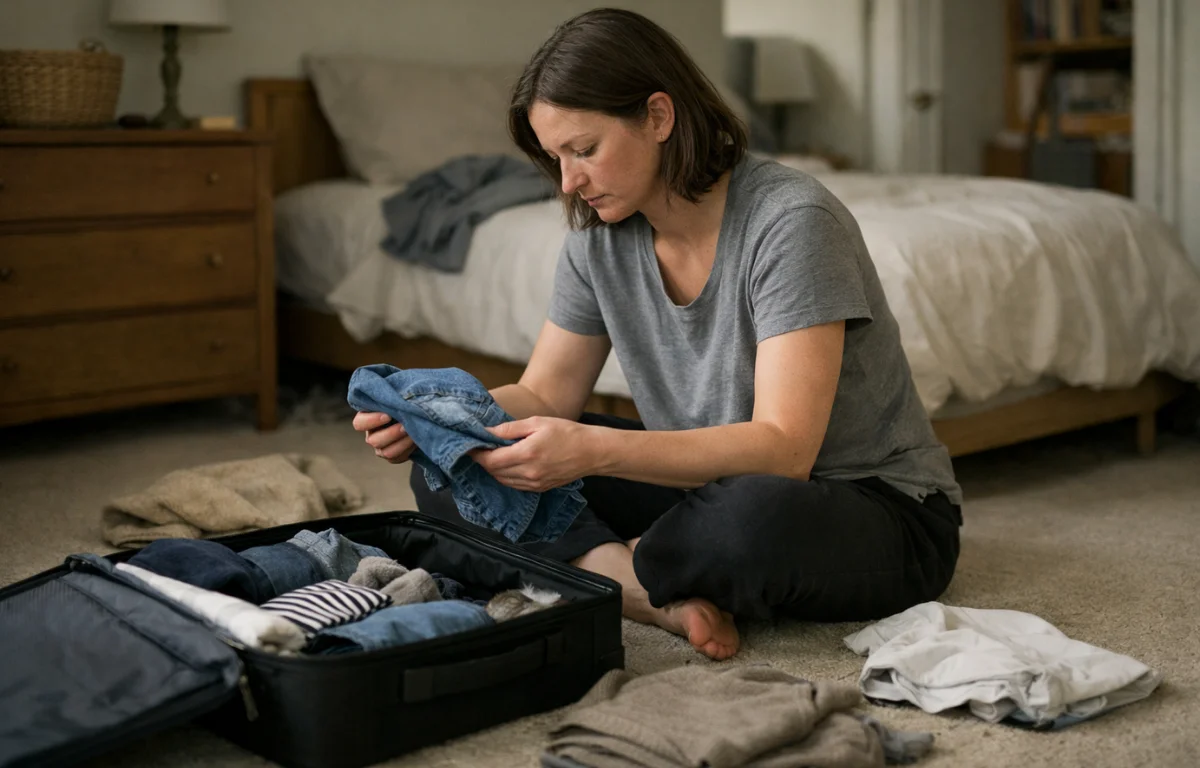
Every journey has a phase that never appears in photos and rarely enters conversations about the trip. It is the phase after stimulation: a moment when impressions have already ended, the rhythm of returning has not yet arrived, and the body keeps quietly working through whatever it has taken in. There are no “events” here — only process: slow, nervous, not fully emotional, and almost always bodily. This is integration.
Delayed pleasure and delayed fatigue
The body seldom reacts to events in real time. Emotions may arrive faster, but pleasure and fatigue are often delayed. Neuroscientists describe this as delayed pleasure and delayed fatigue.
Delayed pleasure is when the true “richness” of an experience plays out only after the trip has ended. One may feel uplifted not at the moment of culmination (the last evening, the best view), but a day or two later — when the nervous system finally completes the processing of stimuli and allows itself to feel pleasure without needing to “stay ready” for the next step.
Delayed fatigue works in the opposite direction: the body holds through intensity, and tiredness arrives only after returning or during a sudden pause. This is not an “aftertaste” — it is the completion of stimulation, when the organism can finally repay its debts to the nervous system and shift into a different level of arousal. Many people say “I got tired only after I came back” — not as a sign of weakness, but as an adaptive strategy.
In practice, delayed pleasure emerges as a soft emotional lift after traveling — the desire to tell stories once already home, a newly formed tenderness toward details, or a light aesthetic receptivity to the world.
Delayed fatigue emerges as a sudden need for quiet, a shortage of social resources, unexpected sleepiness, the feeling of “I just want to be,” or a delayed loss of tempo. Together they form a wave in which the body still remembers movement but already asks for completion.
Sensory echoes: how long the body carries a journey that has ended
After traveling, sensory echoes remain — tiny shifts often invisible to others yet easy to feel within oneself. They appear in the pace of walking, in voice intonations, in how one puts objects down, looks at others, holds pauses in conversation, rests the eyes on the horizon, or chooses food.
Some taste markers may linger for days: the saltiness of the sea, the bitterness of coffee, the acidity of white wine, spices that felt ordinary on the trip and suddenly “don’t fit” at home. This is not about preference — it is about sensory tone that has not yet returned to its default settings.
Behavioral details shift as well: some become more social, others more selective; some seek closeness, others distance. None of this is about personality — it is the residual motion of travel within the nervous system.
After stimulation, the body stands before a choice: continue stimulation or close the event.
Continuation is an attempt to “play out” movement. Hence the wish to meet, talk, plan, buy something new, share impressions quickly, or scroll through photos. This is not nostalgia — it is dopamine-seeking, generously supplied by travel.
Closure is quieter: more sleep, more water, more inward attention, fewer words, and the desire to pull everything back into oneself. Both modes are natural — simply different strategies of the nervous system.
Redistributing attention
During integration, the nervous system performs what can be called a redistribution of attention. It shifts energy from the external to the internal; from events to the self; from novelty to default reality.
One may “feel nothing,” yet suddenly want silence. Or water. Or a calm walk. Or to read. This return is not emotional — it is physiological. Here lies the difference between “we traveled and came back” and “we traveled and changed.” The latter is not dramatic — it is about subtle corrections to baseline settings.
Environment as filter
During a trip, environment is director. After a trip, environment becomes filter. Climate, water, sun, shade, humidity, wind, architecture, even noise — all possess their own rhythm, and it permeates the body faster than culture.
In the text where the skin breathes and finds calm we described how environment influences the body’s tone. After traveling, this influence does not vanish — it shifts form: the new climate exits the system slowly, as if completing the event.
Hence why returning from the sea, the mountains, or very dry cities always carries an environmental aftertaste: the body still lives in water or wind even when already elsewhere.
Before experience becomes memory
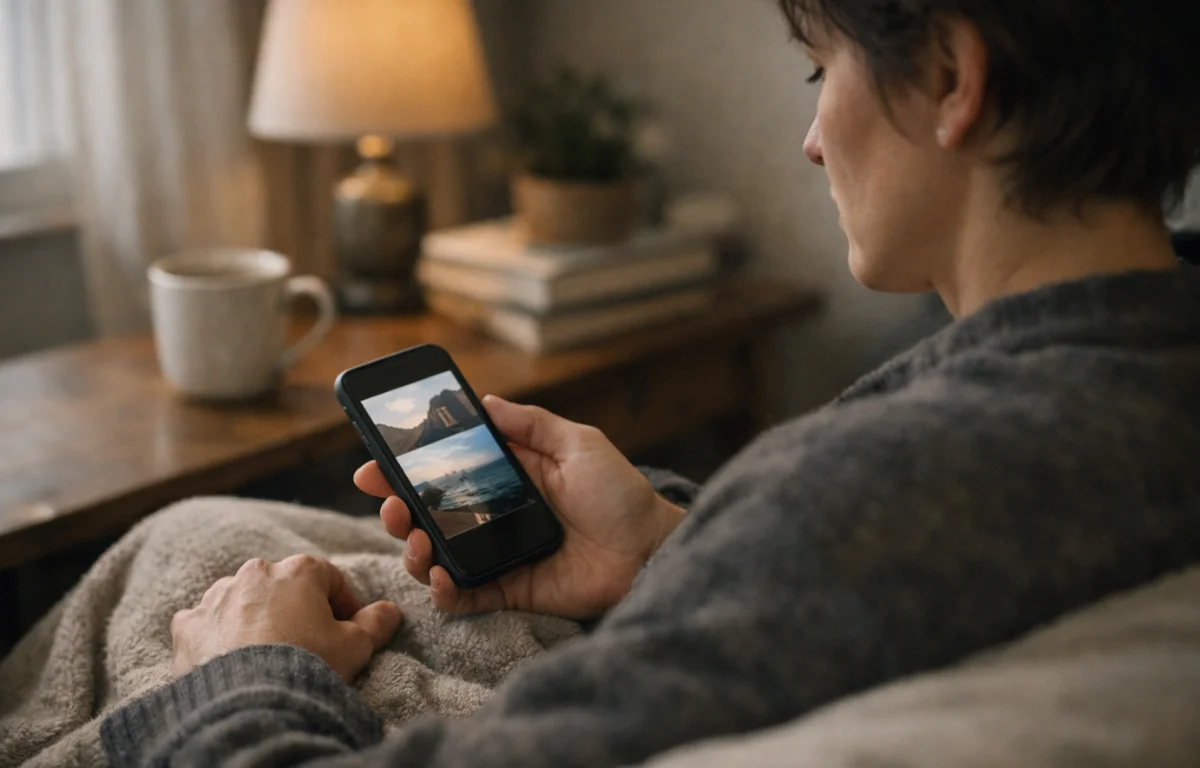
Before returning to one’s usual rhythm, a brief emptiness appears. Not emotional, not dramatic, not sad. Silence. The nervous system removes excess, like clearing a table after dinner before placing new things down.
Sometimes this emptiness is the finest pleasure of travel — not motion, not brightness, but the moment when everything stops and concludes inside.
Micropauses — tiny stops for a bodily reboot appear within this silence as second-long slips in tempo: looking at water, holding the breath, massaging the neck without thinking, wanting fresh air, a tree, or simply watching people.
These pauses are not a practice. They are a spontaneous neural mechanism allowing the body to release residual tension and return to itself without a break and without loss.
Integration ends when travel ceases to be stimulation and becomes memory. Not bright, not touristic, not narrative — but bodily. It remains in the way we move, in the rhythm of the day, in the taste of water, tolerance to noise, warmth, and in how we look at our own space.
Only then can the body return home — not to geography, but to its own rhythms.
Sources:
- Barrett, Lisa Feldman. How Emotions Are Made: The Secret Life of the Brain. Houghton Mifflin Harcourt, 2017.
- Porges, Stephen W. Polyvagal Theory: Neurophysiological Foundations of Emotions, Attachment, Communication, and Self-regulation. W.W. Norton & Company, 2011.
- Sapolsky, Robert. Why Zebras Don’t Get Ulcers: Stress, Health, and Coping. Henry Holt, 2004.
- Huberman, Andrew. “Novelty, Dopamine and the Motivational Cycle.” Huberman Lab Podcast, 2022.
- Kaplan, R., & Kaplan, S. The Experience of Nature: A Psychological Perspective. Cambridge University Press, 1989.