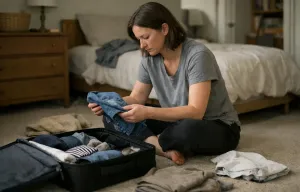






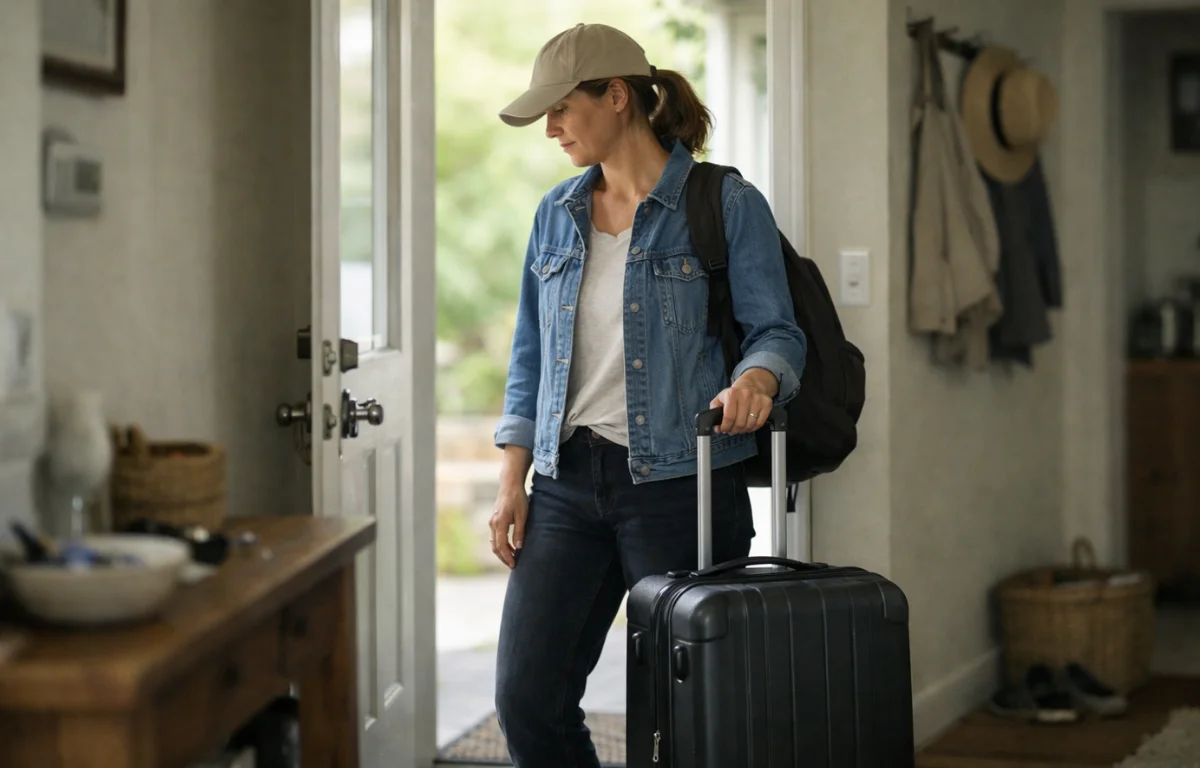
Returning from a trip happens in two tempos. The external one is fast: we pick up the keys, take off our shoes, put things away. The internal one is slower and quieter, when the body still holds the rhythm of the place it has just been in: different sounds, different colours, a different gait, a different daily calendar. This internal tempo does not return to the domestic one immediately — it is still negotiating with novelty.
Travel rarely exhausts — more often it increases the density of stimuli. Geography changes, routes change, language, smells, surfaces, food, sleep, social distances and the speed of exchanging glances. The body does not process this linearly — it processes it in parallel. And parallelism needs integration after, not during events. In the material “Travel as a state shift” we described this mechanism.
Micropauses as post-travel regulation
For the body, novelty is not a story or an emotion. It is a signal of environmental change. When the environment changes, the brain updates three maps at once: the map of space, the map of events, and the map of time. If they change synchronously, short phases of regulation — micropauses — are needed.
Micropauses are not rest. They are a way for the autonomic nervous system (ANS) to balance external signals and internal processes. External signals are vision, hearing, smell, skin, vestibular input. Internal signals are pulse, breathing, thermoregulation, hormones, attention, sleep. While travelling, the external works quickly; the internal works more slowly. This is overstimulation — not “too much”, but an asymmetry of tempo.
The ANS does not block signals, it doses them. This is called sensory gating — a mechanism that gives the brain a chance to sequence events instead of losing them in the noise of novelty. It is in micropauses that this gating works most delicately.
How the body feels it and how it looks in life
On the level of the body: attention becomes more precise, vision searches for “anchor objects”, the skin senses temperature and texture more clearly, breathing briefly pauses, muscle tone decreases, eyes hold on familiar objects a little longer.
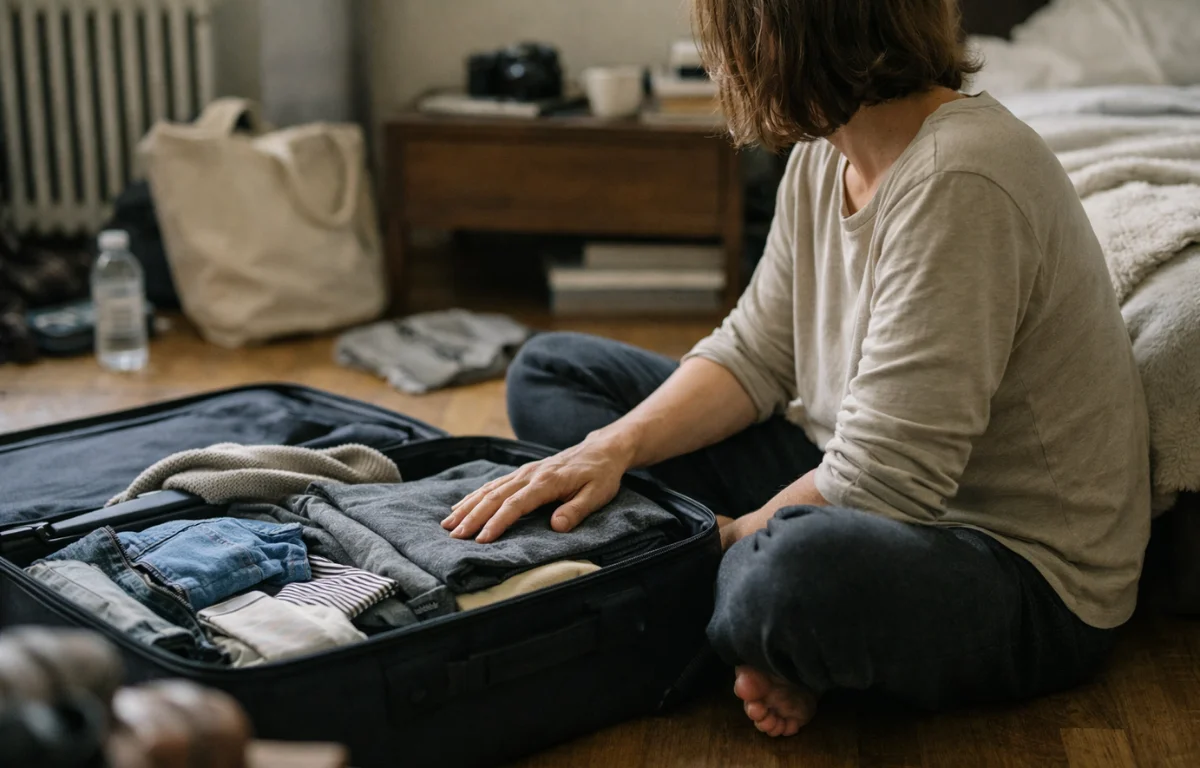
In life: people stand by the window longer than needed, cannot immediately tell “how it was”, postpone unpacking, sit in the kitchen without their phone, look at the room as if seeing it for the first time.
Integrating novelty, silence and the return of rhythm
Circadian rhythms react to travel through changes in predictability. It is not only about time zones. Sleep shifts, meals shift, activity shifts. For the body, knowing when to do certain things matters — that is the biology of rhythms. Travel gives something else — variability.
The neurochemistry of novelty works through orientation, not reward. Dopamine here is not “about motivation” but about scanning the environment. Cortisol mobilises resource, melatonin calibrates time, serotonin restores sensitivity to comfort. This is not stress and not euphoria — this is navigation after a shift in context.
Silence after travel stops being the absence of events — it becomes a medium of integration. In the material “Sensory detox: when the mind hears silence” we discussed the moment when the brain begins to hear silence as a stimulus.
The body does not return home immediately. First returns sensory navigation, then attention, and only then — tempo. In the material “Recovery vs stimulation” we described the difference between environments that stimulate and environments that return rhythm. Travel stimulates, the bedroom restores, and micropauses are the bridge between them.
What the body does in micropauses
In micropauses the body simultaneously:
- reduces the amplitude of sensory input;
- shifts part of attention inward;
- levels tone and coordination;
- synchronises maps of space, events and time;
- converts novelty into familiarity;
- forms its own tempo.
Externally this looks insignificant. Internally — it is the integration of excess.
After travel, the body does not return to the old rhythm — it forms a new one, expanded by experience and novelty. Micropauses do not bring back “as it was”, they help form “how it is now”, without overload and without losing interest.
Sources:
- Jet lag. In: Wikipedia — encyclopedia overview of chronobiology and circadian rhythm disruption.
- Ma, Z. et al. Circadian misalignment and its physiological consequences after travel: neuroendocrine and behavioral perspectives. JCI Insight, 2022.
- Patil, P. et al. Unraveling the impact of travel on circadian rhythm and crafting optimal management approaches: a systematic review. Cureus Journal, 2024.
- Entrainment (chronobiology). In: Wikipedia — overview of biological clock synchronization.
- Guo, C. et al. Neural and physiological markers of circadian entrainment and adjustment after environmental change. JCI Insight, 2020.