






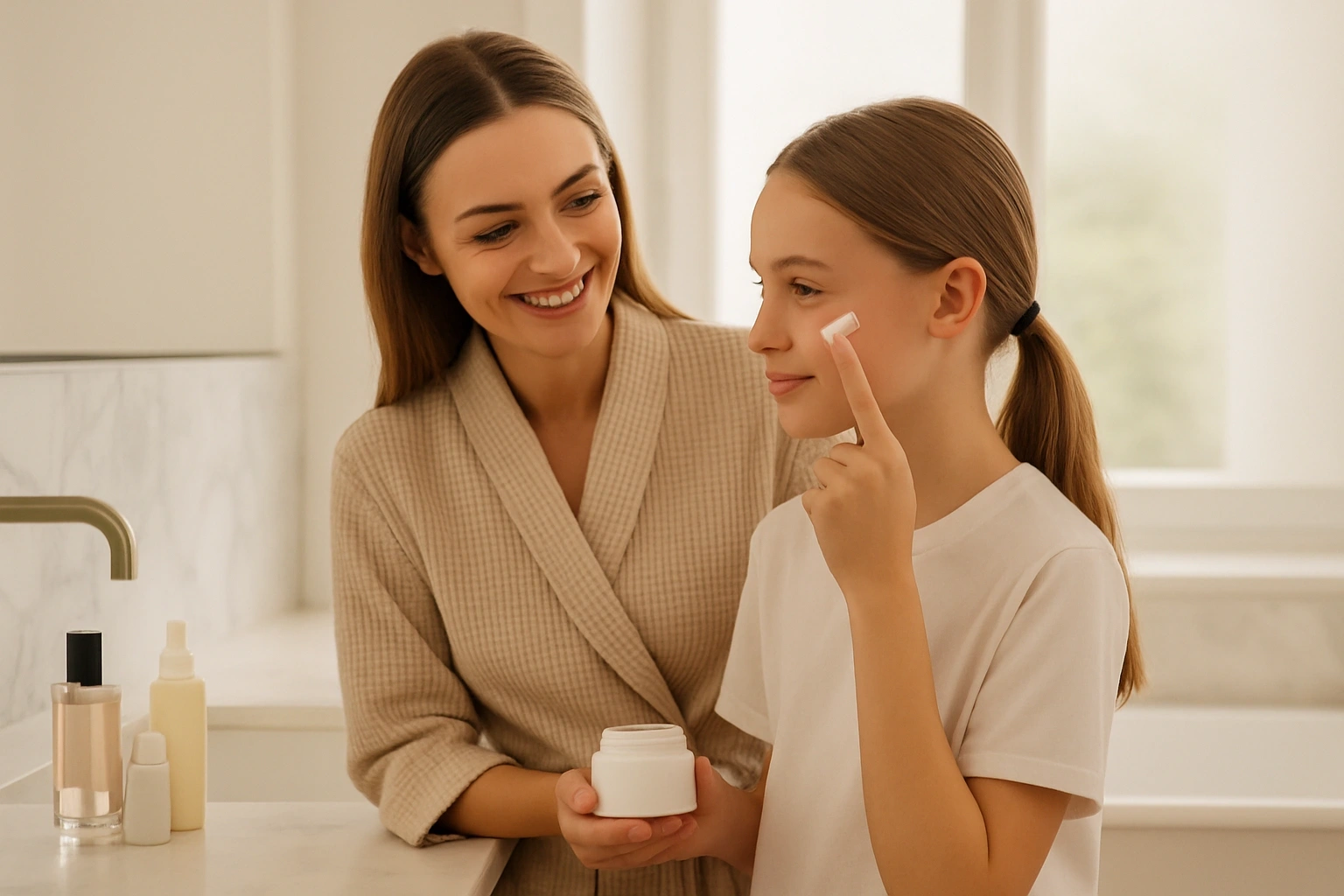
Mala ogledala nikad ne lažu. Djeca promatraju kako nanosimo kremu, češljamo kosu, stavljamo ruž — i neprimjetno usvajaju glavno pravilo: briga o sebi nije hirovitost, već oblik poštovanja vlastitog tijela. No u eri društvenih mreža i milijuna “beauty haulova”, to pravilo traži novo tumačenje. Generacije Z i Alfa zanimaju se za kozmetiku već s 8–10 godina — zato je roditeljima važno da ne šute, već da objasne: njega može biti sigurna, svjesna i primjerena dobi.
Kad dijete počne zanimati kozmetika
Prvi interes za kreme ili sjajila obično se pojavljuje u dobi od 5–7 godina, kad se razvija ponašanje oponašanja. Ne treba zabranjivati — bolje je stvoriti okruženje u kojem su eksperimenti = učenje. Objasnite da je koža živ organ, najveći u našem tijelu (oko 2 m² kod odrasle osobe), koji obavlja zaštitnu, termoregulacijsku i imunološku funkciju.
Znanstveno: u dječjoj dobi rožnati sloj epidermisa tanji je za oko 30% nego kod odraslih; zato gubitak vlage nastupa brže, a reakcija na aktivne tvari je intenzivnija.
- nježno čišćenje bez sulfata;
- lagano hidratiziranje s ceramidima ili pantenolom;
- SPF 50 u sunčanom razdoblju ako dijete provodi mnogo vremena vani.
Znanstveni aspekti njege tinejdžerske kože
U adolescenciji (otprilike 11–17 godina) koža prolazi kroz značajne hormonske promjene. Povećava se razina androgena — to stimulira lojne žlijezde i pojavu akni. Odatle masni sjaj, proširene pore, upale i miteseri.
Optimalna tinejdžerska rutina
- Čišćenje (2 puta dnevno). Birajte gelove ili pjene s cinkom PCA, bifidobakterijama, azelaičnom kiselinom (u niskim koncentracijama do 5%) ili salicilatom betulina. Nemojte koristiti sapun — mijenja pH i oštećuje lipidnu barijeru.
- Toniranje bez alkohola. Tinejdžerskoj koži potreban je blagi balans, a ne agresivno “odmašćivanje”. Dobro djeluju niacinamid, ekstrakti zelenog čaja i fermentirani sastojci.
- Hidratacija. Čak i masna koža treba vlagu: tražite formule s hijaluronskom kiselinom, alojom, ceramidima i skvalanom.
- Zaštita. SPF 30–50 je obavezan, čak i zimi. Plavi ekrani uređaja također emitiraju HEV svjetlo koje ubrzava oksidativni stres.
- Lokalna njega. Za pojedinačne upale mogu se koristiti preparati s cinkom ili sumporom, ali samo nakon savjetovanja s dermatologom.
Što je strogo zabranjeno
- Retinol, AHA / BHA kiseline > 5%, pilinzi — mogu poremetiti rast stanica i izazvati preosjetljivost.
- Korištenje kozmetike za odrasle — formule sadrže previše aktivne tvari za dječju kožu.
- Piling s abrazivnim česticama — mehanički oštećuju kožu i potiču lučenje sebuma.
- Dijeljenje kozmetike — povećava rizik od bakterijskih infekcija.
- Čuvanje preparata u kupaonici — vlaga i toplina potiču rast mikroorganizama.
Kako pravilno organizirati čuvanje dječje kozmetike
- Odredite posebnu policu ili kutiju s jasno označenim proizvodima.
- Čuvajte na +15…+25 °C, dalje od sunčeve svjetlosti.
- Ne stavljajte prste u posudice — koristite špatulicu ili dozator.
- Pratite rok trajanja nakon otvaranja (oznaka PAO).
- Naučite dijete zatvarati poklopce, brisati otvore tubica i ne dodavati vodu u proizvode.
Kako razviti zdrav odnos prema ljepoti
Dijete treba vidjeti: ljepota nije maskiranje, već briga. Kad roditelji brinu o sebi bez žurbe i bez kritike vlastitog tijela — to je najbolja lekcija samopoštovanja. Vrijedi razgovarati o tome kako funkcioniraju reklame i filteri te objasniti da “Instagram-koža” ne postoji u stvarnom svijetu.
Obiteljski rituali njege
- Večernja njega zajedno — sjajna prilika za razgovor bez uređaja.
- Organizirajte beauty večeri ne zbog kozmetike, nego zbog druženja.
- Vodite “dnevnik raspoloženja kože”: bilježite kako lice reagira na sunce, slatkiše ili stres.
Zdrav odnos prema njezi ne oblikuje krema, već ton glasa. Ne plašiti, ne kritizirati — objasniti, to je glavno pravilo. Kad dijete vidi u njezi ne ideal, nego izraz ljubavi prema sebi, trajno pamti: ljepota je ravnoteža, čistoća i povjerenje u vlastito tijelo.