





.jpg)
Not every child's boredom needs immediate rescue. Sometimes, it is in the quiet pause that adults feel compelled to fill quickly, where their own interests, play, and inner movement are born.
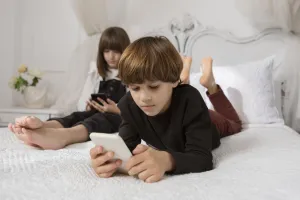
In many families, there is a familiar moment: a child wanders around the house, seemingly wanting nothing. They don’t pick up a book, don’t start a game, reject one suggestion after another, and repeat that they are bored. At that moment, an adult almost physically feels the urge to do something - to turn something on, to suggest, to entertain, to organize, to nudge. Not only because they feel sorry for the child, but also because the empty pause often feels uncomfortable for the adult themselves. It seems like wasted time, a failure, a symptom that "something is wrong".
But not every emptiness is a breakdown. There is a state in which a child is truly exhausted, overloaded, or can no longer handle even a small complexity. And there is another state - less dramatic but very important - when the inner interest has not yet been ignited because the outside world has gotten used to coming too quickly. In such a place, boredom can be not an enemy, but a transition. Not pleasant, not beautiful, not romantic, but still a transition between constant stimulation and their own play, imagination, questions, movement, and narrative.
That is why this topic requires caution. This article is not about leaving a child alone with discomfort and saying, "Bore yourself, it’s good for you." Such a rigid stance poorly understands the nervous system. We are talking about something else: how to distinguish a normal pause, from which interest may arise, from a state in which the child needs not "lessons in boredom," but less overload, more support, and a gentler entry into activity.
If a child’s days are filled with noise, brightness, screens, rapid switches, and evening fatigue, it’s worth first looking at the bigger picture - sleep, light, rhythm, and sensory load. We have already written about this in the article how to reduce overstimulation: screens, light, sleep, and attention. Here, we will focus specifically on how inner interest returns when the world stops constantly entertaining the child instead of them.
Not all boredom is beneficial - and that’s important
When adults hear the phrase "boredom is beneficial," it sometimes sounds too simplistic, even a bit ideological. As if any discomfort should just be endured, and creativity will automatically grow from it. In real life, it doesn’t work that way. A child may say they are bored for very different reasons. In one case, it is indeed a pause before the birth of something of their own. In another, it is tired attention, an unbalanced nervous system, an excess of stimuli, hidden anxiety, loneliness, lack of support, or too complex an entry into activity.
Therefore, it is useful to start not with a conclusion, but with recognition. Not "oh, great, now there will be beneficial boredom," but "what is happening with the child right now?" Do they have the energy for at least a slow search for an activity? Are they still in contact? Does it seem like any suggestion already hurts because their resources are depleted? If the child is suddenly irritable, quickly snaps, cannot endure even a small wait, or has been under significant load all day, then it is too early to talk about the resource of boredom. Here, it’s not about "training endurance," but first reducing the overall overload.
This is an important boundary, because otherwise it is easy to confuse two different states. A quiet, still alive pause can be fertile. An exhausted emptiness - no. That is why in this topic, softness and attentiveness are much more useful than a rigid principle of "don’t entertain, let them figure it out themselves."
Why adults rush to fill the pause
Adults rarely rush to fill boredom solely due to pedagogical beliefs. More often, the reason is deeper and more honest. It is difficult for us to look at an unfilled space. Modern life has accustomed both children and parents to the idea that any free minute can be instantly occupied with something. If there is no narrative, an algorithm will provide one. If there is no company, there will be content. If there is no inner impulse, an external stimulus will come first.
Because of this, a child’s pause begins to seem threatening. As if it inevitably indicates a loss of development, problems with motivation, or a lack of abilities. In reality, part of healthy development occurs precisely in those segments that do not seem effective. Where there is still no ready plan, the game has not yet started, and a solution has not yet formed. To an adult from the outside, it may seem like "nothing is happening." But inside, there is often a slower process: the child listens, tries, doesn’t find, gets frustrated, tries again, and gradually arrives at their own narrative.
Another reason for our haste is the fear of conflict. When a child says they are bored, a parent immediately feels the temptation to quickly suggest something pleasant to avoid tension. And that is understandable. But if every pause automatically receives external filling, the child has fewer chances to encounter that inner micro-work from which independent interest grows.
What "boredom as a resource" really means
When we say that boredom can be a resource, we do not mean discomfort itself as a value. The resource is not suffering, but the window that opens if the pause is not destroyed too quickly. It is in such a window that a child sometimes begins not to consume a ready narrative, but to create their own. Not just to watch, but to invent. Not to wait for someone to start the process, but to enter it from within.
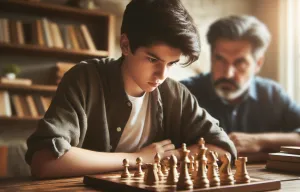
For younger children, this can be very modest: moving objects around, building a strange structure, spinning a small idea for a long time, inventing rules for a simple game. For older children - observing, drawing something, assembling, rearranging space, returning to music, reading, crafts, models, board games, writing, their own mini-projects. This doesn’t always look "useful" in the adult sense. But it is here that something important emerges: interest becomes not a gift from the outside, but born from within.
In this sense, boredom is not a goal, but a transitional zone. It is like the moment before the eyes adjust to a darker room. At first, it is uncomfortable, as if nothing is visible. But if you don’t turn on too bright a light immediately, the outlines gradually emerge. The same goes here: if every pause is instantly filled, the inner interest simply doesn’t have time to "appear in the frame".
What a quiet start of interest looks like
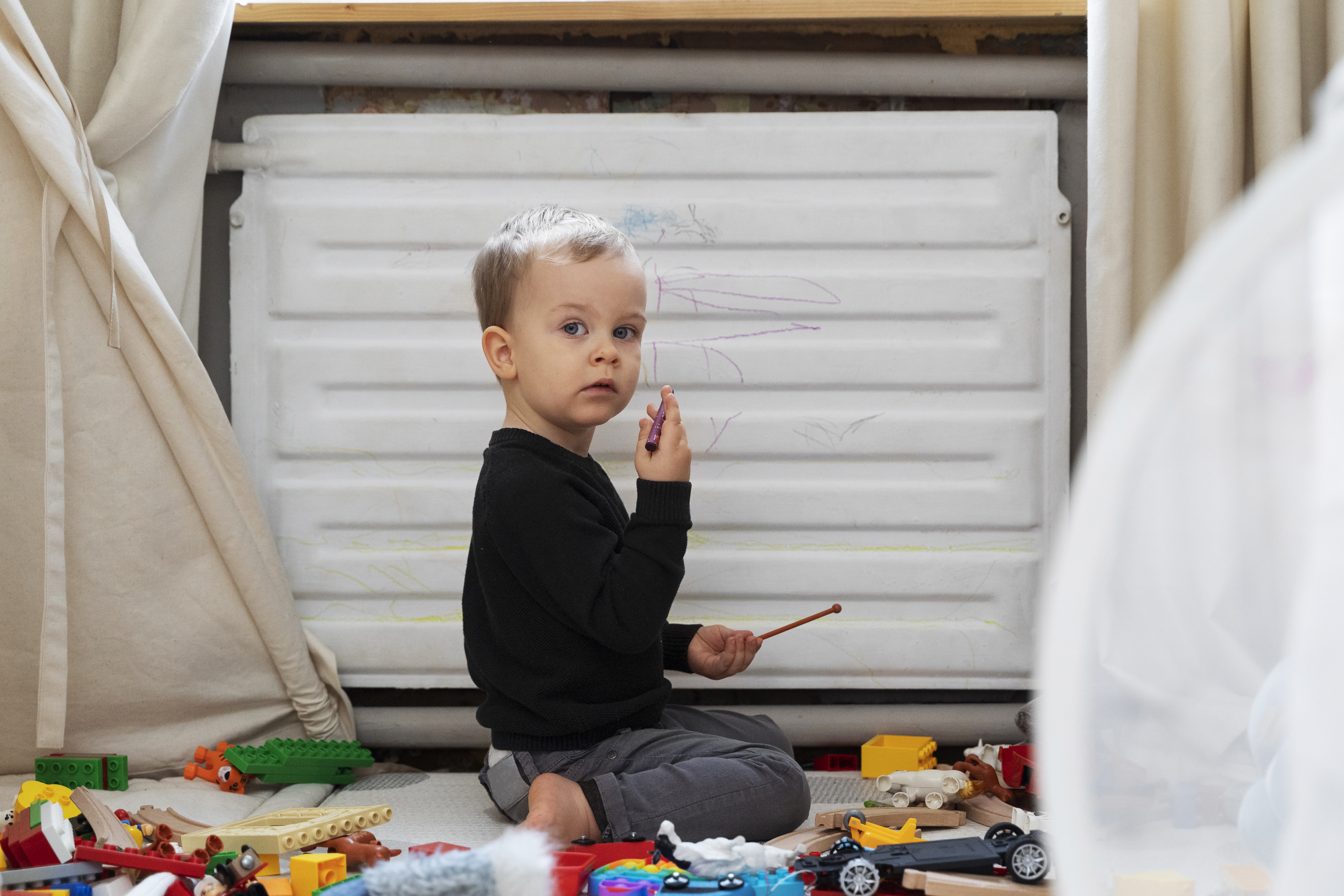
One of the most useful guidelines for parents is to learn to see not only the already developed game but also the quiet start before it. Adults often think that if a child hasn’t engaged in something within a minute or two, then nothing will happen. But the true launch of interest is not always instantaneous. At first, a child may wander aimlessly, pick up and put down objects, look irritated, try one thing and another without obvious success. This is not necessarily a failure. It can be a search for entry.
A good quiet start often looks unconvincing. There is no beautiful scene of "now the child is playing creatively." There is a small trigger: a box that they want to move; a pencil with which they start drawing paths; a blanket that suddenly becomes a cave; a question that grows from empty wonder at the window. It is here that an adult often either helps or breaks everything. Helps - when they don’t immediately burst in with a brighter idea. Breaks - when they see this fragile beginning as "nothing serious" and offer something ready, quicker, and more effective.
Therefore, sometimes the best support is not to come up with an activity instead of the child, but to endure their own anxiety a bit and let this beginning mature. Not to rush, not to evaluate, not to demand that the game immediately becomes "meaningful." Own interest rarely emerges under a microscope.
When it’s not about boredom, but fatigue or overload
There are several situations when it’s better not to rely on "beneficial boredom." The first is if the child is already sensory or emotionally overloaded. The second is if they cannot hold the pause at all and almost instantly snap into affect. The third is if any suggestion sounds to them not like a chance, but as yet another demand. The fourth is if the problem is likely not a lack of entertainment, but that attention cannot hold the task and the entry into it is too difficult.
It is important not to confuse the topic of boredom with the topic of exhausted attention. A child may say "I’m bored" when in reality, it is too difficult for them to start, maintain, or continue an action. That is, they do not lack stimulus; they lack a structure for entry. This is already a different problem, and we will discuss it separately in the article exhausted attention: 3 techniques without pressure. It will not be about pause as a resource, but about why a task can be too difficult even before it begins.
There is another related but not identical topic - enduring difficulty in longer processes. Because interest may arise but disappear at the first complication. This is no longer entirely about boredom, but about resilience to difficulties and inner endurance. For this, we have an interesting bridge article - how to learn to endure difficulty: 4 techniques for "long tasks".
How to help endure the pause without rigidity
The best approach here is not a complete absence of adult involvement and not total animation, but an intermediate position. A child does not always need to be entertained. But the phrase "go figure it out yourself" doesn’t always help either. A softer approach looks like this: the adult does not take away the child’s opportunity to find their impulse but creates an environment in which it is not too hard to start.
Sometimes, it is enough not for new content, but for a simpler field for action. Not ten options for activities, but two or three quiet materials that are easy to reach. Not a long entertainment program, but a short neutral start: "you can just sit next to me," "you can spin this," "let’s put the paper here and see if you want to draw something." Not bright provocation, but open, unobtrusive accessibility.
Such things often help:
- reduce background noise and the number of stimuli before free time, so there is space for interest to emerge;
- not to rush to fill the first 2-5 minutes of the pause with ready entertainment;
- leave simple open materials within reach - paper, pencils, building blocks, boxes, fabric, small objects for assembling, books, tabletop games without a strict script;
- not to evaluate the early start with phrases like "what are you doing" if the process is just beginning;
- not to turn every pause into an educational battle.
It is especially important not to shame the child for the mere fact of boredom. Words like "you have no imagination," "normal children always occupy themselves," or "you just want everything handed to you" do not create inner interest. They only add tension to an already fragile pause. The child then does not enter the game - they enter shame or defense.
Another mistake is to make boredom a test. For example, to fundamentally offer nothing when it is clear that the child is no longer in a lively pause but in an exhausted hang. Here, nuance is important. Our task is not to prove that the child "can handle it themselves," but to help them gradually feel that an inner start is possible even without constant external show.
Why this matters for the child in the long run
When a child occasionally goes through a quiet pause and arrives at their own interest, they gain not only the "ability to occupy themselves." In fact, it is much broader. They gradually learn that not every inner vacuum needs to be closed immediately. That beginnings can be slow. That ideas do not always come fully formed. That something can also emerge from within - not just from an algorithm, schedule, or someone else’s organization.
In the future, this is related not only to play. It pertains to learning, creativity, endurance, autonomy, the ability to be with oneself without constant stimulus, and not to fall apart from every unfilled minute. Not in the sense of strict self-sufficiency, but in the sense of greater inner support.
That is why interest is not returned through endless entertainment. It is returned when the child again gets the chance to encounter a slightly slower space, where they can not only consume but also begin. Not immediately, not always beautifully, not according to a schedule. But truly their own.
Sometimes the most important thing an adult can do in such moments is not to fill the pause with the first stimulus that comes to mind. But to endure it alongside, calmly enough for the child to gradually learn to endure it too. Not as punishment. But as a place from which genuine interest can grow again.
Sources
- American Academy of Pediatrics. Supporting Mindful Technology Use. 2025.
- American Academy of Pediatrics. Power of Play in Early Childhood. 2021.
- Yogman M, Garner A, Hutchinson J, et al. The Power of Play: A Pediatric Role in Enhancing Development in Young Children. Pediatrics. 2018.
- World Health Organization. Improving early childhood development. Guideline. 2020.
- Barker JE, Semenov AD, Michaelson L, et al. Less-structured time in children's daily lives predicts self-directed executive functioning. Frontiers in Psychology. 2014.
- Canadian Paediatric Society. Healthy childhood development through outdoor risky play: Navigating the balance with injury prevention. 2024.