







The Scent of Memory: How Smells Shape Our Emotions and Identity
“Scent is the shortest path to the heart. It doesn’t ask for permission — it simply opens the door to memory.”
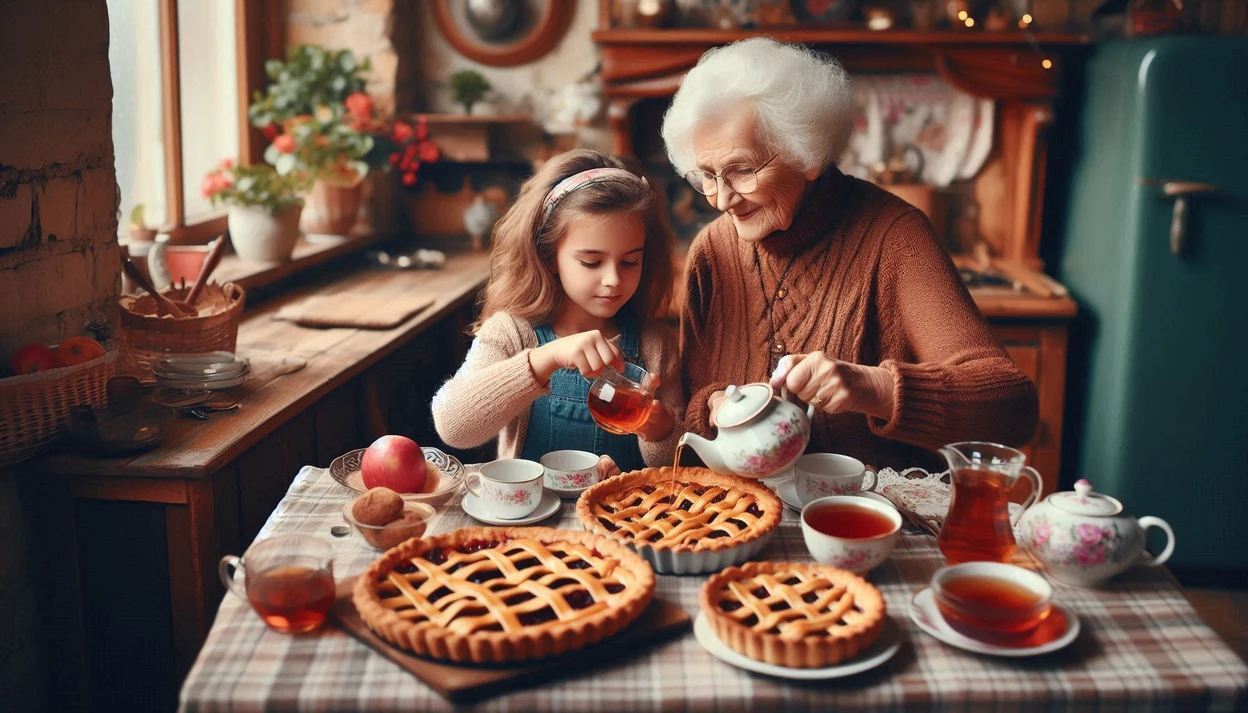
We often talk about taste but forget that true cooking begins not with a recipe, but with scent. It’s the aroma of your mother’s first pastry or the smell of fresh bread in the morning that creates the emotional context accompanying us throughout life. We may forget a recipe, but we never forget the aroma of the kitchen where we were loved.
Scent has an amazing ability to transport us through time. One breath — and you are no longer in your modern apartment, but back in childhood, standing by the gas stove where milk is boiling and the air smells of caramel. Everything that once felt distant becomes real, because scent is a form of memory that cannot be faked.
How the brain remembers scent
Smell is the only sense whose signal reaches the limbic system without the “filter” of the cerebral cortex. This pathway directly connects the nose to the centers of emotion and memory — the amygdala and hippocampus. That’s why scents evoke such vivid emotional reactions, often without conscious effort.
According to Harvard Medical School (2024), olfactory memory is six times stronger than visual memory. A person can recall a smell even 20 years after experiencing it for the first time. This explains why the scent of pies or cinnamon can suddenly bring tears — our brain doesn’t distinguish the present from the past when it comes to smell.
Scent and culture: a journey through centuries
Even ancient philosophers noticed that smell could awaken emotion. In Greece and Rome, aromas were not just decoration but part of the philosophy of life. Plutarch wrote that “a person who cannot smell loses part of the soul.” Ancient Romans considered the smell of bread a symbol of home, and the smell of wine — a symbol of joy and unity. That’s why their meals always included herbs: mint, fennel, rosemary — they created the aromatic background of emotion.
In the Middle Ages, scent became a symbol of spirituality. Monasteries grew lavender, mint, and sage — not only for medicine but also for spiritual cleansing. The practice of “olfactio” — prayer through scent — emerged, where inhaling an aroma was seen as a form of contemplation of God. In Indian and Arab cultures, the scents of spices became part of rituals: turmeric, cardamom, cinnamon — not just ingredients but carriers of ancestral memory.
In the 20th century, scent became part of consumer culture. Post-war Europe, suffering scarcity, longed for the smell of abundance — coffee, fresh pastries, soap. American culture created a new archetype: the smell of home was the smell of baking, hot chocolate, and clean linen. Advertising used scent as a trigger: “Smells like love,” said the slogans of perfume brands.
Aroma as collective memory
When we say “the taste of childhood,” we almost always mean scent. For someone — apples with cinnamon, for another — stewed cabbage, for someone else — the smell of rain after a summer storm. But at the core of all these memories lies the same thing — a sense of safety. That’s what aroma triggers.
French neurologist Jean-Pierre Royet from the University of Lyon proved that scents activate areas of the brain associated with social connection. That’s why the smell of home, family, or kitchen affects not only emotions but also belonging. We literally “belong” to the aromas we grew up with.
Psychologists call this phenomenon “olfactory nostalgia.” It’s so powerful that even in adulthood it can change behavior: the smell of a familiar dish evokes trust, calm, openness. That’s why coffee, bread, or baby cream brands strive to “smell like childhood.”
Culinary memory as emotional inheritance
Food is a language through which we express love. And scent is its tone. When we cook our mother’s borscht or our grandmother’s dumplings, we’re not just repeating a recipe — we’re recreating a memory. The aroma that arises during cooking evokes emotional peace, as the same neural connections activate as in childhood.
Every culture has its own aromas that mean “home.” In Ukraine — bread, uzvar, baked apples. In Poland — borscht, mushrooms, poppy seed rolls. In Croatia — grilled fish, rosemary, lemon. In France — butter, garlic, baguette. All these scents are not only about food but about belonging. We carry them with us like invisible amulets.
Sociologists from McGill University (2023) found that people who regularly cook “childhood dishes” have lower anxiety and higher emotional stability. Familiar aromas from childhood act as emotional anchors — they bring us back to a state of trust.
When scent becomes a story
In literature, scent has always held sacred meaning. For Proust — it was the madeleine. For Turgenev — “the smell of hay and chamomile.” For Lesya Ukrainka — “the scent of the steppe and freedom.” They all used aroma as a bridge between feelings and memory. Because scent is something that can’t be described in words but can be felt together with the character.
Modern filmmakers also experiment with this idea. Director Wim Wenders in “Perfect Days” creates a poetic symphony of scents — wet asphalt, clean laundry, freshly brewed coffee. All of this is not just background but an emotional palette that reminds us life is made of small details.
Perhaps that’s why we love returning to old recipes — not because they taste better but because they smell like memory.
Scents that shape us
If you think about it, our childhood is a collection of scents. They create the emotional dictionary we use for life. Everyone has their own set:
- warm milk — calm and care;
- rain on asphalt — adventure and freedom;
- lavender — comfort and sleep;
- campfire smoke — warmth of company and belonging;
- fried onion — everyday life, but real life.
These scents are like pages of our biography. They remind us that every moment has its aroma, and if we learn to notice it, life becomes deeper.
The science of scent: how smell governs emotions
When we inhale an aroma, thousands of olfactory receptors in the nasal cavity activate instantly. They send signals to the olfactory bulb, which connects directly to the hippocampus and amygdala. This is the only sensory system with a direct path to emotional centers. In other words, scent is the language the brain uses to communicate with emotions without translation.
Research from the Institute for Neuroscience, University College London shows that scents evoke longer-lasting memories than visual images. They can be recalled even decades later. Especially powerful are scents first experienced before the age of seven — they become imprinted as basic elements of our emotional code.
That’s why, when we inhale the smell of freshly baked bread or warm milk, the brain “recreates” the atmosphere of childhood. It’s not association — it’s the neural echo of real experience. We relive the moment, even in a different body.
The psychology of nostalgia
Psychologists at Columbia University have shown that scents can ease stress through an “emotional return” effect. A person who senses a familiar aroma lowers cortisol levels even for a few seconds. That’s why during anxiety we instinctively seek familiar smells: coffee, clean linen, an old perfume.
Interestingly, “olfactory memory” activates not just past images but physical sensations. Scent can revive the temperature of the room, the color of the light, the feel of the skin. It’s a complex memory that preserves the whole atmosphere of a moment. That’s why in psychology scent is viewed as a form of unconscious self-protection — it can restore the wholeness of the self when we lose it in the pace of modern life.
“Scent is emotional geography. It marks the places where we were once happy,” writes neuropsychologist Rachel Herz in her book “The Scent of Desire” (MIT Press).
Culinary therapy
In modern psychotherapy, the concept of “culinary mindfulness” — attentive cooking — appears more often. The idea is simple: when we cook, we touch, smell, and listen — all of which calm the nervous system. A study by the University of California, Berkeley found that cooking with aromatic herbs (rosemary, mint, thyme) stimulates dopamine — the hormone of pleasure.
That’s why cooking today is seen not only as a skill but as a form of self-therapy. Cooking “for the soul” restores contact with oneself. The aroma in the kitchen becomes not just background — it’s a signal: “I’m home, I’m safe.”
This explains the popularity of home baking after the pandemic. In 2020, people bought yeast and flour not only because of shortages but because the smell of bread became a metaphor for stability — a feeling of control in a crumbling world.
Scent in modern gastronomy
Today, scent is no longer a byproduct of food — it’s an independent tool of emotional design. In haute cuisine, chefs create “olfactory pairings” — combinations of scent and taste that unfold in layers.
For example, chef Grant Achatz at Alinea (Chicago) serves dessert on a pillow filled with lavender aroma: while guests eat, the pillow slowly releases fragrance, creating an “air memory” effect. In Tokyo, some restaurants use jasmine or sandalwood aromas to enhance sweetness. In France, “aromatic service” has become popular — each meal is paired with a vial of a scent composition to accompany the menu.
This isn’t just a trend — it’s an attempt to engage memory. Each guest becomes a co-author of the experience: their personal memories mix with the scent, creating something unique.
When scent heals
Medicine also studies scent as a therapeutic tool. In Harvard Health clinics, post-surgery patients inhale lemon or mint essential oils — reducing nausea and fear. In Japan, “forest bathing” (shinrin-yoku) — walking among trees — is officially recognized as stress therapy, since pine compounds calm the nervous system. Even the smell of orange in a dentist’s waiting room reduces anxiety by 30%.
Our body perceives scent as a wordless language. When we inhale a familiar aroma, the body receives a signal: “everything is fine.” Sometimes that’s all we need to slow our heartbeat.
The map of childhood scents
If we were to draw a “map of childhood scents,” each one would be unique, yet some universal notes repeat across cultures, shaping our emotional landscape.
- Bread. A symbol of home, care, fullness. It smells of wheat, rye, corn, or butter — the scent of life.
- Milk. Safety, warmth, care, childhood mornings — a psychological soothing scent.
- Apples and cinnamon. Autumn, school, comfort — in many cultures a symbol of coziness.
- Smoke. A universal scent of unity — bonfire, evening, shared food. Cambridge University researchers believe smoke was humanity’s first collective scent.
- Vanilla. Gentleness, warmth, love — used in baby cosmetics for its trust-evoking qualities.
Each of these scents holds entire emotional systems. That’s why aroma has the power to restore our internal balance.
The scent of home: how to create your own
We can consciously shape the atmosphere of our home through scent. It requires no effort — only mindfulness:
- Choose natural aromas: herbs, fruits, spices — they quickly become “yours.”
- Let aromas match the season: spring — mint, jasmine; summer — citrus, basil; autumn — coffee, cinnamon, cloves; winter — pine, orange, vanilla.
- Don’t mix too many scents — one or two key notes create harmony.
- Allow aromas to fade — memory forms in silence. If a scent is constant, it loses its emotional signal.
The scent of home is more than cleanliness — it’s its character. Some homes smell of coffee and books, others of flowers or fresh dough. But each scent speaks of the people living there — their love and way of being together.
Scent and creativity
Psychologists found that aromas stimulate creativity. At the University of Tokyo, citrus scent increased associative thinking speed by 20%, while jasmine improved concentration. Many writers and artists use “scent rituals”: lighting a candle, brewing cardamom coffee, dabbing oil on the wrist — not whimsy, but a way to tune the brain to creativity.
Scent is also everyday creativity. When we roast seeds, slice a lemon, or simmer uzvar — we create a small masterpiece. Done mindfully, each moment becomes meditation.
Quotes that linger in the air
“Sometimes happiness doesn’t smell like flowers, but like warm bread and quiet in the kitchen.”
“Scent is the only form of memory that can’t lie.”
“When it smells like childhood, the world feels kind again.”
Scent as spiritual experience
In many religions, aroma has sacred meaning. In Orthodox Christianity — incense; in Buddhism — sandalwood; in Catholicism — myrrh. Scent in prayer symbolizes the soul’s ascent. In Christian mysticism, there’s even the concept of “the odor of sanctity” — when the body of a saint emits a pleasant scent as a sign of purity.
This idea has deep psychological roots: aroma is the most delicate carrier of presence. It reminds us that beauty exists in the air — between us and the world.
Return to self
We live in a world where information changes every second, but scent brings us back to the body. It’s slow, real, human. It reminds us that life isn’t stored in files — it lives in sensations. When we breathe in the scent of cinnamon, bread, or coffee, we’re not just breathing air — we’re breathing memory.
Perhaps that’s why cooking will never become just a craft. It will remain an art — the art of remembering, feeling, being. Because scent is the gentlest way to tell yourself: “I am alive.”