





Jak korzystać z tego artykułu
Ten tekst nie jest instrukcją. Warto czytać go jako przestrzeń do obserwowania siebie — bez potrzeby robienia czegokolwiek lub wprowadzania zmian.
Jeśli podczas czytania pojawi się rozpoznanie, reakcja cielesna albo wewnętrzna pauza — to już wystarczy. Brak reakcji również jest normalny.
W dniach, gdy żadna stylizacja „nie działa”, artykuł może być nie wskazówką, lecz pozwoleniem, by niczego od siebie nie wymagać.
W rozmowach o ubraniach często szukamy szybkiego efektu: aby „poprawić nastrój”, „dodać energii”, „zmienić dzień”. Ciało jednak nie reaguje na strój jak na ideę. Odczytuje sygnały: nacisk tkaniny na skórę, swobodę lub ograniczenie ruchu, wrażenia ciepła, światła i koloru. Dlatego ubrania rzadko „czynią nas szczęśliwymi”, ale często wpływają na coś innego — na gotowość do życia, poruszania się, wybierania i wychodzenia w świat.
Dopamine dressing bywa tłumaczony przez jaskrawe kolory i „szybkie emocje”. Na poziomie neurofizjologii staje się jednak jasne: nie chodzi o radość. Chodzi o motywację. Nie o efekt, lecz o proces — o wewnętrzny ruch, który czasem zaczyna się bardzo cicho.
W tym sensie ubranie przestaje być formą autoekspresji, a staje się dialogiem. Nie odpowiada na pytanie „jak wyglądam”, lecz podsuwa inne: czy ciało jest gotowe zrobić krok naprzód, czy potrzebuje pauzy.

Dopamina to hormon oczekiwania, a nie przyjemności
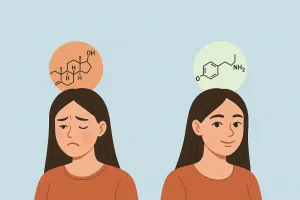
W kulturze popularnej dopamina bywa nazywana „hormonem szczęścia”, jednak to uproszczenie bywa mylące. Dopamina jest neuroprzekaźnikiem oczekiwania, antycypacji i motywacji. Aktywuje się nie wtedy, gdy już jest nam dobrze, lecz wtedy, gdy pojawia się poczucie: „coś jest możliwe”, „warto się ruszyć”, „jestem gotów zrobić krok”.
Z perspektywy neurofizjologicznej dopamina uczestniczy w dokonywaniu wyborów, inicjowaniu działania i kierowaniu uwagą. Dlatego jest ściśle związana z tym, jak wybieramy ubrania. Nawet automatyczny poranny wybór wysyła sygnał do układu nerwowego: dziś jestem zebrany czy rozluźniony, chroniony czy otwarty, nastawiony na działanie czy na regenerację.
Ważne jest rozróżnienie dopaminy i serotoniny. Serotonina wiąże się ze stabilnością i poczuciem „wystarczy”. Dopamina — z impulsem do przodu. Gdy oczekujemy od ubrań uspokojenia, będąc jednocześnie w fazie poszukiwania ruchu, pojawia się wewnętrzny dysonans.
Czasem odczuwamy to bardzo prosto: ubrania wydają się „właściwe”, ale nie chce się w nich wychodzić z domu.
Szerszy kontekst relacji między hormonami a stylem omawia artykuł Moda i hormony: jak styl reguluje kortyzol i dopaminę, w którym ubrania postrzegane są nie jako dekoracja, lecz jako element systemu regulacji stanu organizmu.
Dopamine dressing jako strategia kontaktu z życiem
Gdy porzucimy przekonanie, że ubrania muszą „poprawiać nastrój”, dopamine dressing zaczyna działać inaczej. Nie jest to stymulacja ani próba zmuszenia się do aktywności. To sposób sprawdzenia, czy ciało jest gotowe na minimalny ruch.
W praktyce warto zwrócić uwagę nie na wygląd, lecz na reakcję ciała. Czy zmienia się oddech? Czy pojawia się chęć, by iść nieco szybciej — albo przeciwnie, zwolnić bez napięcia? Czy pojawia się poczucie wewnętrznego oparcia — nie poprzez kontrolę, lecz poprzez stabilność?
Czasem sygnał ten pochodzi z jednego detalu. Nie z całej stylizacji ani koncepcji, lecz z drobnej cielesnej zgody: „tak, w tym mogę się poruszać”. Innymi dniami żaden element nie wywołuje reakcji — i to także jest odpowiedź, a nie błąd.
Czym nie jest dopaminowe ubranie — i co częściej uruchamia ruch
Są ubrania, które wyglądają przekonująco, ale pozostawiają ciało w bezruchu. „Poprawne” stroje, perfekcyjnie przemyślane zestawy, elementy wymagające kontroli postawy lub ciągłej samokontroli — wszystko to może tworzyć wrażenie zebraności, lecz nie wywoływać impulsu do działania. Dopamina nie reaguje na poprawność. Reaguje na możliwość.
Rzadko działa także odzież „na efekt” — taka, która domaga się uwagi, sprawdzania w lustrze i zewnętrznego potwierdzenia. W takich stylizacjach ciało zwykle się napina: oddech staje się płytszy, ramiona unoszą się, ruch zwalnia. Może to przypominać ekscytację, ale bliżej temu do napięcia niż do motywacji.
Najczęściej dopaminowym „starterem” nie jest cała stylizacja, lecz jeden żywy detal. Element, w którym chce się iść nieco szybciej. Tkanina, w której oddech staje się swobodniejszy. Forma, która daje poczucie „mogę się w tym poruszać”. Nie chodzi o jaskrawość ani odwagę — chodzi o mikro-nowość, którą ciało odbiera jako bezpieczną.
Paradoksalnie dopamina częściej aktywuje się tam, gdzie stylizacja nie jest całkowicie domknięta. Gdy pozostaje przestrzeń wyboru: zapiąć lub rozpiąć, podwinąć, zmienić dopasowanie. W takich momentach pojawia się poczucie sprawczości — „mogę” — które leży u podstaw motywacji.
Dopaminowe ubranie to nie to, w którym jest po prostu dobrze. To takie, w którym coś jest możliwe. Krok, ruch, decyzja, wyjście w świat. Czasem bardzo małe — ale wystarczające, by życie znów ruszyło z miejsca.
Sensoryczna podstawa: dlaczego dopamina bez niej nie działa
Żadna aktywacja dopaminowa nie jest możliwa bez podstawowego poczucia bezpieczeństwa. Układ nerwowy nie inwestuje energii w oczekiwanie i ruch, jeśli ciało doświadcza dyskomfortu. Dlatego cechy sensoryczne ubrań — tkanina, szwy, ciężar, temperatura — mają znacznie większe znaczenie niż zgodność z kodami mody.
Dla układu nerwowego komfort nie oznacza „wygody”, lecz sygnał, że kontrolę można zmniejszyć. Gdy ubranie nie uciska, nie drapie i nie wymaga ciągłych poprawek, ciało uwalnia zasoby potrzebne do wyboru, uwagi i motywacji.
Zasada ta leży u podstaw podejścia opisanego w artykule Sensoryczna baza garderoby: jak ubrania uspokajają układ nerwowy i wspierają wewnętrzną stabilność, w którym garderoba postrzegana jest jako wsparcie sensoryczne, a nie konstrukcja wizualna.
Dopamine dressing nie zaczyna się od koloru ani wizerunku. Zaczyna się od bezpieczeństwa ciała.
Kiedy dopamine dressing nie działa — i to jest normalne
Zdarzają się okresy, gdy żadne ubranie nie wywołuje reakcji. Pojawia się poczucie „nie mam się w co ubrać”, nawet gdy garderoba obiektywnie jest pełna. W takich momentach łatwo zacząć obwiniać siebie — co tylko nasila napięcie.
Przewlekły stres, wyczerpanie emocjonalne i przeciążenie wyborami obniżają wrażliwość na dopaminę. Ciało przestaje dostrzegać sens w drobnych decyzjach. Pojawia się frustracja, apatia i poczucie „coś jest ze mną nie tak”.
W rzeczywistości nie jest to awaria. To pauza.
Biochemia wyboru: dlaczego czasem pojawia się „nie mam się w co ubrać”
W takie dni uproszczenie działa lepiej niż poszukiwanie. Powrót do znanych elementów garderoby nie jest rezygnacją ze stylu, lecz sposobem na umożliwienie regeneracji układu nerwowego.
Sezonowość i gotowość na nowość
Gotowość do działania zmienia się nie tylko poprzez procesy wewnętrzne, lecz także poprzez sygnały sezonowe, które ciało odczytuje automatycznie. Poranne światło wpadające do oczu, dłuższe dni, cieplejsze powietrze — wszystko to stopniowo zmienia rytmy okołodobowe i wyprowadza układ nerwowy z trybu oszczędzania.
Wiosną wiele osób zauważa proste zmiany: łatwiejsze wstawanie, chęć wyjścia z domu bez konkretnego celu, zmianę tempa chodzenia. Nie jest to emocjonalne uniesienie ani inspiracja — to fizjologiczna gotowość do mikro-ruchów. W takim stanie pętle dopaminowe aktywują się łatwiej, bez przymusu.
W tym okresie ubrania często zaczynają „działać” inaczej. To, co zimą było neutralne, nagle odczuwane jest jako zaproszenie. Nie do radykalnych zmian, lecz do ostrożnego eksperymentowania: dłuższego spaceru, innej trasy, pozwolenia sobie na drobną nowość bez zobowiązań.
Wiosenne przebudzenie poprzez ubrania: jak sezon zmienia gotowość ciała na nowość
Nie więcej emocji, lecz więcej żywotności
Dopamine dressing nie polega na tym, by za wszelką cenę czuć się lepiej. Ani na tym, by siłą wyciągać się z pauzy. Jego sens tkwi we wspieraniu wewnętrznego ruchu tam, gdzie jest on możliwy, oraz w uważności na momenty, gdy ruch nie jest jeszcze dostępny.
Czasem ubranie staje się punktem startowym: w nim chce się wyjść, iść, zacząć. Innym razem jest cichym tłem, które pozwala nie wymagać od siebie zbyt wiele. W obu przypadkach nie działa jako rozwiązanie, lecz jako sygnał — czy ciało jest teraz gotowe na krok.
Być może najtrafniejszym pytaniem nie jest „co mam na siebie włożyć”, lecz „co jest dla mnie teraz możliwe”. A jeśli odpowiedź jest bardzo mała — to również jest ruch. Właśnie z takich subtelnych, niemal niezauważalnych przesunięć buduje się żywotność.
Źródła
- Berridge K. C., Robinson T. E. What is the role of dopamine in reward: hedonic impact, reward learning, or incentive salience? Brain Research Reviews.
- Salamone J. D., Correa M. The mysterious motivational functions of mesolimbic dopamine. Neuron. https://doi.org/10.1016/j.neuron.2012.10.021
- Damasio A. The Feeling of What Happens: Body and Emotion in the Making of Consciousness. Harcourt Brace & Company.
- Craig A. D. How do you feel? Interoception: the sense of the physiological condition of the body. Nature Reviews Neuroscience. https://doi.org/10.1038/nrn894
- McEwen B. S. Protective and damaging effects of stress mediators. New England Journal of Medicine.
- Cajochen C., Kräuchi K., Wirz-Justice A. Role of melatonin in the regulation of human circadian rhythms. Journal of Neuroendocrinology.