






Sleep doesn’t begin when you turn off the lights — it starts hours earlier, in the quiet of your evening, in the ritual of what you put on your plate. The timing and composition of dinner directly influence melatonin production, serotonin balance, and cortisol levels. These molecules aren’t abstract chemistry — they’re real signals that tell the body when it’s time to let go. If morning routines set the rhythm of energy, evening dinners create the pathway into rest.
Food That Speaks to the Brain
The nervous system reacts to food much like it does to emotions. The components of your dinner affect neurotransmitters — the same messengers that shape your mood. Tryptophan, magnesium, vitamin B6, and glycine are the building blocks of calm sleep. They help the body produce serotonin, which in darkness converts into melatonin — the hormone that regulates your sleep–wake cycle.
Research from Oxford University shows that people with low tryptophan levels experience lighter, more fragmented sleep. Other studies confirm that adequate magnesium intake reduces the activity of the sympathetic nervous system — the one responsible for stress reactions. In other words, a well-chosen dinner can be the gentlest form of therapy for a tired mind.
When You Eat Matters as Much as What You Eat
The ideal time for dinner is 2–3 hours before bedtime. Eating later forces the body to spend energy on digestion instead of recovery. Late meals raise body temperature, delay melatonin production, and shift your sleep phase. That’s why neurobiologists recommend setting a personal “kitchen curfew” — the moment you stop eating, even if you still feel slightly hungry. The brain needs around 90 minutes to fully register satiety, giving the body a chance to transition naturally from activity to calm.
Sleep is not simply rest; it’s also maintenance. During deep sleep, the brain clears out metabolic waste through the glymphatic system. Heavy or fatty meals slow this process down. That’s why dinner should be light, warm, and nourishing — with moderate protein and no excess sugar or alcohol.
Key Nutrients for Restful Sleep
- Tryptophan — an amino acid that converts into serotonin and melatonin. Found in oats, turkey, eggs, cheese, and pumpkin seeds.
- Magnesium — lowers cortisol and relaxes muscles. Found in leafy greens, almonds, cocoa, and quinoa.
- Glycine — an amino acid that reduces body temperature and supports deep sleep. Found in legumes, chicken, and collagen-rich foods.
- Vitamin B6 — supports serotonin synthesis. Found in bananas, chickpeas, potatoes, and fish.
Combined, these nutrients send a biochemical message: “The day is over; it’s safe to rest.” In balance, they help the body and brain shift gently into calm, no medication required.
Example Dinners That Promote Sleep
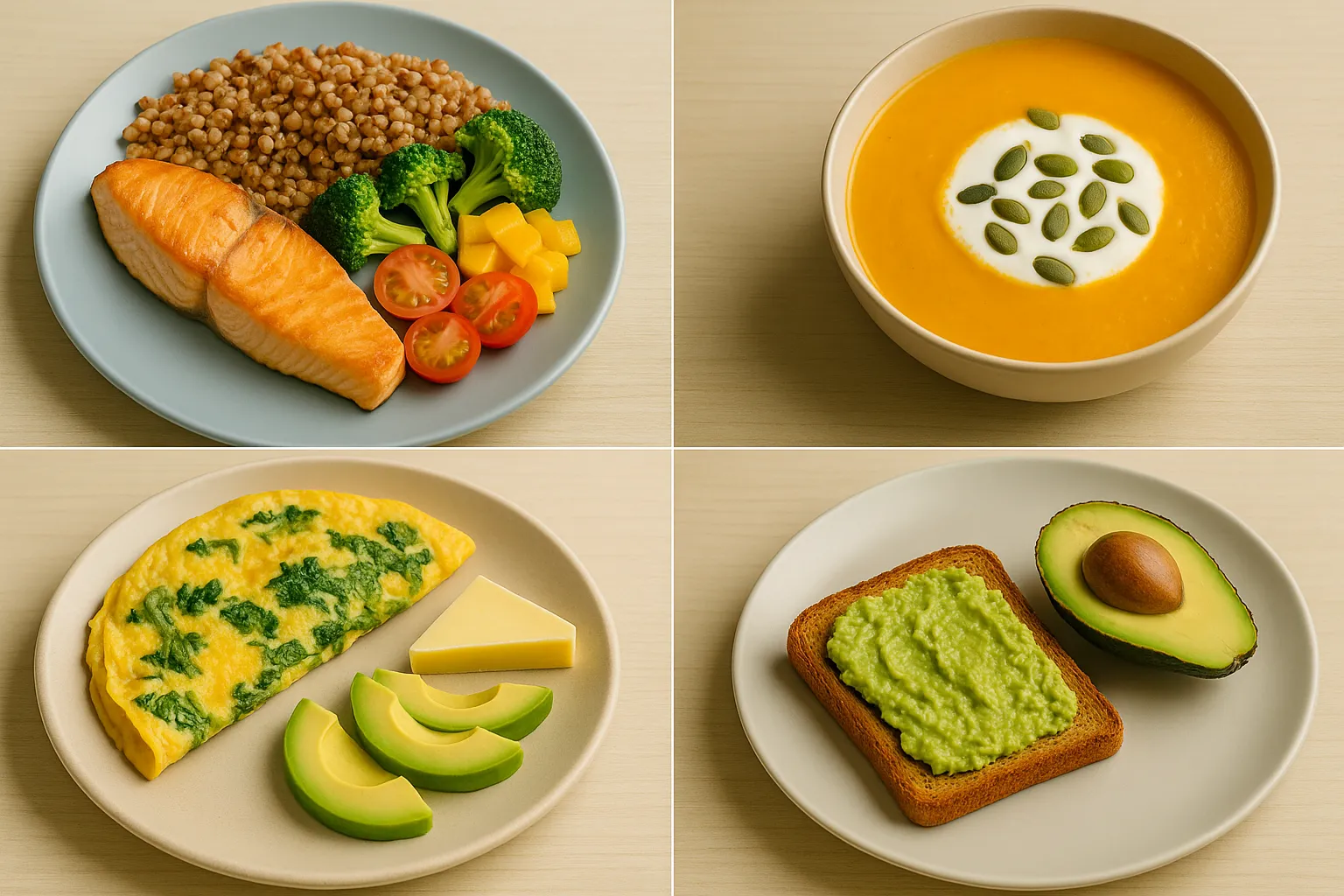
- Warm buckwheat or quinoa with vegetables, a drizzle of olive oil, and a piece of fish — balanced in protein and magnesium.
- Pumpkin cream soup with seeds and a spoon of low-fat yogurt — light yet nourishing.
- Omelet with herbs and a small portion of aged cheese — a source of tryptophan and calcium.
- Whole-grain toast with hummus or avocado — a mix of B vitamins and healthy fats.
Add a glass of warm water or an herbal infusion — chamomile, lemon balm, lemongrass — and your nervous system receives a clear “safety” signal. Alcohol, despite its illusion of relaxation, disrupts sleep architecture, shortens deep sleep, and raises morning cortisol.
Light, Silence, and Taste
The body perceives dinner not only through taste but also through the environment. Soft light, warm tones, gentle music, and the absence of screens — this isn’t romanticism, it’s neurophysiology. Bright light suppresses melatonin, while the noise of television stimulates the dopamine system, keeping the brain alert. When we eat in quiet, the parasympathetic system — “rest and digest” mode — activates naturally.
Stanford University studies show that consistent evening habits, especially mindful eating rituals, can improve heart rate variability in as little as two weeks. This is a marker of nervous system resilience. In other words, dinner is not only about calories — it’s a way to restore the balance between “doing” and “being.”
Union Beauty Micro-Ritual
Try this simple evening ritual: an hour before bed, dim the lights and turn on a soft lamp. Prepare a light meal — perhaps buckwheat with vegetables. Eat slowly, without your phone. Then drink warm water and take a few deep breaths. This is not a diet; it’s a message to your body: “You can stop rushing.”
Sleep that follows such a dinner will be deeper, the body calmer, and the morning clearer. Most importantly, this habit doesn’t require discipline — only attention. The quality of sleep is not luck; it’s the result of gentle self-care that begins in the kitchen.
Dinner as an Act of Self-Respect
We often treat dinner as a technical step before sleep. In reality, it’s a moment to thank your body. Everything you eat becomes a signal to the nervous system: “Relax,” “Restore,” “Live.” A slow, peaceful dinner is a quiet declaration: I deserve rest. And perhaps, in that calm moment, your body finally hears the truth — that peace is not something to find, but something to create with your own hands.