







There are days when you seem to be doing everything "right," yet at home, there are still tears, outbursts, arguments, and fatigue. This text isn't about becoming perfect. It's a map: it will help you quickly understand what's happening with your child's nervous system and what small step can bring more calm, sleep, attention, and connection.
This isn't an instruction manual or a test for good parenting. It's a way to regain clarity in familiar scenes - a rushed morning, the journey home, an evening when everything "seems trivial" but accumulates into a storm.
Why It's Not About Character, But Regulation
Most daily "challenging" behaviors aren't about stubbornness or a bad character. Often, it's about the nervous system being tired and temporarily struggling with emotions. Children are constantly exposed to stimuli - noise, fast pace, screens, demands, news, rules. There are transitions that the brain experiences as small stresses: waking up, leaving home, returning, sitting down for lessons, going to sleep. When contact with an adult is lacking or tense, it's harder for a child to "pull themselves together" internally. And sleep is the main base of regulation: if it's disrupted or becomes shallow, the emotional threshold drops. So sometimes the wisest question isn't "why are you doing this?" but "what's overloading the system right now?"
Three "Control Levers" of the Nervous System in the Family
In real life, we don't need grand theories, but a few simple "levers" that can be turned even when tired. In the family, three usually work.
1) Contact (voice, face, pause). A child reads your state faster than words. Even a short pause before responding can change everything: instead of "don't shout" - a calmer "I see it's hard for you, I'm here." It's not magic, it's basic co-regulation - when your tone and presence help the child's system "lower the temperature." If you want a separate large material-support, save: How to Calm a Child Through Contact: Voice, Face, and Clear Boundaries.
Scene example: you pick up your child from kindergarten, and they fall apart in the car. Sometimes the best thing is not to "sort it out," but to give 20 seconds of simple contact: "I'm here, breathe with me," and only then negotiate the rules.
2) Environment (light, screens, pace of the day). The brain is regulated not only by conversations but also by what it lives in. Bright light in the evening, fast content, constant background noise, lack of pauses - all this keeps the system excited. Changing the environment sometimes has an effect faster than a hundred explanations. If you need a deeper map about stimuli and recovery, find it here: How to Reduce Overstimulation: Screens, Light, Sleep, and Attention Reset
Scene example: evening, the child "won't stop," you raise your voice, and the cycle closes. Sometimes instead of another request, a small change in the environment works: dim the lights, remove background noise, switch eyes to something slow (shower, water, calm hand activity).
3) Rhythm (rituals, predictability, transitions). The nervous system likes to know what's next. Rhythm is not an "ideal schedule," but predictable micro-anchors: how you leave the house, transition to home time, start lessons, prepare for sleep. Rituals relieve part of the tension of choice, and transitions make the day "digestible."
Scene example: returning home is the hardest moment. If there is a short ritual "change clothes - water - 5 minutes of silence," there are fewer outbursts because the system doesn't fall from one wave to another without a bridge.
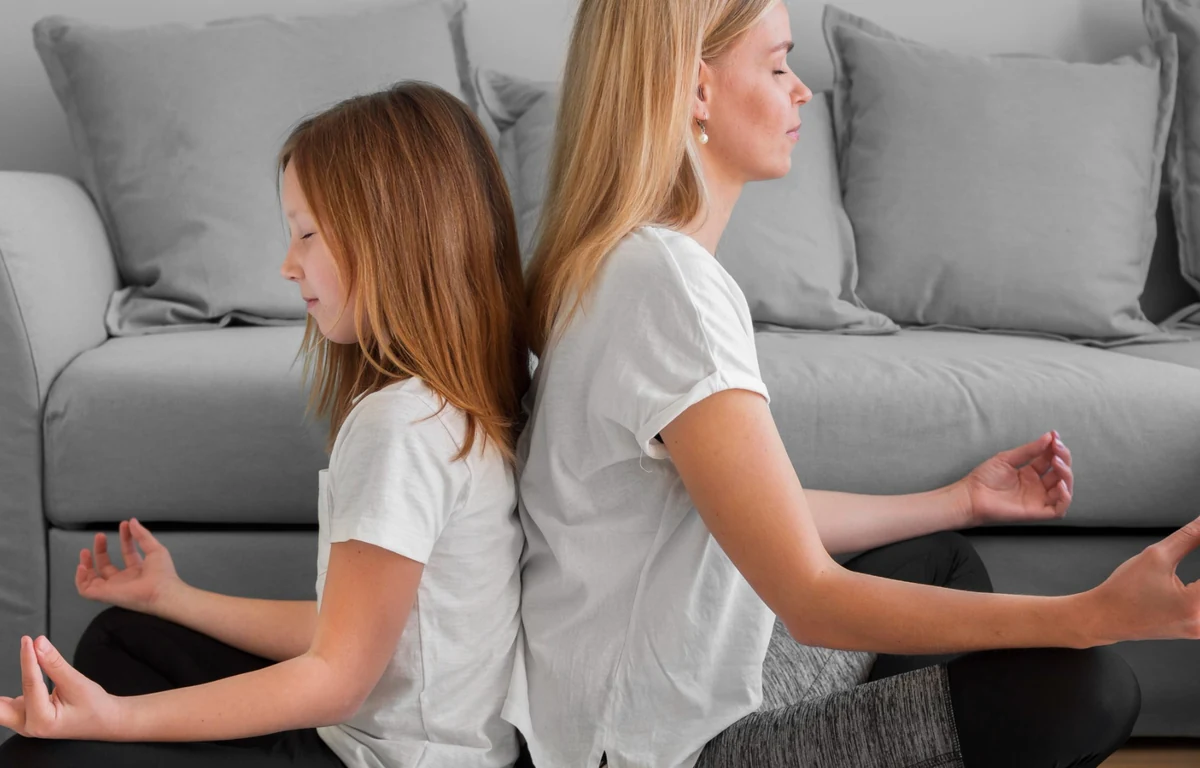
Age Map: What's Most Important Now and What Hurts Most Often
Children change not only "in character" - what changes is how their brain withstands stimuli, transitions, uncertainty, and emotions. Below is a brief age map. It's not to explain everything. It's to find a point of support for today.
0-3 Years: Safety, Soothing, Body
What's most important for the nervous system now:
- The body as a base of calm: warmth, food, sleep, hugs, breathing rhythm next to an adult.
- Predictability: repetitive actions relieve tension from a world that is constantly "new."
- Joint regulation: the child still doesn't "know how" to calm themselves, they learn this through you.
Common daily challenges:
- Sleep and falling asleep, frequent awakenings, shifts due to developmental leaps.
- Emotions without words: crying, screaming, falling to the floor, "nothing fits."
- Transitions: getting dressed, leaving the house, returning, sitting in a car seat.
- Boundaries: "no" still sounds like a threat to safety if said sharply.
Micro-scenario for today (30-60 seconds):
When a child cries and "doesn't take" anything, try "three supports" instead of ten words:
- Get down to eye level and take a short pause of 2-3 seconds.
- Say one simple phrase: "I'm with you, I'm holding."
- Add a physical action: a hand on the back or a gentle squeeze through a hug, 3 slow breaths together.
Read more:
- How Children Learn Emotions: Mirror Neurons and the Role of the Parent's Face
- How a Child Learns Our Habits, Even When We Don't Notice
- How to Calm a Child Through Contact: Voice, Face, and Clear Boundaries
4-7 Years: Boundaries, Rituals, Transitions
What's most important for the nervous system now:
- Learning to hold an impulse: the child can "wait" but still easily breaks down when tired.
- Fairness and framework: rules are perceived sharply, especially if the day is overloaded.
- Transitions between modes: "play - eat - bath - sleep" need bridges, not commands.
Common daily challenges:
- Emotional outbursts in the evening when it's already possible to "fall apart" at home.
- Sleep: "I don't want to sleep," endless requests, fears.
- Screens as a "switch" after kindergarten or fatigue.
- Boundaries: arguments, bargaining, testing rules, "why is he allowed?"
Micro-scenario for today (30-60 seconds):
When you need to quickly transition from play to business, try "bridge + choice":
- Name the transition: "we're transitioning now."
- Give a small choice: "are you going to the bath yourself or should I take your hand?"
- Confirm the emotion: "you don't want to stop, I understand. I'll help."
Read more:
- How a Child Learns Our Habits, Even When We Don't Notice
- How to Calm a Child Through Contact: Voice, Face, and Clear Boundaries
- How to Reduce Overstimulation: Screens, Light, Sleep, and Attention Reset
8-12 Years: Attention, Learning, First Rule Conflicts
What's most important for the nervous system now:
- Attention endurance: the child can hold a task longer but easily "falls" from overload and quick stimuli.
- Self-respect and control: it's important to feel considered, even when there are rules.
- Recovery after school: the brain needs a bridge between "social effort" and home.
Common daily challenges:
- Lessons and resistance: "I don't want to," "I can't," quick exhaustion.
- Screens: conflicts about time and content, "5 more minutes" endlessly.
- Sleep: later falling asleep, harder waking up, schedule shift.
- Boundaries and rules: arguments, testing limits, comparisons with others.
Micro-scenario for today (30-60 seconds):
When lessons become a battlefield, try "visible start" instead of long persuasion:
- Say: "let's just start - 5 minutes."
- Set a visible finish: a timer or a small task ("one exercise").
- After 5 minutes, take a micro-pause with the body: stretch, water, 3 slow breaths.
Read more:
- Children and Gadgets: How to Find a Balance Between Technology and Real Life
- How to Reduce Overstimulation: Screens, Light, Sleep, and Attention Reset
- How to Support Motivation Without Pressure: Load, Rest, and Resilience
13-17 Years: Autonomy, Body, Self-Esteem
What's most important for the nervous system now:
- Autonomy: a teenager needs to feel the space of choice, even if you disagree with some decisions.
- The body as a sensitive topic: sleep, skin, hormonal fluctuations, appearance, and comparisons with others.
- Overload with stimulation: the phone as a way to escape tension and as a source of this tension simultaneously.
Common daily challenges:
- Sleep: late falling asleep, difficult waking up, "night mode" of the brain.
- Emotions: sharp swings, closedness, irritability, silence instead of conversation.
- Screens: "lying on the phone" as a norm, but sometimes as a symptom of overload.
- Body and self-esteem: skin, weight, appearance, comparisons, shame.
Micro-scenario for today (30-60 seconds):
When a teenager silently lies on the phone, try contact without intrusion:
- Approach without demanding conversation and say one phrase: "I'm here if you want - I'll listen."
- Add specificity without control: "tea/water is here, I'll be in the kitchen."
- After 10-15 minutes, suggest a micro-joint action: "will you go with me for 2 minutes to take out the trash?"
Read more:
- How to Teach a Child Safe Self-Care: What's Really Important for Gen Z and Gen Alpha
- Teenager and Appearance: How to Support Confidence and Safe Care Without Extremes
- Children and Gadgets: How to Find a Balance Between Technology and Real Life
Quick Entries by Situation
Below are short tips if you need a solution "right now." This doesn't replace deeper texts but can relieve tension in the next 10 minutes.
If outbursts happen regularly, it often means the system accumulates tension and discharges where it's safe - at home. In the moment of an outburst, long explanations rarely work. A short frame and contact will work: "I see it's hard for you. I'll stop this. I'm here." Then - a bridge: water, movement, silence, shower, anything slow. And only after - a conversation in simple sentences. If you need support about contact and boundaries, keep in mind: How to Calm a Child Through Contact: Voice, Face, and Clear Boundaries.
Micro-tip: before responding, take a 2-second pause and speak half a tone quieter than you want. This sometimes changes the trajectory of the conversation.
- Poor Sleep
Falling asleep isn't about willpower, but about reducing stimuli and a smooth transition. If the evening becomes a struggle, check two things: light and pace. Bright light and fast activities keep the brain in "not yet finished" mode. Give the system 20-30 minutes of slowness: dimmed light, one repetitive action, minimal "raised" conversations. Sometimes it's not the duration of the ritual that matters, but its predictability.
Micro-tip: choose one small "anchor" for every day (e.g., water + 2 pages of a book or shower + quiet blanket), and keep it stable for 7 days.
- Screen Time Overload
The screen often wins not because the child is "lazy," but because it's the quickest way to get a stimulus or calm down. If you just take away the phone, the system will go into conflict. A transition works: "2 more minutes - and we'll make a bridge." A bridge is a short action that switches the brain from fast to slow: water, movement, light, hand activity. Then it's easier to negotiate the frame. If you need a large map about overload, sleep, and attention, it's here: How to Reduce Overstimulation: Screens, Light, Sleep, and Attention Reset.
Micro-tip: say: "I'll give a signal in 2 minutes, and then you turn it off yourself." Self-turning off reduces resistance.
- Conflicts Over Clubs/Studies
Conflicts about clubs and studies are often not about the clubs themselves. Often it's about the resource running out, yet the child is still expected to do "more." Here it's important to separate two questions: "is this really important" and "can the system handle it now." Sometimes the best solution is a temporary pause, reducing intensity, or agreeing on a minimum. If you want a deeper, structured material about motivation without pressure, read: How to Support Motivation Without Pressure: Load, Rest, and Resilience.
Micro-tip: instead of "you must," try: "what's hardest now - starting or finishing?" This often reveals the real problem, not a power struggle.
- Teenager and Appearance/Skin
The topic of skin and appearance often hurts a teenager more than they show. The worst thing you can do is comment "from a position of judgment" or compare. Respect and specificity work better: "I can help with a basic routine, without extremes," "if you want - we'll find a specialist." At this age, it's important to hold two supports: safe habits (cleansing, moisturizing, SPF) and a careful conversation without shame. Also read: Teenager and Appearance: How to Support Confidence and Safe Care Without Extremes.
Micro-tip: one phrase that often works: "you don't have to like yourself every day. I'm on your side."
When to Seek Professional Help
In most family situations, rhythm, environment, and contact help. But there are moments when it's important to involve a specialist - calmly and without shame. It's not "your failure," it's caring for the resource.
- Sleep is consistently disrupted for weeks: the child almost doesn't get enough sleep, and during the day they "drift" significantly.
- Emotional breakdowns are very frequent, intense, and don't get easier over time, even when you reduce stimuli and maintain rhythm.
- You see a sharp decline in functioning: the child stops coping with basic things that were okay before.
- There are signs of prolonged severe stress: constant somatic complaints (pain, nausea) that repeat and interfere with life.
- Behavior becomes dangerous for the child or others, and you need support to regain control and safety.
- The teenager "drops out" of life for a long time: isolation, a sharp loss of interest, a persistent sense of hopelessness - it's better not to stay alone with this.
- You yourself feel exhausted to the limit: if an adult doesn't have the resource, co-regulation becomes almost impossible, and support is needed here too.
Most often, the first step is not to "fix the child," but to return the system to the base: sleep, fewer stimuli, short rituals, warm boundaries. And start small - with what can realistically be done today.
Sources
-
Center on the Developing Child at Harvard University. Serve and Return: Back-and-forth exchanges shape brain architecture.
-
Center on the Developing Child at Harvard University. A Guide to Serve & Return.
-
World Health Organization. Guidelines on physical activity, sedentary behaviour and sleep for children under 5 years of age. 2019.
-
American Academy of Pediatrics. The 5 Cs of Media Use (Center of Excellence on Social Media and Youth Mental Health).
-
Paruthi S, Brooks LJ, D'Ambrosio C, et al. Recommended amount of sleep for pediatric populations: a consensus statement of the American Academy of Sleep Medicine. Journal of Clinical Sleep Medicine. 2016.
-
Centers for Disease Control and Prevention. About Sleep: recommended sleep duration by age.
-
Office of the U.S. Surgeon General. Social Media and Youth Mental Health: The U.S. Surgeon General's Advisory. 2023.
-
National Academies of Sciences, Engineering, and Medicine. Social Media and Adolescent Health. The National Academies Press. 2024.
-
Harvard Health Publishing. Co-regulation: Helping children and teens navigate big emotions. 2024.