







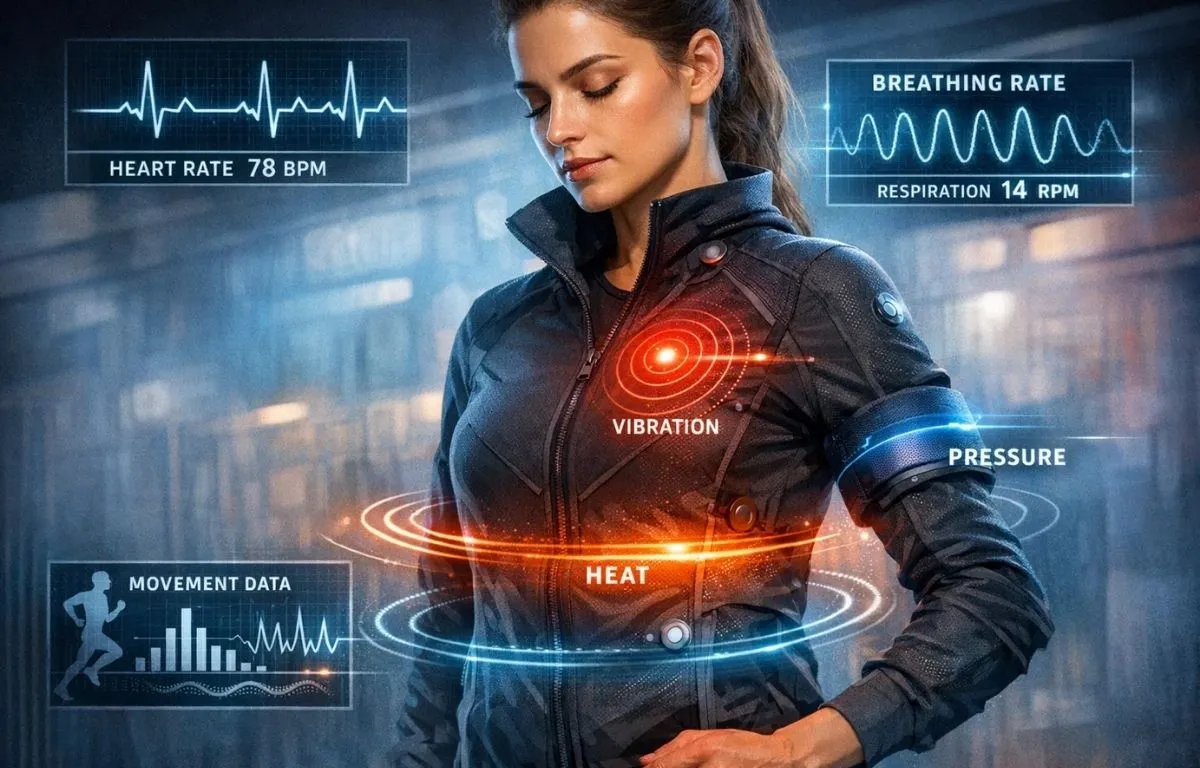
Pojęcie „odzieży sensorycznej” odnosi się zazwyczaj do ubrań zaprojektowanych tak, aby reagowały na fizjologiczne sygnały ciała — napięcie mięśni, rytm oddechu, tętno czy zmiany w ruchu — oraz odpowiadały na nie poprzez nacisk, delikatne wibracje, ciepło lub rytmiczne impulsy. W tym kontekście „sensoryczny” nie oznacza stanu emocjonalnego ani psychologicznej interpretacji, lecz fizyczne postrzeganie sygnałów cielesnych, które są przetwarzane przez układ nerwowy.
Idea takiej odzieży nie pojawia się przypadkowo. Rodzi się w momentach, gdy własne zasoby układu nerwowego okazują się niewystarczające: napięcie utrzymuje się dłużej, ciało trudniej wraca do stanu spokoju, a znane formy samoregulacji przestają działać. W takich okresach pojawia się pokusa przeniesienia wsparcia na zewnątrz — w tkaninę, nacisk, rytm, odpowiedź technologiczną. Wraz z tą możliwością pojawia się jednak subtelne pytanie: gdzie przebiega granica między wspieraniem ciała a zastępowaniem jego naturalnych mechanizmów regulacyjnych?
Ten artykuł nie jest o innowacjach ani o „modzie przyszłości”. Stanowi kontynuację rozmowy o tkaninach, fakturach i cielesnej wrażliwości oraz bada, co się zmienia, gdy odpowiedź sensoryczna zaczyna pochodzić z zewnątrz.
Zanim przejdziemy do technologii, warto zauważyć jedną prostą rzecz: większość mechanizmów, na które dziś próbuje oddziaływać odzież sensoryczna, jest ciału doskonale znana. Ciężar, nacisk, otulenie, rytm ruchu oraz kontakt z tkaniną działają jak sygnały bezpieczeństwa lub stabilizacji — bez udziału czujników czy algorytmów. To właśnie z tych naturalnych reakcji wyrasta zainteresowanie zewnętrznym wsparciem sensorycznym.
Widać to wyraźnie w tym, jak reagujemy na miękkie i strukturalne faktury: odzież może stabilizować układ nerwowy — albo przeciwnie, przeciążać go — jeszcze zanim pojawi się jakakolwiek świadoma interpretacja.
Dlaczego ciało poszukuje zewnętrznego wsparcia sensorycznego
Ludzki układ nerwowy nieustannie balansuje między napięciem a regeneracją. W stabilnych okresach większość mechanizmów regulacyjnych działa niemal niezauważalnie: oddech sam się wyrównuje, mięśnie stopniowo się rozluźniają, a kontakt z ciałem jest odczuwany jako bezpieczny. W warunkach przewlekłego stresu lub przeciążenia sensorycznego mechanizmy te zaczynają się jednak wyczerpywać.
W takich momentach wzrasta potrzeba bardziej wyraźnych sygnałów — nacisku, ciężaru, otulenia, stabilności. Jest to reakcja układu proprioceptywnego, który kształtuje poczucie granic ciała w przestrzeni. Równomierna stymulacja sensoryczna przekazuje układowi nerwowemu prosty komunikat: ciało ma oparcie, sytuacja jest pod kontrolą.
Dlatego właśnie w dniach podwyższonej wrażliwości styl ubierania się często zmienia się intuicyjnie — doświadczenie to zostało opisane w artykule o ubraniach na dni zwiększonej wrażliwości. Gdy taki kontakt przestaje wystarczać, pojawia się pomysł przeniesienia części regulacji poza samo ciało.
Odpowiedź sensoryczna i samoregulacja: co ciało robi samo
Rzadko zastanawiamy się nad tym w codziennych drobiazgach — jak siedzimy, jak stoimy, jak ubranie układa się na ramionach czy talii. A jednak to właśnie w tych mikrosensacjach ciało nieustannie koryguje swój stan, odczytując informacje proprioceptywne i poczucie oparcia.
Równomierny nacisk, otulenie lub stabilne podtrzymanie pomagają mózgowi zbudować wyraźną mapę ciała. Dlatego dobrze skrojone ubrania lub elementy wpływające na postawę i podporę ciała mogą zmieniać nie tylko sposób poruszania się, ale także wewnętrzne poczucie siebie — co zostało opisane w artykule Clothing that changes posture and confidence.
Mechanizmy te nie są stałe. To, co dziś działa kojąco, jutro może okazać się nadmierne. Regulacja poprzez odzież zawsze pozostaje procesem, a nie trwałym rozwiązaniem.
Jak odzież sensoryczna naśladuje sygnały cielesne
Odzież sensoryczna nie wprowadza nowych doznań, lecz naśladuje znane sygnały cielesne poprzez rytm, kompresję, ciepło lub powtarzalną stymulację sensoryczną. Technologia próbuje odtworzyć to, co ciało zwykle robi samodzielnie.
Dla układu nerwowego kluczowa nie jest sama technologia, lecz jakość bodźca — jego regularność, przewidywalność i łagodność. To właśnie te cechy pozwalają interpretować stymulację jako bezpieczną.
Zasadnicza różnica polega na zdolności adaptacji. Wewnętrzne reakcje cielesne nieustannie dostosowują się do kontekstu, podczas gdy stymulacja zewnętrzna pozostaje z góry zaprogramowana. W tym tkwi główne ryzyko — możliwość utrwalenia jednego schematu sensorycznego.
Jak to działa w praktyce: podstawowe zasady technologiczne
Odzież sensoryczna nie wykorzystuje elektrycznego oddziaływania na ciało i nie przekazuje prądu przez skórę. W większości przypadków są to systemy noszone z wbudowanymi elementami niskiej mocy — czujnikami ruchu, oddechu lub tętna oraz miękkimi aktuatorami, które generują sygnały mechaniczne lub cieplne. Oddziaływanie nie zachodzi bezpośrednio na układ nerwowy, lecz poprzez znane kanały sensoryczne: dotyk, nacisk i rytm.
Zasilanie zapewnia niewielki akumulator o niskiej pojemności, podobny do tych stosowanych w opaskach fitness czy słuchawkach bezprzewodowych. Taka odzież wymaga okresowego ładowania — zazwyczaj za pomocą kabla USB lub złącza magnetycznego. Wszystkie elementy elektroniczne są odizolowane od skóry wielowarstwową strukturą tekstylną, a napięcie jest na tyle niskie, że ryzyko porażenia prądem praktycznie nie istnieje.
Z punktu widzenia bezpieczeństwa kluczowa nie jest sama elektronika, lecz intensywność stymulacji sensorycznej. Odpowiedzialne projekty uwzględniają ograniczenia siły wibracji, temperatury oraz czasu ekspozycji. Odzież sensoryczna nie stymuluje układu nerwowego w sensie medycznym ani klinicznym — dostarcza jedynie łagodnych bodźców mechanicznych, które ciało rozpoznaje jako znane odczucia.
Równie istotny jest kontekst użytkowania. Odzież sensoryczna nie została zaprojektowana do całodziennego, ciągłego noszenia. Jej celem jest krótkotrwałe wsparcie — w momentach przeciążenia, regeneracji lub zwiększonej wrażliwości. To czas trwania i kontekst decydują o tym, czy technologia pozostaje wsparciem, a nie zaczyna stopniowo zastępować naturalną zdolność ciała do samoregulacji.
Odzież sensoryczna nie jest wyrobem medycznym i nie służy leczeniu ani terapii. Jej rola polega na stworzeniu bezpiecznego, kontrolowanego tła sensorycznego, które może tymczasowo wspierać ciało bez ingerowania w jego naturalne mechanizmy adaptacyjne.
Granica między wsparciem a zastępowaniem: co warto wziąć pod uwagę
Zewnętrzne wsparcie sensoryczne może być pomocne w okresach zmęczenia lub przeciążenia. Jednak gdy staje się stałe, układ nerwowy może stopniowo ograniczać własny udział w regulacji — nie z powodu słabości, lecz na skutek adaptacji.
Kwestia odzieży sensorycznej nie sprowadza się do skuteczności pojedynczych impulsów. Najważniejsza pozostaje zdolność do utrzymania kontaktu z własną wrażliwością i korzystania ze wsparcia jako zasobu tymczasowego.
Czasami ubranie rzeczywiście pomaga uwolnić napięcie. Jednak najbardziej precyzyjna odpowiedź sensoryczna wciąż pochodzi nie z algorytmu, lecz z uważności na własny stan. Ciało nie potrzebuje stałej korekty — potrzebuje przestrzeni, w której może zostać usłyszane.
Sources
- Goldstein, D. S. The autonomic nervous system in health and disease.
- McGlone, F., Wessberg, J., Olausson, H. Discriminative and affective touch: sensing and feeling.
- Field, T. Touch for socioemotional and physical well-being.
- van Erp, J. B. F., Toet, A. Social touch in human–computer interaction.




-lazy-placeholder.webp)
-medium.webp)