






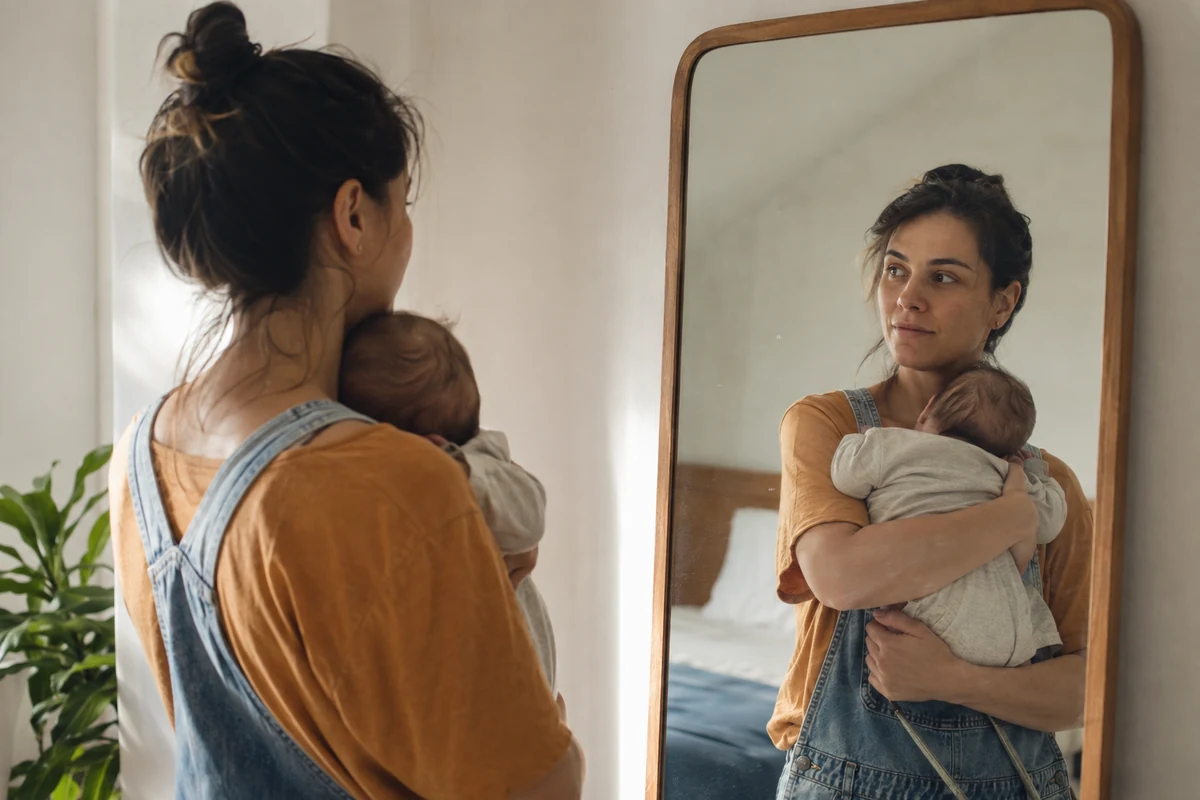
Подруга запитує: «Як ти?» — і ви автоматично починаєте розповідати, як спала дитина, що вона сьогодні їла і коли наступний візит до педіатра. Лише за кілька хвилин помічаєте: про себе ви так нічого й не сказали.
До народження дитини були робота, власний ритм, зустрічі, плани, спонтанні рішення, звичне тіло, можливість залишитися наодинці. Тепер життя може бути наповнене любов’ю до дитини — і водночас виникає дивне відчуття, ніби сама жінка в ньому стала менш помітною. «Я щаслива, що стала мамою, але не розумію, куди поділася я» — ці дві думки цілком можуть існувати одночасно.
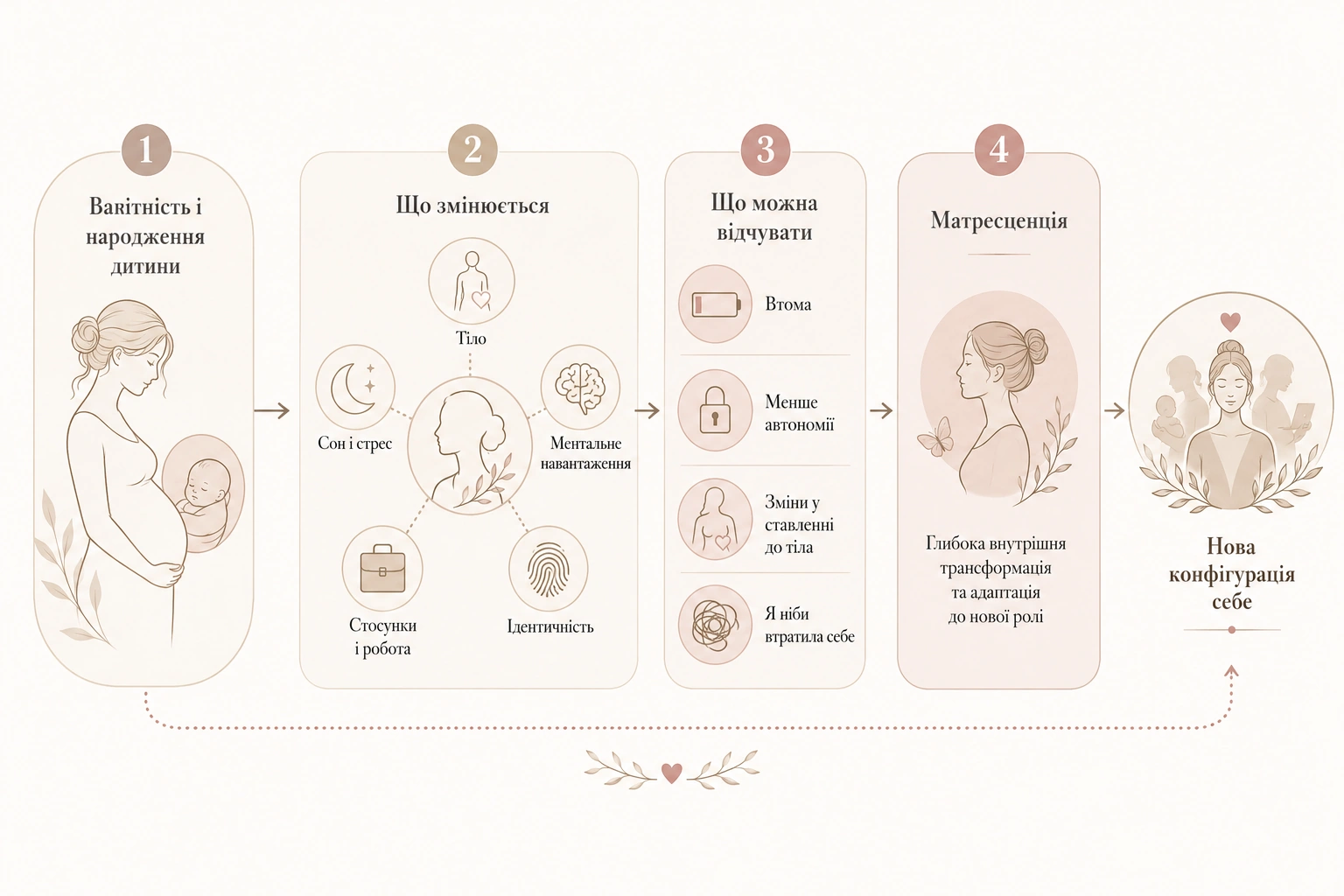
Перехід до материнства справді може змінювати уявлення людини про себе. Для цього процесу існує термін матресценція. Він описує широку перебудову, під час якої нова роль має знайти місце поруч із роботою, партнерством, дружбою, сексуальністю, тілом, інтересами, свободою і планами на майбутнє. Особливо складно стає тоді, коли материнство поступово займає майже весь доступний простір.
Що таке матресценція і чому це більше, ніж післяпологова втома
Термін matrescence увела в обіг антропологиня Дана Рафаель у 1970-х роках. Сьогодні ним описують перехід до материнства, у якому переплітаються біологічні, психологічні, соціальні, культурні та особистісні зміни. Це не медичний діагноз і не набір обов’язкових симптомів. Жінка приходить у материнство вже сформованою людиною: зі своїми звичками, професійною історією, способом будувати стосунки, потребою у приватності, ставленням до власного тіла, уявленнями про хороше життя. Після народження дитини багато складових цього життя змінюються практично одночасно, а новий порядок складається не за один день.
Вагітність і період навколо пологів супроводжуються реальними фізіологічними й нейробіологічними змінами. Дослідження показують, що вагітність є періодом вираженої нейропластичності: змінюються структура й функціонування окремих мозкових мереж, а частина цих змін зберігається після пологів. Водночас забудькуватість, труднощі з концентрацією чи відчуття «туману в голові» не варто автоматично пояснювати перебудовою мозку. Після народження дитини різко зростає когнітивне навантаження, змінюється сон, рівень стресу і кількість завдань, які потрібно одночасно утримувати в голові.
У дослідженні 2026 року, заснованому на глибоких інтерв’ю з 25 матерями, жінки описували зміни у відчутті себе, тілі, емоціях і стосунках, а також необхідність заново узгоджувати материнську роль з іншими частинами своєї особистості. Це невелике якісне дослідження в конкретному культурному середовищі, тому його висновки не можна переносити на всіх жінок. Проте воно добре показує саму природу процесу: після народження дитини звична система координат «хто я і як влаштоване моє життя» може потребувати перебудови.
Чому після народження дитини можна перестати впізнавати себе
Найочевидніше пояснення — бракує часу. Але часто змінюється ще й можливість вільно розпоряджатися власним часом. До народження дитини людина багато разів на день приймає маленькі рішення, навіть не помічаючи їх. Затриматися після роботи, вийти за кавою, лягти спати, прийняти довгий душ, дочитати розділ, відмовитися від зустрічі, запланувати щось на суботу. З немовлям більшість цих рішень починає залежати від годування, сну, самопочуття дитини, наявності іншого дорослого і десятків дрібних обставин. Може здаватися дивним сумувати через можливість просто вийти з дому без підготовки. Але автономія значною мірою і складається з таких буденних рішень. Якщо власні бажання постійно доводиться співвідносити з потребами іншої людини, відчуття себе як окремого суб’єкта теж може змінюватися.
Коли в голові постійно відкрито двадцять вкладок
Фізичний догляд за дитиною — лише видима частина роботи. Є ще те, що часто називають ментальним навантаженням: пам’ятати, передбачати, організовувати, перевіряти. Коли закінчаться підгузки, який одяг уже малий, коли наступне щеплення, що взяти з собою, чи є вдома потрібні ліки, кому написати щодо садка. Навіть якщо партнер виконує багато окремих справ, загальна система управління сім’єю може залишатися в голові однієї людини. Формально вільна година тоді не завжди відчувається як справжній відпочинок: тіло сидить на дивані, а голова продовжує складати списки, пам’ятати і контролювати. Тому вечір із подругами, масаж або ванна можуть дати приємну паузу, але не завжди повертають відчуття власного життя. Якщо після короткої перерви людина знову стає єдиним диспетчером усієї сімейної системи, причина виснаження нікуди не зникає.
Про те, як працює ментальне навантаження і чим звичайна втома відрізняється від материнського вигорання, ми детальніше говоримо в окремому матеріалі.
Тіло теж перестає бути нейтральною територією
Ще одну важливу частину цього досвіду легко звести до питання «як повернути форму після пологів». Насправді стосунки з тілом змінюються значно складніше. Під час вагітності тіло швидко перебудовується. Після пологів воно відновлюється, іноді болить, годує, прокидається вночі, носить дитину на руках, живе в умовах дефіциту сну і великої кількості фізичного контакту. У певний момент жінка може помітити, що майже весь тілесний досвід пов’язаний із потребами когось іншого: виносити, нагодувати, заспокоїти, потримати, прокинутися. На цьому тлі вимога якомога швидше «повернути своє тіло» звучить дивно. Воно нікуди не поділося. Проте відчуття, що ним знову можна розпоряджатися на власних умовах, справді може повертатися поступово.
Комусь насамперед потрібен сон. Комусь — рух, який приносить задоволення і не перетворюється на покарання за зміни фігури. Можливість спокійно помитися, плавати, піти на масаж, носити одяг, у якому комфортно зараз. Іноді важливим стає просте право не хотіти чергових дотиків після дня, протягом якого дитина майже постійно була на руках. Цей тілесний досвід перетинається із сексуальністю, але не зводиться до неї. У матеріалі «Вигорання, материнство і секс: що змінюється після народження дітей» ми окремо розбираємо, як недосип, ментальне навантаження, зміни тіла і брак приватності можуть впливати на бажання.
Краса й догляд як спосіб не втрачати контакт із собою
Після народження дитини догляд за собою легко переходить у категорію «необов’язкового». Душ стає коротшим, волосся збирається так, щоб не заважало, косметика може місяцями лежати без діла, а новий одяг відкладається «до того моменту, коли тіло повернеться у форму». У період великого навантаження це цілком зрозуміло. Але для частини жінок догляд і зовнішність до материнства були не просто набором процедур — вони були частиною звичного способу відчувати себе.
Тому повернення до деяких ритуалів іноді має більше значення, ніж здається. Укласти волосся, скористатися улюбленим ароматом, зробити манікюр або вибрати одяг, який подобається саме зараз, — це невеликі дії, у яких рішення знову належить самій жінці. Вони не «повертають колишню себе» автоматично, але можуть нагадувати, що поруч із материнською роллю залишаються власні смаки, звички й способи взаємодії зі своїм тілом. Для когось це справді буде макіяж або догляд за шкірою, для когось — стрижка, масаж чи просто можливість спокійно прийняти душ. Іншій жінці в певний період усе це може бути зовсім не потрібне. Тут немає правильної норми. Важливо лише, щоб догляд залишався вибором, який приносить комфорт або задоволення, а не перетворювався на ще одну вимогу «добре виглядати» і все встигати.
У цьому сенсі краса може бути не про повернення до допологової зовнішності, а про безперервність власної ідентичності. Якщо одяг, косметика, волосся чи інші ритуали були важливою частиною життя раніше, вони можуть залишатися нею і після народження дитини — вже в новому ритмі й на власних умовах.
Окремо ми розібрали, чому після пологів може сильно випадати волосся і коли воно відновлюється, а також як змінюється шкіра після пологів і який догляд справді має сенс.
Робота, друзі й стосунки теж змінюють значення
Після народження дитини ставлення до роботи може змінитися дуже по-різному. Хтось сумує за нею вже через кілька місяців, хтось уперше починає сумніватися, чи хоче повертатися до колишнього темпу. Робота може означати гроші, амбіції, свободу, соціальні контакти, задоволення від власної компетентності, тому повернення професійної ролі для когось стає полегшенням, а для когось — ще одним навантаженням.
Так само змінюються дружба і партнерство. Люди, які раніше були передусім парою, легко стають командою з організації побуту: хто прокидається вночі, хто йде в магазин, хто забирає дитину, хто домовився з лікарем. Розмови стискаються до логістики, зустрічі з друзями потребують планування, частина колишнього соціального світу віддаляється.
Про те, чому після народження дитини партнери можуть віддалитися і як знову залишатися парою, а не лише командою з побуту, говоримо окремо в матеріалі про стосунки після появи дитини.
Поодинці жодна з цих змін не обов’язково створює кризу. Але разом вони можуть суттєво зменшити кількість ситуацій, у яких жінка переживає себе поза материнством. І саме тут у фразі «я тепер тільки мама» найважливіше слово — «тільки». Воно говорить не про цінність материнства, а про те, скільки місця залишилося для всього іншого.
Не повернути колишню себе, а зрозуміти, що хочеться зберегти
Бажання «знову стати собою» дуже зрозуміле, особливо коли життя чітко розділилося на «до» і «після». Проте буквально відтворити попередню реальність часто неможливо: з’явилася людина, за яку ви відповідаєте, змінилися розклад, фінанси, побут, стосунки, іноді професійні плани й ставлення до власного тіла. Якщо постійно порівнювати теперішнє життя з попереднім, майже кожна відмінність сприйматиметься як втрата. Корисніше поступово розібратися, за чим саме ви сумуєте. Можливо, не за всім колишнім життям, а за професійною впевненістю, самотою, ранковим бігом, улюбленим одягом, подругою, читанням, власними грошима або можливістю завершити думку без переривання.
Материнська роль при цьому може залишатися дуже великою і важливою. Питання лише в тому, чи є поруч із нею місце для інших ролей і потреб. У дослідженнях матресценції перехід до материнства описують як процес, у якому жінки заново осмислюють власну ідентичність, тілесний досвід, стосунки й культурні очікування від «хорошої матері». Це не означає, що всі проходять однакові етапи або повинні пережити кризу. Велика життєва зміна просто може вимагати часу, щоб зрозуміти, що з попереднього життя хочеться зберегти, а що тепер має інше значення.
Що справді допомагає повернути відчуття себе
Починати краще не зі списку self-care, а з питання, чого саме вам зараз бракує. За фразою «я себе втратила» можуть стояти дуже різні речі: нестача інтелектуальної роботи й професійної компетентності, людей і розмов не про дітей, сну, тиші, руху, тілесного комфорту або можливості самій вирішувати, що робити зі своїм часом. Буває й так, що в сім’ї начебто є допомога, але всі рішення, нагадування і відповідальність усе одно залишаються в голові однієї людини.
Щоб велике відчуття «я зникла» стало конкретнішим, корисно подивитися не на все життя одразу, а на кілька його частин.
| Запитання | Що може стояти за відповіддю | З чого можна почати |
|---|---|---|
| За чим я сумую найбільше? | За роботою, творчістю, рухом, спілкуванням | Повернути одну з цих речей у регулярний розклад |
| Що зараз виснажує мене найбільше? | Постійне планування, контроль і необхідність усе пам’ятати | Передати іншій людині цілу ділянку відповідальності, а не окреме доручення |
| Коли я найкраще відчуваю себе собою? | Наодинці, у воді, за роботою, з близькою людиною, під час улюбленої справи | Зробити цей досвід регулярним, а не випадковим |
| Чого в моєму житті стало критично мало? | Сну, тиші, автономії, тілесного комфорту, дорослого спілкування | Почати з однієї потреби, яка зараз найбільше впливає на самопочуття |
Сенс не в тому, щоб одразу відновити все життя «до дитини». Одна невелика, але регулярна зміна часто корисніша за рідкісні великі паузи. Якщо важлива для вас частина життя знову стає нормальною частиною тижня, поступово повертається і відчуття, що власне життя не складається лише з материнських обов’язків.
Є ще одна маленька зміна, яку легко недооцінити, — мова. У перші місяці з дитиною природно часто говорити «ми»: ми погано спали, ми почали прикорм, нам пів року. Але поряд із цим варто залишати місце й для «я»: я втомилася, я не хочу, мені цікаво, мені потрібна година на самоті, я хочу повернутися до роботи, я поки не готова повертатися. Мати й дитина дуже пов’язані, але залишаються двома окремими людьми.
Підтримка теж має значення. Систематичний огляд 2026 року охопив 11 досліджень із загальною вибіркою 1244 жінки й показав, що програми психологічної підтримки, спрямовані на становлення материнської ролі, загалом були пов’язані з покращенням показників материнської ідентичності, самооцінки власної ефективності та компетентності, хоча результати були неоднорідними, а частина ефектів не досягала статистичної значущості. Автори також наголошують на методологічних обмеженнях і обмеженій можливості переносити результати на різні культурні контексти. Ці дані не дають готового рецепта «як пройти матресценцію», але показують, що підтримка в цей період може бути корисною.
Коли справа не тільки в матресценції
Поняття матресценції корисне, тому що дозволяє говорити про складні й суперечливі переживання без автоматичного перетворення їх на симптоми хвороби. Можна любити дитину і сумувати за свободою, бути вдячною за сім’ю і злитися через несправедливий розподіл навантаження, хотіти провести час без дитини, скучати за роботою або, навпаки, не бути готовою до неї повертатися. Такі переживання самі по собі не означають психічного розладу. Проте матресценцією не варто пояснювати будь-яке погане самопочуття після пологів. Якщо пригнічений настрій, сильна тривога, безнадія або втрата здатності отримувати задоволення стають стійкими й заважають жити; якщо важко спати навіть тоді, коли для цього є можливість, концентруватися, виконувати звичайні справи чи піклуватися про себе; якщо виникають думки про смерть, самопошкодження або заподіяння шкоди дитині — потрібна оцінка фахівця. Галюцинації, марення, виражена сплутаність свідомості або маніакальне збудження після пологів можуть бути ознаками післяпологового психозу. Це рідкісний, але невідкладний стан, який потребує термінової медичної допомоги. Межа проходить не між «позитивними» й «негативними» почуттями. Значення мають їхня інтенсивність і тривалість, рівень страждання та те, наскільки людина здатна функціонувати у звичайному житті.
Материнство справді може сильно змінити ідентичність. З часом питання «як повернути колишню себе?» може поступитися точнішим: що зі свого попереднього життя я хочу зберегти, чого мені зараз бракує і якою я хочу бачити свою роботу, тіло, стосунки, час і себе в цій новій реальності. Тоді материнство займає важливе місце в житті, але поруч залишається простір і для інших його частин. Після такої великої зміни важливіше не повернутися назад, а поступово зробити власне життя достатньо широким — для дитини, для себе теперішньої і для тих частин себе, які хочеться зберегти.